On July 25, 1993, in Bensonhurst, Brooklyn, a young man was at home when he heard a knock at the door. He opened it without hesitating, because the two people standing outside were the only two in the world he would open that door for without thinking.
He had known them since childhood. They came up together. One of them was, by every account, his closest friend on Earth.
They came inside. At some point, one of them asked for a drink, and he turned around to get it, because that is what you do when your friends are in your house. He was shot in the back of the head.
They left him where he fell, on the floor of his own home. That is where his parents found him.
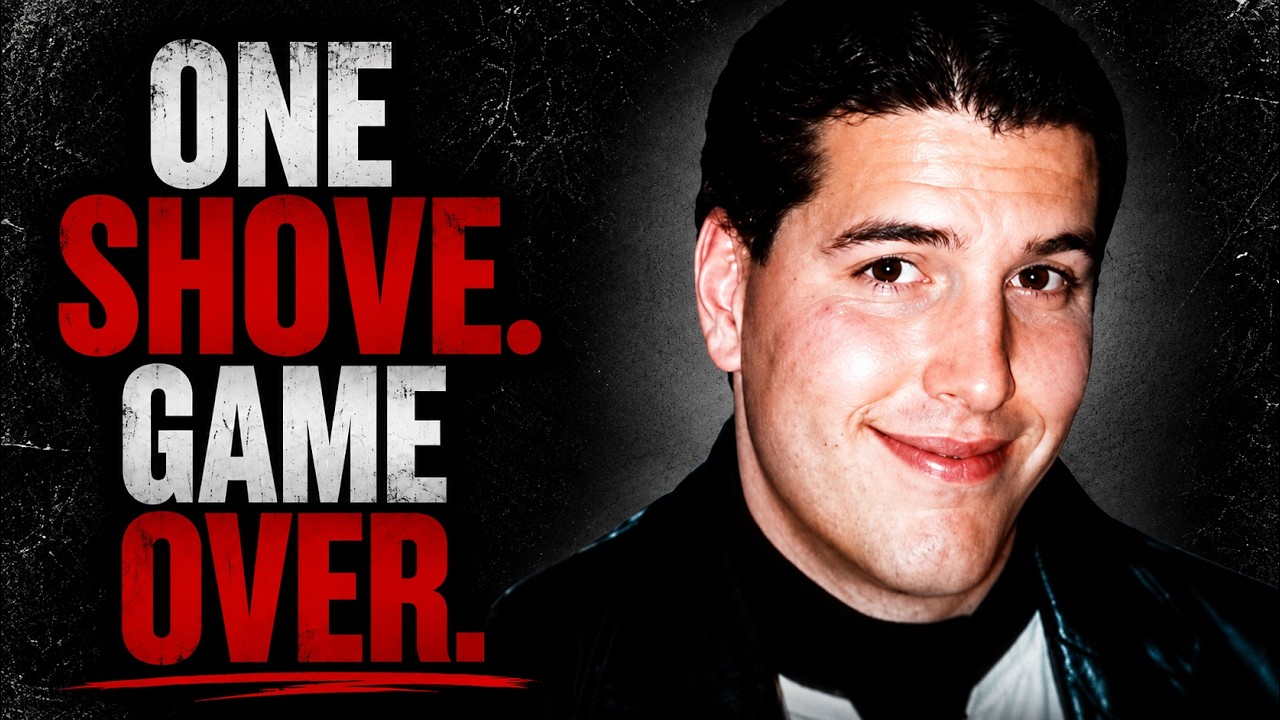
His name was Paul Gulino. The crew called him Paulie Brass.
He led one of the most violent young gangs in Brooklyn, and he had spent his entire adult life trying to get made into the Bonanno crime family. By most accounts, he was close to getting there.
The thing that got him killed was not a murder. He had already committed one for the man who ordered his death, and it had made his reputation. What got him killed was that he put his hands on an old man and shoved him.
This case does not get told much, and when it does, it usually gets flattened into a line about a young gangster who got too big for himself. That is not wrong, but it misses what is actually instructive about it.
In the American Mafia, the thing that gets you killed is almost never the crime. Paul Gulino shot a man five times around the corner from a police station, and it made him a rising star. The organization was pleased. It got him closer to being made, not further away.
What ended him was a shove in an argument. No injury, no weapon. A young man losing his temper and putting his hands on a man in his 60s, in a world where that specific gesture from that specific person to that specific man is the one thing that cannot be walked back.
Understanding why a shove outranks a shooting is understanding how that entire world actually functioned.
Start with the neighborhood, because this crew came out of a very particular corner of Brooklyn at a very particular moment.
Bath Beach and Bensonhurst in the late 1980s and early 1990s were still deeply Italian-American neighborhoods where the presence of organized crime was not a secret or a rumor. It was ambient.
Kids grew up knowing which men on the block were connected, which social club you did not walk into, and, crucially, that there was a visible ladder in front of them.
In most neighborhoods in America, a teenager with no education and a bad temper has no obvious career path. In that neighborhood at that time, he had one, and everyone could see it.
What made this moment different was timing. By the early 1990s, the generation of bosses who had run New York for decades was collapsing.
John Gotti was gone. The heads of the Lucchese family were gone or running. The Bonanno family's own boss had done time. The Colombo family had split into factions and started shooting at itself.
There was a vacuum where the adults used to be. Into that vacuum came a lot of very young men who had watched all of it on the news and drawn exactly the wrong lesson from it.
That is the environment that produced the Bath Avenue crew. They were a group of friends, a handful of them at the core.
By the account of a former member, they marked themselves with a tattoo on the ankle, the number one. The meaning attached to it was the kind of thing you would expect from young men who had watched too many films about this life.
All for one, brothers until the end. And most tellingly, a shared commitment to getting their button, which is the term for formal induction into a crime family.
That is the part to hold on to, because it is the engine of everything that follows. This was not a gang that formed to make money and later got connected. It was a gang that formed with induction as the stated goal. The crimes were the application process.
Paul Gulino was the one at the front of the line. He had the number one on his ankle, and he was the boss of the crew. He dealt directly with the Bonanno people above them, and the entire crew's hopes ran through him. If Paulie got made first, all of them moved closer to the family in one step.
The man above them at a distance was Anthony Sparrow. Sparrow is a genuinely important figure, and he is worth understanding because he is nothing like the picture the word gangster puts in your head.
He was the consigliere of the Bonanno crime family, the third position in the formal structure. The counselor, the man bosses go to for advice and for judgment on disputes.
He was older. He was quiet. He kept pigeons on a roof in Bensonhurst. He had a reputation on those streets as the most respected man in the neighborhood, and respect in that context is not a compliment about his manners. It meant that what he said was final.
The Bath Avenue crew mostly did not deal with Sparrow directly. They dealt with a more accessible intermediary, and messages moved down the chain to them.
Then, by the account crew members later gave, a small-time burglar named Vincent Bickelman made the worst possible mistake available to a man in that neighborhood. He robbed a house that belonged to one of Anthony Sparrow's daughters.
Then he made it worse. He tried to sell the stolen property locally, right there in the neighborhood, which is roughly the equivalent of announcing it with a megaphone.
Crew members caught up with him, beat him, took the goods back, and passed them up the chain. The message that came back down, according to the account given by a former crew member, was that Sparrow wanted him dead as an example.
Sit with the proportionality of that for a second, because it tells you what this world actually valued. The theft itself was trivial. The property was recovered.
What could not be recovered was the fact that a nobody had gone into the home of the consigliere's daughter, and that people in the neighborhood knew it.
The burglary was a property crime. The insult was a governance problem. In an organization whose entire authority rests on the belief that certain people cannot be touched, a governance problem is the only kind that actually matters.
Gulino took the assignment personally. This was his shot. He killed Vincent Bickelman, firing five rounds into him, and did it, by the account of crew members, around the corner from a police station.
That last detail is not incidental. Nobody chooses to commit a murder next to a precinct because it is convenient. He did it that way because the point was not just to kill Bickelman. The point was to be the kind of man who would kill Bickelman there.
It was a performance for an audience of exactly one, the old man on the roof with the pigeons, who needed to understand what Paulie Brass was willing to do.
And it worked. The crew celebrated openly. They wanted the neighborhood to know they had done it and who they had done it for. By the accounts of the men who were there, it cemented their standing with the Bonanno family. Gulino was on track. Induction was, in their minds, a matter of time.
It is worth naming what that celebration actually was, because it is the tell for everything that goes wrong later. These were young men treating a murder as a career milestone, drinking to it in public, wanting to be seen having done it.

Nobody in that bar was thinking about Vincent Bickelman, who was a drug user and a small-time thief, and whatever else, a person who was alive that morning and was not by that evening, killed over property that had already been recovered.
He barely exists in the retellings. He is the pretext. That is what he was to the Bath Avenue crew on the night they toasted his death, and it is roughly what Paul Gulino would become to the same organization about three years later.
Here is where it turns, and the turn is entirely psychological.
Getting made is not a scheduled event. There is no date, there is no exam you pass. The family opens its books when it decides to, and the decision sits with men above you who are under no obligation to explain their timing to anybody.
For a young man who has just done the hardest thing that world can ask of him and been told it counted, that waiting period is a kind of slow poison.
Gulino got impatient. And his solution to impatience was more violence.
By the account of a former crew member, Gulino wanted a street war. He wanted Sparrow to authorize killings, to issue the death warrants that would let him carry a conflict all the way through.
He believed that a war was the fastest possible route to the button he had been promised was coming. He was not asking for permission to defend himself. He was asking to be pointed at people.
Sparrow said no. And that no is the whole story.
Sparrow's reasoning is the reasoning of every experienced man in that world, and it is the exact reasoning Gulino was too young to hear. Wars are terrible for business. They bring police, they bring press, they bring federal attention, they get people indicted, and they cost far more than they ever return.
The consigliere's entire function is to be the man who says no to this, who finds the settlement, who talks the young and the angry back down. Sparrow was doing his job precisely as designed.
Gulino heard it as betrayal. The two of them had a loud argument. And in that argument, Paul Gulino put his hands on Anthony Sparrow and shoved him.
Anthony Sparrow, according to the account of a crew member, did not shout, did not swing back, and did not threaten him. He turned his back and walked away quietly.
That was the death sentence. Delivered in silence.
You have to understand what a shove means in that specific context to understand why. This is an organization where the entire architecture of power runs on the idea that certain men are untouchable. Not physically stronger. Untouchable. That is the product.
When a young associate lays hands on the consigliere of a crime family in front of anybody, he has not insulted a man. He has demonstrated, publicly and physically, that the untouchability is fake. That an angry twenty-something can put his palms on the third most senior man in the organization, and nothing happens.
If nothing continues to happen, everyone watching updates their understanding of what the rules actually are. So something has to happen, and it has to be final, and it has to be unmistakable.
That is why a shove outranks a shooting. The shooting served the organization. The shove exposed it.
By the account crew members later gave, Gulino also began talking about wanting Sparrow dead once he realized he was not getting his war. Whether that was serious intent or the venting of a furious young man did not matter in the slightest. Once a sentence like that has been said out loud in that world, the distinction between meaning it and saying it stops existing.

Here is the part that shows genuine cold expertise, and it is the reason this case stays with people.
Paul Gulino was not an easy man to kill. He was violent, he was armed, he was young and physically capable, and by all accounts, he understood the danger he was in. Men like that can be very hard to get to. They do not meet strangers. They do not walk into unfamiliar rooms. They watch doors.
So the organization did not send strangers.
On July 25, 1993, two members of the Bath Avenue crew went to see him. According to the account given by a former crew member, they were the only two people Gulino would open his door for without question, and the only two he would turn his back on to fetch a drink. One of them had been his friend since childhood.
A third core member of the crew was in prison at the time and learned about it afterward. They killed him in his home and left him there for his parents to find.
There is a detail from the aftermath in that same account that stays in the mind. The member in prison called one of the shooters as soon as he heard and shouted down the phone asking whether he had done it. The man on the other end was crying and saying no, and the man in prison understood perfectly well that he was being told yes.
That is what the organization purchased with Paul Gulino's death. Not just a body. It took the closest friendships in that crew and turned them into the murder weapon, and it did that deliberately. Using the friends was the only method that would work, and the message it sent afterward was worth even more than the killing.
The reckoning came, though it took years, and it came through a courtroom rather than the street.
The Bath Avenue crew came apart the way these groups almost always come apart. Members were arrested, members cooperated, members testified against each other.
On April 5, 2001, Anthony Sparrow, the quiet old man with the pigeons, was convicted of racketeering and of ordering three murders, including the killing of Vincent Bickelman and the killing of Paul Gulino.
In April 2002, he was sentenced to life in prison. His lawyers asked for leniency on the grounds of his poor health, and the judge refused. He died behind bars in 2008 at 79.
Others from that world got long sentences. One member received life for a separate killing. Another cooperated against his own friends.
One of the men connected to that crew, Chris Paciello, went on to a genuinely surreal second act, becoming a celebrated nightclub owner in Miami, running with famous people before his Brooklyn history caught up with him and he was prosecuted alongside the rest.
So what is the actual lesson buried in all this?
It is that Paul Gulino fundamentally misread what the organization wanted from him. He believed the path to being made ran through demonstrated ferocity, that the more willing he was to kill, the more valuable he became, and that the way to accelerate his own promotion was to escalate.
He had it exactly backwards. The organization had plenty of young men willing to shoot people. What it was actually screening for was obedience. Specifically, the ability to accept an instruction you disagree with from a man you cannot question.
That was the whole test. Killing Bickelman did not prove he had passed it. Accepting the no about the war was the test, and he failed it in the most public way available.
And there is the smaller, sadder thing underneath. Everything he did, he did to get into a club that had already decided he was a tool rather than a member.
The crew tattooed a number on their ankles and told each other they were brothers until the end. Two of those brothers shot him in the back of the head in his own home, on instructions from men who were not their brothers, in the hope of getting a little closer to a door that had never once opened for any of them.
He was a young man who ran a crew that terrorized a neighborhood, who killed a stranger to impress someone he barely spoke to, and who died because he lost his temper for about four seconds.
Anthony Sparrow had a man killed over a shove that left no mark on him. Was that a boss protecting an organization that only works if nobody can touch him, or an old man's ego costing a young man his life?