Jerry Catena was born in 1902 and died in 2000, a lifespan that essentially covered the American century. His life paralleled the rise of organized crime in the United States, from Prohibition through the era of federal crackdowns. Yet for much of that time, he remained a name that few outside law enforcement and the underworld knew well.
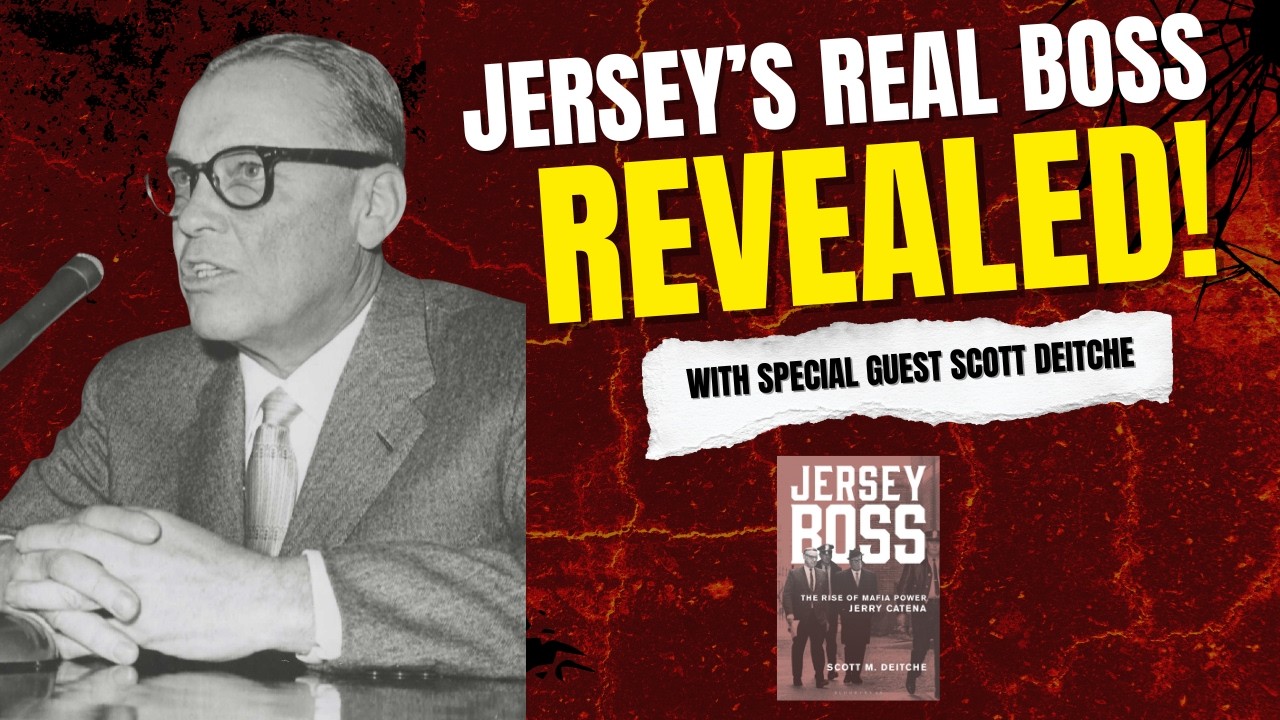
Scott Deitche, a historian and author who has spent more than two decades researching and writing about organized crime, argues that Catena deserves a full-length study. His new book, "Jersey Boss: The Rise of Mafia Power," examines Catena's life and influence. Deitche's earlier works include "Cigar City Mafia," about the Tampa mob, "Garden State Gangland," and a book on the East Harlem Purple Gang.
Catena rose to become the acting boss of the Genovese crime family for a period. For Deitche, the most interesting aspect of his story is not violence but business. Catena was involved in legitimate enterprises and in schemes such as the Las Vegas casino operation that few people realize had a New Jersey connection.
Unlike flamboyant figures such as John Gotti, Catena operated behind the scenes. He was closer to a racketeer than a street gangster, more business-minded than many of his contemporaries. Deitche structured the book around the idea of quiet power.
Catena was not a violent man by the standards of his world. There was violence around him, as there always is in the underworld, but his power was quiet and behind the scenes. His influence showed in things like the Bally's deal and the Las Vegas operations. When he was called before investigative commissions, including the Kefauver Committee and the New Jersey state commission, he maintained his old-world silence.
He was also one of many Genovese family members who traced their roots to Naples rather than Sicily, a detail Deitche has long found interesting about the family. Catena never displayed his influence. When it came time to retire, he simply stepped away. He was not compelled to cling to power.
He was also one of the rare men in his world whose end did not come in the street or behind bars. During the 1960s, when Vito Genovese went to prison, his top leaders and lieutenants were also incarcerated. A group of men effectively ran the family, starting with Eboli, with four or five figures involved. Catena had enormous influence, especially in New Jersey and Florida.
So why did his name never become more widely known? Deitche suggests timing played a role. Catena reached the peak of his power in the 1960s, just as the FBI began exposing the structure of organized crime. With law enforcement focusing heavily on the mob in the late 1960s and early 1970s, Catena's influence began to decline.
He was not indicted in the 1960s and avoided entanglement in some of the era's major cases. He stayed neutral and focused on his own business interests, including Las Vegas. While the FBI concentrated on the more violent elements of the family, Catena was somewhat insulated, at least for a time. He did go to prison, but during his rise his name appeared in many wiretaps, including some DeCarlo tapes, often because others were talking about him.
Catena grew up in the Ironbound section of Newark. From a young age he was surrounded by and educated in a predominantly Jewish area. His mentors in the underworld were Abner "Longie" Zwillman and men like Abie Green, Jewish gangsters in Newark. Through that mentorship he learned the legitimate business world.
Through Zwillman, Catena became involved early with the Public Service Tobacco company. From the end of Prohibition and the post-Prohibition era, he was already moving into legitimate business. That set him on a different path from many other New Jersey gangsters of the time.
He also became involved in Las Vegas through Longie Zwillman, where he gained significant influence. By 1957, when Frank Costello stepped back after a failed assassination attempt and Vito Genovese took over, Genovese appointed Jerry Catena as his underboss. Catena was working at the time with the Bally's company. A quote attributed to Genovese, possibly relayed through DeCarlo, described Catena as the man who held the keys to Las Vegas.
He was appointed because he made a lot of money, not because he was the most violent or the biggest drug trafficker. His value was financial. Deitche notes that there were other powerful figures in Las Vegas, including the 116th Street crew, Mike Miranda, men from Greenwich Village, and Boiardo. Catena's appointment as underboss seemed to stir some hesitation or jealousy.
The DeCarlo tapes contain a great deal of grumbling about Catena. Abels complained about him as well. Catena's relationship with Richie "the Boot" Boiardo was somewhat strange, though Catena was a witness at Tony Boy Boiardo's wedding. There were close ties from the New Jersey perspective.
What Deitche finds interesting is that despite all the complaining about Catena, why he was boss, and why Genovese made the choices he did, nothing happened to Catena. No one moved against him. There was no violence directed at Jerry. Deitche believes he was highly respected for the way he handled himself.
Another point Deitche heard from multiple sources is that when Catena became a capo and took over Willie Moretti's old crew, he was very successful. When he became acting boss, he did not need to receive envelopes. He did not need men to hand him money. He let them do what they wanted because he was making plenty of money himself.
Deitche did a rough calculation for 1965 based on things like Catena's involvement in Bally's and his stock sales. He arrived at an approximate annual income in 1965 of just over two million dollars, equivalent to about twenty million dollars today. DeCarlo said Catena had more money than anyone except Meyer, and possibly Meyer Lansky.
Catena's motivation was the business side. He was also very smart and well-versed in the politics of the Mafia and Cosa Nostra at the time. He may have run things a little differently, but he remained committed to that framework. There was a certain level of respect for him.
As for his leadership style, Catena was very hands-off, extremely hands-off. DeCarlo was recorded complaining that he could not get a meeting with Jerry, saying, "What kind of boss is this? I can't even meet with him!" Catena was something of a reluctant boss. That became a subtitle in Deitche's book, "The Reluctant Boss."
Even when Catena became acting boss, Abels said he sent him a telegram. Abels remarked that if they could tell Catena he could retire tomorrow, they would all kiss him. By the 1960s, when Catena rose from underboss to the top position, he was at a stage of his life and career where he was no longer very hands-on. In some areas he may have become too hands-off. But he worked behind the scenes, meeting with other bosses, offering advice, and guiding matters.
His relationship with Eboli is an example of this. It was tense and full of disagreements, but there was a kind of mutual respect. You can see it in the way they spoke about each other in the recorded calls.
When it came to Eboli's fate, Deitche notes that the full story may not be known. There were rumors that Eboli had borrowed four million dollars from Carlo Gambino and did not repay it, among other stories. When the time came for Eboli to go, because he was difficult, people wonder whether they went to Catena and what role he played in the decision.
At that time Catena was in Yardville prison. In 1970 he was sent there after refusing to testify before a New Jersey state commission. It was a minimum-security prison, and people visited him. He was no longer the leader at that point, but he was clearly consulted. Deitche covered both possibilities in the book, presenting the available information.
Deitche does not believe the matter was related to the Gambino family at all. He thinks it was an internal Genovese family matter. His reason is that a few years later, in 1976, Pasquale, the brother of Tommy Eboli, was killed. Deitche also mentions a rumor in the book that Eboli said something offensive about Catena, something along the lines of who did he think he was, that he thought he was more Jewish than Italian. Catena was angered. Whether or not it was true, it was certainly something circulating on the street at the time.
Regardless, Deitche believes Catena was certainly consulted, whether asked for his opinion or simply saying, "Fine, we'll do this." This makes sense, because although Catena was hands-off and not violent, he held the power of life and death. People should understand that as well.
By the time of the Della Croce case in 1979, Catena had almost retired from day-to-day matters, but he remained a veteran statesman-like figure. There is a series of schemes in 1983 that temporarily list him as a consultant. He served that purpose later, with people saying, "Let's ask him, send him what he thinks." He was living permanently in Boca Raton at that time.
Catena has been compared to Meyer Lansky, and he was indeed close to him. One of the notable aspects of the book is how deep Catena's connections ran into unions and legitimate corporations, such as Bally's and casinos. Deitche considers the Bally's deal the prime example of Catena's business acumen.
Catena's involvement in Bally's Gaming was the peak of his influence in the legitimate business world. The story of how he became involved is somewhat long, but he had been involved in the vending machine business through Runyon Sales in New Jersey years earlier. He was very involved.
Deitche heard an interesting story from Myron Sugarman, whose father founded Runyon Sales. Jerry would go to the Runyon office and did not want anyone there to meet him. One day, two lower-ranking Genovese men came into Runyon to meet him. In a rare moment of losing his temper, Jerry got angry and said, "Don't ever come back here again." He wanted his legitimate business kept separate from organized crime.
As for Bally's Gaming, part of the mixing came from the fact that the investors he brought in were some Jewish men with organized crime connections. But Catena led an investment group that saved Bally's from bankruptcy at the hands of the bank and the board of trustees overseeing what remained of it. A few years later, it became a company controlling 90 percent of the slot machine market in Las Vegas, and Catena was instrumental in launching that venture.
When casinos opened in the 1970s, coinciding with the opening of Atlantic City, Bally's was involved there too. Because of Bally's growing prominence, it became a publicly traded company in the late 1960s. Jerry Catena sold his Bally's shares publicly. He then took the profits and reinvested them through Sam Klein and Abie Green to hold shares informally.
In the 1970s, Bally's not only opened casinos but moved from manufacturing slot machines into involvement with Midway, which later brought Pac-Man to the United States. More importantly, Bally's wanted to open a casino. That put them under heavy scrutiny from regulators. Regulators began to notice that Jerry had sold his shares years earlier, but many of these people were still involved with Bally's. That kind of disclosure began to highlight how deep his involvement in Bally's had been.
The question is whether Catena had enough plausible deniability. He was able to manage all of the company's business. It is interesting that he was never charged, at least as far as the book shows, with tax evasion, for example. He paid his taxes. He did what was necessary to avoid drawing attention.
Deitche believes maintaining that distance was an important factor. In 1976 Catena sold his New Jersey house and moved to Boca, then began his retirement process by the early 1980s. That coincided with all the other mob news, whether about Carmine Galante, John Gotti, or Vincent. No one cared about Jerry Catena.
Why write a story about him then? In terms of timing, he began to fade from the scene just as media coverage intensified, with big stories covered by Time and other outlets. Catena was skilled at timing and managed to avoid some of the things that tripped up many others.
There were figures like John Gotti and Carmine Galante who had a flashy appearance, but they either went to prison or were killed. Catena was smart enough not to do that. Another factor to consider, especially in the Newark area in the 1960s, is that they controlled the mayor and the police. They had a level of protection from local law enforcement and had many people with strong political influence over state representatives and similar figures. New Jersey being a corrupt state became a common pattern, but it was based on a lot of truth, especially at that time, and Jerry was certainly involved in some of it.
Deitche finds it striking that in 1983, Fortune magazine published a list of the most powerful 50 figures in organized crime. There was a man named Catena, retired in Florida for nearly 10 years, ranked as the fourth most powerful mob leader. That was interesting because at that point he had completely stepped out of the spotlight. In fact, two years later the FBI listed him as an active figure in one of its schemes. That shows his influence still endured.
One amusing detail Deitche found during his research was that in 1993, Catena had long been retired. He was 91 years old. When Bally's went to renew its casino license with the Nevada Gaming Control Board, there was a clause in the license stating that they were not to deal with Jerry Catena or Abie Green or any companies associated with them. Even after his long retirement, the Gaming Control Board remained concerned about his involvement. Deitche found that funny.

Catena was never barred from New Jersey casinos and was never placed on Nevada's blacklist. That shows you something.
Deitche dedicated an entire chapter in the book titled "Who Was Jerry Catena?" He was curious about the man himself. He spoke to family members and people who knew him. Catena was a very quiet, very nice, very friendly man. He was very devoted to his family. There is no evidence at all that he had a mistress or anything like that, which cannot be said of many gangsters. He was very committed to the Catholic Church and very devoted to his family.
He did not have anything like that in his home. His home was another forbidden place. No one came to his house. All his neighbors, both in New Jersey and even in Boca, praised him. They saw him as a nice elderly man or a gentleman. Even people Deitche spoke to from outside the law said he never lost his temper. He rarely lost his temper, and Deitche only heard of two occasions.
Interestingly, when Catena was young, one of his first arrests was for biting a police officer's finger during an attempt to arrest him. He may have had some arrogance in his youth, in his late teens or early twenties, but that makes sense.
During his research, one of the biggest surprises for Deitche had nothing to do with mob matters. As researchers do these days, he reviewed sources like newspapers. He looked at newspaper archives to understand what was being published about someone. He found many articles about Catena in the 1940s. One of them had nothing to do with Mafia activity. They were all about his golf game.
Catena was a prolific and successful amateur golfer who competed in tournaments in New Jersey and New York. He even appeared in the New York Times because of his golf. So yes, the gangster who played golf. He loved golf. He played regularly until he was no longer able to. This was really interesting.
It was not as if suspected gangster Jerry Catena played this tournament. It was as if Jerry Catena was in a twosome with Danny Williams and they won first place in the Noll Country Club tournament, things like that. There were actually two country clubs, and Noll was one of them in New Jersey, and many Genovese men belonged to them. Deitche thinks there may have been some business discussions around it, but Jerry took it to another level in terms of actual participation in tournaments. He may have been a professional-level golfer at the time.
Another thing Deitche found amusing was that he spoke to some law enforcement officials in Florida. They still wondered about it. They used to visit Jerry in the 1980s and enter his Boca home, saying, "Hey, what's the news?" Jerry was nice and friendly and talked with them, but he said nothing, as usual.
As for his physical build, Deitche had the information written down but forgot it at the moment. The one thing he will say is that Catena did not look Italian. In fact, most people said he looked like an Irish priest. Very light skin, very light hair, blue eyes. Not what you would consider the stereotypical look of southern Italy. He looked a little different from many men of that period.
He also dressed very neatly, sharp clothes. He always looked nice with a broad smile in many photos. If you looked at a crowd of people, you would not notice him and say, "Oh, that's a wise guy."
Catena was present from the early days of the Mafia through the late 1930s. He was born in 1902. When he turned 18, Prohibition went into effect. Jerry was present at the start of Prohibition, and there was involvement with Longie Zwillman and many Mafia men in New Jersey.
He was not known for violence, but he was a suspect in two shootings, one involving Dominick De Pasquale. His star began to rise as the influence of the Mafia and organized crime grew. After Prohibition ended, he joined the Mafia in 1943. He was placed under Willie Moretti's leadership. As the Genovese family's influence grew, so did his.
He was present when the Jewish Mafia lost its influence after Longie Zwillman's death in 1959, when they all came under Catena's leadership. He was going through a transition as the Mafia itself transitioned during that period. Even the state investigative commission, Jerry was one of its most important targets when it was formed in 1969. When they summoned him to appear before the court, and as law enforcement interest grew, Jerry was one of the most prominent figures in New Jersey at the time. So he was called in for questioning.
But he did something few others did. He left the Mafia. He retired and spent nearly the last twenty years of his life in isolation. He was seen once or twice with Sam DeCavalcante in Florida or with others who asked him questions, but he was effectively retired. He told some people, "They let me retire." Maybe he paid a bribe or a sum of money to someone, Deitche does not know, but he is one of the few who lived out his life as he should. He is one of the few who was not a secondary figure but a prominent one, and he simply lived out the rest of his life.
It is somewhat similar to Joe Bonanno, though he did not go out the same way. Deitche also found it interesting what was mentioned about Catena becoming acting boss. He believes this actually helped him with the leaders. He was not demanding many bribes. He was not demanding any bribes at all. So he did not need them. His crew made their own money.
He was making plenty of money. Another interesting thing is that when he formed his investment group for Bally's, there were no other gangsters in that group. There were no other Italians, no men from the Genovese family. They were all Jewish investors working in the vending machine industry. Some had organized crime connections, but even then, he kept things separate from the day-to-day activities of the Genovese family. So he is a kind of strange contradiction.
Deitche compares this to someone like Santo Trafficante, who oversaw his boss but also ran his own business separately from the family. Catena did that a lot.
Another point that applies to the New Jersey state commission investigation is that Catena spent nearly five years in prison just for refusing to testify. In fact, the Supreme Court released him, saying in their ruling something to the effect that it was clear to them that even if they kept him in prison for another ten years, he would not say anything. Deitche believes the fact that he did this voluntarily, said nothing, and served his time made things easier for him when he got out, and perhaps reinforced the level of respect he commanded.
As for his legacy, Deitche says he will mention a few things. For Generation X, people may not know whether Catena founded Bally's, contributed to its success, or whether Bally's acquired Midway, or whether Midway brought Pac-Man to the United States and launched the arcade wave. Would they have spent all that money in arcades as children without Jerry Catena? Deitche does not know.

But he really believes the Bally's venture was huge. Marcal Paper was another company, a paper products company licensed in New Jersey. Catena was its vice president. So some of his fingerprints are still visible in the business world today.
When Deitche gave his presentation at the Mafia museum, he began by talking about the demolition of the Tropicana hotel, which was of course a headquarters for many mob figures, and the plan to build a new stadium for the Oakland Athletics on that site. The main casino company was Bally's. Bally's still exists, though not necessarily the same company, and some changes have occurred, but its name became synonymous with gambling, Las Vegas, and Atlantic City, and that goes back to Catena.
Deitche knew Bally's through pinball machines, or later with Midway. That is how he knew it because he is from Generation X and grew up in that era. So that is amazing to him.
When Deitche decided to write a full book about Catena, he started with ideas that rotate in his head. He writes a paragraph about each idea and sends it to his literary agent. She says yes, no, whether this will sell or not, get rid of this. She liked the Catena idea. Then he wrote an expanded book summary. Fortunately, he reached a stage in his career where he does not necessarily have to write a full proposal, but a book summary, a short marketing query letter, and an explanation of the book's importance.
He sent it to Roman Littlefield/Bloomsbury, the company that published "Garden State Gangland" and "Hitman." They liked it immediately. They said, "Yes, we really like this." Then they signed the contract, which he believes was for 16 or 18 months, the period he usually takes to write a book. He already had a lot of material gathered. Then he began to delve into the details.
He would not have become a good writer in the era of the manual typewriter, because he copies, pastes, and rearranges things. But he has a general outline, a general plan for how events proceed. For the Catena book, he thought a timeline was most suitable. After that, he puts the outline together and begins filling it in.
Another thing is that his books may be rich in detail. It may be a scientific background. Many citations, many references. He wants to make sure there is not excessive length that might distract from the narrative side. So he starts by filling in some information and shortening the narrative side.
Another thing he usually does is create spreadsheets for the people who will appear in the book and how they interact and their relationships. This has become very useful. He uses some software, one of which is called MyBib. When he uses references, he enters them into it, and it creates a bibliography for him, so he does not have to worry about it later.
In this book, he conducted many oral interviews, recorded interviews with people for long hours. He found a program that transcribes these interviews, and you can extract specific parts you want, which saved him a lot of time. It is about gathering that information, and this is his ninth book on organized crime. He knows where to find information, and he knows what he is looking for.
For example, he filed a Freedom of Information Act request with the FBI about Catena. He did not need information from the 1960s, as it is all available with Mary Ferrell or can be found in other sources. He did not necessarily need information from the 1970s because the New Jersey state commission investigation covered it. So he wanted information about Jerry Catena in Florida from 1980 to 1989. That speed usually accelerates FOIA request procedures. In fact, he received his request before he finished the book, which pleased him.
These are the little things he has learned over the years. He has certainly gathered many sources, and people know him, so he can reach out to them, and that was helpful. The really wonderful thing about this was talking to some of Catena's family members and delving into that, which was very helpful. He had the opportunity to see some wonderful family photos. There are two photos in the book that he obtained permission to use, and some other photos he saw published. He thinks that was really wonderful.
He now lives in Florida, but he grew up in New Jersey. So he returned to New Jersey and walked its streets. He went to the house Catena lived in for a long time in South Orange. He went to the Ironbound and some of the houses he lived in during his childhood. This does not necessarily appear in the writing, but for him it gives the full picture. It gives him a sense and understanding of, oh, this is where he was during this period of his life. This is where he was during this.
He tries to do that with every book. He thinks it is really important.
Deitche has been involved with the Mafia museum in Las Vegas for many years. He has spoken there. He always enjoys it because the audience there really wants to see it. He mentioned before coming that the night of his presentation coincided with the Golden Knights playing their first home game for the Stanley Cup. So he wondered whether anyone would show up. But in fact, there was a large crowd, and it was really wonderful. He had some good questions, and a few people shared some stories, people who grew up in New Jersey and now know the name Jerry Catena.
The one thing that happens with every book, after each book is published, is that people start saying, "I have some stories to tell you." So he will have lunch with a man in the Tampa Bay area later this month who grew up in Newark, New Jersey. He told him, "I wish I had met you a year ago." But that is wonderful. He always loves hearing that because it is always useful.
For listeners who want to delve deeper after reading "Jersey Boss," Deitche recommends several sources. You can find many FBI reports from that time period about things like Mary Ferrell or "the Vault," the FBI page. There are matches for Catena in Longie Zwillman's files. These are some really good primary sources.
There are many books about the Genovese family that mention Jerry or similar things from that time period. Tony DeStefano's book about Vito Genovese is also very good. Deitche also thinks "In the Garden of the Godfather," a book about Richie the Boot published several years ago, is a wonderful book. It contains some really good stories and information about New Jersey, so he still thinks New Jersey is underrepresented in Mafia books, so to speak. There are still many great stories, so perhaps someone will read this and be inspired to write their own book. That is what he always likes.
As for his next step, Deitche is thinking about some ideas. The most important one, after he filed a FOIA request, is a book about the murder of Herbie Blitzstein in Las Vegas in 1997 and everything related to it. He thinks this is another topic. He tries to find stories that have not been written before, as he mentioned earlier. This is a topic he believes has interesting aspects. It is the last major Mafia hit in Las Vegas. There is the Los Angeles Mafia, the Buffalo Mafia, and not major criminals but ordinary men doing their business, which he always finds interesting.
So that is a great idea. He has not yet crystallized it or submitted a full writing proposal. He is just planning it. He believes there is a huge artistic work he will accomplish in the future, a comprehensive history of the Mafia in South Florida, specifically in Miami-Dade, especially in the 1960s and 1970s. That is another option. He will see where the Blitzstein book leads him, and then he definitely has about three or four ideas he is thinking about. They will see which one becomes reality, but perhaps by the end of the summer he will have clarified his direction better.
For those who want to support his work, the easiest way is to visit tampamafia.com. It is a comprehensive site and contains his personal website. He also offers "Tampa Mafia" tours. They organize a walking tour in Tampa from September to April. They walk through Ybor City, the historic Italian, Cuban, and Spanish neighborhood. They talk about the places where men frequented and the places where they were killed. These tours have been a huge success. They are approaching their fifteenth year of organizing them. There you will find links to all his books, as well as a way to contact him. So the easiest way to remember is tampamafia.com.
Of course, links to Amazon will be included. You can go to any of these sites, such as Barnes and Noble or Amazon, to get the book. Deitche appreciates the interest. He likes it when people find the things he cares about interesting, especially specialized topics. He did a Q&A session on Reddit not long ago, and there seemed to be great interest in this topic. He believes fans of mob books do not need another book about Capone or another book about Gotti. There are many other interesting things, and he believes people are thirsty for this kind of book.