A plain brick farmhouse, five bedrooms and no grandeur, sits two miles from one of the grandest houses in England. For more than a hundred years, this small building has served one quiet purpose for the richest family in Britain: it is the place where they send those who cannot be seen. A sick child was kept there until he died. A retired prince lived apart there at the close of a long public life.
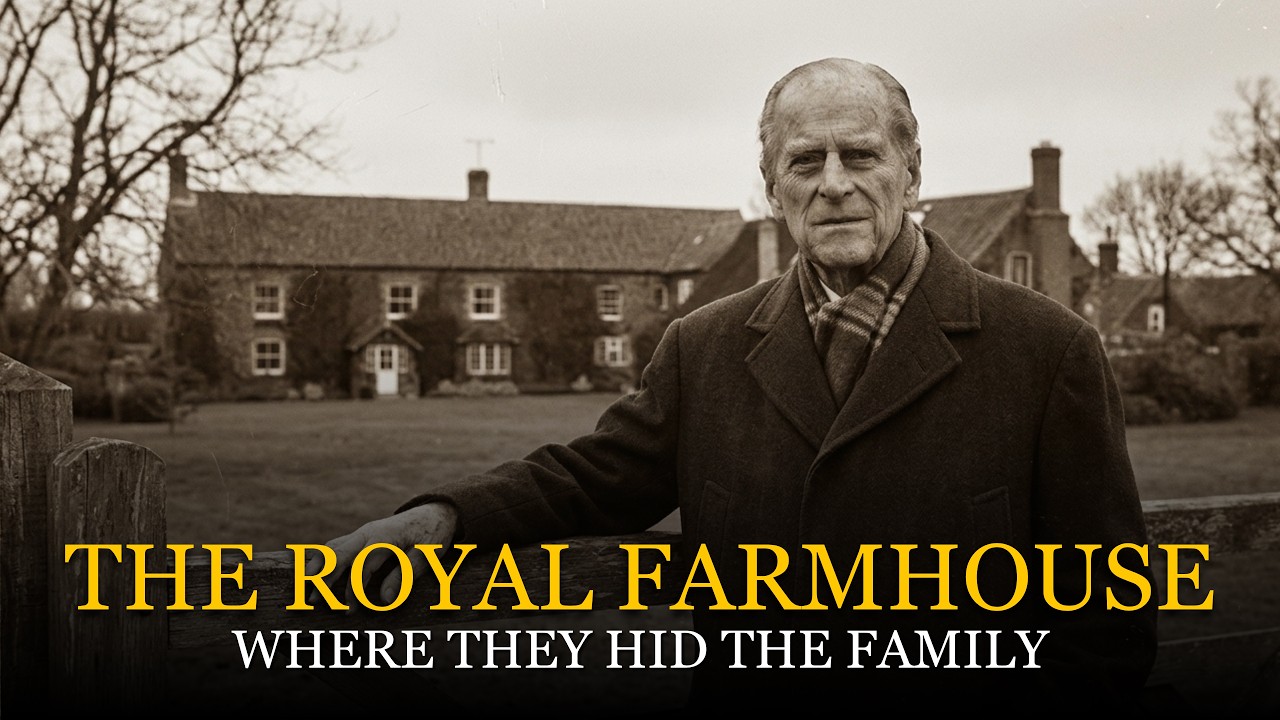
And most recently, a disgraced brother was moved there, out past the shooting woods. This is the story of Wood Farm, and of what a great family does with the people it needs to keep from view. Wood Farm sits near the far edge of the Sandringham estate in Norfolk, close to the old railway halt at Wolverton and the ground kept for pheasant shoots. The family that owns it also owns Buckingham Palace and Windsor Castle, yet it keeps this ordinary dwelling for the days when being watched is the very thing it needs to avoid.
The Sandringham estate runs to some 20,000 acres of farm, forest, and heath. The great house at its center has held more than 200 rooms in its prime. Two miles away, at the end of a track, sits a farmhouse where the same family has cooked its own meals and washed its own dishes. The distance between the two houses is only two miles on the map.
In every other sense, it is the distance between being seen and disappearing. The estate was bought in 1862 for the then-Prince of Wales, the future King Edward VII. The price was more than £200,000, an enormous sum for the land itself. What it truly bought was privacy.
Unlike Buckingham Palace or Windsor Castle, Sandringham was purchased as private property with private money and belongs to the sovereign in person. The funds came from the revenues of the Duchy of Cornwall. Over the following century and a half, the family bought up surrounding land until the estate reached its present size of about 20,000 acres. The estate has operated as a working fortune of land for 160 years, with tenant farmers, horse studs, a fruit farm, and shooting let for large sums.
The story of Wood Farm as a hiding place began with a boy. Prince John Charles Francis was born at York Cottage on the estate on July 12, 1905, the sixth and youngest child of the man who would reign as King George V and his wife Mary. From around 1909, when he was four, John began to suffer seizures. The word used then was epilepsy, and the diagnosis carried a weight that is hard to feel now.
There was no effective treatment and little understanding of what caused the fits. Alongside the seizures, the boy showed signs of a developmental difficulty that set him further apart from his brothers as they grew. Doctors warned the king and queen that their youngest son was not likely to live to grow up. In the early years of the 20th century, epilepsy was widely regarded as something to be managed by separation.
Across Britain and Europe, people with the condition were placed apart from ordinary life in dedicated institutions. This was not a royal cruelty; it was ordinary medical practice. The difference was that this family had somewhere private to put him. They had 20,000 acres and a quiet farmhouse two miles from the big house.
As John grew older, the seizures grew worse. By 1916, they had become more frequent and more severe, and the boy who had once appeared in family photographs appeared in them no longer. The decision took shape gradually until it hardened into a plain arrangement. The youngest son of the king would live at Wood Farm with the people who cared for him.
He would have a garden, chickens, space, and quiet. The woman who went with him was Charlotte Bill, known to the royal children as Lala. She had raised the whole brood of children through their early years. Of all the children, it was John to whom she gave herself most completely.
A small household grew up around the boy at Wood Farm. There was Lala at the center, a few servants, and the country all around. The boy kept chickens and worked a patch of garden. His grandmother, Queen Alexandra, had part of the gardens turned over to a plot that was his to tend, and she came to see him and doted on him.
Queen Mary arranged for children from the neighborhood to come to the farm and play with her son. One of them, a girl named Winifred Thomas, became his companion. The two cycled the lanes together and played in the woods around the farm. For a boy whose illness had cut him off from his brothers, these were real friendships.
Wood Farm was an instrument of concealment. It was also, for the child inside it, a kind of refuge. The same distance that kept him from the world’s eyes also kept the world’s demands away from him. The doctors had been plain from the start.
The boy was not expected to reach manhood. Every gentle day in the garden was lived against that knowledge. In 2003, a television drama called “The Lost Prince” told John’s story to a large audience and framed his seclusion as an act of shame. In that image, John is a prisoner and Wood Farm is a gentle jail.
Set against this is the reading of those who know the history of the illness itself. When the British Epileptic Association looked back on John’s case in later years, it made the point that there was nothing unusual in what the king and queen did. At that time, people with epilepsy were put apart from the rest of the community. For most of his life, John was not in truth kept as some dark secret.
In his earlier years, he appeared with the family in public at the occasions expected of a king’s son, until his illness grew too severe for him to be shown at all. The evidence of the years at the farm does not read like abandonment. A truly discarded child is not given a devoted nurse who stays to the very end and keeps his memory for another half a century. He is not given playmates fetched by his own mother or a garden made by a doting grandmother.
Queen Mary’s own words written when he died speak of a mother’s grief. She called his death a great release for the poor, troubled little spirit and wrote that she would miss the dear child very much indeed. On January 18, 1919, John suffered a severe seizure, worse than the many hundreds that had come before it. He died in his sleep at Wood Farm at about five in the evening.
He was 13 years old. On January 21, John was buried in the churchyard of St. Mary Magdalene at Sandringham, within sight of the great house he had been kept away from in life. In the years and decades that followed, the youngest son of King George V was in effect edited out of the family record.
In family trees drawn up in later years, John was often simply left off, as though the sixth child had never been born. Charlotte Bill lived on for more than 40 years after the boy she loved was gone. She died in 1964 at nearly 90. Among her belongings was found a note written in a child’s hand telling his nanny that he loved her.
She had kept it all her life. From the 1960s onward, the wider royal family began to use Wood Farm for itself. At Wood Farm, the staff were not required to wear uniforms. The queen herself, it is said, cooked and did household tasks during her stays.
Prince Charles held shooting parties at Wood Farm in his college years and kept the habit into adulthood. A young Diana came to the farm during a shooting weekend in the days before the engagement that would change her life. Catherine, who would become Princess of Wales, visited Wood Farm early in her relationship with Prince William. In August 2017, after 65 years of public duty, Prince Philip retired from public life.
He did not retire to a palace. He retired to Wood Farm. He chose it for exactly the reasons that had once made it a place of exile. He wanted the distance, the plainness, and to be away from the cameras.
He had a new kitchen fitted, reworked the bedrooms, and hung the walls with his own watercolor paintings. He kept only a small staff. He read, painted, and had friends to stay. He also established a truffle plantation on the estate.
For years it produced nothing, becoming a standing family joke. Then in 2018, it finally yielded its Périgord black truffles. In the spring of 2020, the coronavirus pandemic swept across Britain. Prince Philip left Wood Farm and went to Windsor Castle to isolate with the Queen.
He did not return to the farm to live. On April 9, 2021, Prince Philip died at Windsor Castle at the age of 99. He died with the monarchy he had served all around him, not in the plain farmhouse at Sandringham. The farm was not his deathbed.
It was his freedom, the place he chose when he was finally allowed to choose. In February 2026, Andrew, once the Duke of York, was moved to Wood Farm. He had given up his lease on Royal Lodge and had been stripped of the royal style he was born to. Amid the fallout from the release of documents connected to the Epstein affair, the family needed the man at the center of the storm to be somewhere out of the public eye.
He was moved there while renovations were carried out at the nearby Marsh Farm, where he was expected to settle. Not long after his move, Andrew was arrested at Wood Farm on suspicion of misconduct in public office, a matter that remained under investigation. The family’s instinct in a crisis of visibility has been precisely the same across a century. When someone cannot be seen, they go to Wood Farm.
The plain brick farmhouse on the edge of Sandringham is once again home to a member of the royal family that the wider world is not meant to look at too closely. The cameras gather at the estate gates. The man stays out past the woods. The house has outlived kings and consorts and scandals, and it is still today at its old and discreet work.
It is the least grand of all the royal houses, and it has spent a century keeping the family’s most difficult people out of sight.