More than three decades after Kurt Cobain’s death shook the music world, the question of what it was like inside Nirvana keeps coming back to one image: a young drummer sleeping on a couch too short for his six-foot-three frame, knees bent toward the ceiling, tucked between pillows and a wall, listening to turtles move in a tank that Cobain had built from scrap and placed less than two feet from where his head lay. Dave Grohl was 21 when he arrived in Seattle in September 1990. He had left his band Scream stranded on the West Coast without a drummer, taken a $120 money transfer from his mother, bought a plane ticket, and landed to find Cobain and Krist Novoselic waiting at baggage claim. He later said being met by those two felt like being greeted by a band called Children of the Corn.
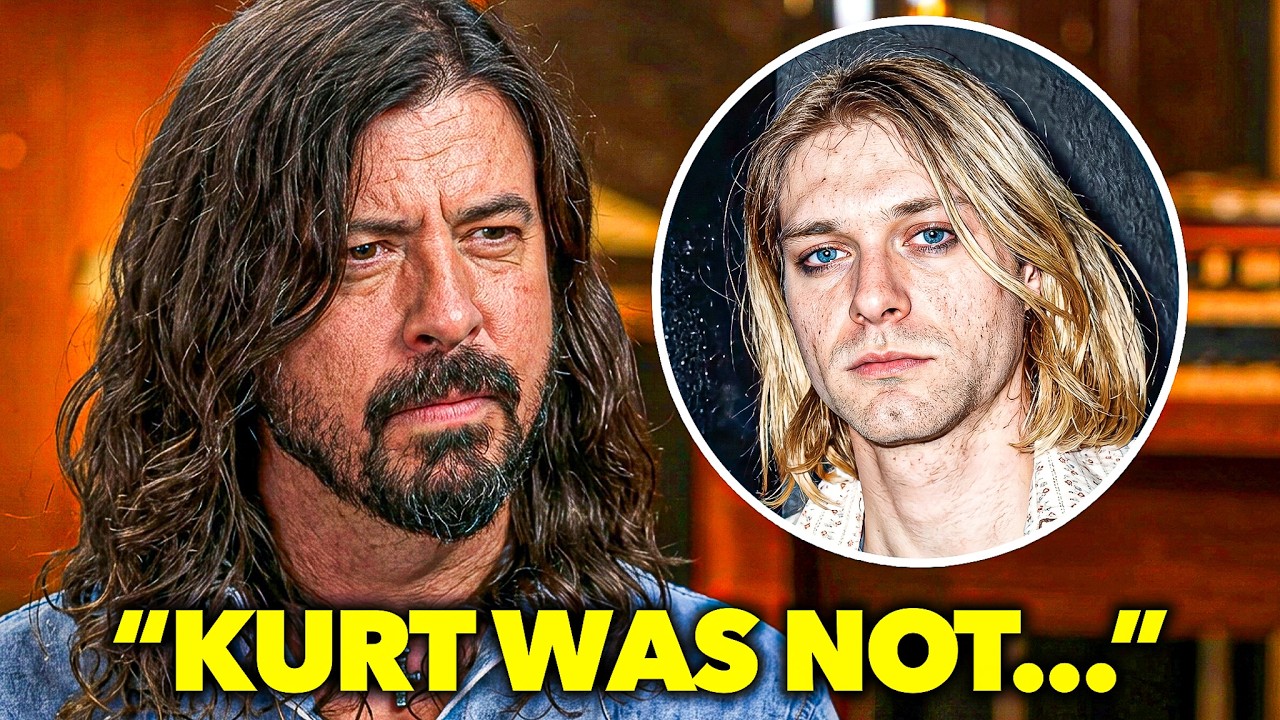
He was the sixth drummer Nirvana ever tried, and the last one they would ever need. What followed over the next three years is widely described as the fastest rise in rock history. A band playing Pacific Northwest clubs to crowds of 1,200 people, mostly kids in flannel and Salvation Army clothes, became the biggest band on Earth in roughly 14 months. They went from sleeping on apartment floors to the number one spot on every chart in every country.
Then it all collapsed, in a way that leaves no room for return. Cobain died on April 5, 1994, at age 27, after eight years in the band. He achieved a level of global fame that outlived the three-year Nirvana era itself. Grohl has now been talking about those years for three decades.
Those who followed him over that time describe him as careful and deliberate, shaped by real grief, not polished public relations. He does not perform sadness over Cobain. He describes an experience he lived through and never stopped trying to understand. Compiled across thirty years of interviews, memoirs, stage comments, and quiet conversations eventually published, Grohl’s account amounts to the fullest available version of what it meant to be inside Nirvana.
Not the mythology, not the imagery, not the Nevermind cover. The truth. The apartments, the turtles, the dented drums, and the feeling that the entire entity could fall apart at any moment. One misconception Grohl says he wants to correct: Nirvana was not always somber.
People heard the music, learned how it ended, and concluded the entire experience was grim. That Cobain was unreachable. That the band was a continuous misery march toward its end. Grohl says that is wrong.
He says there were times so absurdly funny that they are almost impossible to describe to anyone who was not there. Grohl grew up in Springfield, Virginia. His parents divorced when he was seven. His mother was a teacher.
The house was small. He began playing guitar at nine and drums at twelve, and by his early teens he lived the standard life of a mid-1980s teenager drawn to punk rock. He traveled to basement shows at churches and VFW halls, finding a secret network of bands, zines, and independent labels that existed entirely outside the music industry. The spirit of that world was serious.
Nobody wanted to be famous. Nobody wanted radio play. Nobody wanted to sell records to people in shopping malls. You played fast, loud, and honestly for people who understood, people who would drive four hours to see you.
Selling out was not a casual accusation in that scene. It was the worst thing you could say about a musician. It meant you traded the real thing for something fake, and once you did, the real thing was gone. Grohl believed all of it.
He believed it the way people believe things absorbed before they are old enough to question them. He was 17 when he joined his first serious band, the Washington, D. C. hardcore group Scream.
He dropped out of high school for it. He and two school friends loaded into a van and headed west, playing anywhere they could, sleeping on floors or in the van. He played drums like every show was the last one. Scream fell apart in Los Angeles in 1990.
The bassist quit. Grohl, at 21, had no money, no plan, and no clear next move. A musician named Buzz Osborne, frontman of the Melvins and a friend of Cobain, called him. Osborne told Grohl that Nirvana was looking for a drummer.
They had seen Grohl play a few weeks earlier and told Osborne that if they could find someone like him, he was the one they wanted. Grohl knew Nirvana. He had listened to their debut album, Bleach, released on Sub Pop. He thought it achieved something specific and difficult: classic rock energy fused with dissonant punk aggression, not as a compromise or a blend, but as something unique.
He thought that was great. He said yes. His mother wired him $120. He flew to Seattle.
He never went back. The first thing he noticed was the show he attended before even auditioning. Nirvana played in Seattle with their previous drummer in front of 1,200 people who were not the punk audience Grohl knew. Most were working-class kids from outlying towns.
Flannel. Clothes from Fred Meyer and Salvation Army. Not scenesters, not record collectors. Just people who found in Nirvana’s music something that touched something inside them.
Grohl said the energy in that room was something he had never felt before, a movement that was entirely spontaneous, people drawn to something not because anyone told them to be, but because it seemed to reflect their own feelings. He auditioned the next day and got the job immediately. He moved into Cobain’s apartment, sleeping on the couch beside the turtle tank. In late 1990, Cobain was not yet famous beyond the Pacific Northwest underground and a narrow circle of critics following Sub Pop.
He was 23. He grew up in Aberdeen, Washington, a logging town ninety miles southwest of Seattle. His parents divorced when he was nine, and the aftermath sent him moving between his mother’s home, his father’s home, relatives’ homes, friends’ homes, and, at one reported point, a spot under a bridge near the Wishkah River. Cobain wrote Nirvana’s songs alone.
Grohl and Novoselic played what Cobain brought in. The process was not collaborative in the usual songwriter-committee sense. Cobain would start playing, the others would join, and a song would emerge from the playing. No one said the chorus needed extending or the bridge needed changing.
The idea, as Grohl described it later, was not even to talk about the music, but to keep it as pure as possible. The less said about it, the more it stayed what it was supposed to be. Grohl had his own songs. He always had songs, more than most songwriters produce in a lifetime, and he wrote them throughout his Nirvana years in a studio he built in his basement.
Cobain heard some of them and liked some of them. There were two he wanted to do something with, two he found genuinely exciting. But he was afraid to ask if he could change the lyrics, not wanting to offend Grohl by suggesting they were not quite right. So nothing happened with them.
Grohl later reflected on that with his usual humor, saying Cobain’s songs were always better anyway. He said it as a man who had made peace with the logic of the situation. Being in a band with someone whose songs are better than yours is not a problem; it is a privilege. You seize that opportunity and play like it is the last day of your life.
That is what he did. In September 1991, Nevermind was released. Within six weeks, it sold 400,000 copies. Within four months, three million.
By January 1992, it had knocked Michael Jackson’s Dangerous from the top of the Billboard charts. No one expected this success. Not the label, not management, not the members of Nirvana themselves. They had hoped for 250,000 copies, which would have counted as a major success for a rock album at the time.
What happened instead was unprecedented, and no one was prepared for it. Grohl has a particular way of describing the moment he realized the scale of what was happening. He was living with a friend named Barrett in a room at the back of a house. He knew, abstractly and factually, that he could buy every house on the street.
But he did not want to. He refused to change anything about his lifestyle, because changing it would mean becoming something he had spent his teenage years defining himself against. He said the problem with Nirvana was that Cobain’s songs were so good that they became one of them. One of the bands played on radio stations.
One of the bands selling millions of records in shopping malls. Everything the indie scene had trained them to reject, Nirvana unintentionally became. Grohl said it could be seen as a blessing or a curse. He said he saw it as a blessing.
He said Cobain found it more complicated. The word “complicated” carries a great deal of weight in that sentence. Grohl has never fully explained what it contains. He is careful about Cobain’s mental state in the years after Nevermind.
He is precise about some things, silent about others. That silence is not evasion, but respect. The particular respect of those who witnessed hard moments for the person who endured them hardest. This is what he said.
Being the frontman of a band that rose as fast as Nirvana, carrying the cultural identity of someone who came from the alternative world only to land in the middle of everything that world opposed, was a road with no map. There were no tools, no skills, no precedent in their world to teach him how to reach that level of fame and keep his identity. Grohl has said the energy of Nirvana was like a bomb about to explode, and from the inside you could feel its pressure, as if the whole structure were held together by something not strong enough for the forces it contained. He watched Cobain deal with that pressure from a comparatively protected position.
Grohl was the drummer, sitting behind the kit, hair over his face, nearly anonymous in the band. He could walk into a Nirvana show without being recognized. Cobain could not walk anywhere without being recognized. Cobain could not escape any of it: interviews, photo shoots, endless outside demands to explain the music’s meaning, to represent a generation that claimed ownership of it, to be a voice for something he never agreed to speak for.
Grohl was insulated from all that. He saw its effects. He watched. He never fully understood its weight because he never carried it.
He said that when a young artist achieves sudden wide fame, you still worry about them. He said he does not think anyone is qualified for it. There is no way to prepare, and the best you can do is hold on to hope and survive it. Cobain did not survive it.
He was 27 when he died at his home in Seattle in April 1994. Nirvana had been the biggest band in the world for roughly two and a half years. Grohl learned the news at a gas station, while on vacation in Ireland. Someone told him.
He has described that specific moment: the shock and disorientation of receiving the most devastating news of his life in an ordinary place while doing an ordinary thing. Filling the tank, then finding the ground no longer in its place. Grohl did not speak publicly about Cobain for a long time after that. He was 25.
His close friend was gone. The band they had built together was over. He could not see a future for himself. What he eventually did was form another band, writing the songs himself this time.
He played nearly every instrument on the first album because the idea of entering a room with other musicians and working together was not something he could do yet. He named the band Foo Fighters, after the World War II term for unidentified aerial phenomena. He released the album in 1995 without revealing the musicians’ names. Thirty years later, Foo Fighters have sold more albums than Nirvana.
Grohl says he always reminds himself of that kid sitting on his bedroom floor with Beatles records. He adds that the core of your motivation for making music is that child you were when music first touched you, before audiences, albums, charts, money, scrutiny, and the burden of what you become when the world decides you belong to everyone. Grohl says Nirvana was, for him, above all a personal experience with some friends. How the band went from sleeping on the floor to topping the charts, and how those two things happened so fast there was never time to understand what was changing.
He concludes that most people, when they think of Nirvana, remember a music video or a song on the radio. For him, life was turtles in a tank, a couch half his length, Cobain playing a new melody in the next room at three in the morning, and the sound of music vibrating through the wall. He said when it was funny, it was incredibly funny. He lived in a loud, distorted version of Monty Python, and part of that experience is the part people tend not to imagine.
The image Nirvana left behind is not three young men sleeping on the floor, smashing drums, borrowing motorcycles from strangers at two in the morning, and laughing at things that only amuse people who were in the room. The image is the photograph. The wait, the ending. But the ending is not the whole story.
It is the final chapter of a story that began on a couch beside a turtle tank in Seattle in 1990, with a 21-year-old drummer who boarded a plane because his mother wired him $120 and told him that sometimes in life you have to do what is best for you. He went to Seattle. He never came back. He played every show like it was the last day of his life.
He said so himself. Then, it was. What most accounts of Nirvana omit is the precise daily toll that fame on that scale took from Cobain in 1992 and 1993. It demanded hundreds of interviews.
Journalists from every country wanted him to explain the music, the generation, the flannel shirts, the mosh pits, and what it felt like to be the voice of a generation he never agreed to represent. He was 24 for most of those interviews. He had grown up in a small logging town, where his parents’ divorce left him sleeping in other people’s houses. He had no ready framework for understanding what was happening to him or for offering a version of himself that could meet that demand.
He also suffered from chronic stomach pain, acute, constant, and exhausting, which began during the Nevermind tour and never fully went away. He spoke about it in press interviews, describing it as something that made eating, sleeping, and even inhabiting his own body difficult. The pain was real, and the treatments prescribed to him were real too. The only relief he found tolerable for a period was heroin.
Courtney Love has stated that she and Cobain used heroin together before and during their marriage, which began in February 1992. Their daughter, Frances Bean, was born in August of that year. In September, Vanity Fair published an article about Love that included a claim suggesting she used heroin while pregnant. That claim was disputed.
The damage was not entirely repairable. The story became a story about the baby, then about Cobain, then about the kind of fame that Nirvana’s success had created. A fame where everything is public, everything is interpretable, everything is available to be turned into a narrative by people who were not present and did not know the truth. Cobain entered a rehabilitation facility in early 1994, left after two days, and returned to Seattle.
Grohl was not in Seattle when what happened later took place. He learned the news the way everyone did, except he was at a gas station in Ireland instead of in front of a television. The way he found out was different, but the information was the same. He said he had not fully expected what was to come.
He added that no one fully expects something to happen, even when you know something is wrong, because the moment when what is wrong becomes irreversible does not announce itself. You are driving down the road, or filling the tank, or sleeping on a couch beside a turtle tank, and the world is one thing, then someone tells you something, and the world becomes another, and there is no way back to what it was before that information. Only the couch, the turtles, and the songs that were always better than any other songs. And the bomb that seemed always about to explode.
It exploded in the spring of 1994. The music remained. Grohl says he still plays Nirvana songs sometimes when he is alone, and he plays them the same way he always plays everything, like it is the last day of his life.
Because for him, on some days, it still is.