Before dawn on November 19, 1875, a dying man waded into the Rio Grande. The water was cold and rose past his waist. Behind him in the darkness, a few dozen young men followed the sound of his coughing across the river, out of Texas and into another country.
The country on the far bank would describe what they did that night as an act of war. The man did not look like someone others would follow into a river in the dead of night. He was thin. His face was pale and drawn in a way that had nothing to do with the cold. He carried a deep cough in his chest that had never left him for years, and every man behind him could hear it.
Still, they followed. On the other side waited a ranch, and around that ranch, somewhere between the brush and the mesquite, were hundreds of armed men who knew that land the way you know the path to your own door. The Texan had only about thirty men.
He had come to recover stolen cattle, and he had been ordered clearly and in writing by his own government not to cross that river. He crossed it anyway. What happened over the next two days put the United States Army and the Mexican militia on opposite banks of the same river, staring at each other across a Gatling gun.
It ended with a message this dying man sent to the United States Secretary of War. The message was so blunt that people in Texas repeated its words for the rest of their lives. And here is the part that should make you stop. He won.
This thin, coughing man with a handful of his boys recovered his cattle and more than he came for. He defied two governments and did not blink at either one before the other. For about two years, he was the most feared lawman along the southern border of the United States. Outlaws on both sides of the river spoke his name the way you speak the name of a coming storm.
So why don't you know him? You know the gunfighters of the West. You know the man at the O.K. Corral. You know the outlaws whose faces were printed on lunchboxes. But this man, who did more, killed more, and risked more than most of them ever dreamed, is almost absent from memory. He was forgotten, marginalized, and quietly pushed aside. By the end of this, you will understand exactly why. And it is not the reason you might expect.
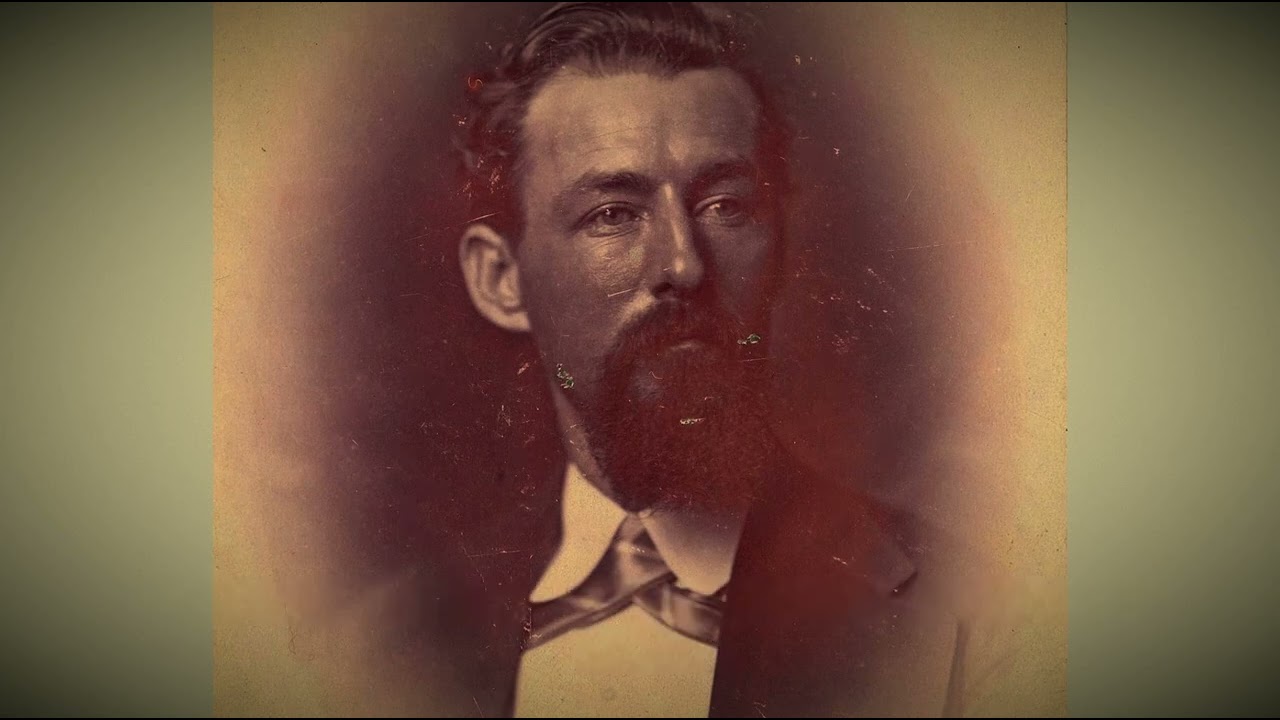
His name was Leander Harvey McNelly. To understand how a man like this gets erased, you have to start very far from that river. You have to start with a sickly boy in the hills of Virginia who was not supposed to live to thirty.
He was born on March 12, 1844, in Brooke County, in the part of Virginia that later separated to become West Virginia. His people were of Irish stock. They had come across the ocean a few years before his birth, looking for what everyone was looking for: a little land and a little peace. They found neither in time.
The boy was sick almost from the beginning. Consumption, they called it then. We call it tuberculosis now. It is a disease of the lungs. In those days there was no cure and barely any hope. It crept in slowly, a cough that would not go away, a tiredness that would not lift, a loss of weight from a body that did not have much to lose.
When a child came down with consumption, people understood they might be watching him die very slowly. So the family did the only thing anyone could do. They chased a better climate. Doctors of that era believed dry air and sunlight might slow the disease and perhaps give the lungs a chance.
In the fall of 1860, when Leander was sixteen, the McNelly family packed everything they owned and headed for Texas. Think about what that meant in 1860. There were no roads worth the name. His father drove a flock of sheep overland the entire way while the rest came by ship. They were gambling the family fortune, such as it was, and the life of one boy on the idea that a different sky might keep him breathing.
For a while, it worked. In Washington County, in central Texas, near a small town called Burton, the boy went to work herding sheep for a neighbor. And the strangest thing happened there under the sun and the wind and the days of hard labor. He recovered. His cough eased. His strength returned. For the first time in his life, Leander McNelly was healthy.
He did not know yet that the disease had not left him. It had only withdrawn into the shadows to wait. He would spend the next seventeen years waiting. And when it finally came back for him, it would arrive at the exact moment he had become the most dangerous man on the border.
But we are getting ahead of ourselves. A year after the family arrived, the entire country split in two. When the Civil War broke out in 1861, McNelly was seventeen and newly strong. He did what many young men in Texas did. On September 13 of that year, he joined the army.
He served with a Texas cavalry unit under a general named Thomas Green, and headed west into the deserts of New Mexico in one of the strangest campaigns of the entire war. Here you begin to see the thing that shaped him. Because McNelly, this quiet, thin young man, turned out to have a rare gift. Not for military parades, not for speeches, but for something else. For scouting, for riding at night, for slipping unseen, for the surprise attack.
His general noticed him almost immediately and made him an aide. By the age of nineteen, this country boy who was supposed to die had taken charge of scouts and been recommended for the rank of captain for what one comrade called his "daring courage."
Years later, one of his fellow Rangers tried to explain the nature of McNelly as a fighter. He put it in a way I have never been able to forget. He said that great war generals, like Robert E. Lee, laid their plans first and then looked for the battle. But Captain McNelly, he said, planned like a hawk. He fixed on his target first. He rose above it, then dropped on it.
That was the whole character of the man before he was twenty-five. He was wounded twice in that war. He nearly died at the Battle of Mansfield in Louisiana in the spring of 1864. And when it was all over, when the Confederacy fell and the guns went silent, he went home to Texas, a hardened and capable twenty-one-year-old veteran.
And he did what no one expected at all. He tried to be a farmer. He married a young woman named Carey Cheek in the fall of 1865. They started their life on a cotton farm near Burton, the same area where he had regained his health. He could have stayed there. He could have grown old quietly among the fields, and no one would ever have heard of him. Honestly, he might have been happier.
But Texas after the war was not a quiet place, and men like McNelly were not left alone for long. To understand what happened next, you have to understand what Texas was in those years. The war had been lost. The old government was gone. In its place came what people called Reconstruction: a new state government backed by federal force, trying to hold together a shattered, bitter, and violent society.
There were men and women newly freed from slavery, trying to build lives of their own. There were the men who had lost the war and hated everything about the new order. There were feuds. There were killings that went unpunished because no one agreed on who held the law in the first place.
Into that, the new governor formed a police force. And Leander McNelly, farmer and former warrior, became one of its leaders in the summer of 1870.
Now I want to be precise and honest here, because this is part of the story that was later ignored, and it contradicts everything you might assume. One of the first big things McNelly did as a lawman was hunt the killers of a Black man. His name was Sam Jenkins. He was a freedman in Walker County, and he had appeared before a grand jury and testified that he had been beaten and whipped by white men. Because he told the truth about it, he was killed.
McNelly took the case. He went out and arrested four white men for the murder. He was bringing them in when things went wrong. The prisoners managed to get hidden weapons, and on the road they opened fire on him. McNelly was wounded. The wound was serious enough that it made the newspapers, and afterward he was furious. He publicly berated the local sheriff for not searching the men properly.
Hold that image for a moment, because it does not fit the story everyone later wanted to tell. An old Confederate warrior in Texas during Reconstruction taking a bullet while trying to get justice for a murdered freedman. That is a real thing that really happened, and it tells you that McNelly, at that particular moment, was everything a lawman is supposed to be.
The problem is that the frontier was expanding, and the frontier was going to demand he become something else. The police force he served in was dissolved in the spring of 1873, because of the political complications of that era. And when a new governor named Richard Coke took office, he faced a state that was, in plain terms, coming apart at the edges.
So in 1874, he revived an entity Texas had relied on since its earliest days: the Rangers. He created two branches. One was a large force, the Frontier Battalion, mostly meant to fight the Comanche and Kiowa in the west. The other was smaller and stranger, answerable to almost no one. This special force was quietly funded by the cattlemen themselves, whose herds it was supposed to protect. And to lead it, Coke chose that thin and deadly farmer from Washington County.
McNelly's men gave themselves a special name. They were mostly very young. Many were little more than farm boys who had come looking for adventure and pay. They loved him with a loyalty that is hard to explain across all these years. They called themselves "McNelly's Little Men."
The first assignment the state gave him was to end a family feud. In DeWitt County, the Sutton and Taylor families had been killing each other for years. It began the way these conflicts begin, with a single murder in the spring of 1874. Then it began to feed on itself. Body after body, with relatives and friends and hired gunmen drawn in on both sides, until no one remembered the whole story anymore.
Witnesses were too frightened to talk. Juries were too frightened to convict. The law simply was not working there. McNelly arrived with about forty guardsmen in the summer of 1874 and did something quieter than you might expect from the man of the river. He did not come to win the feud. He came to restore the law's dignity and function.
He and his men essentially stood guard for four months in front of the courthouse and its witnesses, to make sure the people who were supposed to testify stayed alive, and to make sure a trial could happen at all. It worked, partly. The moment he turned his back, the killings began to reappear. That is the nature of feuds. But it taught the state something. It taught them that this small, sickly man could walk into the worst place in Texas and impose a kind of order just by being there. And when the border caught fire, they knew exactly who to send.
Now we have to talk about that border, because if you do not understand the border, you will misunderstand McNelly. You will make him a hero, or you will make him a monster. He was neither. The truth is harsher and sadder than both.
There is a stretch of land in south Texas between two rivers. The Nueces to the north and the Rio Grande to the south. Today we simply call it south Texas. Back then, they called it the Nueces Strip. It was one of the most dangerous pieces of ground in North America.
Here is why. Less than thirty years earlier, the United States and Mexico had fought a war. When that war ended, the border was drawn at the Rio Grande. But Mexico had always considered the true line to be the Nueces in the north, which meant that this entire strip, with all its arid miles, was land Mexico had lost in a war it never accepted losing.
There were families living on that land, Mexican families and Tejano families, some of whom had been there for generations under Spanish land grants older than the United States itself, and who woke up one morning to find themselves living in a country different from the one they had gone to sleep in.
What happened to those families is one of the silent crimes of that era. Lawyers and courts and Anglo money moved in, and one by one, those old Tejano lands were taken through litigation, or bought for a pittance, or simply seized. People who had owned vast ranches ended up with nothing. This is not legend. This is the historical record.
So the Nueces Strip was an open wound. And in a wound, everything festers. Cattle were worth real money, especially with markets in Cuba hungry for beef. And so cattle theft became a trade. It ran in both directions across that river. Anglo raiders stole Mexican cattle and drove them north. Mexican raiders stole Texan cattle and drove them south. Organized gangs, well armed and well mounted, terrorized ranches on both banks.
And as always, the people stuck in the middle were ordinary people who just wanted to raise their families, and everyone preyed on them. Bandits, and before long, even the Rangers too.
One name rose above that border: Juan Nepomuceno Cortina. And Cortina is the perfect example of how nothing there was simple. To Anglo cattlemen, he was simply a bandit chief, a raider who stole their cattle and fled across the river where they could not reach him. There is truth in that.
But Cortina was something else too. He came from one of those old aristocratic families that had held enormous land grants, hundreds of thousands of acres, which had once included the land the city of Brownsville was built on. Land his family had lost. He had been an officer in the Mexican army. And years earlier, he had led an armed uprising partly because he had watched Anglo authorities mistreat, cheat, and kill Mexicans in Texas and escape punishment entirely.
So was he a criminal, or a man fighting for a land and a people that had been taken from him? The uncomfortable answer is that he was both. And the men who served under him and the men who served against him were all, every one of them, human beings with motives of their own.
That was the country Leander McNelly was sent into in the spring of 1875. He recruited quickly, about forty-one men in roughly two days. And he made a decision that tells you he understood exactly what he was walking into. He refused most native Texans who volunteered. Why? Because he did not want his men to ever find themselves in a position where they had to shoot their own cousins, or neighbors, or kin. In a country that tangled, everyone was connected to everyone. He wanted men without those ties.
The cattlemen armed them. They supplied single-shot long guns, .50 caliber Sharps rifles, the same heavy guns the buffalo hunters used. A weapon that was not fast, but that could kill a man from a distance most people could not even see. And cattle baron Richard King, owner of the enormous King Ranch, who was losing cattle in staggering numbers, was happy to supply the guards with fast, powerful horses.
McNelly went to work, and the work soon turned dark. In June 1875, his scouts brought him word that a group of raiders, about sixteen or eighteen men, were driving a herd of stolen cattle, roughly three hundred head, south toward the river and the ships waiting for them.
McNelly moved to intercept them on open plains called Palo Alto, the same ground where the first battle of the Mexican War had been fought a generation earlier. There is a weight to that, isn't there? The same soil soaking up blood again.
His Rangers caught up with them near first light, and one of McNelly's men left an account of the strangest detail. It was still nearly dark, and in a running fight in the gloom, how do you tell your men from the enemy? So McNelly took the only white shirt in the entire company, tore it into strips, and had every Ranger tie a white strip around his left arm, so they would know each other in the chaos and the dust.
What happened on those plains? The Rangers later called it the Red Raid. It was a running fight that stretched for miles, man against man, across the open brush. I will not walk you through the details of what was done. When it was over, nearly all the raiders were dead. McNelly lost only one of his men, a single man, the only Ranger who fell that day. By every account, the commander was heartbroken, because his men were more than soldiers to him.
And here McNelly did the thing that proves the war had already changed him. He did not simply win the fight. He decided to send a message. And he sent it through the bodies of the dead. According to accounts of the time, he ordered the bodies of the dead raiders collected, hauled into the town of Brownsville, and laid out in the public square, in the open, for everyone to see.
It was meant as a warning: a blunt and terrible statement about how the Rangers would deal with cattle thieves from that day forward. And no one who saw it ever forgot it. That was the entire point. It was something that could not be scrubbed from memory. He wanted it seen.
I want you to consider how far that act is from the man who took a bullet for Sam Jenkins. It is the same man, five years apart. That is the nature of the frontier. It did not turn men into monsters overnight. It did it slowly, and in the name of imposing order. And it convinced good and brave men that terrible things were necessary. And maybe, in that place where the law was absent, some of them truly were. Maybe that is the most troubling part, because it did not stop at the battlefield.
It extended to what happened to the men his Rangers captured. McNelly relied on a local guide, a Tejano rancher named Jesús Sandoval. The Rangers called him "Old Casuse." He knew that country and its people better than any map. And he had his own reasons to hate the raiders, reasons the records only hint at, but reasons that had stripped him of everything and left him with a cold, quiet, unyielding anger.
What happened to the prisoners the Rangers took, the men Sandoval was put in charge of, is something most of the Rangers who were there refused to write down clearly for their entire lives. Those who did write about it chose their words with extreme care and left the worst of it between the lines. Years later, even the great historian who first told the Rangers' story could not look away from it entirely. He acknowledged carefully that McNelly's men essentially took no prisoners from across the river. And that the men believed to be raiders from the other country did not, as a rule, survive their capture.
Read that slowly again and realize that this was done under the cover of a badge and in the name of the law, by men who believed they were the good guys. And realize also that they were not entirely wrong about the terror they were fighting. This is the trap of the whole story. There are no clean hands on the rope. Not the raiders, not the Rangers, and not the governments that sent them.

This is the part historians have argued about ever since. And I think it is worth telling you plainly that they argue, because you should never trust anyone who tells you the past is simple.
One camp looks at McNelly and sees a hero: a frail, dying man who took on a brutal and impossible job with no thanks, who established a measure of peace in a place that had none, who protected families that had no one else to protect them, and who did it against staggering odds and asked for nothing. And the people who lived there and were tired of being robbed and killed, many of them, genuinely saw him that way. To them, he was deliverance.
The other camp looks at the same man and sees something much darker. They see killings outside the law. They see a force that operated, in the words of one modern historian, as a death squad along that border. They see coerced confessions, executions without trial, and bodies displayed in the town square. And they ask the question you should ask, which is: if the law itself does this, what exactly separates the law from the outlaws?
And here is the honest answer. Both things are true at the same time. He was both men. And the man who combines the opposites is very, very hard for history to classify. It is far easier to remember a pure hero or a pure villain. The man who is honestly both makes people uneasy. And men who make people uneasy get set aside and forgotten.
But before he was forgotten, he did the most audacious thing any Texas Ranger ever did. And it is where we began. So now, finally, let us return to that river.
It was November 1875. Raiders had driven a herd of stolen Texas cattle, about 250 head, across the Rio Grande to a ranch on the Mexican side called Las Cuevas. And there they sat, protected on foreign soil, where no Texas lawman had any right to go.
The United States Army was right there on the American bank. But the Army had orders. Under no circumstances were American soldiers permitted to cross that river. To do so would mean invading a country the United States was at peace with. It could start a war. So the soldiers sat, and the cattle sat, and everyone understood that the thieves had won, because the river was a wall the law could not climb.
McNelly looked at that wall and decided it was not one. On November 18, he sent a telegram to his superior in Austin. It is a remarkable document. He reported that the raiders had crossed with the cattle, that they were firing on American troops, and that the Army had refused to cross without further orders. Then, in his direct and simple style, he said what he intended to do. He said, in effect: the soldiers will not cross, but I will. I will cross tonight.
And in the pre-dawn dark, with about thirty men, most of them on foot, the frail man led his Little McNellys into the water and then onto the far bank and into Mexico.
Almost immediately, things went wrong. In the darkness, they reached the wrong ranch. They attacked a defensive fence, believing it was the raiders' stronghold. By the time they realized their mistake, men had already died. And as they moved toward their real target, they ran directly into a large force of ranch workers and Mexican militia. Hundreds of men under a local leader named Juan Flores Salinas, who was the alcalde, the mayor of a nearby town, and who was rallying every armed man he could find.
Because from Salinas's point of view, it was simple. A foreign army had just crossed the river and invaded his country, and he had to defend it.
McNelly had about thirty men against nearly three hundred or four hundred by some accounts. He was deep in another country, cut off from the world, with an entire militia preparing to attack him. That should have been the end of him. Any sane commander would have run for the river and prayed to reach it.
He did fall back toward the river, yes, but he did not leave. He got his men to the bank, fortified their position, and held there at the water's edge, with Mexico behind them and the river in front of them. And on the other side of the river, the American soldiers watched.
Then something happened that historians still argue about, because it nearly lit the fuse of a war. As Salinas and his men advanced, some of those American soldiers moved, in violation of every order, to help. And according to accounts of the fight, Gatling guns, an early machine gun, opened fire from the American side in support of the trapped Ranger company.
When that fight ended, Juan Flores Salinas was dead. And with him, according to the accounts that reached us, as many as eighty of his men fell there on the riverbank, defending a country they believed had been invaded, because it had been.
And I need you to hold both men in your mind at the same time, because this is the heart of the whole thing. McNelly, dying, outnumbered, refusing to abandon his mission. And Salinas, defending his homeland against an armed incursion, and dying for it. Neither was the villain in the other's story. They were two brave men on opposite sides of an open wound, and one of them never came home.
Now, in the middle of all this, while the situation hung by a thread, a message reached McNelly from American commanders at the highest levels. It ordered him, in unmistakable terms, to return to the Texas side immediately, and informed him that the Army had been ordered not to support him in any way as long as he remained on Mexican soil.
He was alone, ordered back, abandoned by his own government's chain of command, with hundreds of enemy fighters regrouping in front of him. And in less than a minute, McNelly wrote his reply. That reply became the most famous thing he ever said, and it was passed down through generations in Texas.
He wrote that he would remain in Mexico with his Rangers, and that he would cross back at his own discretion and not before. Then he added a line for the United States Secretary of War. He asked them to convey his compliments to the Secretary, and to inform the Secretary and his soldiers that they could go to hell. He signed the message and stayed where he was.
He had been shot in both hands during the fighting, by the way. I do not want us to lose that detail. He wrote that reply and held his position while he was dying of tuberculosis and both of his hands were wounded.
And here is the thing that will make you either admire him or fear him, and possibly both. It worked. The next day, it was not over. He took a smaller group of about sixteen Rangers, crossed the river again, a second invasion, in a rowboat in broad daylight. He walked up to the customs building on the Mexican side and demanded the cattle.
When Mexican officials stalled him, politely saying they did not conduct that sort of business on a Sunday, McNelly simply took them hostage, marched them into Texas, and told them they had one hour to move that herd across the river, or they would not live to see the second hour. The cattle crossed.
And here is the detail that tells us everything about this man. He had come to recover about 250 stolen head. But he brought back more than 400. When they sorted the herd, it carried nearly every cattle brand in the region. He had not just recovered his own cattle. He had recovered everyone's.
That is Leander McNelly. A man who was told no by the United States Army, the Secretary of War, and an entire foreign nation and its militia, and who crossed the river twice anyway and came home with more than he went for.
And now, after all of that, after the audacity and the courage and the impossible success of it, you would think Texas would have built statues to this man while he was still alive. You would think he would be as famous as anyone who ever wore a badge. Instead, look at how quickly the world let him go.
On the Mexican side, at the place where Juan Flores Salinas fell, his countrymen later placed a stone marker. And what was written on it should stay in your memory, because it is the other half of the truth, the half that Texas legend ignores. It describes him as a citizen. It says he died fighting for his country. To Mexico, the man killed by McNelly's raid was not a bandit at all. He was a patriot who died defending his home from a foreign invasion. And under a strict reading of international law, Mexico had a point.
And so, from that moment, the story carries two flags. A Texas hero on one bank, and a Mexican martyr on the other. The same event, and a nation and a government that suddenly found the whole thing deeply embarrassing.

Because think about it. From the point of view of Austin and Washington, this man had twice invaded a country the United States was at peace with. He had told the Secretary of War in writing to go to hell. He had caused an international crisis that could have become a real war. Yes, he had recovered the cattle, and the ranchers loved him for it, but he had done it by tearing up the rulebook and burning it. And he had made the United States government look either powerless to control its own men, or secretly pleased about invading its neighbor.
A hero like that is a problem. He is a hero you have to disown, even while you are grateful to him in secret. And that is exactly what happened.
They pulled his special force from him. They ended his command and gave it to another man, a Ranger named Jesse Lee Hall. Complaints had piled up in Austin about McNelly's methods. And one of the loudest of those complaints, according to his men, was that he never brought back any prisoners.
Read that sentence again and understand what it really means, and you will understand why the state needed distance from him. And in spite of that, and this is the bitter part, some of those shouting against him were not demanding justice. His men always believed that some of them were men quietly making money from the very trade in stolen cattle that McNelly had shut down. When you cut off a river of stolen cattle, you make enemies of everyone who had a bucket in that river. Some respectable citizens who wanted McNelly gone wanted him gone because they were losing money because of him.
And so he was pushed out. He did some unofficial work, guarding the Sutton-Taylor trials again in the fall of 1876 at the personal request of a judge, because even then, even sidelined, he was the man you called when you needed order. But his time was nearly up.
On February 1, 1877, his service officially ended, and he returned to his farm at Burton. Then the disease that had waited seventeen years came back to take him at last. Tuberculosis returned, and this time there was no strong young body and no dry Texas air to hold it off. It took him quickly.
On September 4, 1877, Leander Harvey McNelly died on his farm. He was thirty-three years old.
Consider that number. Everything you have just heard, the war, the feuds, the border, the Red Raid, the two invasions of Mexico, the message to the Secretary of War, all of it was done by a man who did not live to see thirty-four. He packed an entire legend's life into a handful of years. Then he was gone, buried in the Texas dirt that had once given him back his breath, before he had even reached middle age.
And that is precisely the first reason the world forgot him. He died far too young and far too early. He never grew old. He never wrote his memoirs. He never sat on a porch in his seventies to tell the story his own way, shaping it and defending it and making himself a legend the way famous gunmen did. Men who become legends usually get decades to build that legend themselves. McNelly got none of that. He fought his war and then the disease closed the book while the ink was still wet.
So the job of telling his story fell to other people. And that is the second reason, and it is stranger than the first. His story did not disappear because no one told it. It was told. But listen to how and by whom.
Two of his young Rangers, decades later, finally wrote down what they had seen. One, a man named George Durham, was the last surviving Ranger of McNelly's men, an old man at the King Ranch, and he told the whole tale to a writer more than fifty years after it happened. It became a book called "Taming the Nueces Strip." Another Ranger, Napoleon Jennings, had written his own account at the end of the nineteenth century.
And here is the astonishing thing. When that founding Texas historian came back and compared the memories of these old men to McNelly's actual official reports filed at the time, the memories were accurate. These were not tall tales. Their core was true.
But look at the nature of those accounts. They were love letters. Every one of McNelly's Little Men worshipped the man. He had taken them to places that should have killed them all and brought them home alive. And for the rest of their lives, they justified everything he did. Everything. Including the killing of prisoners. Because they could not bear to think of him as anything but the greatest man they had ever known.
And I understand that. But it means the first accounts of his story were shaped by men who loved him too much to look clearly at its harder edges. And the founding historian who first told the Rangers' story in full, decades later, saw the problem clearly and said something about McNelly that I think is the truest thing ever said about him. He pointed out, with real regret, that McNelly's tragedy was that his rare and exceptional talents, his courage, his cunning, and his daring, were never spent somewhere history could call noble. Not at the Alamo, not in a battle for freedom that people could rally around and hang on their walls. They were spent in the brush of the Nueces Strip, in a small, ugly, morally tangled war that was, at its core, about stolen cattle belonging to other people.
That is all it was. That is the bitter truth of the whole story. You do not become a beloved national legend by being brilliant and brave in the service of protecting rich men's beef, by methods that included coerced confessions and executions, and by laying the bodies of enemies in a public square during an invasion of a country you were at peace with. It is too complicated. It is too dark. It cannot be printed on a lunchbox. It cannot be a bedtime story.
And so the legend of the Rangers did over the following century what legends usually do. It kept the bright parts and quietly buried the parts that were not.
There is now an entire shelf of history, by contemporary writers, arguing that the Texas Rangers ran a kind of myth-making machine for a hundred years. A machine that smoothed brutal and ugly events, including the killing of many Mexicans and Mexican Americans along that border. Some of them were guilty of raiding, but many had done nothing at all, and those incidents were polished into gleaming tales of frontier heroism. In that telling, the men on the other side of the river stopped being human. They became simply bandits, a faceless enemy for the hero to defeat. And their dead, their reasons, and their side of the story were left out of the American pages entirely.
Now, other historians push back hard, saying this revisionist account goes too far in the opposite direction, that it strips the Rangers of their real courage and real necessity, and that it judges the 1870s by the standards of today. And they are right about that too. That argument is still going on, in books and in lecture halls. And I will not hand you a final verdict, because there is no such thing.
A few years ago, a statue of a Texas Ranger was quietly removed from an airport, and people argued bitterly about whether that was justice or erasure. So even now, 150 years later, no one can agree on how these men should be remembered.
But do you see what that does to Leander McNelly specifically? He is caught in the crossfire of that entire argument. To one side, celebrating him means celebrating the dark side of the Rangers, so they would rather not. To the other side, he is exactly the complicated, controversial figure the heroic legend was designed to gloss over, so his sharpest edges were smoothed away. He is too brutal for the people who want perfect heroes, and too brave and human and sympathetic for the people who want perfect villains. So he fell straight into the gap between them, and the gap swallowed him.
He was never fully erased. Not really. I want to be honest about that word. His papers still exist in a university archive in Austin, where anyone can go and read them. His name is still carved on a wall in the Texas Ranger Hall of Fame. The books exist. The records are available to anyone who wants them.
But there is more than one way to hide a man. You can burn his records, or you can simply stop saying his name. You can leave him to become a footnote in the story of flashier men. You can decide, without ever deciding, that his story is too complicated to tell, too tangled to celebrate, too dark to teach, and too brave to condemn. And so you tell none of it.
And a generation grows up, and then another. They know everything about the gunfight at the O.K. Corral. And they have never once heard the name of the dying man who invaded Mexico twice in a rowboat and told the Secretary of War to go to hell. That is not an eraser of fire. It is an eraser of silence. And in the end, it serves the same purpose.
So let me leave you where we started. Before dawn, on a cold November morning in 1875, a man who was already dying walked into the Rio Grande. Behind him in the darkness, his young men followed the sound of his voice into another country.
He knew he was sick. Part of him surely knew he did not have much time left, and so he spent what remained of his life doing the hardest and darkest and most morally complicated work of his age, in a place no one wanted, for a cause no one could quite decide was noble, and against odds no one thought he could beat.
And he beat them. Then he went home and died at thirty-three. And then, slowly, over a hundred years, we allowed ourselves to forget he had ever lived at all.
The deadliest lawman on that border was not the loudest. He was not the biggest showman. He was not the fastest with a gun, and he did not have the best story or the longest life to tell it. He was a frail, coughing, complicated man who did a great deal at a very young age in a war too ugly to make him a perfect hero.
And maybe that is the real lesson buried in his story. History does not always remember those who gave the most. History remembers those who fit, the ones with clean and simple biographies, whose stories are easy and acceptable. The ones like Leander McNelly, who were all of it at once, brave and cruel, good and terrible, human in every sense of the word, are the ones we forget.
Unless someone says the name again. Leander Harvey McNelly, 1844 to 1877. And now you know it too.