Berlin, April 1945. The city was collapsing under Soviet air raids. Phone lines were down, food was running out, and ground forces were still days from reaching the capital.
Somewhere beneath the ruins of the Reich Chancellery, Adolf Hitler was dying in his isolation. Surrounded, wounded, and increasingly paranoid, he had grown convinced that everyone around him was preparing to betray him.
On April 16, his suspicion fell on his own physician. Karl Brandt had spent more than a decade moving between his own medical circle and Hitler's personal one. He was the surgeon who traveled with the dictator, treated his closest associates, and held medical authority greater than almost anyone else in the regime.
Reaching that position had not been easy. Six months earlier, Brandt had lost a bitter power struggle with Hitler's other doctor, a quack named Theodor Morell, who kept the ailing dictator dependent on regular injections. Brandt tried to warn Hitler that Morell was slowly poisoning him. Hitler did not believe it, and Brandt was dismissed. By that autumn, he had clawed his way back to his official medical post. But the trust was no longer what it had been, and everyone around Hitler knew it.
In April of that year, with the war decided against Germany, Brandt made a decision that finished him. He tried to move his wife and young son out of the city to an area about to fall under American control, hoping to save their lives whatever the consequences.
Hitler found out. To him, this was not a father protecting his family. It was high treason. Another man in his collapsing inner circle, secretly preparing to change loyalties. Hitler ordered Brandt's immediate arrest. A court hastily assembled inside a dying government convicted Karl Brandt and sentenced him to death the following day.
Here is what makes that moment so distorted, and worth reflecting on. During more than ten years of service to the regime, Brandt had faced no consequences for the program he built and ran himself, the program responsible for the deaths of tens of thousands of people. None of that was what finally turned Hitler against his doctor. It was his attempt to save his son.
Yet he was not hanged that week. The reason is almost as strange as the sentence itself. Heinrich Himmler intervened, alongside Albert Speer, and the execution was secretly postponed. No one fully pardoned Brandt. Hitler's men were too busy, too distracted, and fully aware that the entire regime had only days left, so they never bothered to finish what they had started.
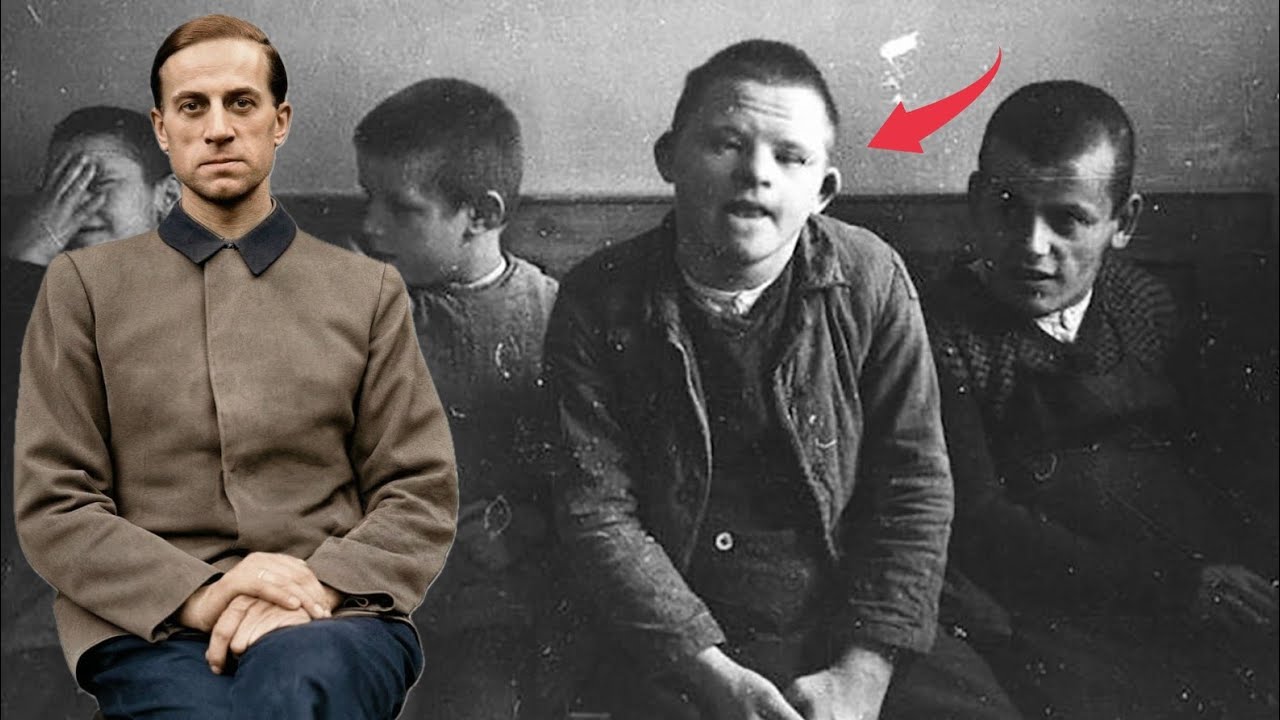
To understand what Brandt did during the war, we have to go back to 1939, before the invasion of Poland had even begun. Brandt was a gifted, ambitious surgeon who was drawn early into Hitler's circle. He joined the Nazi Party while still in his twenties. He treated members of Hitler's staff after a car accident and impressed the right people quickly enough to become one of Hitler's personal physicians while barely in his thirties.
He was not a cold bureaucrat handed a file and told to manage it from an office. He was a believer, the kind Hitler trusted precisely because his ambition and his ideology aligned. That trust is what made him the head of what the regime called Action T4, wrapped in the language of mercy. Officially, it was described as a euthanasia program, a way to spare the incurably ill from suffering. In practice, it was a machine for killing adults and children with disabilities whom the state had decided were a burden on the nation.
Patients were selected on paper, not by any doctor who examined them in person. Families were told their relatives were being transferred to a better facility for treatment, and sometimes they received cheerful postcards written in the victim's own handwriting days after the killing. That was part of a deliberate plan to delay questions.
Instead, they were taken to one of six specially equipped killing centers, stripped of their clothes under the pretext of a medical examination, and led into rooms disguised as public showers. Then carbon monoxide pumped from cylinders completed the killing. Afterwards, staff falsified death certificates, inventing ordinary causes such as pneumonia or heart failure, sometimes even appendicitis for patients whose appendix had been removed years earlier. Often, the ashes sent home in a sealed urn did not belong to the person named in the letter.
By August 1941, when public pressure and church protests, most famously the sermon of the Bishop of Münster, forced the killings to go quiet, T4's internal records counted 70,273 people gassed at those six centers. The program did not stop there. It faded gradually, continuing through starvation and lethal overdoses instead of gas chambers. By the end of the war, the total death toll across all phases of the euthanasia program exceeded 200,000.
Brandt did not run this program remotely, or only on paper. Alongside Philipp Bouhler, an official in the Reich Chancellery, Brandt was one of the two men Hitler personally authorized to manage the operation. And here lies the part that turns this atrocity from a single crime into a much larger catastrophe, and the reason this story matters beyond Brandt himself.
The gas chambers built for T4, the fake shower rooms, the bureaucratic system for selecting victims and processing bodies afterward, none of it stayed confined to those six buildings in Germany. When the regime began planning the genocide of Jews in occupied Poland, which historians call Operation Reinhard, it did not invent a new method of killing from scratch. It exported Brandt's program, which he had already perfected, to staff who knew how to run it without hesitation.
The vast majority of German personnel who ran the camps at Belzec, Sobibor, and Treblinka came directly from T4, and all the inmates of those three camps arrived through the same path. One of them, a T4 doctor named Irmfried Eberl, ran two euthanasia killing centers before becoming the first commandant of Treblinka, carrying with him hands-on experience in gassing and burning acquired from German patients. When American investigators caught up with him years later and he realized the truth of his identity, Eberl hanged himself in his cell rather than face it.

Before Auschwitz became an extermination camp, and before any of the names usually cited in history, this method was built and tested under Brandt's authority. This is the machine Karl Brandt ran for six years, until the week his government decided his real crime was trying to save his son.
Hitler killed himself on April 30. Two days later, Admiral Karl Dönitz, then nominally in charge of what remained of Germany, released Brandt outright. For three weeks, the man responsible for one of the regime's earliest genocide programs remained free amid the ruins of a collapsing state.
On May 23, 1945, British forces arrested all remaining members of the Flensburg government, including Brandt. This time, there was no release. Brandt was handed over to the Americans and charged alongside 22 other doctors and administrators in what became known as the Doctors' Trial, the first of the twelve subsequent Nuremberg trials, opening in the same Palace of Justice where the major war criminals had stood a year earlier.
One of the men who should have sat beside him in the dock, Leonardo Conti, the Reich Health Leader, was never tried. He hanged himself in his cell before proceedings began, refusing to face what was coming.
The charges against the remaining defendants went far beyond T4. Prosecutors presented a list of concentration camp experiments, and Brandt was directly responsible for authorizing them. Freezing prisoners in ice water to study how long a downed pilot could survive in the sea. Infecting healthy prisoners with malaria to test experimental drugs. Exposing men to mustard gas to observe how wounds developed. Forcing prisoners to drink seawater only, to learn how long the body could last before it broke down.
None of it was framed internally as torture. It was framed as research, recorded in reports with footnotes, and handled in the same bureaucratic language you would expect from an ordinary hospital study. The freezing experiments alone killed dozens of men submerged in ice water for hours while doctors recorded their falling body temperatures. All in the name of learning how to save German pilots shot down and pulled from the North Sea.
When prosecutors asked Brandt directly whether he considered those experiments dangerous, he admitted plainly that death was sometimes the result. He also did not deny running the euthanasia program. He defended himself, describing it as a burden he had accepted willingly, insisting he had spent 15 years treating patients like family before that duty forced the decision on him.
It was the same argument nearly every defendant in the room made in one form or another. He was serving the state, and the state's needs came first. Hard decisions were part of his job, and someone else would have been expected to make them if he had not. But the court was not moved.

On August 20, 1947, verdicts were delivered for all 23 defendants. Sixteen were convicted, and seven, including Brandt, were sentenced to death. Five received life imprisonment, and four received terms ranging from 10 to 25 years. Seven walked out of the courtroom entirely acquitted, a verdict historians still argue about today given what the evidence showed about many of the men who were freed.
Karl Brandt was hanged on June 2, 1948, at Landsberg Prison, the same prison where Hitler had been held and had written his memoir. Before the sentence was carried out, Brandt made one final request. He offered his body to medical science for experimentation, arguing it would give his death a final purpose. The court refused.
On the scaffold, he broke the usual protocol requiring condemned prisoners to remain silent, and kept speaking even after his head was covered, defending what he had done, insisting history would eventually understand him. But history did not.
Yet there is a reason this trial still matters outside the history books, and it has nothing to do with sympathy for the man in the dock. The judges who convicted Brandt did not simply issue a verdict and move on. They set down ten specific rules for what makes human experimentation legitimate.
A person must consent voluntarily, without any coercion. The research must be necessary, not merely convenient. It must be based on prior animal experiments, not improvised on humans. It must be designed to avoid unnecessary suffering as much as possible. And a participant must be free to withdraw at any time, without questions or punishment.
This list became known as the Nuremberg Code. For decades, it remained largely a moral statement rather than binding law. Yet it became the model on which nearly every later standard of medical ethics was built, including those that became enforceable.
This is why every clinical trial you have heard of, and every consent form you have signed in a doctor's office, traces its ethical foundation back to a courtroom in Nuremberg and the man standing in the dock. Karl Brandt spent his career believing he was serving a cause greater than any individual's rights. In the end, the two systems that had claim on his life, the one he built and the one that judged him, agreed on only one thing: he deserved to die for it.
So here is a question worth reflecting on. A regime may kill tens of thousands of people for years without holding anyone accountable. And the only thing that turns that regime against its own architect is a father trying to save his son. What does that tell you about that regime's real values, and what it never truly valued?