On August 9, 1941, two fighter pilots met in the skies over northern France. Only one of them would walk away from the encounter, and neither could have imagined that the meeting would lead to a friendship lasting more than four decades.
Wing Commander Douglas Bader, a legendary British pilot, was leading a fighter sweep near Lille when his formation encountered German fighters from JG 26. The German unit was commanded by Lieutenant Colonel Adolf Galland, one of the most accomplished pilots in the Luftwaffe.
What exactly happened during the dogfight remains debated. German records credit Galland's pilots with shooting down Bader. British witnesses reported a mid-air collision between Bader's Spitfire and a Bf 109. What is certain is that Bader's aircraft broke apart, with the tail section separating from the fuselage.
Trapped in the tumbling cockpit, Bader struggled to escape. He finally broke free, but his right prosthetic leg, attached to the rudder pedal, tore away during his exit. He descended by parachute with only his left artificial leg.
German soldiers found him lying in a field near Saint-Omer, remarkably calm given the circumstances. They took him to a hospital, where staff were astonished to discover he had artificial legs and was missing one. Word spread quickly through German military channels.
Adolf Galland, whose headquarters was at Saint-Omer airfield, learned that the famous British legless pilot had been captured. He went to meet him.
Galland entered the hospital room expecting a dejected, defeated enemy. Instead, he found Bader sitting up and smoking, demanding to know when he could have his missing leg back so he could attempt to escape. Galland was impressed.
Here was a warrior, a professional who refused to accept defeat even as a prisoner. Galland understood that mindset. He himself had overcome serious injuries earlier in his career and flown combat missions against medical advice.
The two men talked not as captor and prisoner, but as pilots. They discussed tactics, aircraft performance, and specific engagements. Galland asked about the Spitfire's advantages. Bader asked about the Bf 109's fuel injection system that gave German fighters an edge in negative G maneuvers.
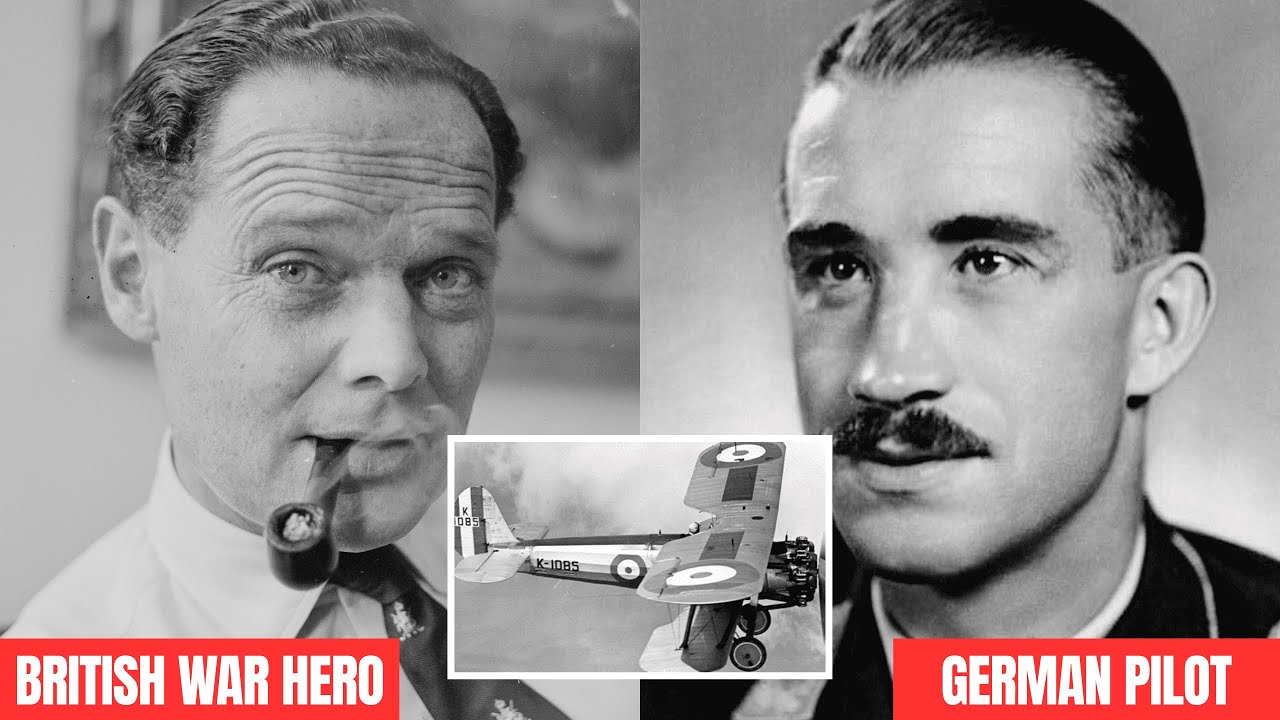
Then Bader mentioned his missing leg. Galland immediately offered a solution. He would contact the RAF through proper channels and request that a replacement prosthetic be dropped during the next British operation over France. More remarkably, Galland gave his personal guarantee that German anti-aircraft batteries would not fire on the aircraft delivering it.
This wasn't mercy. It was respect between professionals. Galland later said he admired any man who could fly combat missions without legs. The least he could do was ensure Bader had both prosthetics for his time as a prisoner.
The RAF responded positively. On August 19, 1941, a British bomber dropped a package containing a replacement artificial leg during a raid over Saint-Omer. German forces collected it and delivered it to Bader.
Galland visited again. He brought gifts, a bottle of French wine and cigarettes. He invited Bader to tour Saint-Omer airfield and even allowed him to sit in a Bf 109 cockpit while under guard. Bader, with characteristic boldness, asked if Galland would let him take it for a test flight. Galland smiled and declined.
Bader was sent to a prisoner of war camp. Galland returned to combat operations. Bader spent the next four years in various POW camps, including Stalag Luft III, where he participated in escape planning. The Germans eventually sent him to Colditz Castle, a maximum security facility for incorrigible prisoners who had attempted multiple escapes.
Douglas Robert Stewart Bader was born on February 21, 1910, in London. He joined the Royal Air Force in 1928 as a cadet at the RAF College Cranwell. Bader excelled as a pilot and was known for aerobatic skill and aggressive confidence. Some called it arrogance.
On December 14, 1931, everything changed. While performing low-level aerobatics at Woodley Airfield near Reading, Bader's Bristol Bulldog biplane clipped the ground during a slow roll. The aircraft cartwheeled and crashed. Bader was pulled from the wreckage with catastrophic injuries.
Doctors amputated his right leg above the knee. Days later, infection forced amputation of his left leg below the knee. At 21 years old, Douglas Bader had lost both legs.
Most would have retired. Bader fought to stay in the RAF. He learned to walk on tin prosthetic legs. He learned to drive. He even learned to dance. But the RAF medical board declared him unfit for flying duties and invalided him out in April 1933.

Bader spent the next seven years working as a petroleum executive. But when World War II began in September 1939, he lobbied relentlessly for reinstatement. The RAF, desperately short of experienced pilots, finally relented in November 1939.
By summer 1940, Bader was flying Hurricanes with Number 222 Squadron during the Battle of Britain. His aggressive tactics and leadership earned him command of Number 242 Squadron. By 1941, he had been promoted to wing commander, leading three squadrons on offensive sweeps over occupied France.
By August 1941, Bader was credited with at least 22 enemy aircraft destroyed, plus additional probables and damaged. He was one of Britain's most famous pilots, a national hero who had overcome impossible odds.
In May 1945, Germany surrendered. Bader was liberated and returned to Britain a hero. He was promoted to group captain and participated in victory celebrations, including flying in the Victory Day flypast over London.
Adolf Galland also survived the war. He had been dismissed from his command position in January 1945 after publicly criticizing Hermann Göring's leadership. Galland formed Jagdverband 44, an elite unit flying Messerschmitt Me 262 jets in the war's final months. He surrendered to American forces in May 1945.
Both men faced postwar challenges. Bader's fame meant he was in demand for public appearances and speaking engagements. He worked for Shell Oil Company and became an advocate for disabled veterans. He was knighted in 1976, becoming Sir Douglas Bader.
Galland faced interrogation by Allied intelligence, then worked in Argentina from 1948 to 1955 as an aviation consultant. He returned to Germany and established an aviation consultancy business in Bonn.
In the late 1950s, as wounds from the war began healing, former adversaries started meeting at aviation events. German and British pilots who had tried to kill each other attended reunions together.
In 1959, Galland attended an aviation event in London. Douglas Bader was there. Eighteen years had passed since their meeting at Saint-Omer. Neither man had seen the other since 1941.
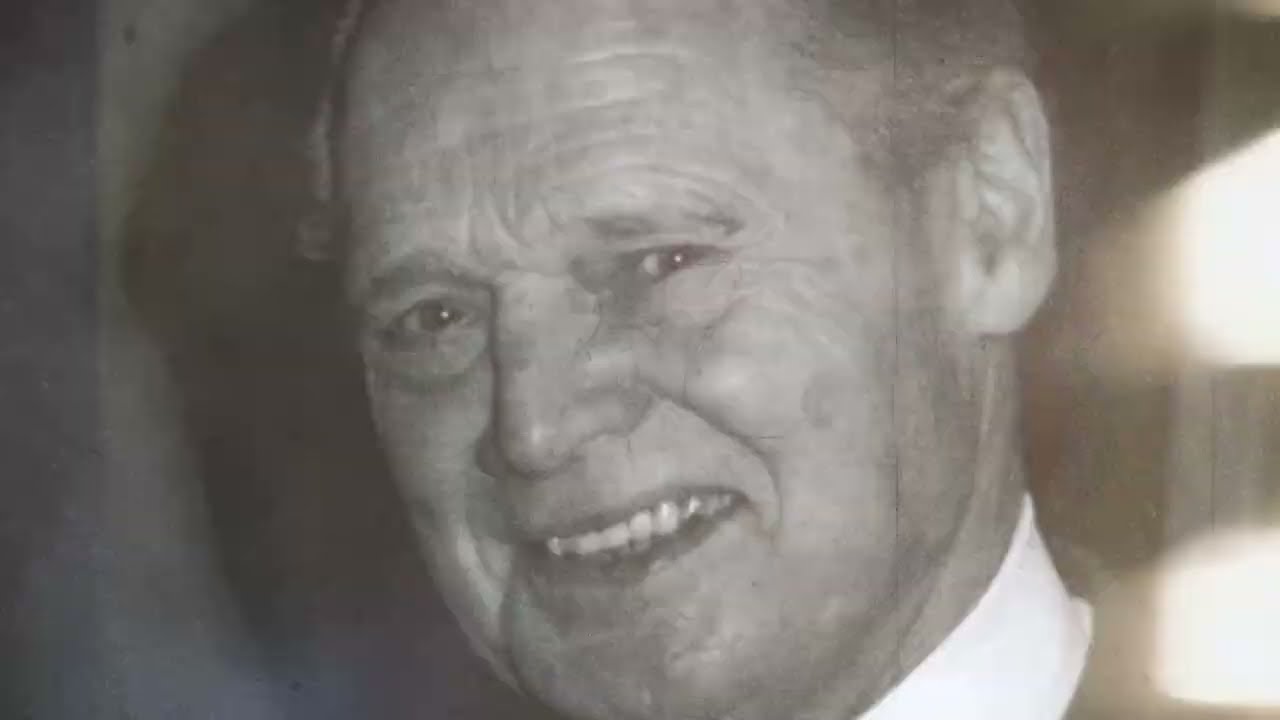
Their reunion was immediate and warm. Bader greeted Galland with genuine pleasure. Galland later recalled feeling relieved. He hadn't known if the British would welcome a former enemy, especially one who had shot down their national hero. But Bader held no grudges. He had been doing his job. Galland had been doing his. The war was over.
That meeting rekindled something from 1941. They exchanged contact information. They began corresponding. When Galland visited Britain, he met with Bader. When Bader traveled to Germany for events, Galland hosted him.
Their friendship deepened over the years. They attended air shows together. They appeared on television programs discussing aerial combat. They wrote forewords for each other's memoirs. Bader wrote the introduction for Galland's book, "The First and the Last." Galland praised Bader's autobiography, "Reach for the Sky."
In the 1960s and 1970s, as both men aged, their friendship became well known in aviation circles. They represented something powerful: former enemies who had moved beyond the conflict to recognize shared experiences and mutual respect.
On September 5, 1982, Douglas Bader died after suffering a heart attack while driving to a dinner engagement. He was 72 years old. The news reached Galland in Germany. He had lost not just a former adversary, but a genuine friend.
Galland attended memorial services in Bader's honor. He spoke publicly about their friendship, calling Bader one of the bravest men he ever knew. Galland continued attending aviation events throughout the 1980s and 1990s. He often spoke about Bader, keeping his friend's memory alive.
On February 9, 1996, Adolf Galland died at his home in Remagen, Germany. He was 83 years old. He had outlived Bader by nearly 14 years. At Galland's funeral, tributes came from around the world. Many mentioned his friendship with Douglas Bader as an example of reconciliation between former enemies.
Their friendship had spanned 23 years, from their 1959 reunion until Bader's death in 1982. But the foundation had been laid 41 years earlier in a hospital room at Saint-Omer, when a German commander showed respect to a captured British pilot with no legs.
Douglas Bader and Adolf Galland's friendship demonstrates something essential about professional warriors. The conflict is temporary, but the understanding between them can be permanent. Bader never blamed Galland personally for shooting him down. That was war. Pilots on both sides were doing their jobs. What mattered was how they treated each other when the shooting stopped.
The friendship also revealed something about both men's characters. Bader's aggressive confidence and refusal to accept limitations made him a difficult prisoner, but also someone Galland could respect. Galland's willingness to show courtesy to an enemy reflected a code of honor that transcended nationality.
One encounter in 1941 led to 41 years of mutual respect and 23 years of genuine friendship. That is not just a war story. That is proof that enemies can choose to become friends.