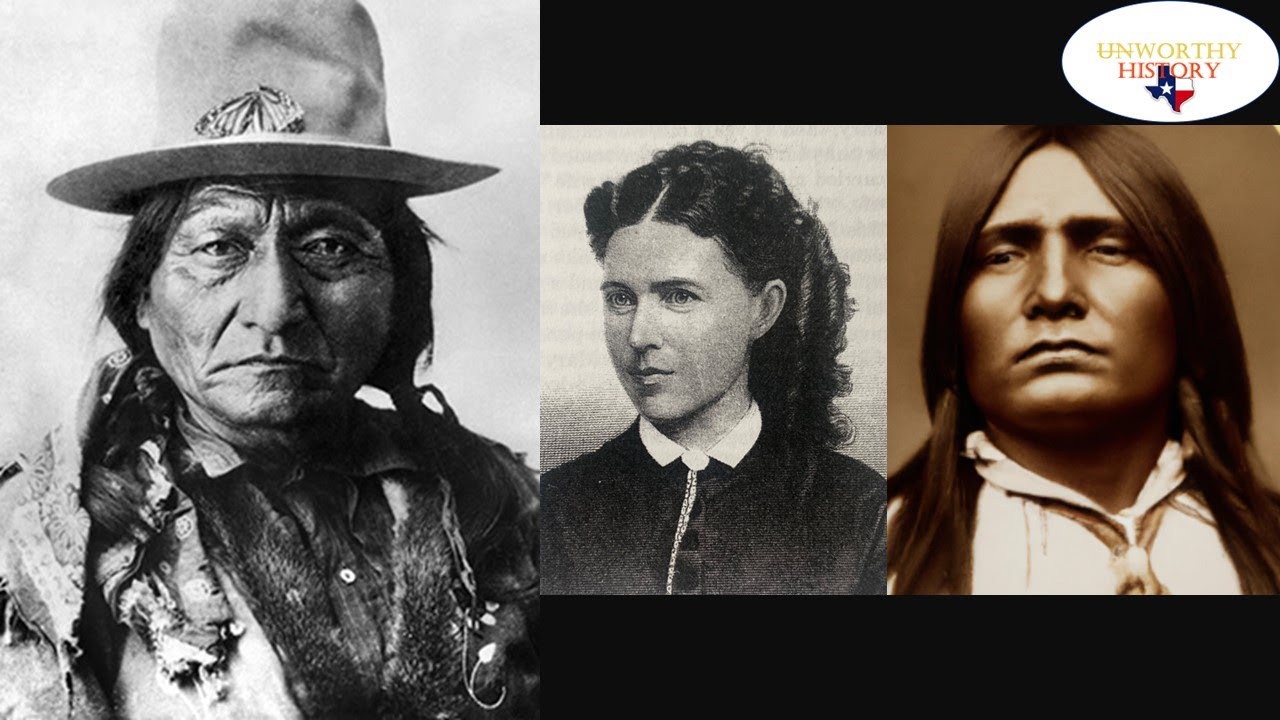
The story of Fanny Kelly's captivity among the Sioux in 1864 is usually told through her own memoir. A different account comes from Stanley Vestal, the pen name of Walter S. Campbell, in his 1931 book "Sitting Bull: Champion of the Sioux."
Campbell was born in Oklahoma in 1887 and played with Cheyenne and Arapaho boys as a child, developing a lifelong interest in Indian warfare. Around 1928 he traveled north to the Sioux reservation, where he interviewed Sitting Bull's nephews One Bull and White Bull, along with Cheyennes, Arapahos, Assiniboines, Crees, and Blackfeet. His book was built from those interviews.
Campbell's version places Kelly's captivity inside the wider collapse of peace between the Tetons and the United States. When the Civil War broke out, fur traders, most of them Southern sympathizers, tried to push the Teton Sioux into war against the Union. They argued that the government in Washington was weak and about to fall, and the fact that promises made at Fort Laramie in 1851 and Fort Pierre in 1856 had never been fulfilled lent weight to their claims.
The Western Tetons, despite many grievances, refused to be stampeded into war. They asked only to be left alone. But they harbored deep resentment against the chiefs arbitrarily appointed by General Harney in 1856. These "paper chiefs" had never received backing from white troops, and after eleven years of keeping the peace they could no longer control their discontented people.
In 1862, when their agent came upriver, the Tetons met him at Fort Pierre and formally repudiated their part of the broken treaties, renouncing their agreements and refusing the annuities he had brought. The agent persisted, and eventually Bear Ribs, the head chief named by Harney, gave in and accepted payments due to his own small band. He did so under protest, warning that the action endangered his life and the lives of his followers.
He was right. Within days, some Sans Arc Sioux who had vowed to have the blood of this "traitor" came to Fort Pierre and shot the chief's saddle mule as he came out to see what was happening. One of them then shot him from the shelter of a tepee. The peace party died with Bear Ribs.
From then on, the National Party led by Four Horns and Sitting Bull was dominant among the Teton Sioux. Within ninety days, the sorely tried Eastern Sioux carried out the Minnesota Massacre, drawing the whole Sioux Nation into hostilities.
Sitting Bull, far to the West, had no hand in the troubles in Minnesota. In June 1863, when General H. H. Sibley attacked his hunting party of Western Sioux, who had been driven by drought to hunt east of the Missouri River, Sitting Bull retaliated by skirmishing with Sibley's wagon train near Apple Creek and running off a mule under fire. Even then, he did not consider himself at war with the whites. He went west and continued hunting peaceably.
In midsummer 1864, Sitting Bull's people were camped above the mouth of the Little Missouri River, not far from the hunting ground near the Killdeer Mountains. Other bands of Sioux soon joined them until there were hundreds of lodges, with nearly every tribe of Tetons represented.
Among the Oglala was a man named Brings Plenty, who had a captive white woman with him. It was reported that thousands of soldiers were coming up the Missouri River. On the Little Cheyenne, three Cut Head Sioux had killed a soldier who wandered away from the main body. The soldiers caught and killed the young men, cut off their heads, and stuck them on poles. It looked as though the soldiers meant to kill all the Sioux.
While the Tetons discussed these things, a group of Eastern Sioux, Yanktons and Santis, arrived and pitched their lodges near Sitting Bull's camp. Sitting Bull's nephew Bull Standing with Cow was then about fourteen winters old. He heard that the soldiers were chasing the Santis and Yanktons, and thought these people might be the ones they were after, but he was not sure. It was the first time Yanktons or Santis had come to his uncle's camp, and the boy was timid about going among them because they were strangers.
A day or two after the strangers arrived, some young men returned from a hunt and said the soldiers were coming. The chief sent out scouts, and the whole camp moved back into the hills. The women pitched the tepees on a flat partway up the mountain where a big spring made a fine pond of good water. The flat lay at the mouth of a canyon, surrounded by wooded ravines and breaks. The people hoped they would be safe there.
Sitting Bull's own people had no desire for war with the soldiers. They were almost without ammunition, even for their old flintlocks. Sitting Bull considered himself at peace with the white soldiers and had no quarrel with them.
When the scouts came back, the herald announced that the soldiers were close and would be there tomorrow. Next morning, Bull Standing with Cow went out to water and herd the family horses. While the horses drank, he heard a disturbance in camp, so he drove the ponies back. Sure enough, the people were saying the soldiers were there.
Four Horns and Sitting Bull caught up their war horses, and the boy, who had never seen a battle, mounted his pony. Sitting Bull selected a fine sorrel, a fast horse recently purchased from some Canadian Indians he had met out hunting. He had paid many robes for the animal. He had his gun and a quiver full of arrows; the boy had only a bow.
The three rode out with the other Sioux to the top of a hill. The soldiers were coming from the southeast. The Sioux could see a whole army advancing in a line a mile wide, men on foot, bunches of horsemen behind them, and behind those a string of wagons and cannon.
As the soldiers came near, a man named Long Dog yelled out that he would go close to them, and if they shot at him, the Sioux would all shoot at the soldiers. Long Dog had a charm; he was "with a ghost," and nobody could kill him. He wanted to find out whether the soldiers were coming to fight.
Long Dog charged toward the line of advancing soldiers, turned, and raced across their front. He gave them a chance to shoot first, and they did. They all shot at him, but he was bulletproof and was not hit. When the other Sioux saw the soldiers shooting at Long Dog, they began to shoot back. Long Dog returned to his own line on the hilltop.
After a few minutes, Long Dog prepared to show off his power a second time. Bull Standing with Cow was burning with ambition to qualify as a warrior. When Long Dog started to repeat his ride along the enemy front, the boy followed on his fleet pony. The soldiers all took a shot at the two of them, but neither was hit, and they rode back to their comrades on the hill unscathed. Sitting Bull was proud of his nephew's bravery and glad the boy had taken the chance to show his courage.
While the Tetons displayed their courage on horseback, the Yanktons and Santis took cover in a ravine, following the forest warfare tactics they had been bred to. When soldiers came near, these men would shoot and hit one or two. The ambush was on the left, east end of the Sioux line. As soon as the white men saw what was happening, some cavalry charged the snipers and killed about thirty of them. Forest tactics were no good in plains country. Those thirty Yanktons and Santis were about all the Indians killed that day, though the military estimate was much larger.
General Sully was much criticized for attacking Indians who had no hand in the Minnesota Massacre, but as it happened, he caused most loss among the very ones he was after. As the troops advanced, the Sioux fell back toward their camp. Shell fire and good rifles were too much for men armed only with bows, lances, clubs, and old muskets.
Sitting Bull had never seen troops fight before and had never heard so many guns at once. The cannon, which shot so far and shot twice, was a strange puzzle to the Indians. Yet the Teton stood up to the troops in a way that made General Sully overestimate their numbers by fifty percent.
On one flank there was a skirmish. Some Sioux swept down on the soldiers in a cavalry charge to turn them back. Following their usual hit-and-run tactics, they sped back again like buffalo wolves, and the soldiers chased them a long way. Another group of Sioux waiting behind a hill saw them coming, got ready, and when they approached, whipped up their ponies and charged. The cavalry wheeled and retreated at a run, but the Sioux ponies were fast and fresh. The Sioux overtook the troopers and pulled several of them from their saddles. The action nearly ended in disaster for the soldiers, who were unable to face the cannon but were first-class fighters in a melee. When the soldiers had gone, the Sioux went back to their hilltop.
Meanwhile, the women in camp were preparing to pull out. In that camp was a man called The Man Who Never Walked, a cripple from birth whose twisted, shrunken limbs had never been any good. He could not go on the war path like other young men, but his heart was that of a bear, full of strong courage. When he saw the soldiers coming right to their camp and shells dropping among the tepees, he knew his chance had come.
He told them to put him into the basket of a travois, or drag, and carry him out to the battlefield. He wished to play the part of a man like other men before he died. The Sioux about Sitting Bull were sitting on their horses on the hilltop watching the battle when a man came from camp singing and leading a cream-colored horse with a drag tied to his saddle. In the basket of the drag was the cripple with the heart of a bear.
When the man reached the Sioux line, he stopped his song and called out that this man had been a cripple all his life, had never gone to war, and now asked to be put into the fight and killed. He preferred to die by a bullet since he could not be of any use. The Sioux warriors looked at the shrunken, twisted limbs huddled in the basket, and Sitting Bull spoke up: that was perfectly all right, let him die in battle if he wanted to. Sitting Bull's heart was full that day. He was proud of his nation, that even the helpless were eager to do battle in defense of their people.
They whipped up the cream-colored horse, and the cripple in the basket of the drag sped away, trying to guide the animal with long reins made of lariats. He could use his arms a little, but he had no weapons. Away went the horse, dragging that strange chariot, galloping straight toward the line of soldiers.
The Sioux on the hilltop watched. All at once the horse went down, shot dead. The Man Who Never Walked was thrown from the drag and sat facing the soldiers, singing his death song. That song soon ended, for he could not dodge the bullets. The soldiers killed him. Later, as they advanced and came upon his body, they were astonished to find that this man who had charged them alone so bravely was only a helpless cripple. So died the man known also as Bear's Heart because of his dauntless courage.
By this time the soldiers were getting close to the camp, and the Sioux made a determined stand to cover the retreat of their women and children. Sitting Bull and the Tetons had relied on the advice of Inkpaduta and his son in selecting the campground in the hills, for the Tetons had no experience fighting soldiers, and Inkpaduta was the hero of half a dozen battles. Cavalry could not get at the camp, but here came cavalrymen on foot with rifles.
The word was passed to the women to save what they could and get out up the canyon. Horses and dogs were being packed up and some of the tents were down when the batteries opened on the camp with all their power. Then all was confusion. Terrified women scuttled away with what they could gather, while the boys herded the horses before them. Old men harangued amid the bursting shells. Children cried, dogs were under everybody's feet, mules balked, and pack horses took fright at the shell fire or snorted at the drifting smoke of battle behind them.
The captive white woman, Fanny Kelly, was hustled along with the others through the parching heat and dust and later left a vivid account of the flight of the women into the hills. Meanwhile, the soldiers charged the Sioux around Sitting Bull. The Sioux fell back as they retreated. Sitting Bull's horse was hit at almost the same instant. Sitting Bull's uncle, Four Horns, called out that he was shot but managed to stay on his horse.
Sitting Bull took his uncle's horse by the bridle and led him out of the field of fire, then examined the wound. The ball had hit Four Horns in the ribs behind and was still in his body. Four Horns said he could feel the lead in him, and it hurt so much that Sitting Bull could not locate it and had to let it be. He generally carried some of his father's remedy with him on the war path, and he applied first aid to his uncle's wound, bandaged it, and gave Four Horns something to drink. Afterward he and his nephew led Four Horns back to camp.
Four Horns was able to ride. It was near the middle of the day when the three of them left the fight, and as they went back they found that the camp had gone. Many of the tepees were still standing, still full of everything the Indians owned: buffalo robes, tanned hides of elk and antelope, tons of dried meat and dried fruits prepared against the coming winter. The travois were still stacked together in rigid pyramids, the saddles still hung on the racks. Here and there a pony remained restlessly pacing about the picket to which it was tied, and puppies whined from their miniature tepees. Hundreds of lost dogs skulked about through the deserted village.
Indian women and children were likely to fall into panic when the soldiers came, and the soldiers were apt to do crazy things, it was said. Yet although the women had fled in panic, the men covered their flight in good order and gave way deliberately, contesting every foot of the way from ravines and hilltops and saving all their wounded. When the troops tried to follow them into the hills, they were soon taught the folly of the attempt and fell back to the captured village.
The Sioux did not have to retreat far. It was only ten miles to the place where Sitting Bull, when he got in about sunset, found his people in camp. Even the women had suffered no harm from the troops. The only casualty from their flight was an old woman killed by a bear that rushed upon her from some bushes along the trail.
That night the Sioux attacked the troops and killed two soldiers. Next day, while the soldiers were burning the abandoned camp, some of the Tetons tried to make peace, showing a white flag. But Colonel R. N. McLaren, in command of the work of destruction, did not know what it meant and paid it no heed. Having destroyed everything in the camp, including hundreds of dogs, he set fire to the surrounding forests.

After the Battle of Killdeer Mountain on July 28, 1864, the Sioux scattered. Inkpaduta took his unpopular gang, which had caused all the trouble, and went off eastward toward Dog's Den, where General Sully tried and failed to catch him. The Hunkpapa went off by themselves, while the Miniconjou and Sans Arcs camped on Thick Timber River, also known as the Little Missouri, not far from the site of the present town of Medora.
General Sully returned to Fort Rice by way of the Yellowstone and Missouri Rivers. When he arrived at the fort, he learned that Captain J. L. Fisk was piloting a party of three hundred immigrants and one hundred wagons across Dakota to the west and had run into hostile Indians. Fisk was besieged in his fort for several days, an improvised structure of sod with walls six feet high and loopholes, near White Butte a few miles east of the Little Missouri River and not far east of the site of the present town of Marmarth, North Dakota. General Sully immediately ordered out a detachment of six hundred men to rescue the embattled farmers.
One day the Sioux were moving camp when word came that the soldiers had come again. About a hundred warriors rode out to meet them and see whether they wanted to fight. When they came within range, they saw that all the whites were on horseback, and the whites began to shoot right away. Bull Standing with Cow and Circling Hawk were in this party. Circling Hawk was on a good, fast horse.
Among others, Circling Hawk charged the soldiers. The soldiers turned and retreated. Circling Hawk knocked one or two out of their saddles, but his horse became scared and ran away right through the soldiers. Then he turned back, and the Indians caught up with the troops. The soldiers halted, and one of them turned and came back alone to meet the Sioux. The Indians thought he must be the soldier chief.
There was a man named White Buffalo Chief who had no mount. He borrowed a pony, charged the soldier, and pulled the white man off his horse. Both fell to the ground and wrestled together. Full Buffalo rode out to take a hand in the fight and tried to shoot the white soldier, but dared not for fear of killing his friend. The soldier soon got on top of White Buffalo Chief, and Full Buffalo, afraid his friend would be killed, began to beat the soldier on the back. The soldier turned on Full Buffalo, took his gun away, and began to beat the Indian underneath, breaking his collarbone with the gun.
Shoots the Bear, a third Sioux, dashed up, but when he saw the soldier get the best of the other two, he turned back to his own lines. The soldier had got the best of three of them and now stood up holding his horse. He was a brave soldier and hard to kill, and now he was victor.
Just then Sitting Bull raced forward on his fast sorrel, riding hanging on the left side of his horse. He was first to reach the soldier and grab the soldier's bridle rein, but the soldier had his pistol and fired, hitting Sitting Bull. The soldier mounted and returned to his own lines. The moment Sitting Bull was hit, he veered away from his enemy, clinging to his mount. As soon as he got back to his own lines, Jumping Bull took care of him and bandaged the wound to stop the bleeding. He had been hit at close range in the left hip and out through the small of his back, a nasty flesh wound. Sitting Bull did not faint or say anything. Jumping Bull and a friend took charge of him, and Bull Standing with Cow went along. They took him home to camp.
He was wounded about noon. The casualties of the Sitting Bull family were heavy that summer: first Four Horns on Killdeer Mountain, then Sitting Bull's cousin at Rose Buttes, and now Sitting Bull himself. For a while thereafter he rode in a drag, but he was sound and brave and healthy and was soon up and around. The affair is represented in catch number 18 of Sitting Bull's picture autobiography.
About this time Four Horns felt better. He said the bullet in his body had dropped into his stomach and troubled him no more. During the time Sitting Bull was getting well from his wound, he had time to observe the captive white woman. Fanny Kelly was with Brings Plenty, who was using her as his wife, and the frightened woman was doing her best not to incense her fierce captors.
Sitting Bull watched her tending the wounded with the other women and enduring the hardships of winter without complaint. Her submissive behavior contrasted markedly with that of the Sioux matrons, who, the white people said, were treated as slaves but were quite as independent and proud and touchy as their husbands. Brings Plenty was delighted with his new wife and dubbed her "a real woman," a title of honor reserved for women of the most unquestioned character. She quickly won the respect and liking of the Sioux. In fact, she was so popular that several men tried to get her away from Brings Plenty.
Sitting Bull also observed that this thin, pale woman in the outlandish dress and curious shoes was continually being demanded by delegations of Indians from the agencies, who came bearing gifts supplied by the frantic Mr. Kelly in the settlements. Whenever this happened, Brings Plenty refused to give her up, and a dangerous crisis followed when somebody was likely to get hurt. The Hunkpapa became annoyed at this constant succession of visitors trying to take away the woman of Brings Plenty.
But Sitting Bull saw what must be done. He made up his mind, he said, that they should feed her up and take better care of her. Traders would be coming, and they must take this woman back and make a good showing.
One morning early in December 1864, a large company of Blackfeet Sioux rode into the valley of Grand River and halted opposite Laughing Wood, where the Hunkpapa were in camp. Laughing Wood is not far from the present town of Bullhead, near the mouth of Rock Creek. The leader of these men was Sitting Bull's close friend the giant Crawler, that terrible warrior with a Mongol face and an interminable string of coups. Crawler said they had come to try to buy the white woman from Brings Plenty.
The Blackfeet soon knew it was a dangerous errand. They were coming to demand the woman from the Hunkpapa without Sitting Bull's consent, and that would be impossible. Sitting Bull said they would take her back, and he sent for Brings Plenty, who flatly refused to accept the horses they offered him. He pretended that he wanted to trade the woman for food to the traders at Long Lake, because the soldiers had destroyed the food supplies at Killdeer Mountain, but he had no mind to give up "Real Woman" at any price.
He went back to his tepee, took her inside, and sat down opposite the door with his knife ready. The Blackfeet Sioux gathered about the tepee, and Brings Plenty and the Hunkpapa were all around them. It was a tense moment, for the Hunkpapa did not like to see these Blackfeet come into their camp and carry off a person in such a high-handed manner. It was a breach of decorum, a violation of intertribal law. The Hunkpapa were always looking for a quarrel or a fight, and it looked as if there would be a big one if the Blackfeet tried to hurt Brings Plenty.
But Sitting Bull said: friends, this woman is out of our path, her path is different. You can see in her face that she is homesick and unhappy here, so I am going to send her back. To Crawler, Sitting Bull said to go in and get her and tell Brings Plenty that he said so.
Crawler went in. He found a fire burning in the center of the room, and Brings Plenty sat near it on the farther side, with Mrs. Kelly beside Brings Plenty at Crawler's right. Crawler told him firmly that he had come to take the captive and would forfeit his life if necessary in her behalf. The day was intensely cold, and he sat down to warm himself by the fire.
As he huddled over the fire rubbing his chilled hands, he said to Brings Plenty that he had come for this woman. Brings Plenty replied that he had no use for the horses and would keep the captive. Crawler drew himself a bit closer to the fire, still industriously rubbing his hands, and advised him to exchange the captive for the horses. Brings Plenty answered that he had no desire to part with the captive.

Crawler moved still further over the fire and again tendered the horses for the captive, and a third time was refused. He saw Brings Plenty draw a knife from his belt and lay it by his side. Still drawing closer to the fire, Crawler suddenly drew his revolver, flashed it in Brings Plenty's face, and at the same instant caught the woman by the shoulder and threw her around the fire behind himself. Still covering Brings Plenty with the revolver, he quickly backed out of the tepee, where his friends at the door hastily took possession of her and mounted her on one of the ponies.
By this time the camp was astir and apparently divided about equally between the friends of Brings Plenty and those who wanted to let the captive go in exchange for the horses. But Sitting Bull and his Strong Hearts prevailed over the excited Hunkpapa, and after a time of jockeying and bluffing they carried Real Woman away to their council tepee. There they selected certain men to accompany her as representatives of the Hunkpapa.
At this meeting Sitting Bull said to care for her well and choose good men to see that no harm came to her, and that they could trade on the same trip. Among those chosen were Big Head, Kills Enemy, Crawler, Pretends Eagle, and Wet Hand Loud Voice Talk, the chief who was one of the group supporting Sitting Bull.
Real Woman was well treated by these Hunkpapa and Blackfeet. She herself said these Indians proved very kind to her, though their nation was regarded by the whites as very vindictive and hostile, and that they showed her nothing but civility and respect. She was housed with Crawler's family, and Mary Crawler adopted the white woman as her sister.
The party went on to Little Oak Creek to the home of Hollow Horn, and Hollow Horn's wife gave Real Woman a complete new outfit of clothing, for the weather was terribly cold. When the Yanktons came trying to buy her, offering a fine horse and saddle, the Hunkpapa sent the Yanktons away and presented Real Woman with four good horses and eight fine robes of their own.
On Moreau or Owl River, Sunflower Face awaited her in the lodge of her husband, the Two Kettle Sioux chief Long Soldier. They then rode down the west bank of the Missouri to Fort Sully. Mrs. Kelly, not understanding the Sioux tongue very well and being fearful at all times, sent in a letter to the commandant of the fort by a young Indian named Jumping Bear, or Charging Bear, who was later to be known as Chief John Grass. This letter warned the soldiers that the Indians intended to overpower the garrison and take the fort.
As a matter of fact, the great number of Indians who followed her along were simply hungry and went down in the hope of sharing in the feast and the reward they expected to receive for turning the woman over to the soldiers. Eight Indians rode with the captive to the fort, one leading her horse, but no sooner had they entered and the gates were shut and the other Indians left outside than the situation changed. Those outside, however, went peacefully into camp nearby.
After a few days spent in trading, the Indians prepared to go home again. They were a little hurt because their friend Real Woman had refused to come out and dine with them when they invited her. Sitting Bull was one of those who had been locked out of the fort.
Throughout her misadventure, Mrs. Kelly was always so upset that she took the wrong step whenever an opportunity was offered for escape. She scared Captain Fisk off when he was all ready to rescue her by a letter of warning, and did the same thing again when Sully's troops came to relieve Fisk. Now she had given the men in Fort Sully the wrong idea entirely. Sitting Bull and the Sioux acted in good faith, but Mrs. Kelly laid the blame on her Indian friends, and their effort at peace and good will was wasted.
Mrs. Kelly afterward wrote or published an account of her sojourn among the Sioux, a highly colored, incoherent story in which geography and the Indian names are terribly mangled. Campbell called the book not a success, an attempt at romance, and observed that the Sioux were not romantic but epic. Although the Moon is one of the greatest gods, he wrote, they are not her minions; long ago they discovered that she pays no heed to human supplications, and so they build no altars to Diana. He could not help wishing that if the author was determined to play the romantic heroine, she had had some other name, one that did not fail to suggest a romantic girl beloved in his youth by the great John Grass.
It was not the fault of Sitting Bull that Brings Plenty only brought one. He made the best of a bad business and restored her to her people as soon as possible. Her narrative concealed him under some indecipherable spelling of an Indian name. Long after, a young pretender came up the Missouri River claiming to be the son of Sitting Bull and Fanny Kelly, but none of the Hunkpapa took any stock in his story.
Sitting Bull was not interested in Real Woman romantically. He was compassionate, as always, when he saw someone unhappy and homesick, and he wished to make peace with the whites. This deed is one of those that showed the generous heart of a great chief. It is well remembered among the Hunkpapa, so well that the winter of 1864 and 1865 is known in their calendar as the winter when the white woman was rescued.
Somewhat later, a delegation of Oglala chiefs signed an affidavit acknowledging the justice of Mrs. Kelly's claim for reparations from the Sioux. The money was to come from monies appropriated for the agency Sioux. When the talk was held, one of the chiefs, placing his finger on the breast of the secretary, said to pay her out of their money and not to give the money into any hands but her own, so that the right one would get it. The speaker was a canny old man who had been watching the officials of the Indian Bureau for some time.
It hardly mattered that Real Woman misinterpreted the motives of the Sioux who rescued her, for on November 29, 1864, things happened that were to make peace between Sitting Bull and the soldiers impossible. On that fatal day, a thousand Colorado soldiers, mostly volunteers, led by a former parson, Colonel J. M. Chivington, attacked the friendly Cheyennes under Black Kettle and White Antelope near Fort Lyon on Sand Creek and destroyed almost one hundred families, mostly women and children, with a ferocity, cruelty, and brutality hardly to be matched in modern history.
Spring brought the Cheyennes from the south. They carried a war pipe and told the dreadful tale of the massacre at Sand Creek. They offered the pipe to Sitting Bull. Would he smoke with them? Would he join his old boyhood friends, the ancient allies of his people? They said they had been told that white men would not kill women and children, but now they had lost all faith in white men. They had taken pity on them in the past, but would never do so again. They planned to strike the whites all along the Platte and after that the settlements to the west, and they asked if he was with them.
Sitting Bull took the pipe, put it to his lips, and smoked it. It was lucky for Fanny Kelly that he rescued her before the news of Sand Creek reached the Grand River.
Another captive white woman, Mrs. Eubanks, was brought into Fort Laramie and turned over to the troops about the same time. Her escort, two Sioux chiefs, had bought her from her captors at great trouble and expense and brought her a long way. But the officer in command of the post, instead of rewarding these chiefs, ordered them hanged in chains. For months afterward their blackened bodies swung in the wind beside the trail. Nearly everyone on the frontier wanted to kill Indians in those days, and it was so convenient to kill friendlies.
Campbell's account differs sharply from Fanny Kelly's own book. He claimed that her true Indian husband was Brings Plenty, not Chief Ottawa, and he was openly critical of her narrative, calling it a work of romance. He even criticized her name, saying it was not a good name for a heroine. Readers are left to decide for themselves who to believe.