At 11 p.m. on April 16, 1943, a convoy of vehicles stopped outside the Hotel de la Poste in the village of Saint-Jorioz in southeastern France. The men who stepped out were Sergeant Hugo Bleicher of the Abwehr, an officer of the feared Gestapo, and a detachment of Italian troops. Thanks to an intelligence tip, they knew exactly whom they were looking for and where she was hiding.
Odette Sansom had been in France for five months, serving as a courier for a British intelligence network that stretched across the mountains of southeastern France. When she heard footsteps in the lobby and felt a pistol pressed against the base of her spine, she did not try to run. Instead, she called out to Peter Churchill, the leader of her circuit, and begged him not to flee. Within an hour, both of them were in Nazi hands.
Over the next two years, the Gestapo did everything in their power to break her will. This is the story of Odette Sansom, a thorn in the side of the Nazis and the most decorated spy of the Second World War.
Odette Brailly was born on April 28, 1912, in Amiens, northern France. Her father, Gaston, was a banker and a decorated soldier who was killed in 1918, just 30 days before the Armistice. Odette was six years old. Her grandparents used to take her and her brother Louis to place flowers on Gaston's grave every Sunday, and her grandfather told them that another war was coming, and that when it did, it would be their duty to serve, just as their father had.
Odette suffered from illness throughout her childhood. She contracted polio at the age of seven, which left her paralyzed for more than a year and blind for three and a half years. She then developed rheumatic fever. Hoping the coastal air would help her, the family moved to Boulogne in 1926 and enrolled Odette in a convent school. Her final school reports described her as intelligent and cheerful, but stubborn, quick-tempered, and strong-willed.
In the summer of 1930, she met Roy Sansom, the son of a British officer who had stayed with her family during the First World War. They married in 1931 and moved to Kensington, England, in 1932. They had three daughters.
When war was declared in September 1939, Roy enlisted, leaving Odette with the children in London to face the Blitz. While sheltering with her daughters in an Anderson shelter in their garden, she realized that staying in the city was no longer possible. She moved the family to a rented cottage near the village of Redball on the Somerset-Devon border. As she grew vegetables, kept chickens, and nursed her sick mother-in-law in the countryside, news from France grew worse. She learned through the Red Cross that the Nazis had seized her mother's house and that her brother had been wounded. She felt guilty enjoying a quiet life while others were dying for her children's freedom.
Then, in the spring of 1942, the Royal Navy broadcast an appeal asking the public to send personal photographs of the French coast to help plan the invasion. Odette saw responding as the least she could do, so she collected family photographs of the beaches near Calais and Boulogne and sent them by post. But she mistakenly addressed the package to the War Office instead of the Admiralty. She had enclosed a note explaining that her parents were French and that she knew the coastal region well.
Just one week later, a letter arrived inviting her to come to London. She expected she was only going to retrieve her photographs. Instead, she faced Major Guthrie, who questioned her about her childhood in France and tested her fluency in French. He asked whether she was prepared to help the war effort. As a mother of three young children, she said she could help with translation work, but the major had bigger plans for Odette Sansom. He asked if he could give her name to one of his colleagues.
A few weeks later, on June 28, 1942, Odette received another letter. This time it was from Captain Selwyn Jepson, the recruiting officer for F Section, the sabotage and resistance arm of the Special Operations Executive. They met on July 10, 1942, at the Victoria Hotel in London. He explained that F Section needed women like her, since young French men were being stopped and arrested for forced labor, while women could move about freely as couriers.
At first, she refused. She said she was not clever enough, not respectable enough, and not suited to that kind of work. Moreover, her children came first. Jepson did not pressure her. He only asked her to go home and think about it.
Odette kept thinking about the proposal for months. Eventually, she reached an agreement with herself. She would agree to go for training, but she was confident she would not pass the test. That way, the decision would be out of her hands, and her conscience would be at ease. She arranged for her three daughters to be enrolled at St. Helen's convent school in Essex. Then she set off.
On July 18, 1942, Odette put on a khaki uniform, belt, and cap and joined the First Aid Nursing Yeomanry, a voluntary women's corps that gave SOE agents legal military status and official cover without revealing their real missions. But Odette was not heading off to drive ambulances or work in nursing wards like most members of the corps. She was heading to Winston Churchill's Special Operations Executive.
The training program was grueling. Up to 80 percent of candidates were usually eliminated, and Odette was counting on being one of them. Training at the preliminary school at Wanborough Manor near Guildford focused on physical assessment and basic field skills. This included handling weapons and explosives. The focus at the final school at Beaulieu shifted to what instructors called the fine arts of espionage: evading surveillance, handling border checks, and building and maintaining a false identity. Mock interrogations conducted by men in German army uniforms were designed to test recruits' psychological endurance and to see who would hold up and who would break.
The next stop was parachute training at Ringway near Manchester, and it went badly. During a training jump, Odette landed on her face on the mat, suffering a concussion, a severe ankle sprain, and a swollen eye. Nevertheless, she managed to continue training.
Her final assessment from Beaulieu on August 25, 1942, was mixed. Instructors praised her enthusiasm, intelligence, and patriotism, but described her as reckless, hasty in her judgments, and unwilling to admit she might be wrong. They concluded she lacked the coolness of mind required for sabotage work. Even so, she was recommended for deployment. They needed people like Odette who spoke French without a British accent.
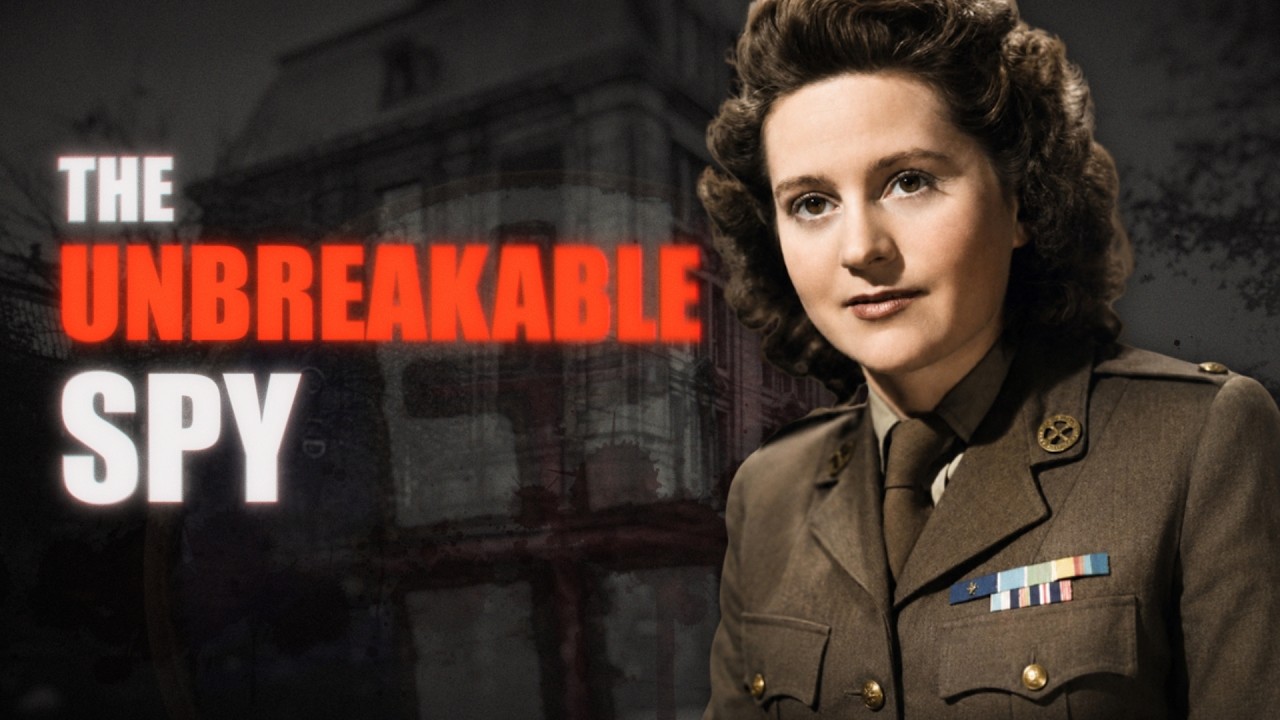
Odette Sansom began her training hoping she would not pass the test. Having left her fate in the hands of others, she realized by the end of her training that she was bound by duty to carry on with her mission. She may not have known at the time that the mortality rate for SOE agents like her was a staggering 42 percent. The only job more dangerous than hers was flying in RAF Bomber Command. Given the high probability of capture, as part of her field kit she was given a cyanide pill, known as an L-pill, to be used only if she could no longer endure Gestapo torture.
Once she arrived in France, her name would be Odette Metayer. She was a French widow working as a seamstress. To reinforce the cover, she had to prick her fingertips with needles to simulate years of sewing work. She was given the field codename Lise. The time had come to depart.
The Spindle network was founded by Captain Peter Churchill, a Cambridge-educated linguist known in the field as Michel and Raoul, who had already completed two missions in France before Odette arrived. Spindle was headquartered in Cannes, and she served as the senior British contact, ran a courier service between circuits, identified landing sites, and maintained safe houses across the region's mountains and towns.
But getting Odette to France to join the Spindle network was a major challenge in itself. It took five attempts. Her first flight, aboard a Whitley bomber, collided with another aircraft landing on the same runway before it even took off. The second attempt, by Lysander, was halted when London learned that its contacts in France had been arrested by the Gestapo. After that, bad weather prevented a seaplane from taking off from Plymouth. A second Whitley took off from Newquay, then lost its right engine and made an emergency landing, nearly crashing into the Celtic Sea from a cliff. Fortunately, no one was hurt, but with Odette's air travel apparently cursed, it was decided instead that she would travel by sea.
So, in mid-October 1942, a troopship carried her to Gibraltar. There she boarded a sailboat with a Polish crew for the run up the French Riviera coast. Finally, Odette reached France in November 1942.
She began her work as a courier, carrying maps and coordinates for parachute drops through mountain passes and German checkpoints. Adolf Rabinovitch, also known as Alec, took charge of wireless contact with London. He was a Russian-Egyptian Jew and a former member of the French Foreign Legion. Leo Marks, SOE's chief cipher officer, described him as one of the best wireless operators in France. His 35-pound transmitter required a 70-foot antenna, and with German direction-finding vans constantly triangulating broadcasts, his transmission time at any location had to remain short. He was the lifeline of communications with London and had to be protected at any cost. Churchill, Rabinovitch, and Odette formed the backbone of SOE support for the Spindle circuit.
Just four days after landing, Odette was sent alone to Marseille to deliver money to resistance leader André Marsac and retrieve a suitcase containing plans for the Marseille docks. It took her two hours to find him, and by then she had missed the last train and was facing curfew. Her contact sent her to a brothel for German soldiers, the only place safe from Gestapo patrols. When military police searched the building door to door at 3 a.m., the madam told them she had a highly infectious disease. That was enough to persuade the soldiers to leave. Odette slipped out at dawn and returned later that day. That was the first of many dangerous encounters.
The Spindle network was fully mobilized in March 1943. Jean and Simone Cottet owned a hotel in Saint-Jorioz on the shore of Lake Annecy. Jean Cottet became a friend of the network and carried a message to Churchill that the Maquis fighters at Glières, a large resistance group in the mountains, urgently needed weapons. Churchill coordinated a massive resupply operation involving 25 aircraft to deliver arms to the resistance. Once the weapons reached resistance hands, they were used to sabotage railways, bridges, and Nazi ships in the region.
As in all resistance networks, its strength was only as great as its weakest link. For Churchill and Odette, that weakest security link was the Carte network. Led by André Girard, Carte was the largest resistance organization in Vichy France. Their security was extremely lax. Girard kept a list of more than 200 agents, with names and photographs, in his own office. His deputy, André Marsac, whom Odette had previously visited in Marseille, carried a copy with him wherever he went. Odette refused to work directly with Girard, telling Churchill that they would be risking their lives needlessly if they did.
Amid all this, the Germans had a man ready to exploit exactly that kind of carelessness. Sergeant Hugo Bleicher had earned wide renown in German counterintelligence circles. While working for the Abwehr's counterespionage service, he had nearly dismantled the Interallié network, the largest Allied espionage and resistance network in France. After the arrest of 60 of its members, he became feared as the Abwehr's bloodhound. All he needed was a crack in the armor, a moment when informants trusted him too quickly and talked too much, or, in Carte's case, a moment of carelessness.
Unlike Gestapo men, Bleicher's methods were more cunning. He was fluent in French, English, and Spanish, and he traveled using the alias Monsieur Jean. He spent the autumn of 1942 monitoring resistance networks from Nice to Marseille. All he needed was an opportunity.
In November 1942, André Marsac carried Girard's list of Carte agents aboard the Marseille-Paris train. The briefcase was on the seat beside him. Somewhere during the long, crowded train journey, he fell asleep. When he woke, the briefcase was gone. The Abwehr was watching that train line. Bleicher knew the resistance used it regularly. But it took the Abwehr several months to act on the valuable intelligence that had fallen into their hands.
By early 1943, they were working through the list name by name. Girard's wife and two of his daughters were arrested. In Arles, 17 agents were caught in a single raid. London had no other choice. It dissolved the Carte network and merged its remaining members into the Spindle network and a new circuit at Auxerre. Girard was recalled to London. Days later, SOE ordered Peter Churchill back to London to brief him on the reorganization of his network. Odette was left in charge, and Churchill asked Rabinovitch, the wireless operator, to look after her.
In Paris, German intelligence was already planning one of their traps. Marsac was due to arrive in the city in an attempt to recruit new members and rebuild his network. German intelligence had an agent named Claire ready to meet him, posing as a sympathizer. Bleicher's task was to monitor the meeting and complete the arrest at the right moment. Marsac arrived with his secretary. Bleicher's team was waiting and arrested them before they finished their coffee.
Marsac was taken to Fresnes prison within an hour. He tried to buy his freedom by handing over hidden wireless crystals and a suitcase containing a million francs. The Germans happily accepted his gift, but Marsac was not going to leave prison. Using his false identity as Monsieur Jean, Bleicher began working on him, spending several days earning Marsac's trust rather than using force. He said he was a German officer tired of the war, and that if Marsac could get him safely to England, they could broker a peace agreement between the German High Command and the British War Office.
Marsac believed the story and even helped Bleicher invent his false identity, Colonel Henri. Within German intelligence, the operation was codenamed Grand Duke. Confident that he had found a friend and a way back to his homeland, Marsac wrote to his wife and his lieutenant, Roger Bardet, recommending his new friend, Colonel Henri. Bleicher carried the letters to Annecy, where Bardet was found in the safe house used by Odette Sansom.
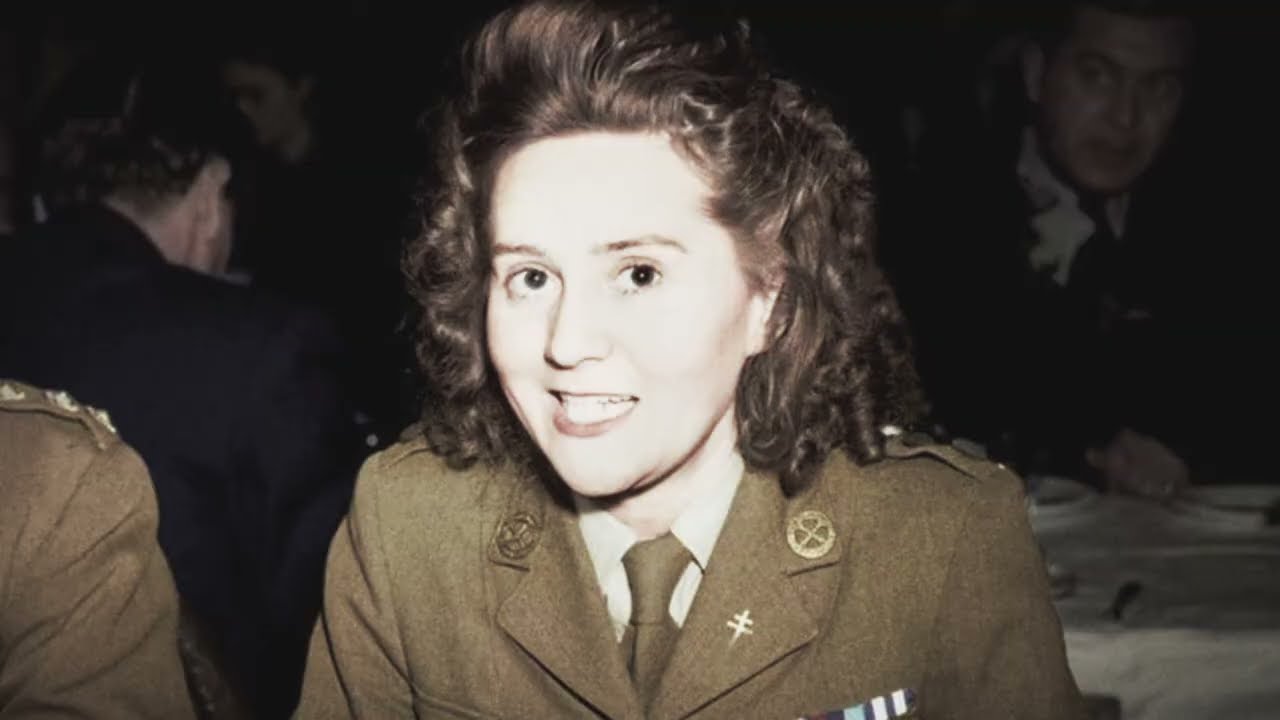
Marsac's letter affected Bardet exactly as it had affected Marsac. He believed every word. To help his new friend reach the network, Bardet gave Bleicher precise descriptions of the Spindle team and the address of the house where Odette was staying.
In early April 1943, Bleicher traveled to Saint-Jorioz in the French Alps to find Odette. He met her at the Hotel de la Poste. Using his own charm, he introduced himself as André, an officer in the German army, and handed her Marsac's letter. He told her what he wanted: a wireless set and a Hudson bomber with a pilot to take him and Marsac to London. He could have arrested her at that moment, but Bleicher was planning bigger goals than the capture of a single agent. Seizing a British aircraft, whether a Hudson or a Lysander, along with its pilot, would be a tremendous intelligence coup. It might even be enough to earn him the Iron Cross personally.
But Odette was immediately suspicious. To buy time, she told them that Bardet needed to see Marsac in person to verify the letter's authenticity. She also added that any decision had to come exclusively from London. Colonel Henri agreed to the condition and invited Odette to visit Paris in the meantime to attend the opera. She declined the invitation, saying she had a medical condition that prevented her from traveling. Later that night, she told Rabinovitch about her meeting with the Nazi officer. He, too, did not believe a word she said.
The next morning, Odette warned Bardet. London would certainly reject the plan, and given their suspicions about Colonel Henri's true intentions, there was no reason for him to go to Paris. But Bardet went anyway, claiming he planned to rescue Marsac himself. At Fresnes prison, Marsac embraced his close friend Jean, convinced he had saved his life. After Bardet committed to the agreement, Bleicher pressed further. He said that if Marsac wanted to protect his men, he had to provide names as a guarantee, a guarantee against any retaliatory actions if André were arrested in London. Still deceived by the ruse, Marsac wrote down 20 addresses of resistance groups from Bordeaux to Strasbourg. Every name went straight into Bleicher's file.
Odette asked Rabinovitch to send an urgent telegram to London about the meeting and the proposed plan. The reply was unequivocal. André is too dangerous, stop. You must hide across the lake and cut all communications. Odette carried out only half the order. She and Francis Cammaerts, head of the Jockey network, moved to a safe house in Cannes, and she sent Rabinovitch to a remote hideout. She found a new hotel across the lake in Talloires to use as a hideout for herself and Churchill, but she delayed actually moving there. That turned out to be a disastrous mistake.
After telling André that the flight could not be arranged before April 18, she had bought enough time to meet Peter Churchill when he parachuted into France. His return was expected any night, and she wanted to regroup before they went into hiding. On April 15, 1943, news reached them that Churchill had returned. Odette and Rabinovitch climbed 6,000 feet up Mont Semnoz in the dark to signal the incoming RAF aircraft. Once Churchill was on the ground, they began the dangerous descent. Odette fell hard on the way down and only later discovered she had fractured one of her spinal vertebrae. Since she was able to keep going, she continued on, ignoring the pain.
The next day was April 16, 1943. Sergeant Hugo Bleicher's plans appeared to have changed. He must have learned that his grand plan to seize a British aircraft and its pilot was no longer possible. So he decided to claim what he considered the second-best prize: the leaders of one of the most active and influential French resistance networks.
When the pistol was pointed at Odette's back in the hotel corridor, her first concern was the wallet in Peter Churchill's jacket. Inside it were 70,000 francs and, more importantly, wireless codes for six agents. In the confusion of the arrest, she swapped his jacket for a sports coat and hid the wallet in her sleeve. She then slipped it under the car seat during the ride to the barracks. The Gestapo never found it.
During their transfer to Paris, she and Peter agreed on a unified story to maintain through every interrogation. They would pretend to be a married couple. They would also exploit Peter's surname, claiming he was a relative of the British prime minister. Odette was to claim that she was the mastermind behind the mission and that she had pressured her husband into coming to France. In truth, if Peter Churchill was related to Winston Churchill at all, it was so distant that it would have made no difference to his position as a Nazi prisoner. Nevertheless, he made the most of his name, hoping that family connection would spare him the worst torture that awaited them. The ruse worked convincingly. The Germans saw Peter Churchill as a valuable political hostage. He was interrogated only twice and was not tortured. Unfortunately for Odette, she bore the rest of what followed alone.
Odette Sansom was taken to the Gestapo counterintelligence headquarters at 84 Avenue Foch in Paris. Her interrogator wanted to know the whereabouts of Adolf Rabinovitch and Francis Cammaerts, two key agents the Germans had not yet captured. Odette's answer was the same every time. I have nothing to say.
When psychological pressure produced nothing, the Gestapo inevitably turned to physical violence. Her back was burned with a hot iron. When burning failed to break her will, one of the Gestapo torturers used steel surgical forceps to pull out all ten of her toenails, one by one. Despite being in a state of delirium from the pain, she did not say a word.
In June 1943, she appeared before a court on Avenue Foch and was sentenced to death on two counts. First, as a British spy, and second, as a French woman working against the occupation. She told the judges that they would have to decide which charge to execute her for, since she could only die once.
Odette arrived at Fresnes prison outside Paris on May 8, 1943, and was led through an underground corridor to cell 108. It measured 12 by 8 feet, with mold on the ceiling, a rusty iron bed, and scratches on the walls. She was classified as a first-class criminal. Notices on her cell door specified: no books, no bathing, no parcels, no exercise, and no privileges. Her daily ration was a small piece of black bread, a bowl of turnip or thin cabbage soup, and a cup of what was called coffee.
By October 1943, she had developed pleurisy, and a gland in her neck had swollen to the size of a grapefruit. Hugo Bleicher visited her and Peter at Fresnes prison, bringing cigarettes and expressing embarrassment at the torture he claimed he had been unable to prevent. Peter was granted special privileges because of his important political connections, or so the Nazis thought. He was once allowed out without handcuffs, permitted to bathe at Bleicher's apartment and change his clothes, and then taken to lunch.
On May 13, 1944, Odette was transferred by train to Karlsruhe criminal prison in Germany. She was handcuffed to another SOE agent, Yolande Beekman, and five other women from the organization made the same journey. At Karlsruhe, the women were held in separate cells and forced to work sewing uniforms and peeling potatoes.
The women's chances of survival were bleak. Hitler's Commando Order required them to be handed over to the Sicherheitsdienst, or SD, for execution without trial. As prisoners under the so-called Night and Fog decree, they were to disappear without a trace. The following month, Vera Leigh, Diana Rowden, and Andrée Borrel were taken from Karlsruhe and executed on July 6, 1944, at Natzweiler-Struthof concentration camp. Yolande Beekman, Madeleine Damerment, and Eliane Plewman were held longer, but were later executed at Dachau in September.
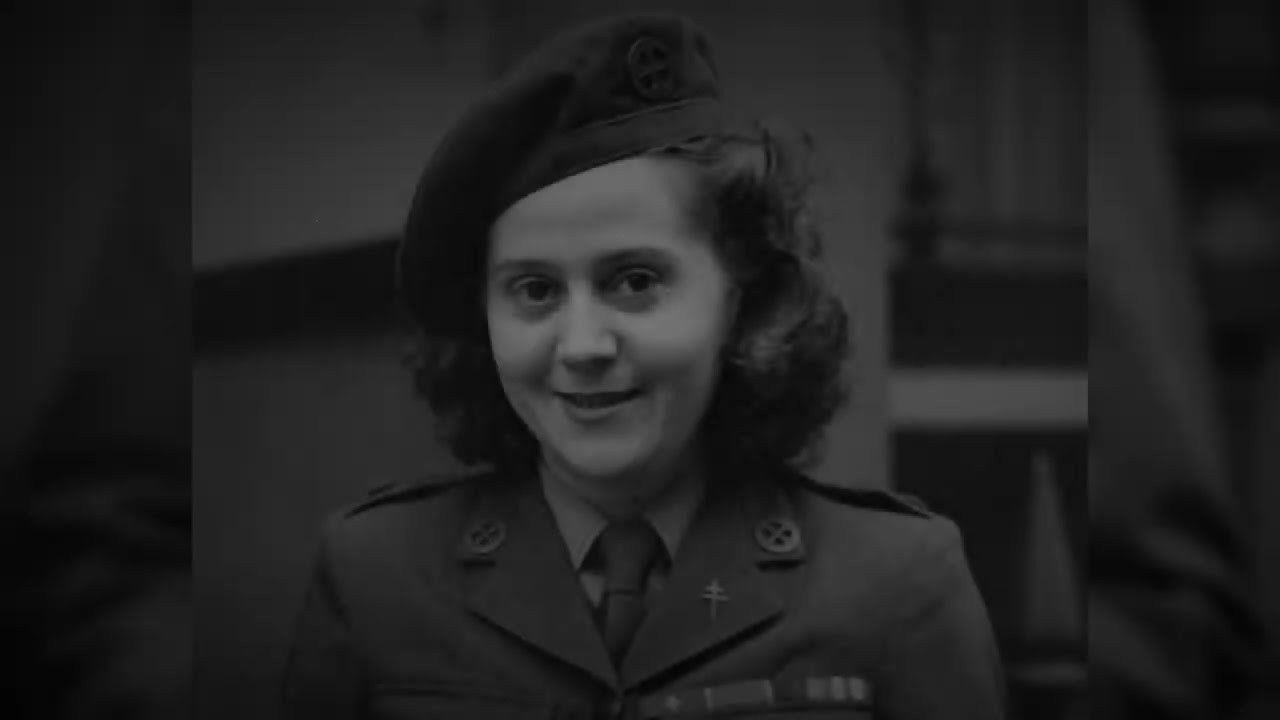
By then, the Nazi war machine was under pressure from the Allies on all sides. On July 18, 1944, Odette was moved out of Karlsruhe. She arrived at Ravensbrück concentration camp later that month and was placed in the bunker, the camp's harshest punishment section, in a cell whose window had been bricked up. Commandant Fritz Suhren ordered that she be known inside the camp as Frau Schurer to prevent the Churchill name from drawing attention.
In August 1944, following the Allied landings in southern France, SS guards turned the central heating in her cell to maximum and deprived her of food for a week. The extreme heat caused her to develop scurvy and dysentery. Her hair fell out, and she became incredibly severely malnourished. When a guard told Suhren that she would probably die within a week, he allowed her to receive medical treatment and vitamin injections at the camp hospital, which kept her alive but in isolation.
In December 1944, Suhren moved her to cell 32 in the main bunker building, only 6 yards from the crematorium. She could hear the sound of the machinery through the bricked-up window. Ash and remnants of human hair seeped through the available ventilation openings and settled on the floor.
On April 16, 1945, Fritz Suhren received orders from Heinrich Himmler to execute all bunker prisoners and witnesses before the camp was liberated. But he did not carry out those orders in Odette's case. He concluded that a relative of the British prime minister was worth more to him alive than dead. As the Russian army approached the camp from the east, he realized he needed a bargaining chip.
On May 1, 1945, with Russian forces closing in, Fritz Suhren took Odette out of Ravensbrück in his white open-top Mercedes. As he drove toward the American lines with a picnic basket and a bottle of Burgundy, he calculated that appearing as the man who had protected the British prime minister's relative would earn him lenient treatment. When they reached the American position, Suhren told the soldiers that Odette was a relative of Winston Churchill and that he had taken good care of her. But Odette told the soldiers the truth of the situation. She told them that the man standing beside her was Fritz Suhren, commandant of Ravensbrück concentration camp, and that they should arrest him immediately.
Finally, miraculously, Odette was free and alive. She returned to London on May 8, 1945, Victory in Europe Day, arriving amid the city's celebrations. Doctors at Queen Alexandra Military Hospital in Millbank described her condition as appalling. She weighed less than 84 pounds. Her fifth vertebra, fractured on Mont Semnoz, had gone untreated for two years, and the toenails pulled out on Avenue Foch never grew back. She relearned to walk on her heels and wore men's shoes for two years until she recovered.
Her marriage to Roy Sansom did not survive the war, or at least did not survive the person the war had turned her into. They divorced in 1946. She and Peter Churchill married on February 15, 1947, at Kensington register office. The press treated the story like a fairy tale.
In August 1946, St. James's Palace announced that Odette would receive the George Cross. She was the first woman to receive it while still alive. At her investiture at Buckingham Palace in November of that year, King George VI personally asked her to lead a procession of 250 medal recipients. She was also honored by the French with the Legion of Honour.
Odette and Peter Churchill's fame reached new heights after the 1950 film Odette, starring Anna Neagle and Trevor Howard, which portrayed their wartime experiences. But all that public recognition brought a great deal of scrutiny with it.
In the late 1950s and 1960s, MP Irene Ward campaigned to have the George Cross revoked, accusing Odette of exaggerating her torture and claiming that her survival was the result of an intimate relationship with the camp commandant. She also focused on the relationship between Sansom and Churchill and whether it had led to security breaches and endangered the mission. But Odette's medical records proved beyond doubt that she had been tortured and mistreated, and the campaign failed.
The famous historian M. R. D. Foot also questioned in his 1966 official history of SOE how much Odette had been tortured and raised doubts about aspects of her account. He also questioned her relationship with Peter Churchill while they were in the field. Odette sued for libel and won a public apology published in The Times, along with a financial settlement.
Her fairy-tale marriage to Peter Churchill did not last either. He lectured and published a three-volume memoir, and the public attention he sought was something she found difficult to bear. They divorced in 1956. She later married Geoffrey Hallowes, also a former SOE officer.
The fates of the others involved in this story varied. Commandant Fritz Suhren escaped British custody in December 1945 and lived under an assumed name in a Bavarian village for years before a former Ravensbrück secretary recognized him. American forces recaptured him on March 24, 1949. Odette testified against him at war crimes trials in Hamburg and later at his trial in Rastatt. Suhren was convicted and hanged on June 12, 1950.
After the collapse of the Spindle network, Roger Bardet became an open collaborator with the Nazis. He worked for German intelligence and the SD, helped dismantle a separate network called Inventor, and revealed the address of its wireless operator, Vera Leigh, the same woman who was executed alongside Odette's close companions at Natzweiler-Struthof. He was convicted of treason in 1949 and sentenced to death, but the sentence was not carried out and he was released from prison around 1955.
Adolf Rabinovitch managed to escape the raid at Saint-Jorioz despite receiving orders to return to England immediately. He refused to leave until he had personally warned Francis Cammaerts in Cannes that the network had been compromised. He then crossed the Pyrenees and eventually returned to France to continue resistance work. He was arrested the day before the D-Day landings in 1944, and because of his Jewish origins he was sent to the Rabitz extermination camp in Poland, where he was killed in the gas chambers.
Hugo Bleicher was captured by Canadian soldiers and Dutch militia in Amsterdam on May 31, 1945. British intelligence assessed him as a relatively humane man who had no sympathy for the Nazis. The French authorities released him in September 1946 after he provided an affidavit that cleared many resistance members of treason charges. He returned to his village of Tettnang in Germany and opened a tobacco shop.
In her later years, Odette was a prominent supporter of Amnesty International and served as vice president of the First Aid Nursing Yeomanry, or FANY. In 1993, at the age of 81, she returned to Ravensbrück and unveiled a memorial plaque to the SOE agents who died there. Odette Sansom died at her home in Walton-on-Thames on March 13, 1995. She was 82 years old. She was buried in Burvale Cemetery in Surrey in the same grave as her mother, Yvonne Brailly, and her third husband, Geoffrey Hallowes.