Frank Rosenthal, known throughout Las Vegas as “Lefty,” ran four major casinos without ever holding a gaming license. He was a numbers genius who revolutionized sports betting, hosted celebrities on his own television show, and operated at the center of the largest casino skimming operation in FBI history. On October 4, 1982, someone placed a bomb under his Cadillac outside a restaurant. The explosion should have killed him.
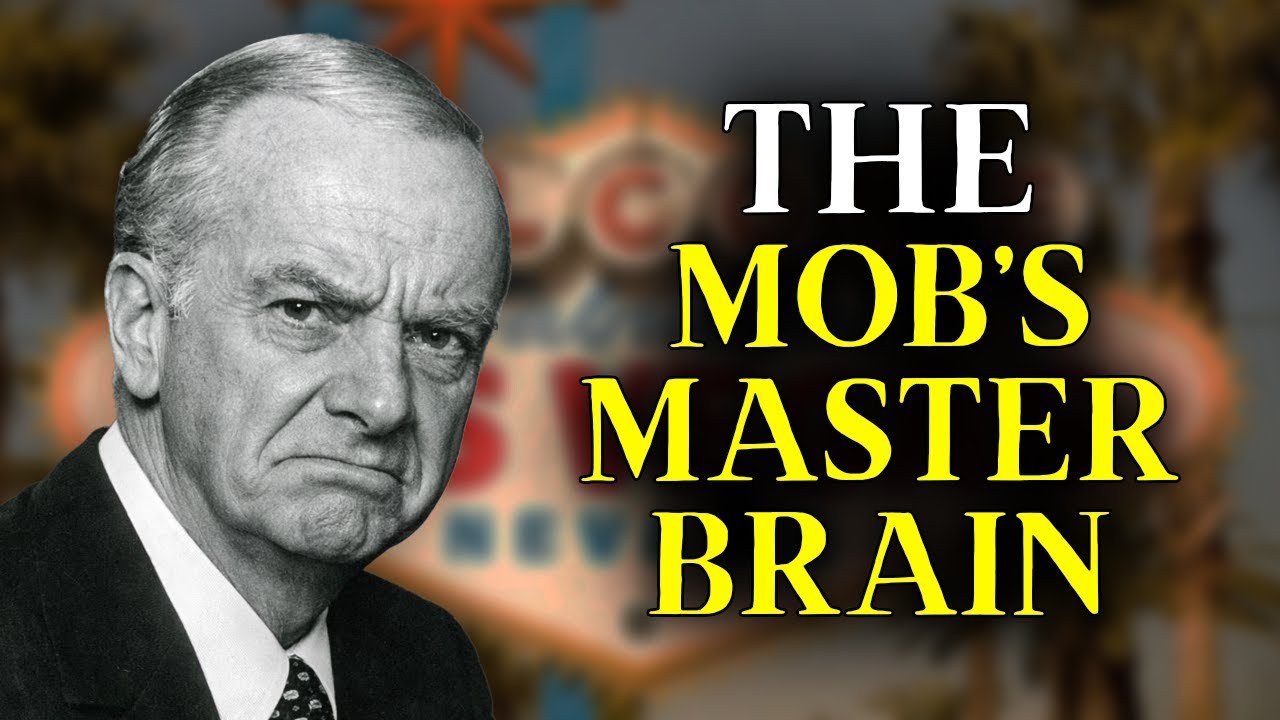
It did not. Rosenthal was born on June 12, 1929, in Chicago. His father owned racehorses, and young Frank grew up studying racing forms and learning odds instead of playing like other children. He developed an extraordinary ability to calculate probability and see patterns in sports that others missed.
By his teenage years, he was already betting professionally and winning consistently. The Chicago outfit noticed his talents. They recruited him not for muscle but for his brain. Through the 1950s, Rosenthal ran sports betting operations for organized crime, setting lines and managing books.
He earned the nickname “Lefty” simply because he was left-handed. In 1961, Sports Illustrated called him one of the greatest living experts on sports gambling. Federal heat in Chicago pushed him west. In 1968, Rosenthal moved to Las Vegas, a city where mob families from Chicago, Milwaukee, Cleveland, and Kansas City were competing for control.
In 1974, Alan Glick used a $62. 7 million Teamsters pension fund loan to form Argent Corporation and purchase four casinos: the Stardust, Fremont, Hacienda, and Marina. Glick was the owner on paper, but Rosenthal ran everything. Rosenthal earned roughly $4 million a year as an executive consultant, though he had no gaming license and no official authority.
He reshaped the Stardust, creating the first integrated race and sports book inside a casino. He installed massive odds boards, hired expert handicappers, and made sports gambling a glamorous centerpiece of the casino floor. Every modern sports book in Las Vegas traces its origins to what he built. He also hired female blackjack dealers, the first casino on the Strip to do so systematically.
Revenue doubled within a year. His obsession with detail became legendary, including his requirement that blueberry muffins baked in Stardust kitchens contain exactly 16 blueberries each. Employees who cheated at table games reportedly had their hands crushed with rubber mallets. His television show, taped at the Stardust, featured guests including Frank Sinatra, Bob Hope, Wayne Newton, and O.
J. Simpson. For someone barred from holding a gaming license, the show was a bold display of influence. Frank Sinatra had never appeared on a talk show before.
Behind the scenes, a massive skimming operation ran through the Stardust count room. Money was diverted from the casino cage before counting, undercounted through compromised coin-weighing equipment, and transported to mob bosses in multiple cities. Between 1974 and 1979, an estimated $7 million to $15 million was skimmed. The exact figure remains unknown.
The FBI investigated for years but never charged Rosenthal. In 1983, indictments came down against 15 other people connected to the operation. Rosenthal was never named. He claimed he knew nothing about the skim, and prosecutors never produced evidence tying him to it.
The Nevada Gaming Control Board took a different approach. In 1976, they ordered Rosenthal to apply for a key employee license. He refused. After losing an appeal in the Nevada Supreme Court in 1980, he was barred from any gaming-related work in the state.
He remained in Las Vegas anyway, hosting his show and continuing to act as entertainment director. His personal life was collapsing alongside his professional empire. His wife, Geri McGee, a former showgirl he married in 1969, maintained a long relationship with Lester Diamond, a hustler from her past. More devastating, she began an affair with Tony Spilotro, a violent Chicago enforcer who had been sent to Vegas to protect mob interests and who was also Rosenthal’s close friend.
Spilotro ran a burglary crew called the Hole in the Wall Gang and was secretly skimming from the skim. He was also sleeping with Rosenthal’s wife. Geri McGee died in a Los Angeles motel room in 1982 of a drug overdose, ruled accidental. Rosenthal never publicly blamed her or Spilotro.
The car bombing came two months after Geri’s death. On the night of October 4, 1982, Rosenthal left Tony Roma’s restaurant and got into his 1981 Cadillac Eldorado. When he turned the ignition, the bomb exploded. Witnesses heard the blast blocks away.
Rosenthal crawled from the burning wreckage, clothes on fire, screaming that someone was trying to kill him. He survived because of a metal plate under the driver’s seat in his specific Cadillac model, which absorbed enough of the blast to save his life. He spent weeks hospitalized with burns and broken bones. No one was ever charged with the bombing.
The FBI and Las Vegas police investigated but never made an arrest. Rosenthal left Las Vegas six months later. He moved his children to California and then Florida, where he ran a sports bar and worked as a consultant for offshore betting operations. He never remarried.
Tony Spilotro was killed in June 1986. He and his brother Michael were lured to a meeting in Indiana under the pretense of a promotion, then beaten to death with baseball bats and buried in a cornfield. Dental records were needed to identify the bodies. Martin Scorsese’s 1995 film Casino brought Rosenthal’s story to a new generation.
Robert De Niro played a character based on him, and Rosenthal rated the portrayal about a seven out of ten. He refused to comment on Sharon Stone’s portrayal of his late wife. Rosenthal died of a heart attack in 2008 at age 79. He had outlived his enemies and his wife.
His obituary described him as a sports handicapper and casino executive without mentioning the mob, the skim, or the bomb. His legacy survives in modern Las Vegas. The integrated sports book he created became the industry standard, his hiring of female dealers proved a business success, and his attention to detail influenced elite casino operations.
But his larger significance lies in representing the end of mob-controlled Vegas, the era that corporate regulation was designed to eliminate.