A leaked police document, a media frenzy, and a relentless public interrogation—these were the forces that converged to destroy the life of Lee Sun-kyun, the beloved Oscar-winning star of “Parasite. ” In less than 70 days, the wealthy actor lost his career, his dignity, and ultimately his life, despite every scientific drug test coming back negative. The nightmare began in October 2023 when an internal police investigation in Incheon, South Korea, was leaked directly to the press. A police lieutenant, who was not even assigned to the drug enforcement team, snapped photos of a confidential progress report detailing an investigation into high-profile figures, including Lee Sun-kyun.
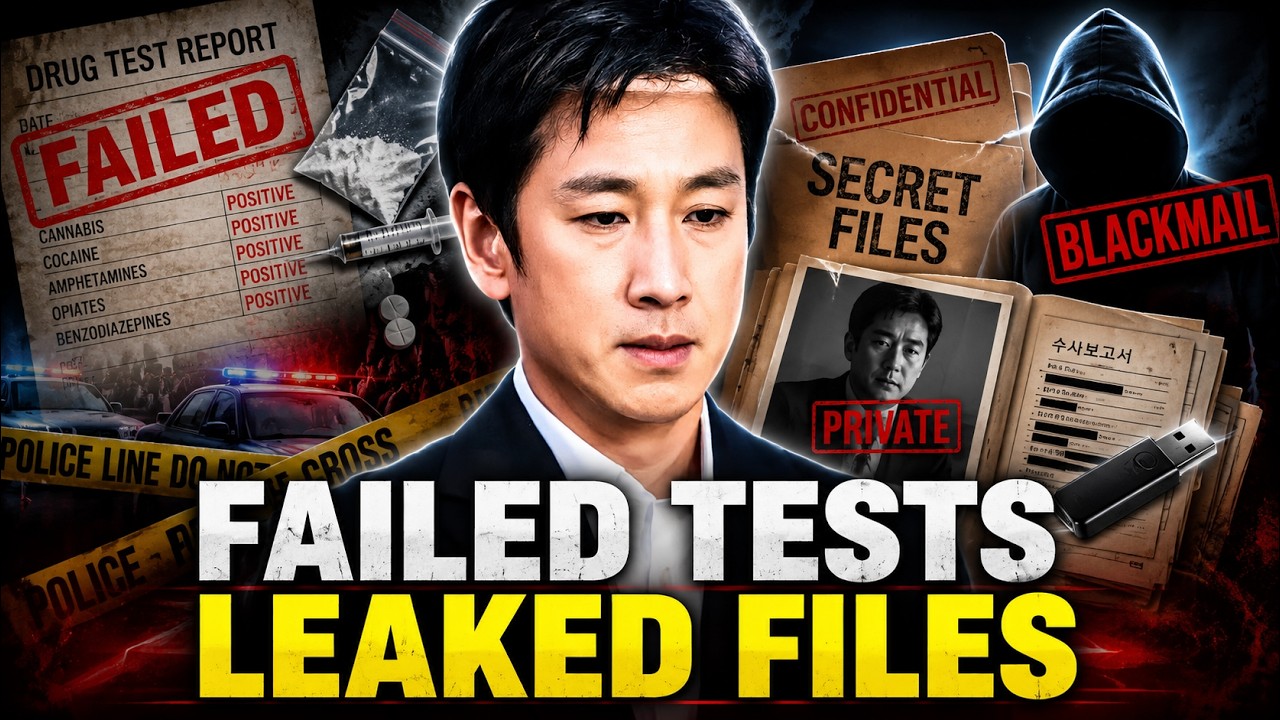
The officer handed these documents to local journalists, sparking a massive media storm long before any official charges were filed or any physical evidence was secured. News agencies ran with the story on October 19, thrusting the famous actor into a harsh public spotlight. By October 24, authorities had formally registered a case against Lee Sun-kyun under the Narcotics Control Act, based largely on the claims of a hostess known as “A,” who managed an upscale bar. Just four days later, police called the actor in for his first public appearance, forcing him to walk a gauntlet of flashing cameras.
During that visit, officers administered a rapid urine test and a preliminary screening kit for immediate signs of illegal substances. Both initial tests came back completely negative, offering no physical evidence of drug use. Despite this absence of tangible proof, sensitive details about the case continued to leak to the press daily. In early November, investigators sent samples to the National Forensic Service for advanced laboratory analysis.
Forensic experts examined extensive hair samples, which can reveal drug use over the preceding eight to ten months. On November 3, the lab announced that the comprehensive hair test results were negative for all illegal substances screened. Officials then requested additional tests on leg hair samples to confirm the findings, but those secondary tests also came back negative or inconclusive. Science consistently failed to support the initial allegations, showing no trace of drugs in his system.
With no criminal evidence, police shifted the full weight of their investigation onto the verbal statements of hostess “A. ” The woman claimed the actor had used illegal substances at her home on several occasions. Lee maintained his innocence emphatically, explaining that she had given him things under the guise of prescribed sleeping pills, and that he had no idea they were illegal drugs. Complicating matters further, the actor had already filed a formal blackmail complaint against her, stating that she and an accomplice had threatened him and extorted 350 million won, roughly $270,000.
By mid-November, the situation had become a complex battle between undocumented verbal testimony and solid scientific data. Investigators continued to rely on the statements of a person actually accused of blackmail, while ignoring that every forensic test had come back negative. The structural flaws of the investigation became increasingly apparent as confidential details, personal rumors, and unverified statements were routinely shared with news outlets. Public perception was shaped entirely by media leaks, rather than documented facts.
In late November, the investigation took a dramatic and damaging turn away from physical evidence and into the actor’s personal life. Major broadcast networks, including the public broadcasting giant KBS, began airing leaked audio recordings of private phone conversations between Lee Sun-kyun and hostess “A. ” These recordings contained no concrete evidence of drug use but revealed intimate and highly personal dialogue unrelated to any criminal offense. The publication of these private calls transformed a legal investigation into a sensational public spectacle, unleashing harsh moral judgment across internet forums and social media.
Throughout December 2023, the media obsession escalated, causing catastrophic damage to the actor’s reputation and career long before any courtroom could assess the facts. Commercial brands rushed to terminate endorsement contracts and pulled advertisements featuring his image. Major entertainment production companies indefinitely delayed the release of upcoming feature films, while television networks hurried to exclude him from high-budget series projects. The relentless wave of unverified leaks created a suffocating environment of character assassination, effectively convicting him in the court of public opinion while police still lacked a single positive lab result.
A critical turning point came on December 23, when authorities summoned the actor to the Incheon Metropolitan Police Agency for his third formal interrogation. Instead of a routine session, investigators subjected him to an exhausting 19-hour ordeal that stretched into the morning of December 24. Exhausted and desperate to prove his truthfulness, the actor submitted a formal request through his lawyer asking to undergo a polygraph test. He asked that both he and hostess “A” be tested together so that neutral experts could scientifically evaluate who was telling the truth about the sleeping pill deception.
On December 26, Lee’s legal team filed another formal written request asking police officials to keep future summonses confidential. The defense asked that any subsequent questioning be conducted behind closed doors to spare the actor another humiliating walk through a gauntlet of media cameras. However, the police department refused the private appearance request, insisting that subjecting prominent figures to the public filming line was standard procedure. The refusal left the actor unprotected before the unrelenting media circus waiting outside the station walls.
The unrelenting pressure reached a tragic end on the morning of December 27, 2023, when emergency services discovered Lee Sun-kyun’s body inside his parked car near Waryong Park in central Seoul. Evidence found in the vehicle suggested he had taken his own life, bringing an end to a grueling two-month ordeal that had destroyed his world. Before leaving his home for the last time, he left a private note for his wife, actress Jeon Hye-jin, expressing deep sorrow and apologizing for the unbearable burden the scandal had placed on his family and agency. Following the discovery of his death, the Incheon Metropolitan Police Agency formally closed the drug investigation under legal provisions regarding deceased suspects.
The sudden closure left the public without any official judicial resolution or final ruling on the original drug allegations. Instead of answers, the abrupt ending left a mountain of unresolved questions, zero positive criminal results, and a nation grappling with the devastating real-world consequences of aggressive media leaks and unchecked public anger. In the immediate aftermath, the contradictions lingering in the investigation sparked widespread public outrage and systemic scrutiny throughout South Korea. The central absurdity of the entire case revolved around a stark contrast: every scientific test conducted by the National Forensic Service came back negative for illegal drugs.
Yet law enforcement continued to conduct intensive public interrogations based solely on the shifting verbal testimony of a bar manager. Adding to the procedural irrationality, the key witness providing these allegations was herself under investigation for blackmailing Lee Sun-kyun for 350 million won. Legal observers questioned why investigating authorities granted absolute credibility to an accused blackmailer while completely ignoring objective physical evidence, raising troubling doubts about whether the case was driven by law enforcement goals or a desire for headlines. The fallout extended far beyond the courtroom, devastating lives and careers across multiple sectors.
Lee Sun-kyun’s decades-long acting career was erased overnight, causing severe financial losses for film production companies, distributors, and advertising agencies. His family members endured intense public harassment and invasive media coverage that exposed details of their private lives. Meanwhile, sensational reports generated massive web traffic and high ratings for media outlets, leading critics to argue that the press and commentators directly profited from the systematic destruction of a public figure’s reputation before any conviction was proven. Demands for accountability peaked on January 12, 2024, when a coalition of prominent cultural figures formed the “Conference of Professionals in Culture and Arts” and held a national press conference in Seoul.
Led by Oscar-winning director Bong Joon-ho, along with veteran actors and filmmakers, the group issued a joint statement demanding a comprehensive independent investigation into police misconduct and the illegal leaking of official records. They explicitly criticized major news networks for broadcasting private phone recordings unrelated to the crime and urged the national legislature to enact new strict laws protecting the human rights of suspects during ongoing criminal investigations. The growing pressure forced senior investigative authorities to open an internal probe into the Incheon Metropolitan Police Agency to trace the sources of unauthorized media leaks. On March 21, 2024, anti-corruption investigators raided police offices and arrested a senior officer at the Incheon agency who had not been part of the original drug enforcement squad.
Subsequent investigations revealed that this officer, working with an investigator from the prosecution office, had taken secret photos of internal progress reports and handed them to local journalists in October 2023. Both individuals were later relieved of duty and charged with disclosing official secrets, exposing a deep network of illegal information exchange between law enforcement personnel and the media. Despite the arrests of those responsible for the leaks, the tragedy remains one of the most controversial stories in modern South Korean history. The case highlighted a destructive cycle where public agencies leak unverified claims to the media, creating an irreversible public narrative long before facts are evaluated in a court of law.
Posthumous film releases such as “Land of Happiness” and “Project Silence” served as sobering reminders of his artistic talent, while legal experts and human rights advocates continue to use his story as a primary example of the urgent need for structural reforms to curb trial by media and protect individual rights during police investigations. The tragic downfall of Lee Sun-kyun exposed a terrifying system where media leaks and unverified allegations could destroy a human life overnight without a single piece of physical evidence. Long after the cameras have stopped rolling, his story stands as a stark warning about the lethal power of public rage and institutional failure.
His artistic legacy will live on, but the painful questions surrounding his final days will echo for generations.