Queen Victoria deliberately kept Windsor Castle freezing cold, commanding that fires remain low even as guests and courtiers shivered through evening events in silk and velvet, none daring to complain about the temperature she personally preferred. Windsor is the oldest and largest occupied castle in the world, a royal residence for more than 950 years. It covers roughly 13 acres and contains around 1,000 rooms, divided into three wards. The sheer scale made it nearly impossible to heat: medieval stone walls held winter cold deep into spring, and corridors running hundreds of feet funneled chill from end to end.
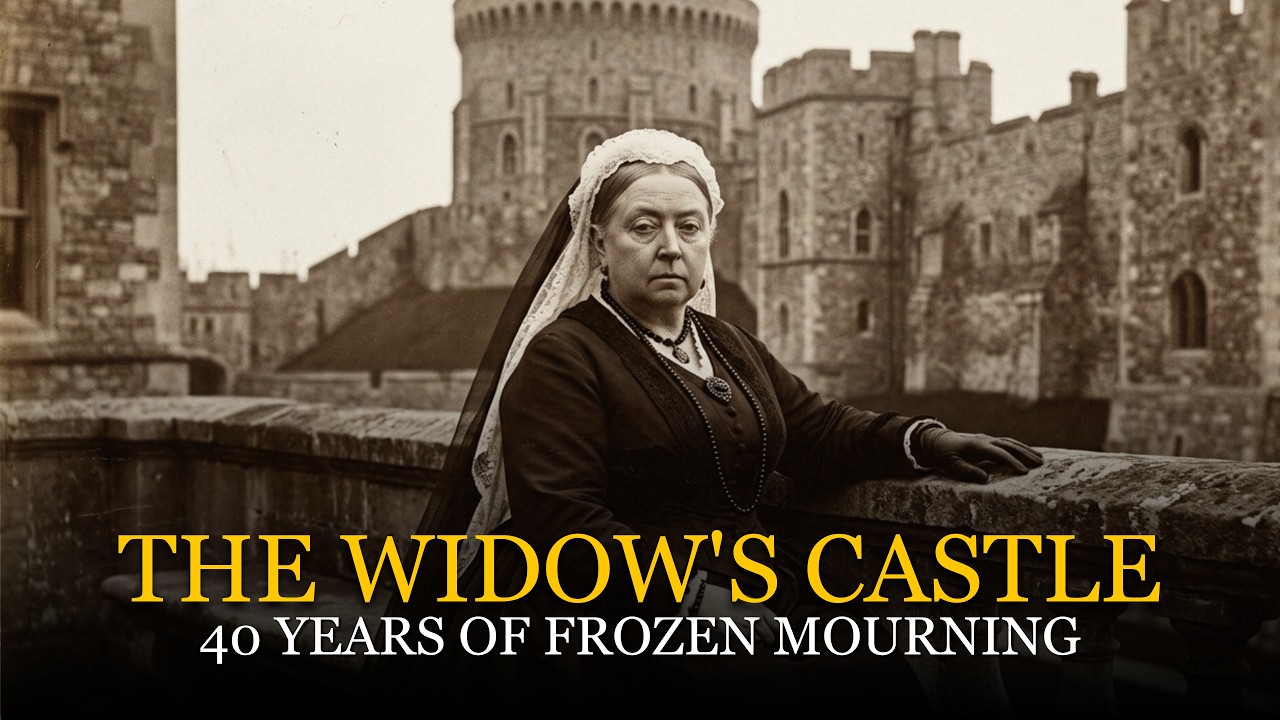
The great library was so cold that guests could see their breath among the books, and it became legendary for generations. Victoria disliked warm rooms, finding them close and oppressive. Her preference for cold, fresh air became the rule for every room she might enter. The household froze by command, and no one dared ask for a better fire, as doing so would imply criticism of the queen’s own arrangements.
Guests endured the evenings in silence, and servants had the worst of it, working in the coldest, least heated parts of the castle and sleeping in unheated attic rooms under the eaves. The castle’s operation required a vast hidden workforce. Before dawn each day, housemaids moved through the sleeping castle by candlelight, raking out cold ash, hauling coal up narrow back stairs, and laying and lighting fires so rooms might hold some warmth by the time anyone of rank awoke. The rule was absolute: servants were to be neither seen nor heard, vanishing the moment a person of rank appeared.
Windsor was threaded with a hidden second castle of back stairs and service corridors, allowing servants to reach nearly any room without crossing paths with the family. The royal household employed more than 1,000 servants across all crown residences, with hundreds at Windsor alone. The great kitchen, in continuous use for more than 650 years since the reign of Edward III, produced hundreds of dishes for state banquets. But the kitchen sat a very long way from the dining hall.
Footmen carried covered dishes through freezing stone passages to St. George’s Hall at the far eastern end of the upper ward, and by the time the food arrived, it had surrendered much of its heat to the cold stone along the way. Dining at Windsor ran to a rhythm set entirely by the queen. Victoria ate quickly, and no guest could continue eating a course once she had finished hers.
The instant she laid down her knife and fork, plates were cleared up and down the table, whether diners had finished or barely begun. Many went to their beds hungry. After dinner came the long, famously dull evening. Guests could not retire until the queen chose to withdraw, so the household sat together in cold drawing rooms, making careful conversation and playing mild games while watching the clock.
Ladies were reprimanded for walking outside the castle walls without a chaperone, and certain subjects could not be spoken of within earshot of the younger princesses. The cold and the rules were not always the whole story. When Victoria came to Windsor as queen in August 1837, she was 18 years old and had just escaped the suffocating control of her childhood. In those first bright years, the ancient castle was a place of youth and freedom.
She celebrated her 20th birthday there in 1839, dancing until nearly 2 a. m. , and played battledore and shuttlecock down the grand corridor with her companions. She spent her honeymoon at Windsor in 1840 after marrying Albert, and the castle became the seat of a growing family.
Her son Prince Alfred was born there in 1844, the only one of her nine children not born at Buckingham Palace. At Christmas, the castle was transformed with decorated German trees that Albert had brought from his homeland. It was Albert, far more than Victoria, who made the vast establishment actually work. He reformed the tangled household in the mid-1840s, concentrating authority under a single master of the household.
He brought in the Christmas trees and the custom of a close family Christmas, and his energy gave the place a real center. For 20 years, the cold castle had a warm heart, and its best years were a measure of how far he had come. Albert fell ill in the autumn of 1861, weakening through December. Doctors named it typhoid fever, though the exact cause has been debated ever since.
On December 14, 1861, in the blue room at Windsor, he died at just 42 years old. The blue room had already witnessed the deaths of George IV in 1830 and William IV in 1837. Victoria ordered the blue room preserved exactly as it had been at the moment of Albert’s death. She had its ceiling painted over with stars, turning it into a shrine where she went to pray and grieve.
She wore mourning black without a break until her own death in 1901, and she withdrew from public life so completely that the country began to murmur openly against her. She became known as the Widow of Windsor, and she came to describe the castle as prison-like, even as a dungeon. The old way of life did not long survive her. Across the decades after 1901, central heating and electric light crept into the castle, and the vast resident household dwindled.
The human army that had risen in the dark to fight the cold grew smaller year by year, until the old Victorian establishment passed away entirely. Windsor itself endured. It belonged to the crown, and the crown held on to it through every century. Queen Elizabeth II chose Windsor as her weekend home from 1952 onward and made it her main home in her final years.
The castle remains the oldest and largest occupied castle in the world, still lived in, still standing on its Norman mound above the Thames. The deep past remains intact: the round tower still wears the stone crown that Wyattville raised for George IV, St. George’s Chapel still holds royal tombs beneath its floor, and the great kitchen still works after more than 650 years of continuous use. But what the visitor cannot see is the second castle, the hidden world of back stairs and cold passages where the real work was done.
The deepest truth is that grandeur on such a scale was never comfort. Every scrap of warmth in all those rooms had to be made by hand and carried by hand through the cold. Victoria had a crown, an empire, and the most famous castle on earth, and she called it a prison after it took her husband from her. The castle gave her 20 warm years, then 40 years of grief and cold in exchange.
The grandeur was entirely real, and so was the cost, paid in full and in silence by the people no one was ever meant to see.