In April 1941, Nazi Germany and its Axis allies invaded the Kingdom of Yugoslavia, crushing the royal Yugoslav army within days. In Serbia, one of the most significant parts of the occupied kingdom, the new authorities quickly found willing collaborators among the followers of Zbor, a small fascist movement that had spent years promoting authoritarian rule, anti-Semitism, and close ties with Nazi Germany. The German occupation transformed Zbor from a marginal political group into an active collaborator. Thousands of its members eventually served in the Serbian Volunteer Corps, fighting alongside German forces against the communist partisans led by Josip Broz Tito.
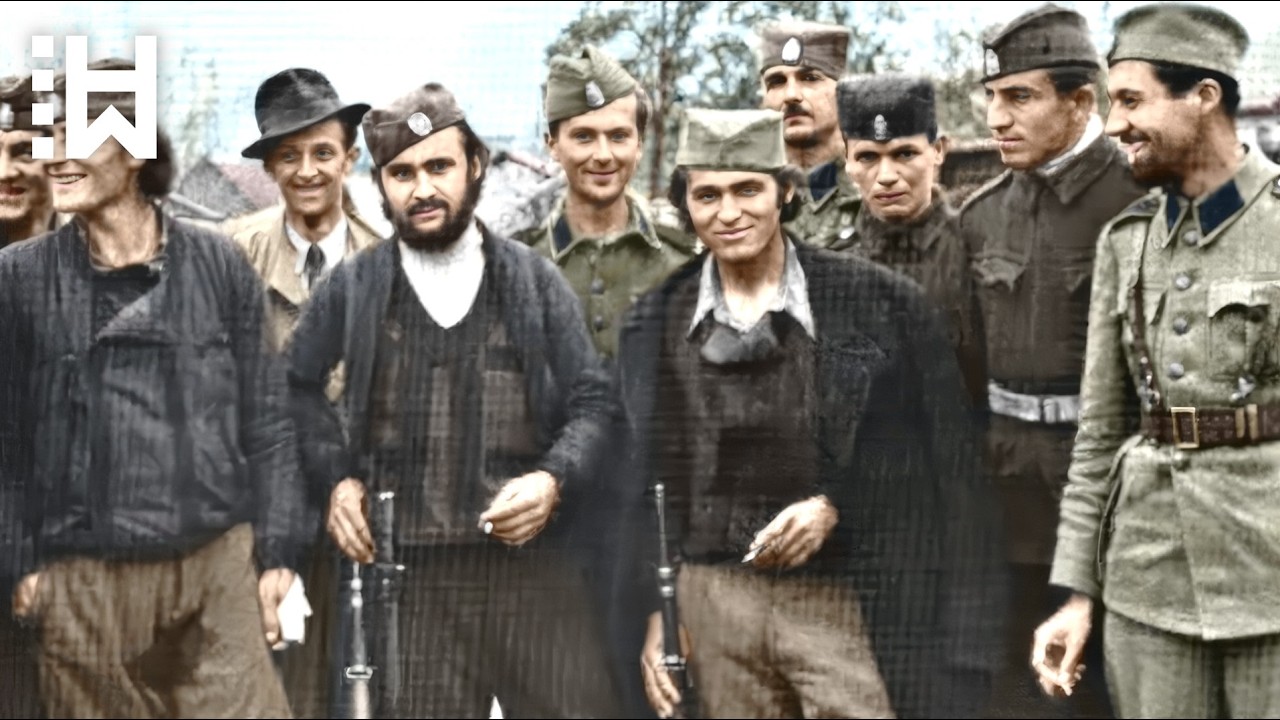
Others helped track down Jews who had escaped capture, dragging the movement deeper into collaboration with the Nazi occupation regime. By 1945, however, Nazi Germany was collapsing and Zbor’s followers were retreating westward. Many finally surrendered to the British, believing they had escaped the advancing partisans. Instead, thousands were returned to Yugoslavia and handed over to the very forces they had spent years fighting.
For many, there was no second escape. The Yugoslav National Movement, known as Zbor, was founded in Belgrade on January 6, 1935, through the merger of several small nationalist and far-right organizations. It was led by Dimitrije Ljotić, a Serbian politician and former Yugoslav minister of justice, who rejected parliamentary democracy and wanted to replace it with an authoritarian, centrally organized state. Another prominent member was Filip Jajić, who served as Zbor’s secretary general during its early years.
Zbor promoted Christianity, traditional values, and corporatism as the foundations of this system. Ljotić spoke of uniting Serbs, Croats, and Slovenes in a common Yugoslav state, but he envisioned Serbia as the dominant force. The movement was fiercely anti-communist and xenophobic, and Zbor became the only political party in Yugoslavia that openly promoted anti-Semitism. One German observer described it as a kind of national socialist party based on opposition to Jews, Freemasons, communists, and Western capitalism.
Yet these ideas found only limited support among ordinary Serbs. Zbor’s active membership never exceeded 10,000 people, and the movement’s attempts to reach power through elections failed miserably. Ljotić’s open sympathy for Nazi Germany only made him more disliked in a country where anti-German sentiment remained widespread. What Zbor lacked in domestic support, it increasingly found abroad.
German industrial firms and intelligence agencies provided the movement with money, strengthening a relationship with Nazi Germany that grew ever more important. When World War II began in September 1939, Ljotić publicly supported Yugoslavia’s neutrality. At the same time, he argued that the country’s foreign policy should be oriented toward Berlin. By that point, German influence within Zbor had extended even further.
The movement was infiltrated by the SS, the Gestapo, and the Abwehr, the German military intelligence service. During 1940, the movement became increasingly violent. Clashes with communist youth helped fuel the growth of Zbor’s student wing, known as the White Eagles. On October 23, its members gathered at the University of Belgrade armed with pistols and knives.
Students and faculty were threatened, and several people were stabbed while the attackers praised Adolf Hitler and Benito Mussolini and shouted anti-Semitic slogans. The violence sparked outrage across Serbia. The next day, the Yugoslav government banned Zbor and subsequently arrested several hundred of its members.
Despite the crackdown, the movement remained active, and when Germany invaded in 1941, Zbor was ready to step into its role as a collaborator under the new occupation administration.