When Stanley Kubrick needed an actor to play the bomb-riding Major “King” Kong in Dr. Strangelove, he found a rodeo veteran who had spent two decades breaking bones in arenas and playing bit parts in B-movie westerns. Slim Pickens, born Lewis Bert Lindley Jr. in Kingsburg, California in 1919, rose from a hardscrabble farming childhood to become one of Hollywood’s most recognizable cowboys, but the ride was marked by injury, near-poverty, and a famously demanding final chapter.
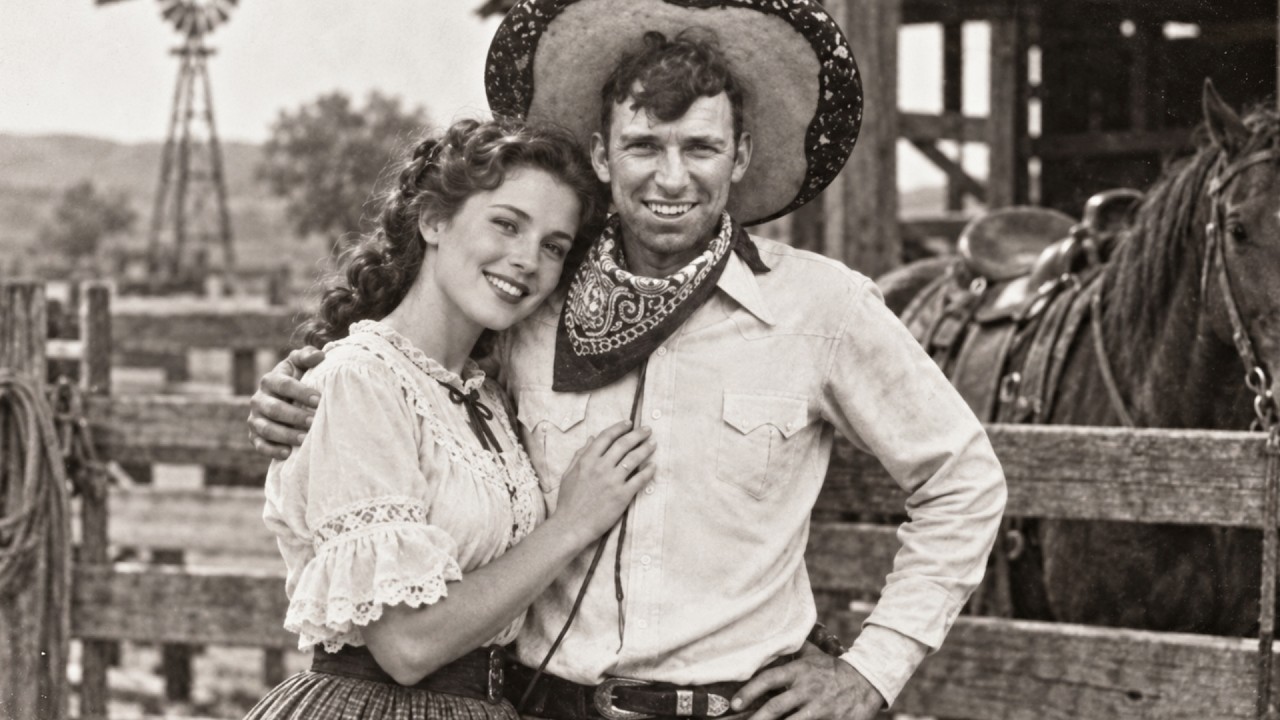
Pickens grew up in California’s Central Valley, the son of a dairy farmer. His deep drawl often led audiences to assume he was from Texas, but the accent came from his father and family environment. Life on the farm was hard, and his father expected him to follow in his footsteps. Slim, however, was drawn to horses and rodeo, a far riskier path with little financial security.
According to family stories, his father warned him that if he entered a rodeo, he should not come back home. When the teenage Slim showed up at a registration table anyway, he told the man taking entries about his dilemma. The man reportedly replied that there would be “slim pickings” out there for a boy like him, and wrote the name on the entry form. The insult became his stage name.
That day, Slim won around $400—a significant sum for a farm kid in the Depression era. For roughly two decades, rodeo was his life, and it took a brutal toll. Slim competed in bareback bronc riding, saddle bronc riding, and bull riding. He also worked as a rodeo clown and bull fighter, deliberately placing himself between angry bulls and fallen riders.
The injuries piled up: a crushed chest, two fractured skulls, two broken wrists, a broken elbow, a broken collarbone, and a broken hand. Both feet were broken five times, he broke his back twice, and he lost count of his broken ribs. In one incident alone, doctors found 17 broken bones on one side of his body. Despite the pain, he became one of the most respected bull fighters in the country, performing at major events like the Calgary Stampede and Cheyenne Frontier Days.
Still, the money was often poor. In 1942, at a rodeo in Prescott, Arizona, he reportedly had to pawn his own boots to pay the entry fee. In 1950, Slim married Margaret Harmon, who stood by him through years of uncertain work. He had just appeared in his first major film, Rocky Mountain, but steady success was elusive.
He found regular work at Republic Pictures, which produced low-budget westerns quickly. He partnered with fellow rodeo veteran Rex Allen across nine films, but he was typically cast as comic relief or a sidekick. Hollywood saw his rough voice and natural manner, but rarely looked deeper. During this period, Slim bought a blue roan Appaloosa gelding for $150 in Montana and named him Dear John.
He trained the horse to buck on command, sit down, and pull a blanket off his own back. He developed a simple rule for Hollywood productions: if a studio wanted his horse, it had to hire him too. He joked that Dear John sometimes earned more than he did. The horse helped him find work while his acting career stalled.
A turning point came in 1961 when Marlon Brando cast him in One-Eyed Jacks. Slim played Deputy Lon Dedric, a rough and threatening character that moved him away from pure comedy. During a jailbreak scene, Slim was supposed to hit Brando with the butt of a rifle. The blow opened a gash on Brando’s forehead that required stitches.
The production had to work around the injury, but Slim was not fired. He had performed the action he was asked to perform. Stanley Kubrick had originally been attached to One-Eyed Jacks before Brando took over, and he remembered Slim’s performance. A few years later, Kubrick was preparing Dr.
Strangelove and needed an actor for Major Kong, an American bomber commander. Peter Sellers was originally intended for the role, but an ankle injury and the physical demands made it impossible. John Wayne reportedly turned it down, and Dan Blocker’s representatives rejected the material. Kubrick needed someone who genuinely felt like a western military man.
Slim was 44 and had never left the United States. He had to get his first passport to travel to England for the production. When he arrived, he brought his own cowboy clothes—his hat, boots, and western gear were his personal possessions, not costume department creations. British crew members reportedly assumed he was a method actor who refused to break character.
In truth, he was simply being himself. James Earl Jones later noted that Slim remained Major Kong even when the cameras were off. The famous climax, in which Major Kong climbs onto a stuck nuclear bomb, rides it downward, and waves his hat while cheering, became one of cinema’s most iconic images. The scene required repeated takes, and Slim delivered the same energetic performance each time.
One of the bombs in the film was even marked “Dear John,” a quiet reference to his beloved horse. When Dr. Strangelove was released in 1964, Slim’s career changed overnight. He later summed it up plainly: after the film, the roles became bigger, the dressing rooms became bigger, and the paychecks became bigger.
Hollywood began offering him more substantial parts. In 1972, he appeared in The Cowboys alongside John Wayne, and the same year in Sam Peckinpah’s The Getaway with Steve McQueen. In 1974, Mel Brooks cast him as Taggart in Blazing Saddles, the crude and intimidating foreman for the villainous Hedley Lamarr. Slim never played the character as though he knew he was ridiculous; he delivered his lines with complete seriousness, including the now-famous line, “What in the wide world of sports is going on here?
” The scene became one of his most memorable moments and introduced him to a new generation of viewers. By then, Slim had reached a point where he could turn down work. When Kubrick approached him about playing Dick Hallorann, the chef at the Overlook Hotel in The Shining, Slim remembered the exhausting number of takes from Dr. Strangelove.
He set a condition: Kubrick would have to agree not to shoot more than 100 takes of any shot. The agreement was not reached, and Slim passed on the role. Scatman Crothers was eventually cast instead. Slim’s health began to decline in August 1982, when doctors discovered and removed a brain tumor.
He never fully recovered, and pneumonia followed. On December 8, 1983, Slim Pickens died in Modesto, California, at the age of 64. His final years were a stark contrast to the life that made him famous—the man who had faced bulls and broken bones for decades ultimately lost a quiet battle with illness.