For decades, Zhang Yimou has been celebrated as one of the most revered filmmakers in Asian history, the creative genius behind global cinematic masterpieces and the architect of the stunning Beijing Olympics opening ceremony. Yet behind the breathtaking visuals and glittering red carpets lay a hidden story of brutal survival, cold-blooded romantic abandonment, secret families, and devastating corporate betrayals. From secretly selling his blood to afford a cheap camera, to coldly discarding his loyal wife for a rising movie star, to hiding unregistered children in a high-stakes game of blackmail, his life reads less like a triumph of artistic royalty and more like a shocking saga of desire, paranoia, and the terrifying price of absolute fame under a merciless system. Zhang was born in 1950 in Shaanxi Province, China.
He was named with a character representing the duty to carry on his ancestors’ legacy, a legacy that would become a lifelong curse. His family had once been wealthy and prominent, but his survival was threatened by close relatives who had served in the nationalist party, some of whom had fled to Taiwan. In the mid-century political climate of China, this background classified his family as part of the Five Black Categories, a group targeted for severe discrimination. Growing up in the 1960s and 1970s, he learned to keep his head down, enduring public humiliation whenever authorities ordered ordinary citizens out of meetings while party members remained.
This atmosphere of fear and isolation shaped a quiet, reserved young man. But inside him burned a desperate longing to be seen, recognized, and accepted by a world that constantly rejected him. In 1968, at the height of the Cultural Revolution, the 18-year-old was sent to rural Shaanxi for manual labor and ideological re-education. For three years, he slept on dirt beds, ate meager meals, and worked alongside poor farmers.
The harsh landscape and raw beauty of the yellow earth became deeply etched in his memory, providing the visual foundation for his future cinematic style. By 1971, he found work at the No. 8 Textile Factory in Hanyang. The stigma of his family’s reactionary background followed him onto the factory floor.
Assigned the dirtiest and most physically exhausting tasks, he used his artistic talent as a shield, painting portraits of the leadership and motivational posters to prove his loyalty and worth. Seeking a deeper creative escape, he developed an obsession with photography in 1974. He set his sights on a Seagull 4A camera that cost 186. 66 yuan, while his monthly salary as a worker was a paltry 30 yuan.
Saving that amount seemed impossible given his obligation to send money home. Driven by a desperate need to capture the world through his own lens, he secretly sold his blood several times to raise the money, literally turning his body into the key to his freedom. When national university entrance exams resumed in 1977 after a decade-long pause, millions of young people saw a rare chance to change their fates. Zhang aimed for the Beijing Film Academy.
However, strict admission policy prohibited anyone over age 22. At 27, he was five years past the limit. With his family background as an additional obstacle and refusing a life trapped in the textile factory, he took a risky gamble. He compiled a portfolio of 40 black-and-white photos and crafted a moving personal letter.
Rather than submitting his application to ordinary admissions officials who would quickly reject him, he mailed the portfolio directly to the Minister of Culture, Huang Zhen. The bold move worked. The minister was deeply moved by the exceptional artistic composition and raw emotional contrast in the photos. Recognizing extraordinary innate talent, the minister issued a direct order to the academy to break the age rule and admit the persistent young applicant.
His arrival at the academy in 1978 sparked backlash, with faculty and students protesting what they saw as unfair preferential treatment and favoritism. He found himself once again living a quiet, cautious life, avoiding social conflicts and burying himself in the university library, where he reportedly read every film book available to master the craft. His intense discipline and unique visual instincts quickly silenced his critics. After graduating in 1982, he was assigned to the Guangxi Film Studio.
Collaborating with fellow visionary filmmakers, he revolutionized Chinese cinema as the cinematographer of One and Eight in 1983. He broke traditional cinematic conventions with stark natural lighting, off-center framing, and intense graphic contrast that shocked traditional critics. He followed that success by shooting Yellow Earth in 1984 with director Chen Kaige, introducing vast landscapes and monumental visual compositions that drew the world’s attention to a rising generation of Chinese filmmakers. His career took another unexpected turn in 1986 when director Wu Tianming hired him as cinematographer for Old Well.
Struggling to find an actor who could truly embody the sun-scorched, rugged hero, the director looked at his cinematographer and ordered him in front of the camera instead. Zhang threw himself into the role with extreme dedication, carrying heavy rocks up mountains, fasting to appear thin, and exposing himself to the sun until his skin was dark and weathered. His raw, unpolished, instinctive performance stunned audiences and critics worldwide. His dramatic debut as a lead actor earned him the Best Actor award at the 1987 Tokyo International Film Festival, making him the first Chinese actor to win this honor at a major international festival.
Having mastered photography, cinematography, and acting through sheer willpower and resilience, the former factory worker was finally ready to sit in the director’s chair and take full control of his own stories. The new director turned his attention to adapting Mo Yan’s sensual novel Red Sorghum. In 1986, Zhang traveled to meet the author, appearing so modest and rough in his simple clothes that he resembled an ordinary farmer more than a rising filmmaker. Despite the author’s initial reservations, the visionary director secured the film rights for a modest 800 yuan and began casting for his directorial debut.
While searching for his leading lady at the Central Academy of Drama, he met a 22-year-old second-year student named Gong Li. Although she differed from the physical description in the original book, the director saw an undeniable fiery spark in her eyes and impulsively chose her for the lead role. His bold casting gamble paid off massively when Red Sorghum exploded onto the world cinema scene, winning the prestigious Golden Bear at the 1988 Berlin International Film Festival. The film shattered the gloomy visual patterns of traditional Chinese cinema with its vibrant use of saturated red, unleashing raw human desire on screen and elevating its director to the heights of international art cinema.
Yet this joyful artistic success amidst the wild sorghum fields unleashed a tumultuous personal crisis whose repercussions would echo for decades. Amid the intense production heat, the director and his young, attractive star fell deeply in love, igniting a romantic affair that destroyed his existing family life. In Xi’an, his first loyal wife, Xiao Hua, discovered the secret relationship when she found a heartbreaking love letter from the young actress hidden in her husband’s clothing pocket. When confronted, the stubborn director offered no excuses, frankly admitting he no longer found himself in their shared life and demanding a divorce despite his wife’s desperate pleas for the sake of their young daughter, Zhang Mo.
By 1988, the decade-long marriage was officially dissolved, leaving his ex-wife in tears and giving the director a biting reputation as a heartless betrayer of his devoted wife. Now completely free from marital constraints, the new couple embraced openly, even co-starring in the 1989 action-fantasy film A Terracotta Warrior to celebrate their relationship and earn much-needed income. The 1990s represented the absolute creative peak of this artistic partnership, with the visionary director using his muse to criticize historical oppression through stunning visual aesthetics. In 1990, he released Ju Dou, using the bright red and yellow dyes of a rural dye factory to contrast human passion with rigid feudal morality, becoming the first Chinese film nominated for an Academy Award for Best Foreign Language Film.
He followed this achievement with Raise the Red Lantern in 1991, a lesson in visual symbolism set within a suffocating compound where concubines fight for power beneath the glow of crimson lanterns. This masterpiece won the Silver Lion at the Venice Film Festival, cementing his reputation as an unmatched master of visual symbolism. Abandoning luxurious aesthetics in 1992, he directed The Story of Qiu Ju, using hidden cameras to capture a raw documentary-style narrative of a pregnant village woman seeking justice, earning his lead actress the prestigious Best Actress award in Venice. His most emotionally impactful work came in 1994 with To Live, a sweeping historical drama chronicling one family’s survival across decades of political upheaval.
It won the top prize at Cannes while provoking the ire of censors back home, who permanently banned the film. While official government restrictions limited his ability to secure foreign investment, the director found his personal life collapsing alongside his career. By 1995, after eight years together, his iconic actress longed for the security of marriage as she approached 30, repeatedly hinting at formal commitment. However, scarred by his previous marriage and deeply fearful of domestic constraints, the director coldly rejected the need for legal marriage, claiming a mere piece of paper held no real meaning.
Devastated by his refusal to commit, his great muse withdrew from the relationship entirely after completing their 1995 film Shanghai Triad, resulting in a shocking public breakup that marked the end of Chinese cinema’s greatest golden age. Emotionally wounded and politically marginalized, the director desperately needed a financial lifeline to continue his filmmaking career. Into this vulnerable void stepped Zhang Weiping, a shrewd real estate businessman and former pharmacist who seized the opportunity to attach himself to the internationally renowned director. In 1996, the businessman liquidated his personal assets to invest 26 million yuan in the director’s upcoming project, founded the production company New Picture Film, and established a dominant partnership where the director handled the artistic side while the businessman controlled all financial and marketing matters.
Under this immense commercial pressure, the director radically transformed from intimate art dramas toward massive state-approved blockbusters. In 2002, he released Hero, an unprecedented martial arts epic starring Jet Li that shattered global box office records with revenues exceeding 177 million dollars, opening the era of modern Chinese commercial cinema. Despite critics accusing the director of abandoning his artistic soul for government propaganda and commercial spectacle, his incomparable visual brilliance elevated him to national icon status. This culminated in his appointment as chief director of the 2008 Beijing Olympics opening ceremony, where he led thousands of performers in a mesmerizing display of national pride.
Yet a last-minute executive order forced him to have a young singer lip-sync to a recording for visual perfection, leaving a permanent ethical stain on his greatest triumph. Beneath the sweeping public glare of his cultural status, the world-famous artist was hiding a dangerous family secret rooted in the pressures of family tradition. Obsessed with fulfilling his late father’s firm directive to produce male heirs for the family lineage, the director secretly began a relationship in 1999 with Chen Ting, an 18-year-old dance student he met during auditions. Despite the 31-year age difference, the young woman left her education and agreed to live in complete secrecy, bearing two sons and a daughter between 2001 and 2006.
For over a decade, the children lived as unregistered residents without legal birth certificates, confined to an isolated villa in Wuxi to protect the director from a devastating scandal involving violation of China’s strict one-child policy. To handle the sensitive paperwork for the hidden children, the director naively trusted his business partner Zhang Weiping. What the director failed to realize was that the manipulative manager kept the falsified official records in his own safe as leverage to control the artist’s career. This toxic business alliance reached its breaking point during production of the 2011 historical drama The Flowers of War, when financial disputes over the director’s unpaid fees and creative interference drove him to end their 16-year partnership.
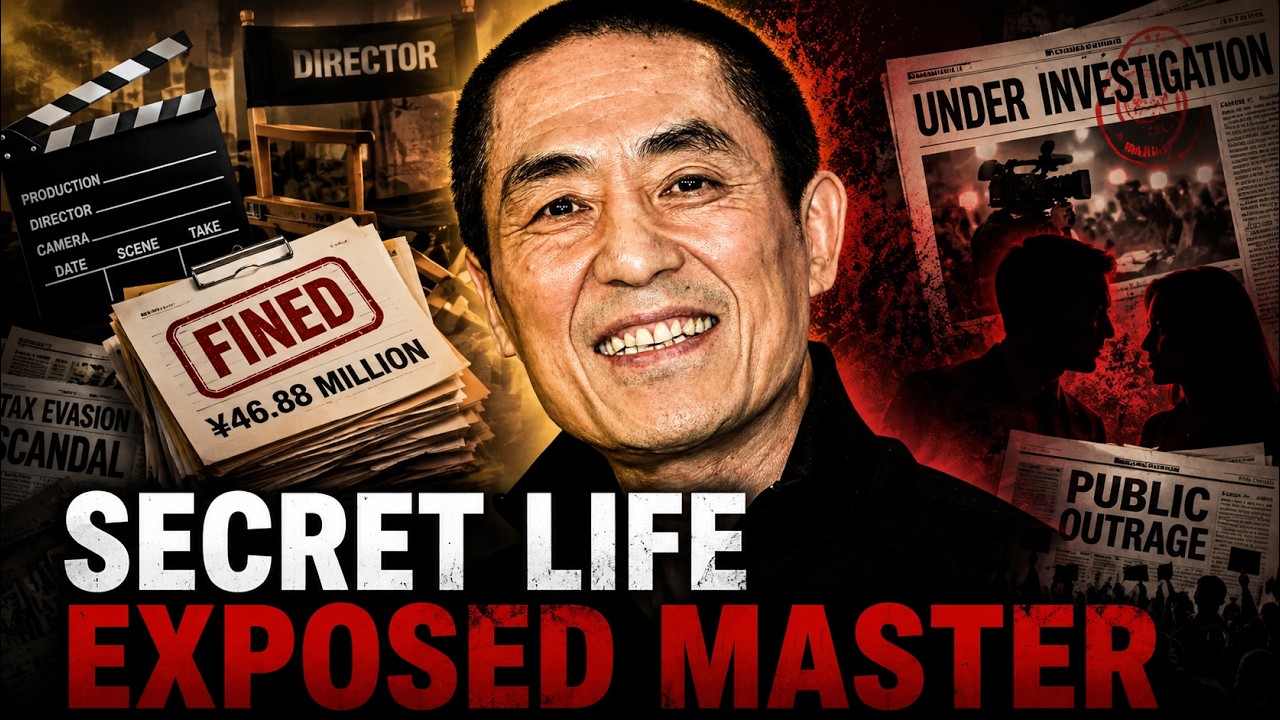
Seeking total revenge for the abandonment, the former business partner used the hidden family secret as a weapon, quietly orchestrating its exposure online in 2012 through an actress managed by his company. The resulting media storm shocked the nation, with citizens expressing anger at a privileged elite evading laws that ordinary families struggled to comply with. Family planning officials launched an intensive high-level investigation, surrounding the private residence with journalists, until the director issued a public confession in late 2013. In early 2014, government authorities imposed a record family planning fine exceeding 7.
48 million yuan, an unprecedented amount that the director paid immediately via a single bank transfer to finally buy his family their legal freedom and dignity. Although the public humiliation stripped the director of his illusion of immunity, the exposure lifted an unbearable psychological burden that had haunted him since his traumatized youth. No longer vulnerable to blackmail at age 64, he officially registered his marriage, emerged publicly as a proud father, and returned to artistic collaboration with his legendary former muse Gong Li in the moving 2014 drama Coming Home. The intimate story of a pardoned prisoner returning home to a wife suffering from memory loss served as a symbolic personal confession, marking his emotional return to human stories after years as a captive of commercial spectacle.
However, his financial problems were far from resolved. Seeking new institutional support, he signed a massive deal with tech tycoon Jia Yueting and invested his personal savings into the company, only to lose everything when the company collapsed under enormous debt and the executive fled abroad, leaving the artist completely bankrupt. Despite generating billions of dollars at the box office throughout his career, and refusing to let age or financial ruin slow him down, the tireless artist adopted an unprecedented work ethic in his seventies. Working like a man running out of time between 2018 and 2023, he directed a remarkable series of films that earned both critical acclaim and massive commercial success.
Beginning with Shadow, a stunning monochromatic masterpiece inspired by traditional ink-wash paintings, he followed this visual triumph with the nostalgic drama One Second in 2020, the thrilling espionage film Cliff Walkers in 2021, and the epic historical film Full River Red in 2023, which shattered domestic box office records with over 600 million dollars globally. Even when government censorship suddenly pulled One Second from the Berlin International Film Festival just days before its scheduled screening, the aging master no longer fought with public statements as he had in his youth. Instead, he quietly chose to edit the film to ensure his artistic work survived. By 2022, he achieved another historic milestone, becoming the first person in world history to serve as chief director of both the Summer and Winter Olympic Games.
Eschewing the overwhelming crowds and lavish performances of the 2008 ceremony, he designed a simple opening centered on a single snowflake carrying a quiet, small flame, reflecting a mature and confident artistic vision that prioritized elegance over sheer power. Today, past his mid-seventies, the legendary director sleeps only four hours a night and maintains an austere diet, working tirelessly on film sets to escape the loneliness and financial betrayal that have marked his turbulent personal journey. Stripped of his seemingly infinite wealth but finally free from the paranoia that defined his early life, the former factory worker remains forever bound to his camera, finding his only true refuge within the lights and shadows of the cinema screen. From an oppressed factory worker selling his blood to an unstoppable cinematic force, his life stands as a stunning masterpiece written in brilliance, obsession, and deep personal tragedy.
He conquered the summit of world cinema, but paid for his ambition with broken relationships, devastating financial circumstances, and complete isolation. The aging master stands alone behind the camera in his seventies, continuing to create because the screen is the only place where he truly belongs.