Britain remembers a love story. Seventy-three years, two thrones, one marriage presented as close to perfect.
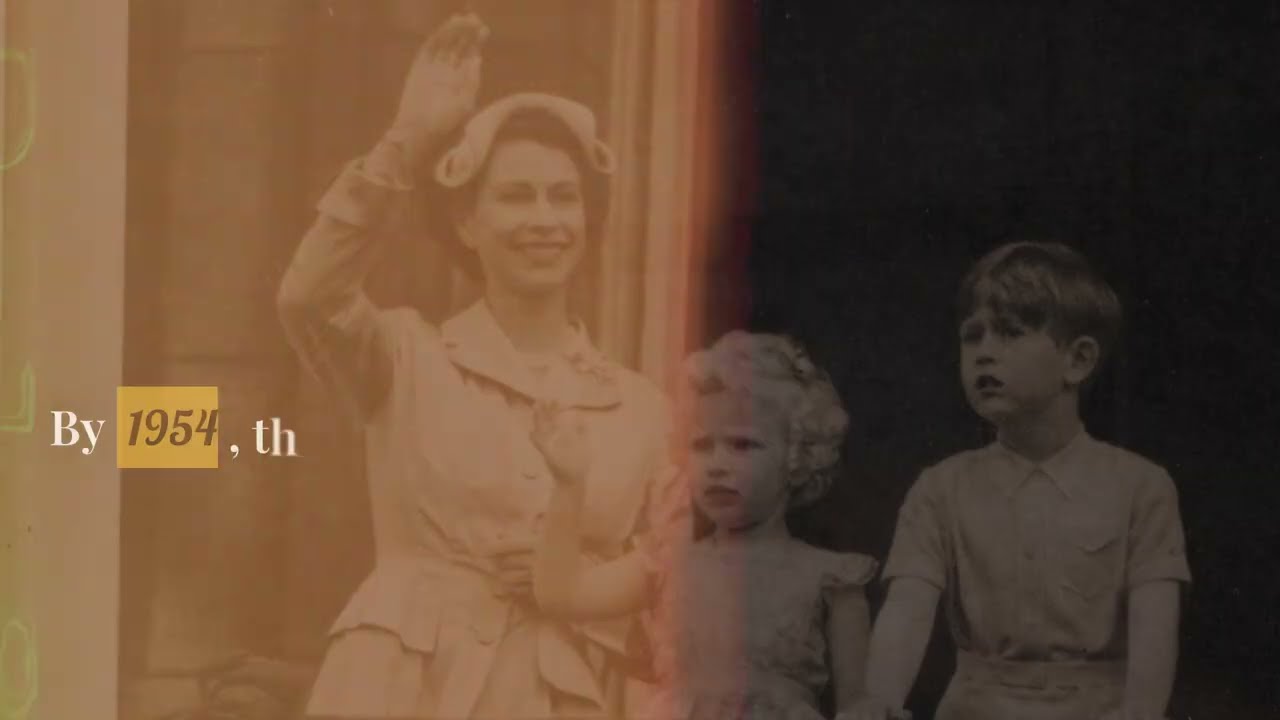
Then there is Tobruk, May 1954. A five-year-old boy waits on the deck of Britannia after six months without his mother. By several accounts, the Queen shook his hand.
That story deserves a warning before we go further. It comes from later recollections, not a dated document, and the versions differ. Some say she shook his hand. Some say she greeted the assembled officials first and reached her children afterward.
What is not in dispute is the six months. Elizabeth and Philip left in November 1953 and returned in May 1954. In that window, a boy turned five without either parent in the building. That part is in the court circular. Nobody argues about it.
So the question that matters is not whether a mother shook her son's hand on a gangway in Libya. It is whether the marriage those two people were running by 1954 had any room in it for a child at all.
It did not. The reason lies in a deal struck in the spring of 1952, in rooms Charles would not be allowed into for another 30 years.
Start with the man, because the man is where the damage lives. Philip was born on a kitchen table on Corfu in June 1921. The family villa, Mon Repos, had no delivery room worth the name.
Eighteen months later, his uncle, King Constantine, was gone. His father, Prince Andrew, was tried by a revolutionary court in Athens, and a British warship carried the family out. The story that the infant Philip traveled in a cot made from a fruit box has been told so often it is practically royal scripture, and it appears to be true.
What came next was not a childhood. It was a dispersal. His four sisters were married off to German princes in a single burst between 1930 and 1931. Three of those men later joined the Nazi Party, and one wore SS black.
His mother, Alice, born deaf, suffered a psychiatric collapse and was taken to a sanatorium in Switzerland. Philip was told very little. His father drifted to Monte Carlo and effectively stopped functioning as a parent.
By the time Philip was 10, he was being shuttled between relatives who paid his school fees. By 16, he was walking behind his sister Cecil's coffin through Darmstadt with swastika banners hanging over the street. She had died in an air crash with her husband and two of her children.
He was educated first at Cheam in England, then briefly at Salem in Germany, then at Gordonstoun in Scotland under Kurt Hahn, a school built on cold water, long runs, seamanship, and the theory that a boy's character is a muscle you strengthen by loading it.
For Philip, it worked. He arrived with no home, no money, and no country, and Hahn's system gave him a set of rules that made him useful. He went into the Royal Navy, was mentioned in dispatches at Cape Matapan at 20, and by 1946 was a serious officer with a serious future and roughly nothing else.
Then there is Elizabeth. She wanted him. She had wanted him since she was 13 and he was showing off at Dartmouth in 1939. She kept his photograph in her room, and the courtiers who sniffed that he was penniless, foreign, and rough lost the argument because she refused to lose it.
Her letters from the honeymoon in November 1947, first at Broadlands, then at Birkhall, are not the letters of a woman making a dynastic arrangement. She wrote to her mother that Philip was an angel, that he was kind and thoughtful, that she was happier than she could say.
Keep those letters in mind. Everything that follows is worse because of them.
The wedding itself, on the 20th of November, 1947, is where you can already see who held the pen. Philip gave up his Greek and Danish titles, was received into the Church of England, took his uncle's borrowed surname, Mountbatten, and was naturalized British.
He was created Duke of Edinburgh on the morning of the ceremony, essentially so the bride wouldn't be marrying a commoner in the newsreels. He had, by his own accounting, one civilian suit's worth of assets and no relatives on the guest list who counted.
His three surviving sisters were not invited. Two years after the war, with Germany in ruins and British rationing still in force, the palace decided that princesses married to Germans could not appear in Westminster Abbey. Nobody wrote him a letter explaining it. It was simply arranged the way things were arranged.
For a few years, though, it looked like he might get to be a person anyway. In 1949, Philip was posted to Malta as first lieutenant of HMS Chequers, and Elizabeth came out to join him. They lived at the Villa Guardamangia, a house rented from Lord Mountbatten on a hill above Valletta.
She drove herself. She went to the hairdresser like a customer. She watched polo and went to dances at the Phoenicia and was by every account we have freer there than at any other point in her life. In 1950, he got his own command, HMS Magpie, and for about a year the couple functioned like a naval couple.
There is a detail inside that idyll that most people skip past. The children weren't there.
Charles was born at Buckingham Palace on the 14th of November, 1948. His father was on a squash court in the palace with his equerry, Michael Parker, when the news came. Parker described it repeatedly and Philip never disputed it.
When Elizabeth went to Malta, the baby stayed in England. On his first birthday in November 1949, his mother was on a plane to her husband. Charles spent the day at Sandringham with his grandparents. Anne, born in August 1950, was left behind in the same way.
There is a stretch in 1950 and 1951 where the parents' Malta months and the children's Sandringham months barely overlap. The people who raised them were Helen Lightbody, who ran the nursery, and an under-nurse from Elgin named Mabel Anderson.
Charles, decades later, described Anderson as a haven of security, his phrase, not a biographer's. He was talking about staff. He was talking about the woman who was actually there.
That is not an accusation of cruelty. It is a description of a system. Upper-class British parenting in 1950 outsourced the first five years as a matter of routine, and Elizabeth was doing what her mother had done, and what everyone she knew was doing.
The difference is what happened next, because the system was about to be handed an enormous amount of new power over that particular child. And the person who would wield it had just been stripped of everything else he owned.
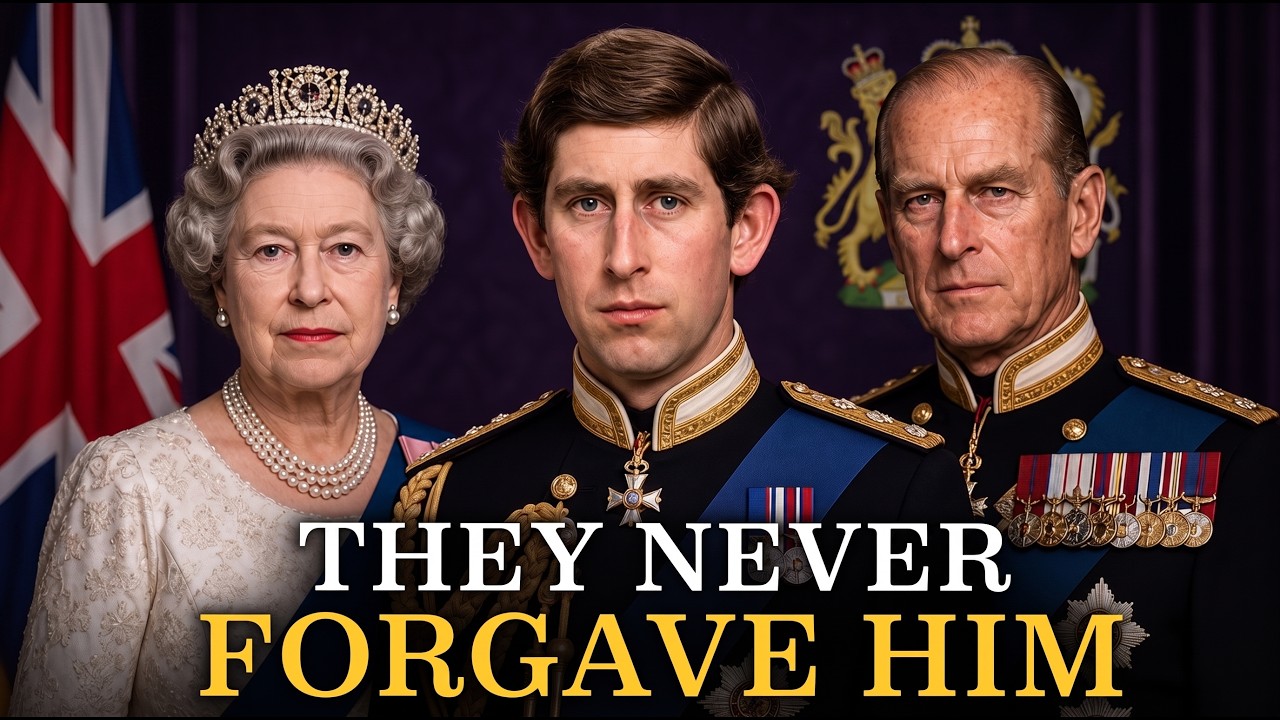
On the 6th of February, 1952, George VI died at Sandringham. Elizabeth was in Kenya at Sagana Lodge, and it was Philip who took the news from Parker, and Philip who told her. Parker said afterward that his boss looked as if half the world had dropped on him.
He wasn't being dramatic. He had done the arithmetic faster than anyone. He was 30. His naval career ended that morning and never resumed, because the leave he was granted quietly became permanent. He would never command a ship again.
He had just spent months refurbishing Clarence House into the first real home he had ever had. Within 18 months, Churchill and the courtiers had moved the family into Buckingham Palace, which Philip called an institution rather than a house, and never stopped resenting.
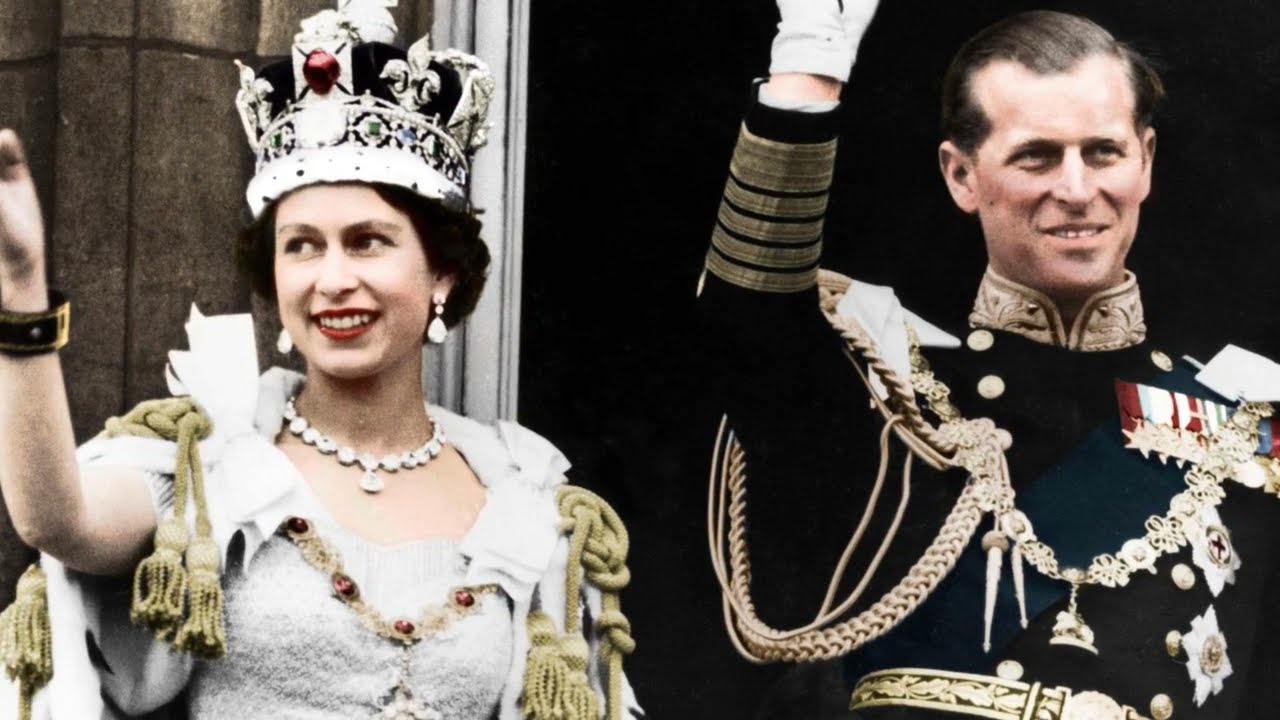
He walked two paces behind his wife in public because the College of Arms said so. At the coronation in June 1953, he knelt and swore to become her liege man of life and limb, which is a striking thing to require of a husband on television.
Then they took the name. Mountbatten, according to several accounts that trace back to guests at Broadlands, told people that the House of Mountbatten now reigned. Queen Mary heard about it and was appalled. Churchill's cabinet moved with speed rarely seen in constitutional matters.
In April 1952, Elizabeth declared that her descendants would remain the House of Windsor. She was 25, three months into the job, and she took her minister's advice over her husband's wishes.
What Philip said in response has been quoted in a dozen books, that he was the only man in the country not allowed to give his name to his own children. The amoeba line, that he was nothing but a bloody amoeba, comes from courtiers' recollections rather than any document in his hand. The bitterness behind it is not in doubt.
It lasted eight years, until a compromise in 1960 produced the surname Mountbatten-Windsor for descendants who weren't royal highnesses, a consolation prize dressed as a settlement.
So here is the arrangement as it actually stood by the middle of 1952. The Queen had a country. Her husband had a title, a diary of engagements, and nothing to run. Except a household. Except two children.
She gave him that. Deliberately, and in writing to her staff, Philip was to be master in his own home, the head of the family, the one who decided how the children were brought up.
The son he was handed was four years old, shy, easily frightened, and desperate to please. Charles at four was not a robust child, and everyone around him could see it. He cried easily. He was frightened of loud voices and of horses, and according to more than one account from inside the household, of his father's attention.
He loved his grandmother, who indulged him, and Mabel Anderson, who was paid to be there, and his nursery, which was the only room in the building where nothing was expected of him.
Philip looked at that boy and saw a problem with a known solution: cold water and difficulty. It had rescued him at 14. It would rescue his son at eight.
The nursery routine at Buckingham Palace tells you most of what you need to know about the next decade. Charles was brought down to his mother in the mornings and again in the evening at half past five for roughly half an hour. That was the appointment.
The Queen was not a cold woman. She was a punctual one, with a red box in front of her and a Prime Minister on Tuesdays, and she did not rearrange the machinery of state for a small boy who had been sent for at the correct hour. Multiple members of the household later described the same pattern: affection, real enough, delivered on a schedule someone else had set.
In 1956, he was sent to Hill House in Knightsbridge, then in 1957 to Cheam in Berkshire, his father's old prep school. He was eight. Boarding for the first time. Philip drove him down himself, which people at the time read as warmth and which reads differently once you know the school had been chosen without any serious discussion of alternatives.
Cheam was not brutal by the standards of English prep schools in 1957, which is a low bar and worth saying out loud. What it was for Charles was exposure. The other boys knew exactly who he was. Nobody could be his friend without it being noticed.
The headmaster later remembered a homesick child who wrote to his family constantly. And in the summer of 1958, the school gathered the boys in front of a television to watch the closing ceremony of the Empire Games in Cardiff, where a recorded message from the Queen announced that she intended to create her son Prince of Wales.
He found out with everyone else. He was nine, and he said afterward that he remembered wanting to sink through the floor. That is the household in one image: a boy learning his own future from a television set in a room full of other people's children.
The choice of senior school in 1962 was the fight. Elizabeth's family had opinions. Eton was 15 minutes from Windsor Castle, full of boys he already knew, and the Queen Mother pushed for it hard. Philip wanted Gordonstoun on the Moray Firth, 500 miles north, cold showers before dawn, a run before breakfast, the school that had made him.
Philip won. He usually won these, because his wife had given him the file, and because she disliked confrontation with him more than she disliked the outcome.
Charles later described the moment his father flew him up in a Heron of the Queen's Flight and walked him into the school. The letters he wrote home from Gordonstoun in the first two years are the strongest evidence in this entire story, and they survive for a reason that matters. He kept writing to friends and relatives, and some of them kept the letters.
He asked to be taken away. He described the place in language any parent reading it would recognize as distress: that he could hardly bear it, that the nights in the dormitory were the worst, that he wanted to come home.
He was bullied, and specifically, he was bullied at night, because a boy who is beaten up in a dormitory can't report it without becoming the boy who reported it. The rugby was worse. Other boys competed to tackle him, and some of them said later, with a kind of cheerful nostalgia, that it was because of who he was. His parents left him there for five years.
The famous phrase, Colditz in kilts, is the line everyone quotes, and it is not a documented quotation from Charles at the time. It surfaced later in circulation around the Dimbleby biography and press coverage of it. The letters don't need the slogan. They're worse than the slogan.
Then, in June 1963, he handed the newspapers a gift. He was 14, on a school sailing trip aboard the Pinta, and the boys came ashore at Stornoway on the Isle of Lewis. Charles walked into the Crown Hotel to escape a crowd staring at him through a window, found himself standing in a bar, and by his own later account ordered the only drink he could think of because he'd had it once on a shoot. Cherry brandy.
A journalist was in the room. It ran everywhere. The palace denied it first, then had to retract the denial, which turned a schoolboy's glass of liqueur into a story about royal dishonesty.
He was stripped of his junior privileges at school, and his personal detective, Donald Green, who had been with him for years and was one of the few adults in his daily life who was actually fond of him, resigned and was gone.
That is the part to sit with. A 14-year-old boy's mistake cost him the nearest thing he had to a friend, and the lesson was not, don't drink. The lesson was, anything you do in public will be taken from you and it will cost somebody else their job.
Two years later, in 1965, there was a dinner at Buckingham Palace to decide what he would do after school. Present were the Queen and Philip, Mountbatten, the Prime Minister Harold Wilson, the Archbishop of Canterbury, Michael Ramsey, the Dean of Windsor, Robin Woods, and the chairman of the committee of vice-chancellors. Seven of the most powerful men in Britain debating a 16-year-old's education. He wasn't at the table.
He got Cambridge out of it, Trinity, Mountbatten's suggestion, and a genuinely good one. But before that came the year that proves the whole argument.
In 1966, they sent him to Timbertop, the Outback campus of Geelong Grammar in Victoria, Australia. Two terms, chopping wood, sheep, bush walks, no deference whatsoever from Australian teenagers who found the whole institution faintly ridiculous.
And Charles was happy. Openly, measurably happy. He said later it was the most wonderful period of his life and that he'd left Australia reluctantly. He came back visibly different, more confident, funnier, easier.
So the hardship wasn't the problem. Philip's diagnosis wasn't even entirely wrong. What Charles couldn't survive was hardship 500 miles from a family that wouldn't come and get him. Distance from them was the cure, not the disease.
By 1969, the family had found the use for him. The investiture at Caernarfon Castle on the 1st of July was a television production designed by Lord Snowdon with a Perspex canopy so the cameras could see through it, watched by an audience in the hundreds of millions.
Charles spent the preceding term at Aberystwyth learning Welsh and did it well enough to deliver a speech in the language, which was the one part of the whole thing that was genuinely his. Nineteen years old, kneeling in front of his mother while she put a coronet on him in a ceremony largely invented for the cameras. He performed it flawlessly. That is the skill the childhood produced.
The man he actually talked to about his life was his great-uncle. Mountbatten gave him Broadlands as a bolt hole, gave him advice, wrote him letters, and treated him, this is the thing, as a young man with a personality rather than a constitutional appointment.
He also had an agenda, because Mountbatten always had an agenda, and it involved his own granddaughter, Amanda Knatchbull. His counsel on marriage, in letters now in the Broadlands archive at Southampton, was blunt and cold-blooded: a man should sow his wild oats but should marry a suitable, attractive, and sweet-charactered girl before she had met anyone else.
Charles had met someone. In 1972, through a mutual circle, he met Camilla Shand, funny, unimpressed, entirely at ease, and interested in him rather than in the position. Then he went to sea with the Navy for eight months, and in July 1973 she married Andrew Parker Bowles at the Guards Chapel.
Charles was at sea in the Caribbean. He wrote to Mountbatten about it in terms that Dimbleby later quoted from his letters, that it seemed cruel, that there was such emptiness. He did not fight for her. He didn't know he was allowed to.
On the 27th of August, 1979, the IRA detonated a bomb aboard Mountbatten's fishing boat at Mullaghmore in County Sligo. Mountbatten was killed along with his 14-year-old grandson Nicholas, the boy's grandmother, and a local boy of 15.
Charles was in Iceland. His diary entry, quoted by Dimbleby, describes a life that suddenly seemed unbearable and a grief he compared to losing a grandfather and a father at once. He wrote that his great-uncle had been someone he could talk to and that there was now no one.
Read what happened next in that light. The one adult who had ever given him a plan was dead, and the family closed ranks around a single conclusion. It was time he married.
In the winter of 1980 into 1981, with Diana Spencer photographed outside her flat every morning and the press treating the situation as a scandal in progress, Philip wrote his son a letter.
What that letter said depends entirely on who you ask, and this is where the record splits. Dimbleby, working from Charles's own account and his circle, presented it as an ultimatum: either marry the girl or release her, because leaving her position ambiguous was damaging her reputation.
Philip's defenders, Giles Brandreth, who knew him, and Penny Junor, insist he was giving a father's practical advice and was genuinely appalled to find himself blamed for the marriage afterward. Both camps agree on one thing. The letter existed and it demanded a decision.
Charles proposed in February 1981. He was 32, she was 19. And when a television reporter asked the newly engaged couple whether they were in love, Diana said, of course. And Charles added, whatever in love means.
The country laughed at it as awkwardness. It wasn't awkwardness. It was a man who had been trained professionally, and from the age of four, never to claim a feeling he wasn't certain he could deliver on.
The wedding at St. Paul's on the 29th of July, 1981, was the largest television event in history to that point. The family had learned the lesson of Caernarfon well. Seven hundred and fifty million people. A 25-foot train that had to be crushed into a glass coach. A cathedral chosen over the Abbey because it seated more guests and gave a longer processional route for the cameras.
Diana muddled the order of his names at the altar and the crowd loved her for it. Nobody in that building had asked the bride what she thought she was joining. She was 19. She had been photographed daily for six months, and the institution that had spent three decades processing Charles now took delivery of her.
That marriage is the one part of this story everyone already knows. The point here is narrower. Look at what the parents did while it came apart.
Elizabeth did what she had always done with a difficulty inside her own family. She waited for it to resolve itself. Diana asked to speak with her. The meetings happened. Nothing structural changed.
Charles's staff and Diana's staff went to war through the newspapers, and the Queen, who could summon a prime minister on a Tuesday, did not summon her son and daughter-in-law and impose terms until the situation was already public property.
By the end of 1992, a year that gave her the Windsor Castle fire, the Fergie photographs, the Andrew Morton book, and a formal separation announced in the House of Commons, she stood up in the city and called it her annus horribilis.
Philip unexpectedly did more. In 1992, he wrote to Diana a series of letters opening as dearest Diana, signing off as pa. They were leaked and litigated over for years afterward, and Diana's own friends, the ones who had every reason to describe him as an ogre, conceded that the letters were kind.
He told her he could not imagine anyone leaving her for Camilla. He told her he was trying to see both sides. He asked her to work with him. She replied. She kept writing to him. The correspondence went on for months.
That is the moral reversal in this story. Philip could be attentive, patient, and genuinely useful to a young woman in trouble inside his family. He simply could not do it for his own son, and the record doesn't tell us why. It only tells us that he never did.
Then in 1994, Charles did the thing no one in his position had ever done. He gave Jonathan Dimbleby unrestricted access: diaries, private letters, household staff, friends, 60 hours of interviews.
The documentary aired in June 1994, the book followed in October, and the coverage fixed on the sentence about adultery, that he had been unfaithful once the marriage had irretrievably broken down. That wasn't the detonation.
The detonation was quieter and further into the book. Dimbleby, working from Charles's own papers and testimony, wrote that his parents had been unable or unwilling to show him the affection he needed. That his father had been harsh and mocking. That his mother had been remote, and that the boy had gone to the nursery staff for comfort because there was nowhere else to go.
Both parents were alive. Both read it or had it read to them, and the Prince of Wales had put it into the public record in his own name, with his own archive as evidence, which meant the palace could not brief against it in the usual way. You cannot anonymously dismiss a man's account of his own childhood when he has handed the biographer the letters.
Nobody in that family answered it. Philip was reported by people around him to regard it as disloyalty of the worst kind. The Queen said nothing publicly, then or ever. There is no letter, no interview, no authorized rebuttal. The institutional response to the heir accusing his parents of emotional neglect on national television was silence, maintained for the rest of both their lives.
Which tells you something about what he'd grown up inside. It also tells you he'd found the only weapon the system had no defense against.
Because here is what he had been building while everyone watched the marriage burn. The Duchy of Cornwall gave him an income no one at Buckingham Palace controlled. By the 1990s, millions a year. And he had turned it from a sleepy landed estate into an aggressive commercial operation.
That money paid for a separate court. He bought Highgrove in Gloucestershire in 1980, before the engagement, and spent 40 years making it the one place on earth arranged entirely to his own specification, down to the hedges.
He founded the Prince's Trust in 1976 with his navy severance pay and grew it into a charity that reached hundreds of thousands of unemployed young people. A genuine achievement, and also a power base that reported to him.
He hired his own press people and briefed his own journalists, sometimes against his wife, sometimes against his mother's household. He wrote the memos, the black spider letters, in that dense sloping hand to cabinet ministers about agriculture and architecture and hospital design. He fought all the way to the Supreme Court in 2015 before the government was forced to release them.
He didn't argue with the institution. He built a parallel one, financed it independently, staffed it with loyalists, and waited.
And in the middle of that came the part where all the training was tested at once. Diana died in Paris on the 31st of August, 1997. Charles flew to collect her body and brought her home.
The family stayed at Balmoral for days while the flag over Buckingham Palace stayed down and the country turned savage about it. The Queen came south, spoke to the nation from a window with the crowds visible behind her, and read the situation correctly about four days later than she needed to.
On the day of the funeral, William and Harry walked behind the coffin, aged 15 and 12. The decision has been picked over ever since. What the family has consistently said is that Philip settled it, that he offered to walk with them and did, on the left of the line. He was 76. He'd buried his own sister at 16.
Both things are true of that man. He could not comfort his son, and he would not let his grandsons walk alone.
Charles married Camilla on the 9th of April, 2005, at the Guildhall in Windsor. A civil ceremony, no cathedral, no state occasion. The Queen did not attend it. She came to the blessing at St. George's Chapel afterward and gave a short speech at the reception about the Grand National, in which she compared her son to a horse that had come through Becher's Brook and the Chair and was now in the winner's enclosure.
That was as close to a public apology as that family produces. She still hadn't gone to the wedding. Camilla was styled Duchess of Cornwall. The palace announced that when Charles became king, she would be known as Princess Consort, not queen. That was the settlement. That was the price.
Philip died on the 9th of April, 2021, 69 years after the morning in Kenya that ended his career. Charles spoke outside Highgrove the following day and called him my dear papa, a much-loved and appreciated figure. Not a word of the 1994 book in it. Whatever passed between them in the last decades, and there is evidence it softened considerably, they had found a way to be in the same room.
Then, on the 6th of February, 2022, 70 years to the day since her father died at Sandringham, the Queen released an Accession Day message. Near the end, she wrote that when her son became king, it was her sincere wish that Camilla be known as Queen Consort.
Seventeen years after skipping the wedding. Seven months before her death. She was 95, and she wrote it in her own name, and constitutionally it settled the question forever, because nobody was going to overrule that.
She never explained the childhood. She never addressed a single line of what her son had published about her. She fixed the one thing she could fix with a document, which is how she had done everything for 70 years.
And here is who holds the paper now. The Royal Archives sit in the Round Tower at Windsor. Access is by permission. Nothing about a living member of the family is released, and a great deal about the dead ones isn't either. Historians have spent decades being politely refused. When the family closes a file, it stays closed.
What survives of Elizabeth II's private correspondence, what is released about her marriage, what future biographers are permitted to see, those decisions run through the sovereign. The sovereign is Charles. He is the only person in the history of that institution to have broken its silence about his own upbringing, and he now owns the machinery of silence.
The one uncontrolled document in the modern history of the House of Windsor is the one he authorized himself in 1994, while both defendants were alive to read it.
So go back to the gangway at Tobruk. A small boy, six months without his mother, an official greeting, and the version everyone repeats, which may not be exactly what happened. The photograph was never a lie. It was accurate. It shows a woman meeting an obligation, and a child being managed, which is what that household was, and the country looked at it and saw a family, because that was the product on offer.
They didn't hate him. That is the flat, unsatisfying, entirely documented answer. They handed him to a man who'd been raised by a shipwreck and taught that difficulty was love, and they called it an education, and it took him 50 years and a national broadcast to say out loud that it hadn't worked.
He got the last word in 1994, when it cost him everything. He got the crown in 2022, when his mother's letter made his wife a queen. And the sensitive boy who was never asked what he wanted now decides which of their letters the world is ever allowed to read.