On the evening of November 7, 1965, Dorothy Kilgallen sat at the writing desk in the third-floor bedroom of her East 68th Street townhouse in Manhattan. It was 11:20 p.m. She had been working since nine. An open Manila folder lay in front of her.
Inside that folder, according to the account that has emerged in the decades since, were notes for a chapter her publisher was waiting for. It was the chapter that would name the man she believed ordered John Kennedy killed.
Kilgallen was not a fringe commentator. By the early 1960s she was one of the most powerful journalists in the United States. Her syndicated column, Voice of Broadway, ran in more than 140 newspapers. She was a television personality millions of Americans watched every week on What's My Line. She was also a courtroom reporter with a reputation for cracking stories the FBI would have preferred she leave alone.
She had spent two years building a case the way a prosecutor builds a case, not the way a gossip columnist builds a story. She traveled to Dallas. She traveled to New Orleans. She sat across from Jack Ruby in a Dallas jail cell while every other journalist in America was locked out of the building. She read Ruby's secret Warren Commission testimony before the government intended anyone to read it.
Sometime in the weeks before that November night, she told her lawyer, Ernst Cahn, "I'm going to break the real story and have the biggest scoop of the century." She did not mean a scoop in the celebrity sense. She meant a documented, sourced, named accusation.
She was found dead the following morning, Monday, November 8, 1965. She was 52 years old.
The New York City Chief Medical Examiner ruled the cause of death accidental, a combination of alcohol and barbiturates. The police investigation that followed was described by subsequent investigators as perfunctory. Her bedroom was not treated as a crime scene. Her JFK research notes were not recovered. Her manuscript was never found.
The only journalist in America with a private interview with Jack Ruby, with a copy of his secret government testimony, and with named sources in New Orleans pointing directly at the men who orchestrated the assassination was dead the night before she intended to expose them. The investigation that followed lasted approximately as long as it takes to fill out a form.
Kilgallen's skepticism of the official story was on the record long before Dallas. In July 1959, four years before the assassination, she became the first journalist in America to allege in print that the CIA and organized crime were coordinating efforts to assassinate Fidel Castro. It was not a rumor. It was a named allegation published in her syndicated column, at a time when the CIA's relationship with the Mafia was one of the most tightly guarded operational secrets in the federal government.
The FBI noted it. They opened a file on her. They did not close it. That file would grow considerably after November 22, 1963.
When the Warren Commission published its findings in September 1964 — lone gunman, no conspiracy, case closed — Kilgallen did not accept the conclusion. She called it laughable, the word chosen deliberately, not emotionally. She wrote in her syndicated column, "The American people have just lost a beloved president. It's a dark chapter in our history, but we have the right to read every word of it."
The right, as she framed it, was not an appeal to emotion. It was a legal claim. She was not grieving in public. She was filing a brief.
She had already done something no other journalist in America had managed. In March 1964, while Jack Ruby's Dallas trial was still underway, Kilgallen secured a private jailhouse interview with Ruby himself. It was not a press conference, not a shouted question through a crowd. It was a private conversation alone in a room with the man who had killed Lee Harvey Oswald on live television two days after the assassination.
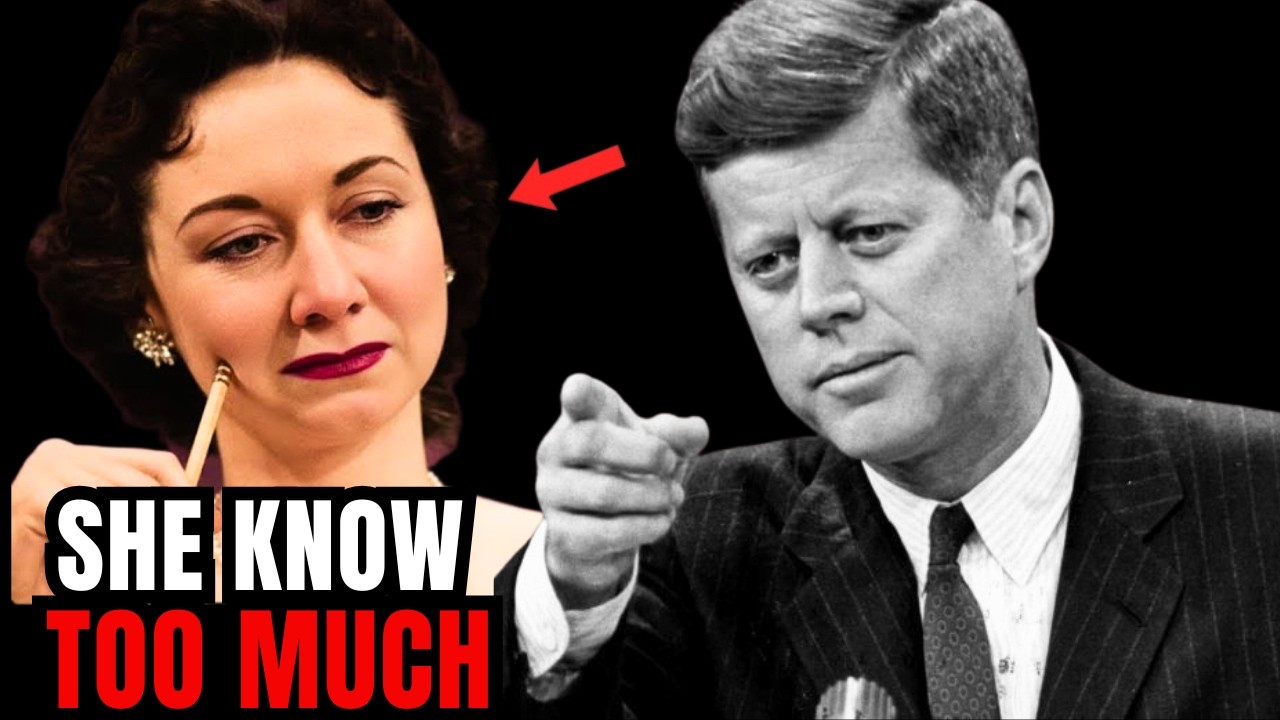
The Dallas District Attorney's Office was furious. Ruby's own legal team was caught off guard. No explanation was ever offered for how she obtained the access. What Ruby told her in that room, she did not immediately publish. She went back to New York and kept working.
In June 1964, Jack Ruby testified before the Warren Commission. That testimony was given on June 7, 1964, and immediately classified. Ruby had asked Earl Warren personally in recorded testimony to take him to Washington where he could speak freely, away from Dallas, away from Texas, away from the people he said he feared. Warren declined. Ruby testified in Dallas. His testimony was sealed.
By August 1964, Dorothy Kilgallen had a copy. She published Ruby's secret Warren Commission testimony across the front pages of the New York Journal-American, the Philadelphia Inquirer, the Seattle Post-Intelligencer, and 14 other newspapers in her syndication network.
Federal authorities were not merely displeased. The publication of sealed government testimony in a murder investigation touching the assassination of a president was not a minor editorial decision. The FBI opened a formal inquiry into how she obtained the document. The CIA's existing file on Kilgallen was updated. Neither agency found, or at least neither agency acknowledged finding, the source of the leak.
In a memorandum dated September 3, 1964, held in Kilgallen's FBI file and released decades later under the Freedom of Information Act, the Bureau notes that Kilgallen's possession of the Ruby testimony represented a significant breach of commission security and that the subject's sources within the investigation should be identified as a matter of priority.
The subject. That was Dorothy Kilgallen. The woman America watched play a parlor game on television every Sunday night had been designated a national security subject by the Federal Bureau of Investigation.
She did not slow down. In the months following the Ruby testimony publication, Kilgallen made at least two trips to Dallas, conducting interviews with witnesses who had not spoken to the Warren Commission or who gave testimony they later wished to retract. She traveled to New Orleans, where the name Carlos Marcello had begun appearing in her notes with increasing frequency.
Marcello was not an abstraction in the JFK investigation. He was a specific, documented presence in the architecture of Dallas. His name would appear in the House Select Committee on Assassinations Report in 1979 in connection with possible Mafia involvement in the assassination. In 1963, he was already known to federal investigators as one of the most powerful organized crime figures in the country — a man who had personally threatened the life of John Kennedy in the presence of witnesses in 1962. The FBI had records of that threat. Robert Kennedy, who had spent his career as a federal prosecutor targeting men exactly like Marcello, knew about it.
By the autumn of 1965, Kilgallen had concluded that Marcello had orchestrated not one murder but two: the assassination of President Kennedy and the subsequent killing of Lee Harvey Oswald by Jack Ruby. She told this to confidants directly — not as a theory, but as a conclusion she had reached through two years of documented investigation.
She told a close friend, May East, that she was preparing a second trip to New Orleans to meet a source she described as very cloak and daggerish. The phrasing was deliberate. Kilgallen understood operational language. She had been writing about intelligence operations since 1959. She never made that second trip.
In Mark Shaw's 2016 book, The Reporter Who Knew Too Much, published by Skyhorse Publishing and based on 12 years of investigative research, Shaw reconstructed the final weeks of Kilgallen's life. Shaw, an attorney and investigative author, identified a specific mechanism of her death: her drink spiked with three separate drugs — alcohol, Seconal, and a third barbiturate not consistent with her normal prescriptions — by Ron Cataki, an Ohio newspaper columnist with whom she had been having an affair and whose connections Shaw traced toward Marcello's network.
Shaw's conclusion, stated without qualification, was that Dorothy Kilgallen was murdered. The motive was the book she was about to publish. The book would have named Marcello directly. Shaw writes that Marcello's operation won because she was eliminated and erased from any historical record about the JFK assassination.
Erased. That word is precise, and it is accurate. In the published accounts of the JFK assassination released in the years following her death — the volumes of Warren Commission analysis, the journalism, the congressional testimony — Kilgallen's name appears rarely and briefly, footnoted, peripheral, treated as a minor figure whose allegations were the product of tabloid ambition rather than two years of documented investigation. The erasure was not accidental.
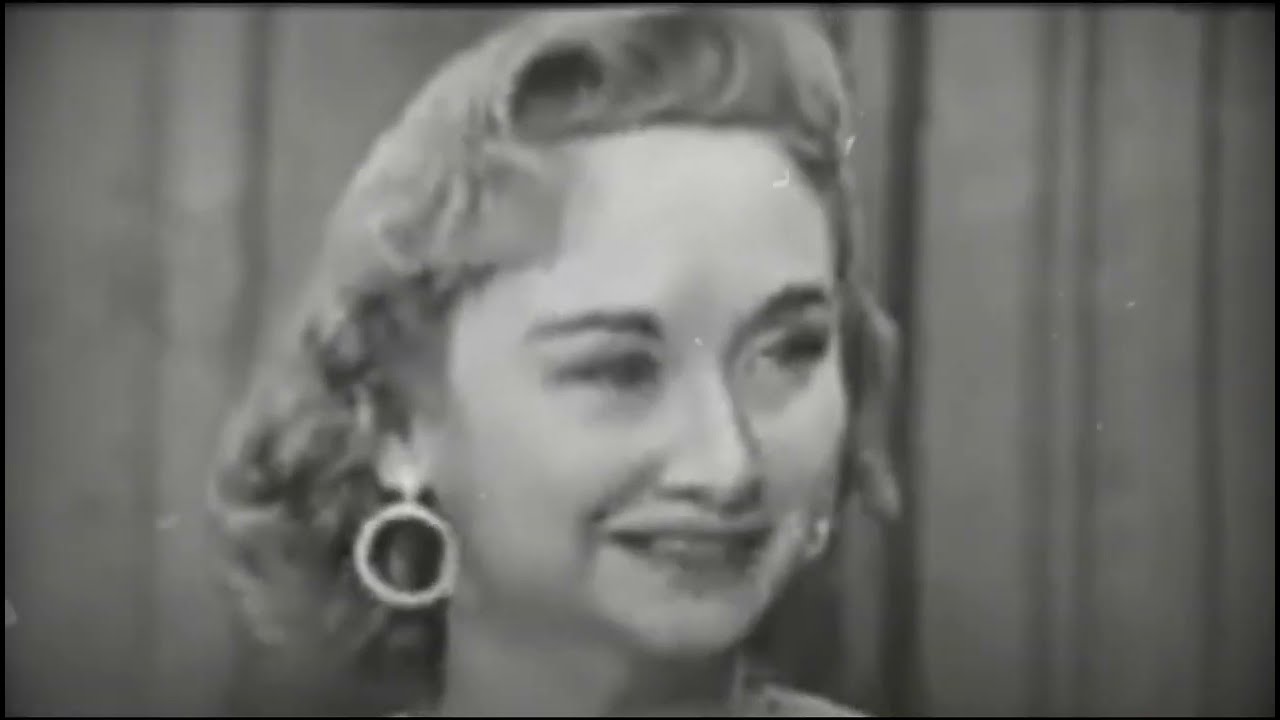
The physical evidence from November 8, 1965, established certain facts and left others unresolved. Kilgallen was found dead in her bedroom by her hairdresser, Mark Sinclair, who had arrived for a morning appointment. The scene contained two immediate anomalies that Sinclair noted and that subsequent investigators documented.
First, Kilgallen was found in a bedroom she rarely used — not her own bedroom, but a guest room. Second, she was found wearing false eyelashes and full makeup, dressed in clothing she had not been wearing the previous evening. The body had been moved and redressed after death.
The New York City Medical Examiner's report, filed November 8, 1965, attributed death to acute ethanol and barbiturate intoxication. No homicide investigation was opened. No forensic analysis of the room was conducted beyond the basic examination. The police report on the scene, accessed by researchers including Shaw, uses the word perfunctory in its own documentation of the investigation's scope.
Her JFK manuscript — the notes, the interview transcripts, the sourced accusations she had spent two years assembling — was not found in the townhouse. Not in the desk. Not in the filing cabinets. Not in storage. Her editor at her publisher was never contacted about its whereabouts. The manuscript did not exist in any inventory of her estate.
Kilgallen had been telling people for months she was close to publication. She had a lawyer who had been briefed on the book's contents. She had a publisher expecting a manuscript. She had notes from Dallas, from New Orleans, from her Ruby interview, from sources she described as inside the federal investigation itself. All of it disappeared within hours of her death, before any investigator thought to look for it, because no investigator treated the scene as a crime scene.
In January 2017, the Manhattan District Attorney's office opened a formal inquiry into Dorothy Kilgallen's death. The inquiry was triggered directly by Shaw's book, published the previous year, 51 years after the fact. The investigation was described at the time as preliminary, focused on whether sufficient new evidence existed to reclassify the death as a homicide.
The DA's inquiry received almost no coverage. The New York Times did not lead with it. The Washington Post ran a short item in its entertainment section, a nod to Kilgallen's television career rather than her investigative journalism. A formal government inquiry into the possible murder of a nationally known journalist 50 years after her death was treated as a minor cultural footnote.
Treating the DA's inquiry as serious required taking a position. It required news organizations to entertain the possibility that a nationally prominent journalist had been murdered for investigating the assassination of a president, that the murderer had never been charged, and that the federal agencies she had been investigating had maintained surveillance files on her while she was alive. That position had consequences. It required following the evidence wherever the evidence led. Easier to run the old photograph from What's My Line and call it a nostalgic piece.
That same month, January 2017, the first tranche of documents released under the JFK Records Act began entering the public record through the National Archives. Buried in CIA internal correspondence from the autumn of 1965 — the same autumn Kilgallen was preparing her final New Orleans trip — researchers identified a passage referencing surveillance of journalists with active contact in the Ruby investigation.
Kilgallen's name appears in a classified routing slip dated October 14, 1965, 25 days before her death, forwarded from the CIA's Domestic Operations Division to Counterintelligence. The routing slip does not specify the nature of the surveillance. It confirms the surveillance was active 25 days before she died.
The Warren Commission she had publicly dismantled for two years included Allen Dulles, the former CIA director whom Kennedy had fired after the Bay of Pigs — the man Kennedy had blamed most directly for the failure that had made him, in the view of many inside the agency, a liability rather than a leader. Dulles sat on the commission investigating the murder of the president who had fired him. Kilgallen knew this. She wrote about it. She called the commission's composition a structural impossibility, an investigation designed to reach a specific conclusion before the first witness was seated.
The House Select Committee on Assassinations, reporting in 1979, concluded that John Kennedy had probably been killed as the result of a conspiracy. Fourteen years after Kilgallen's death, the American government formally acknowledged what she had argued in print from the week the Warren Commission published its findings. The HSCA identified acoustic evidence of a second shooter. It named Marcello as a person of interest in a possible conspiracy. It confirmed, in the abstracted language of congressional committees, the framework Dorothy Kilgallen had built her final investigation around.
She had been dead for 14 years by then. Her manuscript had been gone for 14 years. Her sources had dispersed or died. The book that would have named names and provided documentation was gone so completely that no fragment of it has ever surfaced in any archive in any form.
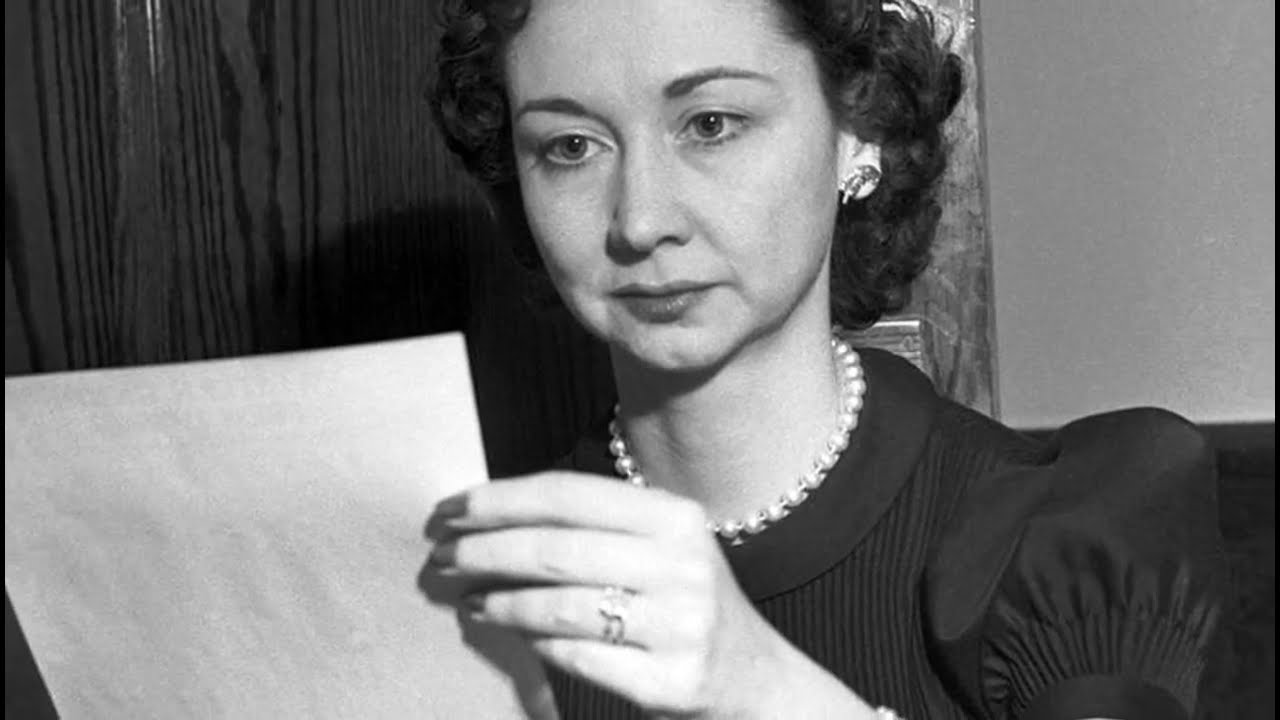
What Kilgallen understood, perhaps better than any journalist working in America in 1963, was that the assassination was not a secret maintained by a single organization through a single act of suppression. It was a secret maintained by an ecosystem, each part of which had independent reasons to keep it intact.
The CIA had operational exposure. If Kilgallen's sources were accurate — and the 2017 document releases suggest they were closer to accurate than anyone in 1965 was prepared to admit — the agency's pre-Dallas intelligence failures, and possibly its operational involvement, would have constituted the largest institutional scandal in American history. Kilgallen had been in their files since 1959. By 1965, she was not a journalist they were monitoring out of bureaucratic habit. She was a journalist whose specific knowledge had been assessed as operationally dangerous.
Carlos Marcello had a direct motive that required no institutional complexity. Kilgallen's book named him as the architect of two murders. Marcello had spent decades ensuring that people who named him in that fashion did not live to publish the accusation. His methods were not mysterious. They were documented. His reach into Dallas, into Ruby's world, into the operational geography of November 22, was the subject of federal investigation by the late 1970s.
The New York City police had institutional incentive to accept the medical examiner's initial finding. An accidental overdose requires a form and a filing. A homicide in a famous woman's townhouse connected to the assassination of a president requires an investigation that leads into federal territory. No city police department in 1965 had the mandate or the protection to enter. The investigation was perfunctory because a thorough investigation would have required someone with authority to authorize it. No one with that authority made the call.
The press had the deepest structural incentive of all. Kilgallen's colleagues at the Journal-American, at the television networks, at the wire services understood on some level what she had been working on. None of them picked up the investigation after her death. None of them assigned a reporter to the missing manuscript. None of them asked in print why a woman who had published secret government testimony three months earlier and described an imminent trip to meet a clandestine source had died in a bedroom she didn't use, wearing makeup applied after death, with every note from her two-year investigation missing from her home. They covered her funeral. They ran her photograph. They called her a beloved figure in American journalism.
None of these actors needed to coordinate. The CIA did not call Marcello. Marcello did not call the police commissioner. The press did not receive instructions from the government. They each independently did what their institutional interests required. And collectively, without a meeting, without a memo, without a single point of explicit coordination, they ensured that Dorothy Kilgallen's name disappeared from the history of the Kennedy assassination.
It is not a conspiracy in the dramatic sense — one room, one table, one decision. It is something more durable and far more difficult to prosecute. It is institutional convergence: separate actors with separate motives producing the same result. Silence. Erasure. A woman who knew too much reduced to a footnote in an investigation she had come closer to cracking than anyone with a federal budget and subpoena power.
Dorothy Kilgallen died on November 8, 1965, at 52 years old, in a townhouse on the Upper East Side of Manhattan. She left no sealed archive. She left no letter to be opened in 50 years. She had no time to build a vault, because the vault was taken from her. The notes were pulled from the desk. The manuscript was removed from the files. The investigation closed before it opened. She did not manage her death. Her death was managed for her.
But erasure is not completion. Erasure leaves edges. In Shaw's 12 years of research, in the DA inquiry of 2017, in the classified routing slip dated October 14, 1965, in Ruby's Warren Commission testimony she published at the cost of a federal investigation into her own sources, in the FBI file that tracked her as a security subject from 1959 until her death — in all of these, Dorothy Kilgallen left something behind.
Not intentionally, the way Jackie Kennedy sealed tapes and wrote letters to British Prime Ministers. Unintentionally, the way a person leaves traces when they are moving too fast and too close to something that will not allow itself to be found.
The most important thing Dorothy Kilgallen ever said about the Kennedy assassination was not said in her column. It was not said in testimony. It was said to her lawyer in the weeks before November 8, 1965, in the certainty of a woman who had done the work, made the calls, read the documents, and sat in the room with the man whose silence the government had paid for with his life. She said, "I'm going to break the real story and have the biggest scoop of the century."
That was not ambition. It was a deadline. The story she was going to break did not disappear when she did. It scattered into Shaw's research files, into the DA's preliminary inquiry, into the CIA routing slip with her name on it, into the HSCA report that confirmed her framework 14 years too late, into the 2017 document releases that placed federal surveillance on her in the final month of her life.
No single document proves what she knew. Together, they describe a journalist who had built the case, named the architect, and was 24 hours from telling the world. Dorothy Kilgallen did not build an archive the way Jackie Kennedy did. She didn't have 30 years. She had an evening. But the evidence she left behind — in the FBI file, in the published Ruby testimony, in Shaw's reconstruction of her final weeks — has been assembling itself across five decades into something that cannot be managed away.
She called it the biggest scoop of the century. She was right. She just never got to publish it. The pieces she left behind are publishing it now.