The word “snitch” carries more weight in the American underworld than any charge a prosecutor can file. A man can kill and still command respect in certain circles, but the moment he sits in a room with a federal agent and starts giving names, his reputation, his legacy, and his family are finished. Yet some of the most powerful figures in the history of American crime have sat in that room, trading names for lighter sentences, new identities, and fresh starts that their victims never received. Lorenzo “Fat Cat” Nichols ran a $20 million-a-year drug operation from the back office of a corner deli in Jamaica, Queens.
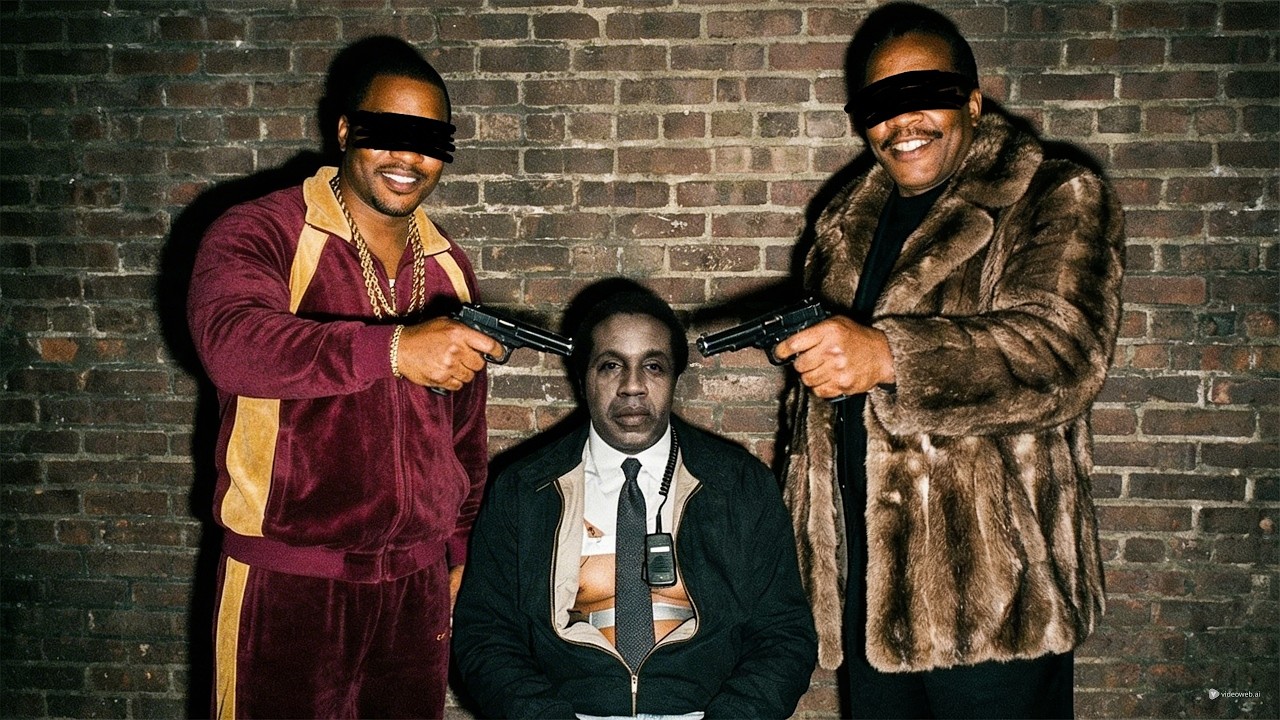
He was the wholesaler for much of Southeast Queens’ drug trade, including Kenneth “Supreme” McGriff’s Supreme Team. Nichols killed his own parole officer, his ex-girlfriend and mother of his son, and a childhood friend. When his mother, Louise Coleman, learned what her son had done, she disowned him. Facing federal prosecution, Nichols cooperated with the government in exchange for a lighter sentence.
He spent over 20 years in the federal witness protection program and was paroled in 2022 after 34 years. Police unions were outraged. Brian Rooney’s partner, the parole officer Nichols had killed, said, “Maybe God will forgive him. I certainly can’t.
”
Richard “White Boy Rick” Wershe Jr. was 14 years old when the FBI recruited him in Detroit. The agency wanted a white teenager who had access to Black dealers that adult agents could not get near. They paid him, trained him, and pulled him out of high school to work as a confidential informant.
Along the way, the informant became the dealer. By 17, Wershe was one of the biggest drug dealers in the city, flying on private jets and dating the niece of Detroit’s mayor. When the FBI no longer needed him, they cut him loose. He was arrested with over 650 grams of cocaine and sentenced to life under Michigan’s 650-lifer law.
From prison, he helped the FBI bust corrupt Detroit police officers in Operation Backbone, leading to 11 arrests. His handler said he had never seen anyone cooperate like Wershe in 46 years. Wershe served more time than most murderers for a crime the government helped create. Frank Lucas rose to infamy in Harlem, the subject of the film “American Gangster.
” The real Lucas, however, gave up more than 100 names to federal prosecutors, reducing his 70-year sentence to time served. He walked out of prison while the people he named remained behind bars for decades. Lucas claimed he cooperated to protect his family; prosecutors said the evidence was overwhelming and cooperation was his only play. More than 100 people went down because Lucas talked, and Hollywood turned him into a hero.
The film grossed over $260 million worldwide. It did not show Lucas sitting in a room with federal agents giving up the names of people who trusted him. At 24, Raeford Edmond controlled an estimated 60% of the cocaine trade in Washington, D. C.
His crew was responsible for approximately 30 murders, and the city’s murder rate doubled during his reign. He was arrested in 1989 with 28 associates, 11 of them family members, and jailed at the Quantico Marine base because the government feared someone would try to break him out. From prison, Edmond kept dealing, brokering transactions using a coded pig Latin that the FBI needed a translator to decode. When the feds finally caught on, Edmond cooperated — three separate times.
His mother, Constance “Bootsey” Perry, was serving 14 years for her role in his operation, and his cooperation got her sentence reduced. The most powerful dealer in D. C. history became a government asset to bring his mother home.
Freeway Ricky Ross was called the Walmart of crack. At his peak, he moved $3 million worth of product a day through South Central Los Angeles. His main cocaine connection was a Nicaraguan named Oscar Danilo Blandon, who was funneling drug profits to the CIA-backed Contras fighting Nicaragua’s government. Journalist Gary Webb exposed the connection in his 1996 “Dark Alliance” series, sparking one of the biggest scandals in American history.
Webb’s reporting was attacked by major newspapers, he lost his career, and in 2004 he was found dead with two gunshot wounds to the head; the coroner ruled it a suicide. Ross cooperated with authorities after his arrest, but the deepest betrayal belonged to the government — the system that supplied him also prosecuted him. Alberto “Alpo” Martinez killed his best friend, Rich Porter, in January 1990 amid money disputes and trust issues. The timing was devastating: Porter’s 12-year-old brother Donnell had been kidnapped and held for a $500,000 ransom.
Without Rich alive to pay, Donnell was murdered shortly after. Facing the death penalty on 14 counts of murder, Alpo cooperated, confessing to all 14 and testifying against his enforcer, Wayne Perry, who received five life sentences. Alpo got 35 years instead of death. He was released in 2015 and entered witness protection under the name Abraham Rodriguez in Lewiston, Maine.
He started a construction company, but then he began returning to Harlem, showing his face in the neighborhood where he had murdered his best friend. On Halloween morning 2021, at 3:30 a. m. , someone pulled up and fired five shots through the window of his red Dodge Ram.
He was 55. Rich Porter’s niece told the Daily News, “We waited for a long time for this day to come. That’s why we’re out here celebrating, drinking champagne. It’s a celebration for Harlem, period.
”
The Black Mafia Family, built by brothers Big Meech and Southwest T from Detroit, was the biggest Black drug organization since the 1980s super gangs, spanning 12 states with over 500 members. The brothers fell out around 2003, weakening the empire, and then the cooperators moved in. It was not one snitch but several. Jabari Hayes was pulled over with 95 kilograms of cocaine in a motor home and cooperated.
Omari McCree, a high-level distributor favored by Big Meech, was caught with 10 kilograms on Interstate 75 and also flipped. The 2005 indictment named over 30 defendants. Big Meech got 30 years; Southwest T got 30. The empire was taken apart not by police work alone but by the men who had eaten at the table and then turned over the plates.
In 2025, 50 Cent launched snitching allegations against Big Meech himself. Meech denied it, but the accusation alone shows how deep the distrust runs. Frank “Pee Wee” Matthews is different. He is the opposite of a snitch.
Matthews controlled the heroin trade in every major East Coast city by the early 1970s, earning an estimated $10 million a year in 1972 money. He had two fortified drug mills in Brooklyn and organized summits of Black dealers at Las Vegas hotels. In 1973, facing 50 years, Matthews was released on bail. On July 2, 1973, he was supposed to appear in court.
He never showed up. He took $20 million and his girlfriend and vanished — no trace, no sightings, no body. The FBI has been looking for over 50 years. He is still on the wanted list.
Every other name on this list chose cooperation. Matthews chose to disappear on his own terms, the only name the streets still respect. Leroy “Nicky” Barnes was called Mr. Untouchable.
In the 1970s, he ran “the Council,” a consortium of Harlem’s top seven dealers who divided territories like a corporate board. In 1977, he agreed to be photographed for the cover of the New York Times Magazine. President Jimmy Carter saw it and personally demanded the Justice Department take him down. Barnes was convicted and sentenced to life without parole.
From prison, he learned that his wife was sleeping with his lieutenant. That betrayal broke something prison could not. He contacted federal prosecutors and gave up 109 names in 50 murder and drug cases. Rudy Giuliani personally advocated for his release.
Barnes entered witness protection and died in 2012, his death kept secret for years — no real name on the death certificate, no public funeral, no grave anyone can find. The stories of these men are not exceptions. They are the system. Today, there are an estimated 30,000 confidential informants working for the FBI and the DEA alone.
According to Harvard Law Professor Alexandra Natapoff, as many as 4% of young Black men in urban centers are actively cooperating with law enforcement at any given time. If there are a hundred young men on a block, four of them are talking. Forty-five percent of federal drug defendants cooperate. The American criminal justice machine runs on informants the way a car runs on gasoline.
Every empire that rose and fell in the last 50 years was brought down with the help of someone who was inside. The code of the street says do not snitch. The code of the system says everybody snitches eventually. The only man on this list who did not cooperate was Frank Matthews, and he had to disappear from the face of the earth to do it — vanishing so completely that 50 years later the FBI still does not know if he is alive or dead.
That is what it costs to keep the code.