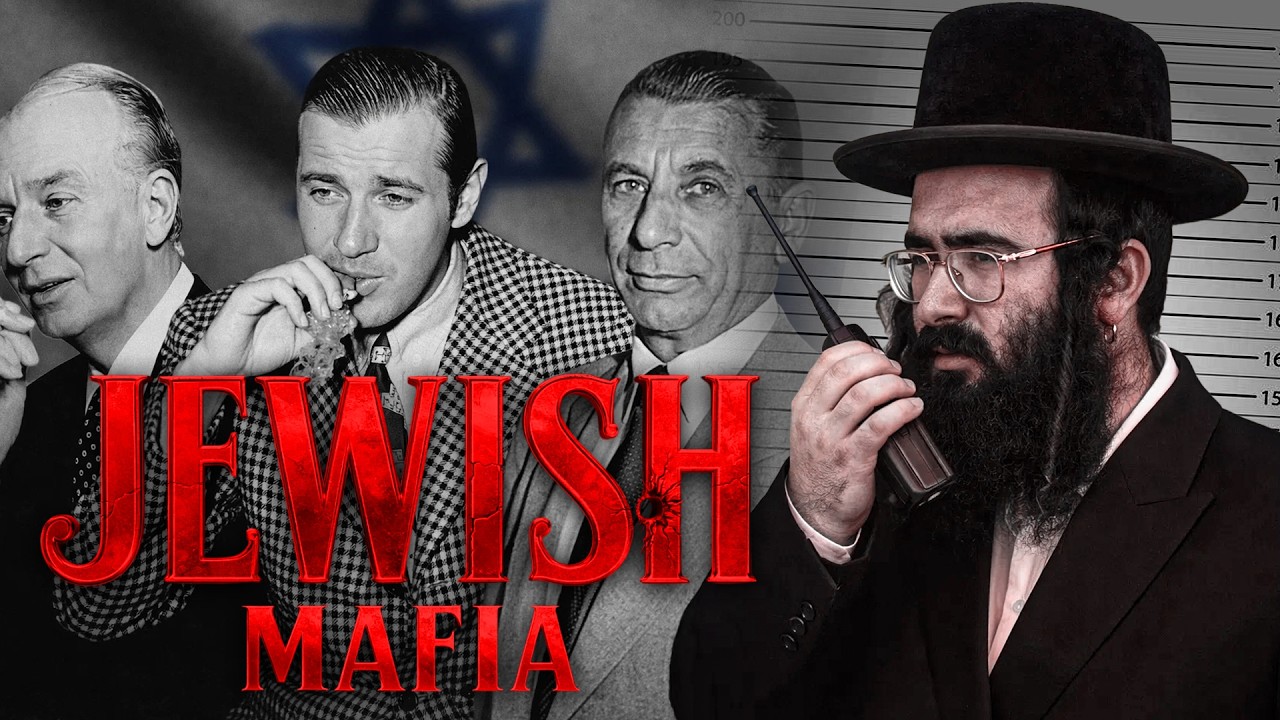
In the early 20th century, a generation of Jewish gangsters rose from the tenements of New York to build one of the most powerful criminal networks in American history. They were not the first criminals, but they were among the most innovative. They created national networks, cooperated across ethnic lines, and modernized the underworld.
Their story begins with immigration. In Lower East Side Manhattan around 1900, tenement buildings lined narrow streets. Inside cramped apartments, Russian and Eastern European Jewish families unpacked their lives. They had fled persecution, crossed an ocean, and arrived with nothing. Their children grew up fast. The streets taught them what Ellis Island could not.
Arthur Flegenheimer was born in the Bronx in 1902 to German Jewish parents. His father abandoned the family, and the boy turned to the streets. He took the name Dutch Schultz. No one knows why. By 17, he served time for burglary. When he walked out, Prohibition had arrived.
Benjamin Siegelbaum was born on February 28, 1906, in Brooklyn to Ukrainian Jewish immigrants. He grew up poor on the Lower East Side. He was handsome, charming, and violent. Other boys called him Bugsy. He hated the name. Men who used it to his face did not live long.
Meer Suchansky was born in Grodno, in the Russian Empire, on July 4, 1902. His family immigrated to New York in 1911. He became Meer Lansky. Small, thin, and smart, he did not look like a gangster. That was his advantage.
Meyer met Bugsy on Broome Street in 1918. They were teenagers. They formed a gang, the Bugs and Meyer Mob. They stole, they extorted, they muscled in on crap games. Italian gangs noticed them. Irish gangs tried to kill them. They survived.
Arnold Rothstein watched from above. Born in 1882 to respectable German Jewish parents, his father was a businessman. Arnold chose a different path. By 1919, he was the most powerful gambler in New York. He operated out of Lindy's restaurant on Broadway. Politicians came to him. Gangsters came to him. He lent them money. He taught them how to think big.
On October 1, 1919, in Cincinnati, Ohio, the Chicago White Sox faced the Cincinnati Reds in the World Series. Eight White Sox players accepted bribes and threw games. The scandal rocked baseball. Rothstein's name surfaced. He denied involvement. No charges stuck, but everyone knew he was the man who fixed the World Series.
The Volstead Act took effect. The 18th Amendment became law. Alcohol was now illegal in the United States. The decision changed everything. Legitimate businessmen lost their licenses. Criminals saw opportunity.
Arnold Rothstein moved first. He organized the importation of Canadian whiskey. He financed operations. He did not get his hands dirty. He was the banker, the brain. Young Jewish gangsters worked under him. Irving Wexler, known as Waxey Gordon. Louis Buchalter, called Lepke. Meer Lansky. Bugsy Siegel. Arthur Flegenheimer.
New York became a battlefield. Italian gangs controlled certain territories. Irish gangs controlled others. Jewish gangs carved out their own space. Sometimes they fought, sometimes they cooperated. The money was too good to let ethnic differences matter.
Dutch Schultz took over beer distribution in the Bronx. He muscled out rivals. He paid off police. He earned thousands per week, then tens of thousands. He expanded into the numbers racket, illegal lottery games in Harlem and the Bronx. He became rich. He became feared.
Meyer Lansky and Bugsy Siegel worked differently. They were partners. They thought strategically. They saw the future. In 1929, Lansky met Charles "Lucky" Luciano, an Italian gangster on the rise. The two men recognized something in each other. They spoke the same language. Not Italian, not Yiddish, the language of money and power.
On February 14, 1929, in Chicago, Al Capone's men massacred seven members of the Bugs Moran gang in a garage. The St. Valentine's Day Massacre shocked the nation. Federal authorities intensified their pursuit of gangsters. Capone went to prison in 1931 for tax evasion. The message was clear. The government cannot catch you for murder, but they will catch you for taxes.
Organized crime leaders met in Atlantic City and New York. Italians, Jews, a few Irish. They discussed territories. They discussed rules. They formed what journalists later called the National Crime Syndicate. Charles Luciano became chairman. Meer Lansky served as his right hand.
The syndicate created the Commission, a ruling body of crime families. Five New York families. Families in Chicago, Detroit, Philadelphia, Kansas City. The syndicate also created an enforcement arm, a group of killers on call, mostly Jewish and Italian, based in Brooklyn, led by Louis Lepke Buchalter and Albert Anastasia. The newspapers called them Murder Incorporated.
Murder Incorporated operated from a candy store in Brownsville, Brooklyn. Abe Reles, known as Kid Twist, was one of their top killers. Martin Goldstein. Harry Strauss, called Pittsburgh Phil. These men did not kill for passion. They killed for business. They received contracts. They fulfilled contracts. They were paid. Estimates suggest they killed between 400 and 1,000 people during the 1930s.
The operation was efficient. A boss in one city needed someone eliminated. He contacted the syndicate. Murder Incorporated sent men who were not known in that city. They killed, they left. No connections, no evidence.
Lepke Buchalter ran the labor rackets. He controlled unions, the garment industry, trucking, bakeries. He ordered strikes. He ordered beatings. He ordered murders. He operated from the shadows. By the mid-1930s, he was one of the most powerful gangsters in America.
Abner "Longie" Zwillman rose in New Jersey. Born July 27, 1904, in Newark to Jewish immigrants, he was tall and strong. He controlled bootlegging across the state. He partnered with Lucky Luciano and Meer Lansky. His trucks moved Canadian whiskey down the eastern seaboard. He made millions in Newark. He was respected. He helped Jewish families. He fought Nazi sympathizers.
In the late 1930s, the German-American Bund held rallies in New Jersey. Zwillman organized Jewish gang members to break them up. They did. The rallies stopped.
Mickey Cohen was born September 4, 1913, in Brooklyn, another Jewish kid from immigrant parents. He moved to Los Angeles as a child. He became a boxer, then a gangster. In 1939, Bugsy Siegel sent for him. Mickey became his bodyguard, his enforcer, his partner in West Coast operations.
Bugsy Siegel arrived in California in 1937. The syndicate sent him. They wanted control of racing wire services, betting operations, union rackets. Siegel charmed Hollywood. He dated movie stars. He dined in expensive restaurants. He wore tailored suits. He looked like a celebrity. He was a killer.
On December 26, 1946, in Las Vegas, Nevada, the Flamingo Hotel opened on the desert highway known as the Strip. Bugsy Siegel stood at the entrance. This was his dream, a luxury casino in the middle of nowhere. He poured syndicate money into construction. Cost overruns plagued the project. The budget spiraled. His partners in New York grew impatient.

The grand opening was troubled. Bad weather grounded flights. Celebrities did not show. The casino opened anyway. Jimmy Durante performed. Xavier Cugat's band played. Some gamblers arrived. They won. The house lost. Within two weeks, Siegel closed the hotel. He reopened it in March 1947. This time, business improved, but the damage was done.
Meer Lansky, his childhood friend, could not protect him. The syndicate had rules. Money missing, cost overruns, disrespect. On June 20, 1947, Bugsy Siegel sat in Virginia Hill's Beverly Hills mansion. A gunman fired through the window. Nine shots. Two bullets hit Siegel in the head. He died instantly. He was 41 years old. No one was ever arrested.
Mickey Cohen took over Los Angeles operations. He survived 11 assassination attempts over the next decade. Bombs, drive-by shootings, ambushes in restaurants. He walked away every time. He became a media sensation. He granted interviews. He appeared in newspapers. He was the gangster as celebrity.
Back east, law enforcement closed in on Murder Incorporated. In 1940, Abe Reles was arrested for murder. He faced execution. He made a choice. He turned informant. He provided details on more than 70 killings. He described methods, locations, names. His testimony sent several Murder Incorporated members to the electric chair.
On May 40, 1940, in Brooklyn, Reles gave a four-hour confession to prosecutors. He admitted to six murders personally. He described dozens more committed by others. He named Louis Lepke Buchalter. He named Albert Anastasia. He named Martin Goldstein, Harry Strauss, Harry Maione. The authorities called him the canary who could sing. His testimony broke Murder Incorporated.
On March 4, 1944, at Sing Sing prison in New York, Louis Lepke Buchalter entered the execution chamber. He was the highest-ranking mobster ever executed in the United States. He went to the electric chair for the murder of Joseph Rosen, a Brooklyn candy store owner. At 11:16 p.m., the switch was thrown. Lepke was dead. Emanuel "Mendy" Weiss and Louis Capone, no relation to Al Capone, were executed the same night. Three men, three jolts from Old Sparky.
The era of Murder Incorporated ended in the electric chair, but Abe Reles never testified against Albert Anastasia. On November 12, 1941, Reles was under police protection in the Half Moon Hotel in Coney Island. Six police officers guarded him. In the early morning, Reles fell from a sixth-floor window. He died on impact. The official story was suicide. No one believed it. The newspapers called it the canary who could sing but couldn't fly. The investigation went nowhere.
Dutch Schultz met his end earlier. On October 23, 1935, at the Palace Chop House in Newark, New Jersey, Schultz sat in the back room with three associates. Two gunmen entered, Charles Workman and Emanuel Weiss. They opened fire. Schultz's men died quickly. Schultz took a bullet to the abdomen. He stumbled to the bathroom. He collapsed.
Ambulances arrived. He was taken to a New York City hospital. He underwent surgery for 22 hours. He drifted in and out of consciousness. He spoke in fragments, delirium. Police stenographers recorded his words. They made no sense. At 8:35 p.m. on October 24, Dutch Schultz died. He was 33 years old.
The murder was sanctioned by the syndicate. Schultz had wanted to kill Thomas Dewey, the ambitious district attorney prosecuting gangsters. The syndicate said no. Killing a prosecutor would bring too much heat. Schultz planned to do it anyway, so they killed him first.
Meer Lansky outlasted them all. He avoided arrest. He avoided prosecution. He moved money. He invested in legitimate businesses. He opened casinos in Cuba under Fulgencio Batista. When Fidel Castro took power in 1959, Lansky lost millions. He moved operations to the Bahamas, to London, to Las Vegas. He became the financial genius of organized crime. The FBI investigated him for decades. They found nothing that stuck.
Waxey Gordon was not so lucky. By 1932, he controlled beer distribution along the eastern seaboard. He partnered with Max Hassel and Max Greenberg. They imported Canadian liquor. They brewed beer in Pennsylvania breweries. They distributed to New York, Philadelphia, New Jersey. Waxey Gordon made millions, but he spent millions. Fancy cars, expensive suits, mansions. The government noticed.

In 1933, Thomas Dewey prosecuted Gordon for tax evasion. The trial lasted weeks. The jury convicted him. He was sentenced to 10 years in federal prison. When he was released, Prohibition had ended. His empire was gone. He tried to restart. He failed. In 1951, he was arrested for selling narcotics. In 1952, he died of a heart attack in Alcatraz prison. He was 64 years old.
Prohibition ended December 5, 1933. The 21st Amendment repealed the 18th. Alcohol was legal again. The bootlegging empires collapsed overnight. But the gangsters did not disappear. They moved into other rackets. Gambling, narcotics, labor unions, loan sharking, extortion. The Jewish gangsters who built the underworld in the 1920s adapted.
Meer Lansky invested in Las Vegas. After Bugsy Siegel's death, Lansky and his partners took control of the Flamingo. It became profitable. Other casinos followed. The Sands, the Desert Inn, the Stardust. Jewish mobsters owned or had interests in many of them. They worked alongside Italian families. The syndicate operated smoothly.
Lansky traveled frequently. In the 1950s and 1960s, he divided his time between Miami Beach and Havana. He became the financial adviser to multiple crime families. He laundered money. He invested in legitimate businesses. He was meticulous. He kept no records. He trusted no one completely.
In 1970, facing federal indictment for tax evasion and money skimming, Meer Lansky fled to Israel. He arrived in Tel Aviv with his wife Thelma. He invoked the Law of Return. Any Jew can immigrate to Israel. He applied for citizenship. Israeli authorities were torn. Lansky was Jewish, but he was also a mobster. The Israeli government debated for two years. Public pressure mounted. The United States demanded extradition.
On September 11, 1972, the Israeli Supreme Court denied Lansky's citizenship application. He was ordered to leave. He flew to South America. No country would take him. He returned to Miami in 1973. He stood trial for tax evasion. The government's case was weak. He was acquitted. He lived quietly in Miami Beach until his death on January 15, 1983. He was 80 years old. The FBI estimated he was worth hundreds of millions. His family claimed he died nearly broke.
Mickey Cohen survived into the 1960s. In 1951, he was convicted of tax evasion. He served four years. Released in 1955, he returned to Los Angeles. In 1961, he was convicted again, this time for tax evasion on unreported income. He was sentenced to 15 years. He served most of it in Alcatraz.
On August 14, 1963, Cohen was in the Alcatraz recreation yard. Another inmate, Burl Estes MacDonald, attacked him with a lead pipe, three blows to the head. Cohen survived, but the injuries left him partially paralyzed. He was transferred to a federal medical facility. Released in 1972, he spent his final years confined to a wheelchair. He died in his sleep on July 29, 1976. He was 62 years old.
Longie Zwillman's end was quieter. By the 1950s, law enforcement intensified investigations. Senate hearings on organized crime put pressure on old-guard mobsters. In 1959, Zwillman was scheduled to testify before a grand jury. On February 26, 1959, he was found dead in the basement of his West Orange, New Jersey, mansion. He was hanging from a plastic-coated wire attached to a ceiling pipe. The medical examiner ruled it suicide. Associates doubted it. Theories circulated. Was it murder disguised as suicide? Or did Zwillman take his own life to avoid prison and humiliation? The truth died with him. He was 54 years old.
The Jewish gangsters of the early 20th century left an indelible mark on American organized crime. They were not the first criminals, but they were among the most innovative. They created national networks. They cooperated across ethnic lines. They modernized the underworld.
Arnold Rothstein taught them to think like businessmen. Meer Lansky taught them financial discipline. Bugsy Siegel taught them to dream big. Dutch Schultz taught them ruthlessness. Louis Lepke taught them the value of organization and enforcement. Together they built the infrastructure that the Mafia would inherit.
Most of them died violently, shot in restaurants, executed in electric chairs, beaten in prison yards. A few, like Meer Lansky, lived long lives and died of natural causes, but their legacy endured. The casinos in Las Vegas, the methods of money laundering, the cooperation between crime families, the National Crime Syndicate. These were their inventions.
By the 1960s, the original generation was gone. Their children did not follow them into the life. They became doctors, lawyers, businessmen. The Jewish gangster became a historical curiosity, a chapter in American crime that closed. The Italian Mafia dominated the headlines. The Jewish mobsters faded into memory. But in their time, they were kings. They controlled cities. They corrupted politicians. They defied the law for decades. They built empires from nothing. They came from tenements and sweatshops and emerged as millionaires. They lived by the gun, and most of them died by it.