On July 20, 1944, Adolf Hitler met with Italy's fascist leader Benito Mussolini, just hours after German military officers attempted to assassinate him at the Wolf's Lair, his East Prussian headquarters in Rastenburg. The plot marked the culmination of efforts by several groups within the German resistance who hoped Hitler's death would trigger an anti-Nazi revolt and overthrow the Nazi government. Under the plan, other major Nazi leaders would be arrested in the confusion, and a new government would be established to negotiate an armistice on more favorable terms for Germany.
The plot failed. In the days that followed, Hitler ordered a massive hunt for the conspirators, and executions continued until the last days of the war. One of those conspirators was the deputy chief of the Abwehr, Germany's secret military intelligence service. His name was Hans Oster.
Hans Oster was born on August 9, 1887, in Dresden, then part of the German Empire. He grew up in a Protestant family, with his father serving as a pastor for the Reformed French congregation in Dresden. He chose a different path. After completing his secondary education, he pursued a military career as a professional officer, joining the artillery in 1907. In 1912 he married Gertrud Knoop, and the marriage produced three children.
When the First World War began on July 28, 1914, Oster served on the Western Front. In 1916, within the German General Staff, he was promoted to Hauptmann, equivalent to captain. The war ended on November 11, 1918, and like many other Germans, Oster was dismayed by the harsh conditions imposed on his country by the Treaty of Versailles.
The treaty, signed on June 28, 1919, placed Germany under strict restrictions that deeply affected its economy, military, and sense of sovereignty. Germany was forced to accept full responsibility for the war and faced enormous reparations payments to the Allied powers, straining an already weakened economy. Germany also lost valuable territories, including Alsace-Lorraine, which was rich in coal and iron ore, as well as all overseas colonies, leading to widespread resentment. The treaty imposed severe military restrictions as well, limiting Germany's army to 100,000 troops and prohibiting submarines, an air force, and conscription.
After the war, Oster continued to serve in the German Army even though the officer corps was restricted to just 4,000 members. In the following years he rose through the ranks and was promoted to major in 1929. Three years later, however, Oster was forced to resign from service due to an affair with a comrade's wife.
On January 30, 1933, Adolf Hitler was appointed chancellor of Germany by President Paul von Hindenburg. Oster initially supported the Nazi regime, believing in its promise to restore the glory of the former German Empire, elevate the German people back to prominence, and secure a dignified place for Germany on the world stage. Several months after the Nazis took power, he joined the Abwehr, Germany's secret military intelligence service.
After taking power in 1933, the Nazis swiftly dismantled Germany's democratic institutions, establishing a totalitarian state under Hitler's leadership. Political opponents, particularly Communists and socialists, were violently suppressed, with many imprisoned in the first concentration camps such as Dachau, established in March 1933. These camps became a tool to intimidate and silence those who opposed the regime.
The Nazis also launched cultural purges, with the infamous book burnings of May 1933 symbolizing their attempt to eradicate "un-German" ideas by targeting works by Jewish, Marxist, and liberal authors. Conflict with the Christian churches also arose as the Nazis sought to align religious institutions with Nazi ideology, arresting dissenting priests and restricting church activities.
While Oster was growing increasingly disillusioned with the Nazi regime and its oppressive policies, the last straw came with the Night of the Long Knives, which occurred between June 30 and July 2, 1934. During this purge, the SS assassinated many members of the rival SA, a paramilitary wing of the Nazi Party, including its leader Ernst Röhm. Several of Hitler's political opponents were also killed, among them General Kurt von Schleicher, who had preceded Hitler as chancellor and had criticized his cabinet, and Major General Ferdinand von Bredow, the former head of the Abwehr and Oster's friend. The Night of the Long Knives deeply affected Oster, strengthening his resolve to undermine the Nazi regime.
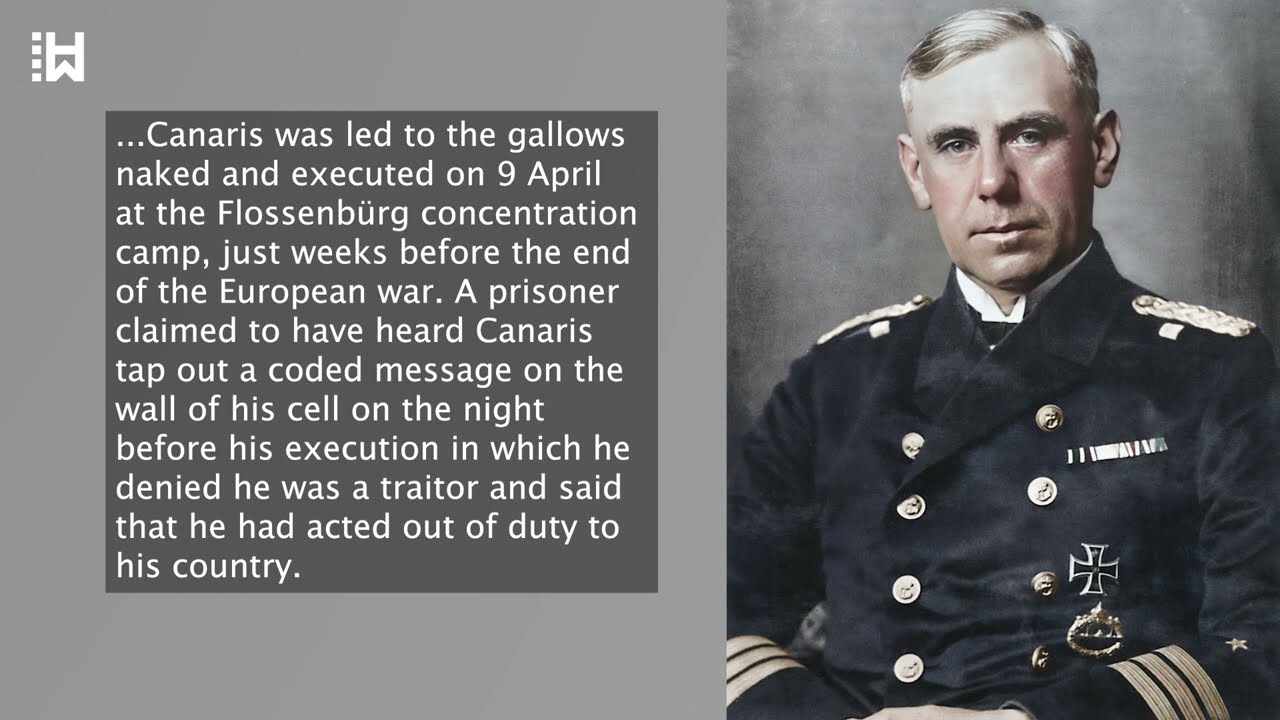
In 1935, under the new head of the Abwehr, Wilhelm Canaris, Oster began building a network of contacts with opponents of the Nazis within the state administration and security organizations. Following the Blomberg-Fritsch Affair, his antipathy toward the Nazis turned into hatred as Hitler consolidated his grip on power.
Ever since they seized power in Germany, the Nazis had been trying to take control of the army, and it came in very useful when it turned out that Defense Minister Werner von Blomberg had married a prostitute. In January 1938, von Blomberg was forced to resign after revelations about his wife's past led to concerns about his judgment. Around the same time, Werner von Fritsch, commander-in-chief of the German Army, was falsely accused of engaging in homosexual activities. In February 1938 he was also forced to resign, but Canaris and other military officers were appalled at the mistreatment of Fritsch and eventually succeeded in proving his innocence.
After von Blomberg and von Fritsch were removed from their positions, Hitler assumed the position of supreme commander of the armed forces, consolidating military and political power in his hands. During the Blomberg-Fritsch Affair, Oster met Colonel General Ludwig Beck, the chief of the general staff, for the first time. This meeting laid the groundwork for the first military conspiracy to overthrow Hitler if Germany went to war with Czechoslovakia over the Sudetenland, a border region with a significant ethnic German majority.
In August 1938, Beck openly expressed his opposition to a potential war with the Western powers over Czechoslovakia during a meeting of army generals in Berlin. When Hitler learned of his stance, he demanded Beck's resignation. Beck, a highly respected figure within the military, was succeeded as chief of staff by Franz Halder, who stayed in contact with both Beck and Oster and privately described Hitler as the incarnation of evil.
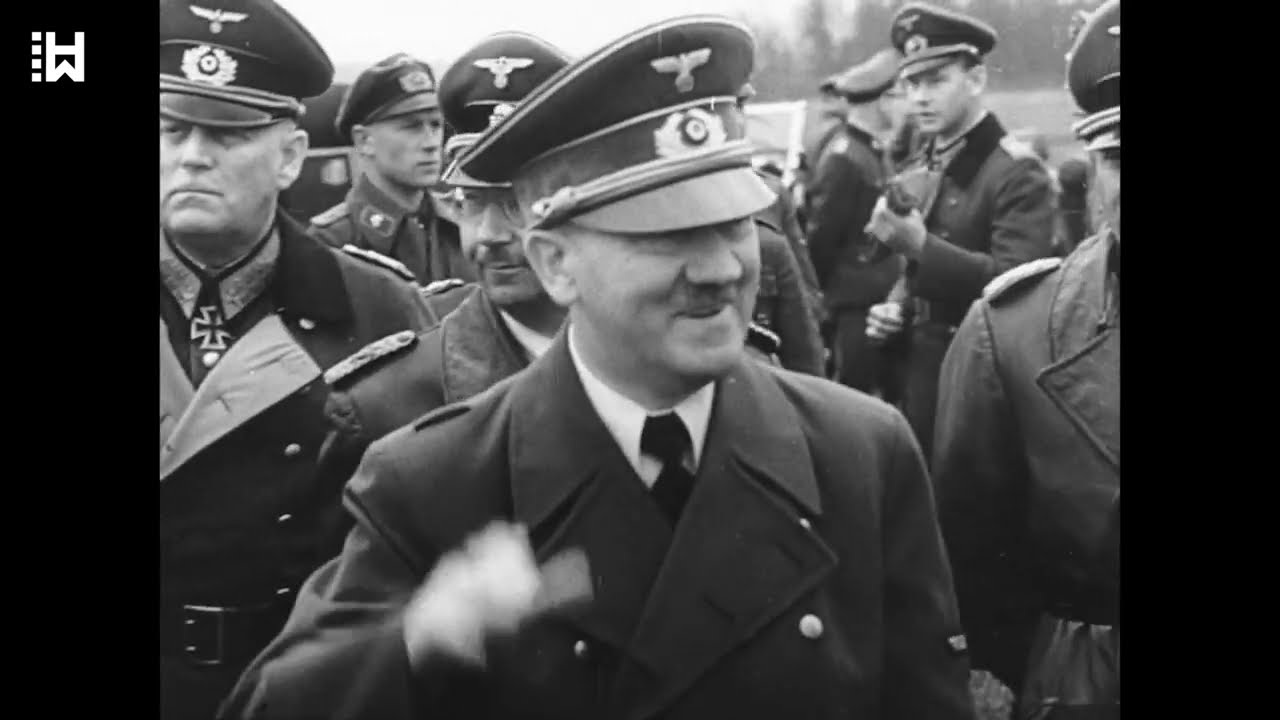
Oster and other conspirators believed Germany was not ready to fight another war and pressured Halder and Beck to take action against Hitler. Their plan involved overthrowing Hitler and the Nazi regime by storming the Reich Chancellery with forces loyal to them. Once in control of the government, they intended to either arrest or assassinate Hitler and restore the monarchy under Prince Wilhelm of Prussia, the grandson of Wilhelm II, the last German emperor and king of Prussia. The army generals argued, however, that support among the officer corps could only be mobilized if Hitler made overt moves toward war.
While Oster was drawing up plans for a coup, it was eventually agreed that Halder would act when Hitler took a definitive step toward war. Oster's position in the Abwehr proved invaluable to the conspirators. The Abwehr provided false documents and access to restricted materials, masked conspiratorial activities as intelligence work, connected various resistance cells, and supplied critical intelligence to support the plot. Emissaries of the conspirators, with Oster's assistance and the resources of the Abwehr, even traveled to Britain to urge the British government to stand firm against Hitler during the Sudeten crisis.
British Prime Minister Neville Chamberlain agreed to meet in Munich, where, along with French Prime Minister Édouard Daladier, on September 29 and 30, 1938, he accepted the dismemberment of Czechoslovakia. This destroyed any chance of the plot succeeding, as Hitler was then seen in Germany as the greatest statesman of all time, at the height of his greatest triumph. On September 30, 1938, Chamberlain, on his return from Munich, made his "peace for our time" declaration, believing he had averted war. He was wrong.
The Second World War started on September 1, 1939, when Nazi Germany invaded Poland. After the outbreak of the war, opposing Hitler within the army became increasingly risky, as it could jeopardize Germany's chances of victory. When Hitler announced plans to attack France shortly after the Polish campaign, Halder and other senior generals deemed the idea hopelessly unrealistic and once again considered staging a coup, encouraged by Oster and Canaris. When Hitler vowed to eradicate defeatist attitudes within the army high command, however, Halder feared the conspiracy might be uncovered and destroyed all incriminating evidence.
This atmosphere of fear and escalating pressure did not deter Hans Oster from continuing his resistance. Determined to undermine Hitler's plans, Oster took a bold and unprecedented step by secretly sharing critical military intelligence with his trusted friend Bert Sas, the Netherlands military attaché in Berlin. Oster informed Sas of a postponed invasion date of the Netherlands more than 20 times. In one warning, he referred to Hitler as "the pig who was departed from the front in the west," implying that Hitler had finalized plans for the German invasion of the Netherlands and Belgium. Sas passed the information to his government, but they did not believe him.
The German invasion of France, Belgium, Luxembourg, and the Netherlands started on May 10, 1940, and became known as the Battle of France. These countries, along with France, were conquered within six weeks. Between 1940 and 1942, German resistance reached its lowest point. While some officers felt reassured that their fears of military disaster had not materialized, others remained opposed to Hitler but believed his overwhelming popularity made resistance efforts impossible. Despite these challenges, Oster tirelessly worked to rebuild the resistance network.
In 1941, after the invasion of the Soviet Union marked the start of the systematic extermination of European Jews, Oster established contact with the resistance network led by then Colonel Henning von Tresckow in Army Group Center. Oster's network later provided British magnetic bombs to Tresckow's team for their assassination attempts on Hitler in 1943. At this time, Hans Oster held the rank of Generalmajor, to which he was promoted on November 16, 1942, with effect from December 1 of the same year.
The first attempt in March 1943 involved a bomb smuggled onto Hitler's plane, but a faulty detonator caused it to fail. Days later, Colonel Rudolf von Gersdorff carried explosives in a Berlin museum, intending to kill Hitler during a tour, but Hitler left abruptly, forcing Gersdorff to disarm the bomb and abort the mission.
In April of the same year, the Gestapo, the Nazi secret police, grew suspicious of Oster's behavior following the arrest of Hans von Dohnanyi, who had joined the Abwehr shortly before the war. Initially the investigation focused on currency violations against Dohnanyi, who had smuggled 14 Jews into Switzerland by disguising them as Abwehr agents and providing them with foreign currency. During his arrest, Dohnanyi failed to hide incriminating documents lying openly on his desk, and Oster tried to remove them. Oster was immediately confronted and forced to return the documents. He was placed under house arrest and dismissed from his position in the Abwehr a few days later.
Oster's dismissal marked a severe blow to the resistance, leaving the network in disarray at a critical time. Despite this setback, the resolve to oppose Hitler continued to grow elsewhere. From early 1942, several military officers, such as Colonel Claus von Stauffenberg, became convinced that Germany was being led to disaster and that Hitler's removal from power was necessary. After the Battle of Stalingrad in December 1942, despite his religious scruples, Stauffenberg concluded that the Führer's assassination was a lesser moral evil than Hitler's remaining in power.
On July 20, 1944, Stauffenberg placed one of two bombs in a briefcase under the table in Hitler's briefing room at the Wolf's Lair. He was unable to arm the second bomb in time, and after Stauffenberg left the room, the briefcase was coincidentally moved under the heavy support of the table leg. It detonated but failed to kill Hitler. This was not immediately known to the conspirators. An ally at Hitler's headquarters cut off all communications. Stauffenberg returned to Berlin to coordinate the implementation of the plan, code-named Operation Valkyrie.
At first the plan seemed to go smoothly as the reserve army began to take action, but delays, confusion, and poor communication robbed the coup of its initiative. Eventually the fact of Hitler's survival was broadcast, and the plot quickly unraveled. As a result of the failed coup, every member of the Wehrmacht, the German armed forces, was required to re-swear his loyalty oath by name to Hitler. On July 24, 1944, the military salute was replaced throughout the armed forces with the Hitler salute, in which the arm was outstretched and the salutation "Heil Hitler" was given.
In the days that followed, Hitler ordered a massive hunt for conspirators, which continued for months. Oster was arrested one day after the failed assassination attempt. On April 4, 1945, Admiral Canaris's diaries were discovered, and in a manic rage upon reading them, Hitler ordered that all current and past conspirators, Oster among them, be executed.
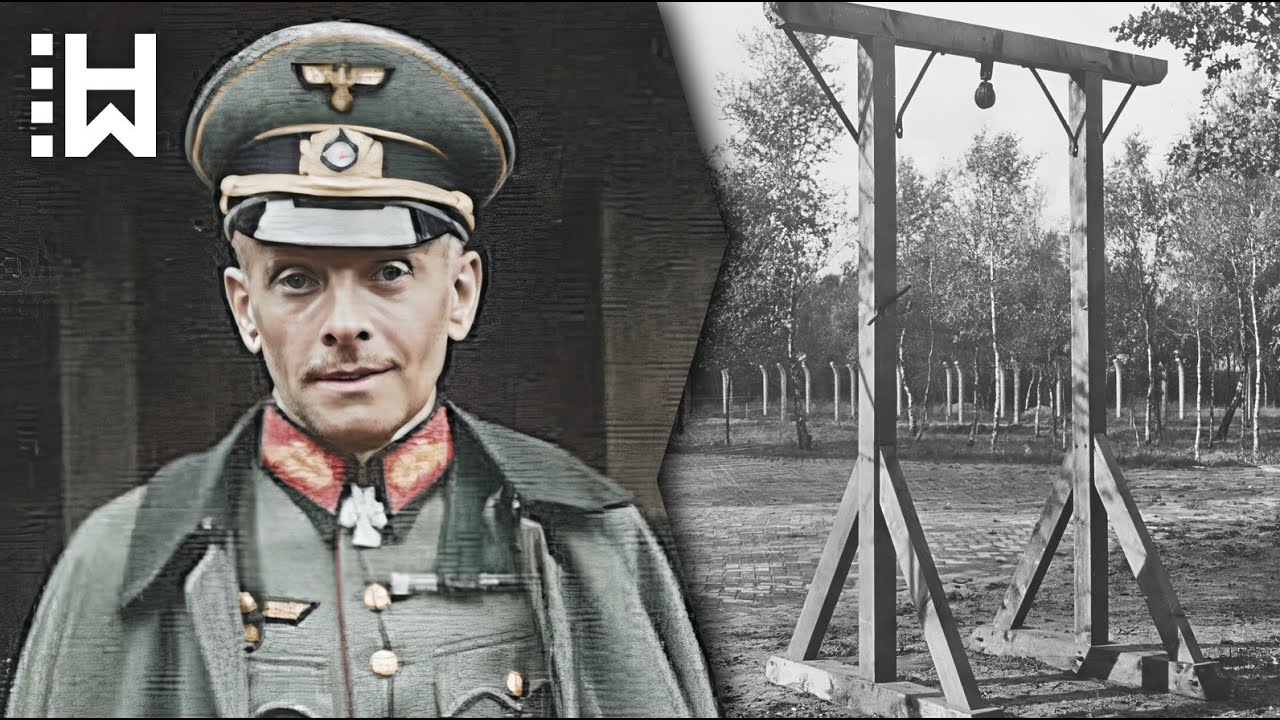
In the gray morning hours of April 9, 1945, just a month before the end of the war in Europe, gallows were erected hastily in the courtyard of Flossenbürg concentration camp. Hans Oster, then 57 years old, was ordered to remove his clothing and was led to the gallows naked. By Hitler's direct orders, he was hanged with a meat hook and a thin hemp rope, which the people called a "piano wire." In some cases this barbaric method of execution caused the death struggle to last for 20 minutes. Following his execution, Oster was buried in the Nordfriedhof Cemetery in Dresden.
After the war, Oster has often been cited as a principled opponent of Hitler who acted despite great personal risk. Fabian von Schlabrendorff, one of the few senior anti-Nazis to survive the war, described Oster as "a man such as God meant men to be, lucid and serene of mind, imperturbable in danger."