In the early 1970s, a concrete contractor named Anthony Benevento walked into Carlo Gambino's home in Howard Beach, Queens, and raised his voice at the most powerful organized crime boss in America.
Benevento pointed his finger at Gambino in front of a room full of made men.
Gambino said almost nothing. He smiled, nodded, and personally walked his guest to the door like a gracious host.
Three decades later, workers tearing down a commercial building in Canarsie, Brooklyn, finally learned what that smile meant.
To understand the story, you first have to understand the man Benevento chose to disrespect.
Carlo Gambino was small, perhaps five foot six, and thin. He had enormous ears, deep-set eyes, and dressed like a retired accountant who could not quite afford good suits.
When he entered a room, strangers did not notice him. He did not command space the way people expect a feared boss to command it.
He did not need to. The men who knew exactly who he was went very still.
That stillness was his power. Not a gun, not a temper. Stillness.
Gambino was born in Palermo, Sicily, in 1902, the son of a peasant farmer. He came to America at sixteen through Ellis Island with nothing.
He got connected early. By his mid-twenties he was running with the Masseria family during the Castellammarese War, the bloody power struggle that reorganized American organized crime in the early 1930s.
During that war, Gambino did something that defined him for the next fifty years. He picked the right side, not the loudest or the most powerful at the time, but the side that was going to win.
He had a gift for reading a room, a situation, a man, and knowing where the weight was going to fall before it fell.
By the time Vito Genovese and Lucky Luciano carved New York into the five families, Gambino was a made member of the Mangano family. He spent decades working his way up, patient and methodical, never reckless.
The FBI had files on him going back to Prohibition, but indicting Carlo Gambino was like trying to arrest fog. He was always in the next room, always three handshakes removed from the actual crime.
In 1957, after a series of murders and power shifts, Gambino became boss of what would eventually bear his name. The Gambino family became the largest, wealthiest, and most politically connected organized crime family in the United States.
He ran it on one principle above all others: respect. Not the word, but the actual thing, the bone-deep understanding that there was an order to the world and that order had to be honored or the whole structure collapsed.
You paid what you owed. You asked permission before you acted. You did not raise your voice. You did not make demands. You did not, under any circumstances, embarrass a boss in front of his people.
Gambino enforced this not with rage but with patience. He would listen to a man's transgression, nod slowly, thank whoever brought it to him, and then, somewhere down the line, that man would simply cease to exist.
No speech, no confrontation, no drama. Just gone.
The men around Gambino used to say you never knew you were in trouble with him until you were already dead. That was not a metaphor. It was a documented pattern of behavior that law enforcement studied for two decades and could never quite crack.
This was the man Anthony Benevento decided to get loud with.
Before getting to the meeting itself, it is necessary to understand concrete, not the material, but the business.
In New York City in the 1970s, concrete was not just a building material. It was a currency, and it was power. The New York families had quietly, systematically, and completely wrapped their hands around it.
If you wanted to put up a building in the five boroughs, you were going to deal with them, whether you knew it or not.
New York in the '70s was a construction boomtown. Office towers, apartment complexes, public housing, and commercial developments were going up everywhere. All of it required concrete, poured on a schedule, because in construction time is money and concrete has to go in at a specific point or the whole project stalls.
Contractors could not afford delays. Developers could not afford delays. The banks financing these projects absolutely could not afford delays.
The mob figured that out quickly. Through a combination of union control, contractor intimidation, and outright extortion, the Gambino family, along with elements of the Genovese, Lucchese, and Colombo families, established what investigators later called the Concrete Club.
It was not a social organization. It was a cartel, a rigged bidding system that controlled which concrete companies got contracts on major New York construction projects.
Any project over $2 million had to go through the club. The concrete company that got the job would kick back a percentage, typically one percent of the total contract value, to the families.
One percent sounds small. It was not. These were multi-million dollar projects, and that one percent added up to millions of dollars a year flowing into mob coffers, laundered through legitimate-looking construction businesses and virtually untraceable.
The genius of it was the mundanity. There was no shootout, no dramatic confrontation, no movie moment. There were just phone calls and envelopes and handshakes, and concrete got poured and buildings went up, and nobody talked.
The unions were the key. If a developer tried to go around the club and hire a non-affiliated contractor, that contractor would find his equipment vandalized, his workers not showing up, his deliveries mysteriously delayed. The job would grind to a halt.
When the developer came back to the table, and they always came back, the terms would be worse.
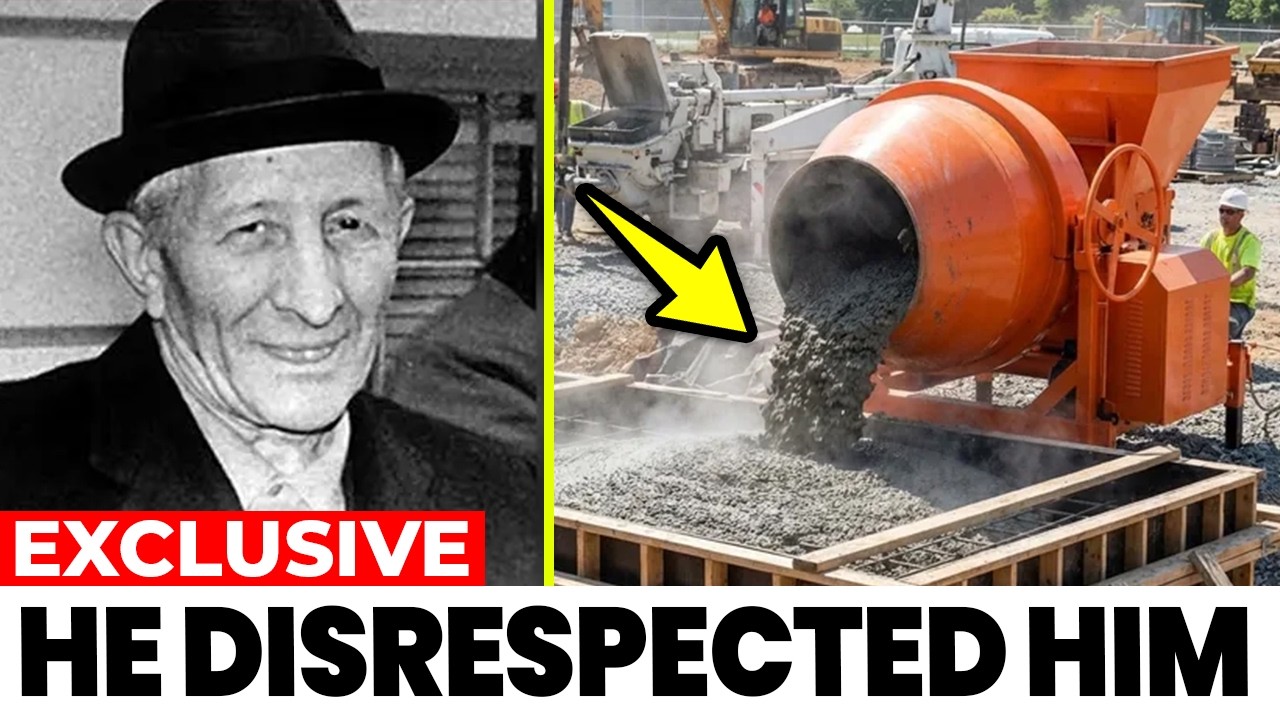
The Gambinos, as the most powerful family, had the largest slice of the arrangement. Carlo Gambino did not attend concrete meetings. He did not sit in union halls. He did not know the names of the individual contractors being squeezed. He had people for that.
What he did know was the revenue, the steady, reliable, enormous revenue that made the Gambino family the dominant power in New York organized crime throughout the 1960s and '70s.
That dominance was not just financial. It was territorial. The families had agreed on who controlled what. You operated where you were supposed to operate, with who you were supposed to operate with, and you did not go freelancing on another family's turf without explicit permission.
That brings the story to Anthony Benevento, who had apparently missed that memo entirely.
Anthony Benevento, known as Tony Beck to everyone who mattered, was not a stupid man. That needs to be said up front, because the story is easier to understand if he was. He was not.
He was sharp, connected, and genuinely talented at making money in concrete. That was the problem.
He grew up in Bensonhurst, Brooklyn, where organized crime was not something you read about in the newspaper. It was the guy at the social club on the corner. It was the fabric of the neighborhood.
Tony came up in the Colombo family's orbit, ran errands, made himself useful, and built the right relationships. By his early thirties he was an associate with a concrete contracting operation that was legitimate on paper and extremely profitable everywhere else.
The Colombo family liked him because he earned. In this world, a man who earns has a certain amount of protection.
Tony Beck confused protection with immunity. That mistake has a long and very consistent historical track record. It is, almost without exception, the last mistake a man makes.
The Colombo family operated in specific territory, specific contracts, specific unions, specific geography, all of it agreed upon with the other families. Tony worked within those lines for years because the money was good and the rules were clear.
Then the money got better somewhere else. Major commercial projects started going up in Gambino territory. Tony had the equipment, the crew, and the supplier relationships. He was right there. The Gambino-affiliated contractors were slower and more expensive.
So Tony started competing for their contracts without asking anyone's permission. And when he won those contracts, he kept the money.
The first time, a quiet message came back through the appropriate channels. A suggestion, pointed but polite. Tony acknowledged it, then continued.
The second message was less polite. Tony acknowledged that one too, then continued.
There is a saying in mob circles that the most dangerous thing you can do is not steal from a boss. It is steal from a boss and make him ask you twice to stop. Because twice means the boss looks weak, and a boss who looks weak has exactly one solution available to him.
By the time the meeting with Carlo Gambino was arranged, the word had already quietly circulated among the people who needed to know. Tony Beck was going to Howard Beach, and the outcome had been decided before he ever knocked on the door. He just did not know that yet.
Carlo Gambino's house in Howard Beach, Queens, was not what you would expect. No mansion, no gates, no swimming pool full of henchmen. It was a modest, well-kept home on a residential street in a tight-knit neighborhood where everybody knew everybody and strangers were noticed immediately.
Carlo had lived there for years. He liked the neighborhood, liked his neighbors, liked being the old Sicilian gentleman who took walks, attended mass, and sometimes sat on the front stoop and watched the street.
His neighbors knew what he was in a general sense. Nobody talked about it. That was the arrangement.
The meeting was set for a Tuesday morning. Not a late-night gathering of dark-suited men in a back room somewhere. A Tuesday morning in Carlo's house, with coffee.
The particular intimacy of that setting was not accidental. Carlo conducted his most serious business in the most ordinary-looking circumstances he could arrange. It was a habit. It was also a statement. This is my world, my rules, my kitchen table.
Tony Beck arrived with one of his Colombo contacts, a capo named Sal Ferrara, who had helped arrange the sit-down and who probably already knew this was not going to go well.
Several other men were present, Gambino loyalists, quietly positioned around the room in that practiced casual way that meant they were anything but casual.
Carlo greeted Tony Beck warmly, offered coffee, asked about his family, and made small talk in the precise, measured way that people who are very good at conversation use to take the measure of a man before the real conversation begins.
Then, gently, he got to it. There had been, Carlo said, some confusion, some misunderstanding perhaps. Contracts in certain areas that should have gone to certain people had not. Money that should have reached certain hands had not reached them.
Carlo framed it as a bookkeeping problem, almost sympathetic, as if Tony Beck had simply made an accounting error and they were here to correct the ledger.
And Tony Beck pushed back. Not gently, not diplomatically. He pushed back loudly.
He had a position, and he was going to state it. The contracts he had won, he had won fair. He was the better contractor. The Gambino-affiliated operations were overpriced and inefficient. He was generating business. He was creating value.
Was the whole point not to make money? Was he not making money? So what exactly was the problem?
He raised his voice in Carlo Gambino's kitchen with Carlo Gambino sitting four feet away.
There is an account from a man who was in that room, an account that surfaced years later through law enforcement channels, never entered into any public record but considered reliable by the agents who heard it. It describes the moment Tony Beck pointed his finger at Carlo Gambino and said, with genuine heat in his voice, that he was not going to be talked to like a child.
The room went completely silent. Silent in the way a room only goes silent when everyone in it simultaneously understands that something has just happened that cannot be undone.
Carlo Gambino did not react. That was the terrifying thing. He sat very still. His expression did not change. He listened to Tony Beck finish his point. He nodded slowly.

He said something along the lines that he understood Tony's perspective and appreciated him coming to speak directly. He thanked Sal Ferrara for arranging the meeting. He stood up, which signaled that the meeting was over, and he walked both men to the door himself, shook hands, and smiled.
Tony Beck apparently drove away from Howard Beach feeling like he had held his ground, like he had made his case, like a man who did not understand that the silence in that room had been a verdict.
Sal Ferrara, by contrast, drove away understanding that silence very clearly. He reportedly told a close associate that evening that Tony Beck had maybe a month. He was off by about three weeks.
The sentence was delivered without a word.
Carlo Gambino did not pick up a phone and call a hitman. He did not summon an underboss and issue a direct order that could later be traced, testified to, or recorded. He had a system so diffuse and so carefully insulated that federal investigators spent years trying to map it and never fully succeeded.
What would happen, pieced together from multiple cooperating witnesses across multiple investigations over multiple decades, is that Carlo would have a conversation with his underboss or a trusted capo. Not a conversation about murder. A conversation about a problem.
He would describe the problem. The other man would acknowledge the problem. And then, somehow, without any further explicit instruction, the problem would be addressed.
The men who carried out these jobs often did not know the specific chain of command that had resulted in their assignment. They knew what needed to be done and who had sanctioned it in the broadest possible sense, but the mechanics of how that sanction traveled from Carlo's kitchen table to their doorstep were invisible by design.
This is why Carlo Gambino was never successfully prosecuted for murder. The FBI knew, with absolute certainty, that he had ordered dozens of killings over his career. They could not prove it to a jury beyond reasonable doubt.
By the time you got to the man holding the gun, you were six conversations removed from the man who had originally described the problem.
After the Howard Beach meeting, Tony Beck had a few weeks that he experienced as normal. He went to work, ran his crews, and had dinner with his family. He probably told himself the meeting had gone fine. Maybe not great, but fine.
He had made his position clear, and the Gambinos would have to accept it, because he was a Colombo guy and starting a war over some concrete contracts was not worth it to anyone.
He did not notice the things that, in retrospect, were very noticeable.
The Colombo capo who had arranged the sit-down stopped returning his calls. Not dramatically, not suddenly. He was just always busy, always unavailable, always two days away from getting back to you. The kind of gradual withdrawal that could look like coincidence if you were not looking for it.
A business contact who had been a reliable source of contract referrals similarly became difficult to reach. Jobs Tony had been expecting to bid on quietly went to other contractors.
The circle around Tony Beck was shrinking, and Tony Beck, either because he genuinely did not see it or because he could not afford psychologically to see it, kept moving forward.
The crew assigned to handle the situation was based out of Canarsie. Three men, experienced and professional in the way the Gambino family expected its business to be professional. They had done this before. They knew how to do it clean and how to make finding anything afterward as difficult as possible.
They had a location already in mind.
They poured the concrete on a Tuesday.
The commercial building going up off Flatlands Avenue in Canarsie, Brooklyn, was not a remarkable project. A three-story mixed-use development, ground-floor retail, two floors of office space above. The kind of building that goes up in a dozen neighborhoods simultaneously and nobody writes about in the newspaper.
The contractor on the project had Gambino affiliations. Not directly, never directly. But the right people knew who was behind it, and the right people had been informed that a foundation pour was being scheduled for a Tuesday in the autumn of 1973, and that before the concrete went in, a certain portion of the subgrade work would need to accommodate something extra.
Tony Beck was lured to the site under the pretense of a business meeting. The person who made the call was someone Tony trusted, a contact he had worked with for years, someone who had every reason in the world to still be on Tony's side, or so Tony believed.
There was work to discuss, a potential contract. Come to the site, we will walk it together, talk numbers.
Tony Beck showed up alone.
A man who had spent his entire adult life in proximity to organized crime, who had been to Howard Beach, who had seen the room go silent, who had watched his phone calls go unreturned for three weeks, showed up alone.
Maybe he genuinely did not believe it was coming. Maybe he thought his Colombo connections made him too expensive to hit. Maybe he thought he was charming enough, valuable enough, and connected enough that the rules applied to other people.
Nobody knows, because nobody who was there ever told the whole story on the record.
What law enforcement was able to reconstruct decades later, through a combination of forensic evidence and carefully sourced informant accounts, is that Tony Beck was killed at or near the construction site sometime in the evening hours, quickly and professionally, the method consistent with how the Gambino family handled this kind of business in that era.
Not gratuitous, not drawn out. A working man's execution, which sounds darkly absurd but is the most accurate description.
The foundation pour was scheduled for the following morning.
The subgrade area where Tony Beck was placed had been prepared in advance. Specific dimensions, specific depth. The kind of preparation that tells investigators, when they eventually find it, that this was not an improvised decision. This was planned.
The location, the timing, the pour schedule, all of it was arranged before Tony Beck ever pulled up to that construction site.
By six in the morning, the crew was gone. By ten in the morning, concrete was being poured. By the end of that Tuesday, the foundation of what would become a perfectly ordinary commercial building in Canarsie, Brooklyn, contained Anthony Benevento.
The building went up on schedule. Tenants moved in. A dry cleaner on the ground floor, insurance offices upstairs. People parked their cars in the lot, paid their rent, and went about their days with no particular awareness that the foundation beneath them was doing double duty.
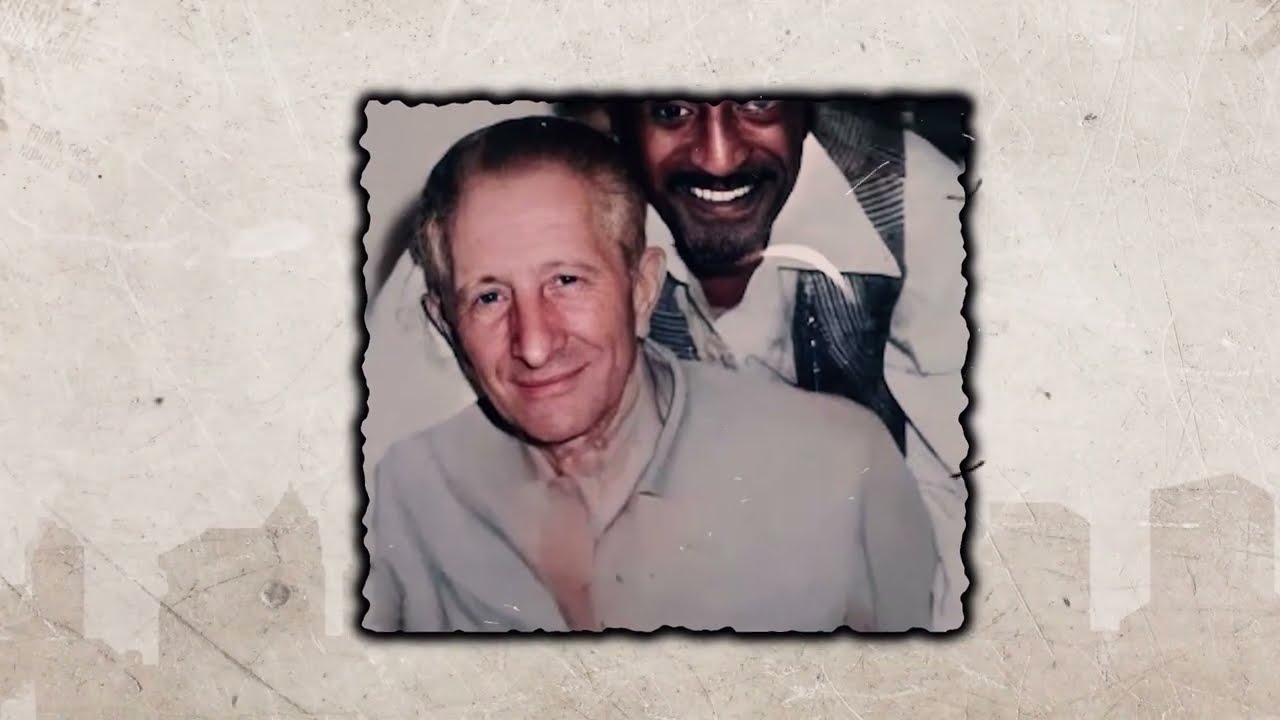
Tony Beck's wife reported him missing. The police took a report. The investigation went exactly nowhere, because in 1973 in Brooklyn, when a man with Colombo family associations simply ceased to exist, the number of people who were going to aggressively pursue that disappearance was very small.
His associates did not push. His Colombo contacts, the ones who were still accessible, were vague and unhelpful. The police had other things. Tony Beck became a missing person's file in a drawer.
And above him, people dry cleaned their shirts.
The building on Flatlands Avenue had a good run, roughly thirty years. Different tenants came and went. The dry cleaner gave way to a deli, then a check-cashing place, then a cellular phone store, which tells you something about how much time passed.
Upstairs, the insurance offices became a medical billing company, then a small accounting firm. The neighborhood changed around it. The building stayed.
In 2003, the property was sold to a developer who wanted to put up something larger. The building was scheduled for demolition. Standard stuff. Environmental assessment, asbestos check, structural survey, demolition crew. Nobody expected anything unusual.
The demolition crew hit something in the foundation in the early phases of the dig. Not immediately remarkable. Old foundations in Brooklyn are full of surprises, debris from previous structures, irregular pours, all kinds of things.
But this was different. The crew supervisor stopped the work and called in a structural engineer, who took one look at what they were uncovering and called the police.
The medical examiner's office came out. The forensic team came out. And the remains of a man who had been in that foundation since the autumn of 1973 were carefully, painstakingly recovered from the concrete of a building that had housed a dry cleaner, an insurance office, a cellular phone store, and approximately thirty years worth of Tuesday afternoons.
The forensic process was slow and methodical. Concrete is, it turns out, a remarkably effective preservative in some respects and deeply destructive in others. The investigation had to work with what the foundation had left them. Dental records. Eventually, DNA.
The identification took months. When the name Anthony Benevento came back, the cold case detectives who got handed the file had to go looking for people who remembered 1973.
Some of those people were dead. Some were in prison. Some had relocated under federal protection. A surprising number were still in Brooklyn, still in the neighborhood, still alive, and still possessed of the remarkable ability to have been present for decades of organized crime activity without ever having seen or heard anything useful to law enforcement.
The NYPD cold case unit worked the file. The FBI came in, because Anthony Benevento's name appearing in connection with concrete, Gambino, and Canarsie triggered certain institutional memories that agents had been maintaining for decades.
There were files. There were informant reports from the '70s that had referenced a contractor named Benevento in connection with a sit-down in Howard Beach. Pieces that had never quite connected suddenly had a foundation to connect to.
The men who had carried out the job were, by 2003, mostly dead or infirm. The men who had sanctioned it were dead. The men who had arranged the specific logistics, the pour schedule, the subgrade preparation, were dead.
The informant accounts that existed were old, second and third hand, and legally complex in ways that made prosecution an essentially theoretical exercise.
Law enforcement knew what had happened. They could reconstruct it. They could write reports about it that read with complete clarity and confidence about the sequence of events. What they could not do was put anyone in a courtroom for it.
The case was classified as a homicide with known circumstances and no prosecutable suspects, which is a bureaucratic way of saying: we know exactly what happened and we cannot do anything about it.
The detective who led the cold case investigation later gave an account to a journalist, off the record, that captured the whole thing precisely.
He said that you spend months rebuilding this picture, and by the end of it you can tell the story from beginning to end with complete confidence. You know who. You know why. You know how. And then you close the file, because every person who could be charged is already where they were always going to end up.
He meant dead. Which, in its own way, is a very New York conclusion to a very New York story.
Carlo Gambino died on October 15, 1976, three years after the concrete pour at Flatlands Avenue. He died in his home in Howard Beach, Queens, in his bed, of a heart attack. Peacefully, by all accounts, surrounded by family. He was 74 years old.
Consider what that means in context. Gambino ran the most powerful organized crime family in America for nearly two decades. He came up through the deadliest period in mob history.
He survived the Castellammarese War, Prohibition, the National Crime Commission, multiple FBI investigations, and the Kefauver Committee hearings. He survived Joe Valachi's Senate testimony in 1963, which named him specifically and which he responded to by continuing to live in Howard Beach and walking to mass on Sundays.
He survived all of it. He died in his bed.
The number of men in his position who died in their beds, you could count on one hand. The rest went to prison or went into the ground or went into concrete foundations in Canarsie, Brooklyn.
Carlo Gambino's death was front-page news. His funeral was enormous, attended by hundreds of people who loved him or feared him or both. The FBI photographed everyone who came. It was, one agent later said, the most useful surveillance operation they had run in years.
The empire Carlo left behind lasted another decade and a half before John Gotti, loud and flashy and everything Carlo was not, grabbed the throne and burned it down through sheer vanity and volume.
The FBI eventually got the Gambino family through wiretaps and cooperating witnesses in ways they never managed with Carlo, because Carlo understood something Gotti never did. Silence is the only perfect alibi.
The story of Anthony Benevento, Tony Beck, the concrete contractor from Bensonhurst who raised his voice in Howard Beach and was poured into a foundation on a Tuesday, is not in any history book. It was never prosecuted. It is not, technically speaking, officially solved.
The building is gone now. The foundation is gone. The concrete that held Tony Beck for thirty years was broken up and hauled away to a landfill somewhere, and that landfill is probably underneath something else by now.
But the story is real. What it tells you, underneath all the names and dates and construction schedules, is how Carlo Gambino maintained an empire for twenty years without ever raising his voice or pulling a trigger himself.
He simply described problems. And problems got solved.
A man disrespected him to his face in his own kitchen. Carlo smiled. Carlo nodded. Carlo walked him to the door and shook his hand. And three weeks later, that man became part of the infrastructure of a city that still stands.
That is not brutality. That is not gangster theater. That is administration. Cold, patient, efficient, remorseless administration.
The building in Canarsie stood for thirty years before anyone knew. So did Carlo Gambino's reputation. Thirty years, and not a whisper.