Camelot was never supposed to have a hidden room. From the outside, John F. Kennedy's White House looked like the closest thing America had ever produced to political royalty.
Youth, beauty, glamour, a handsome president, a brilliant first lady, little children running through history like a photograph the country wanted to live inside forever. But behind that image was a private life so reckless, so layered, and so potentially explosive that if the full story had broken in real time, Camelot might have collapsed before the legend ever had a chance to exist.
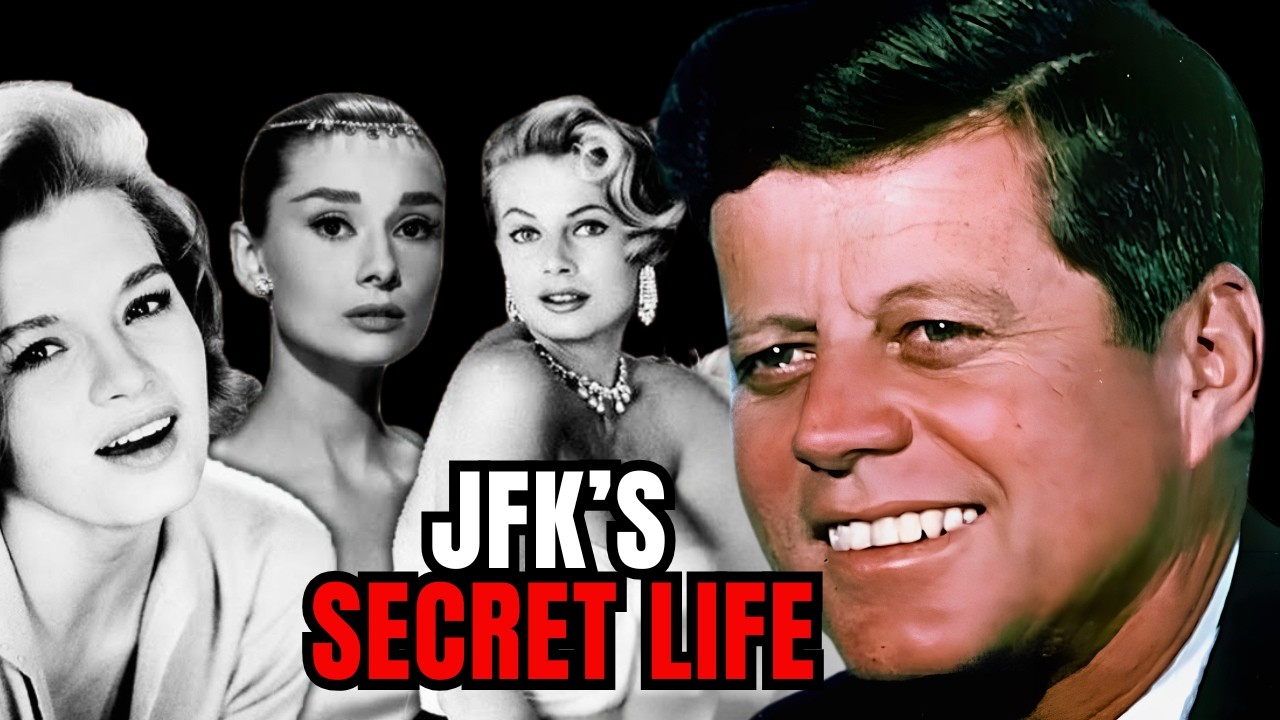
This is not just a story about affairs. That version is too simple, too easy. The real story is that Kennedy's private appetites created a chain of vulnerabilities that touched marriage, image, power, secrecy, and even the political stability of the presidency itself.
Some of the women linked to him were Hollywood stars, some were White House insiders, some moved dangerously close to worlds where sex and influence could become indistinguishable. The deeper you look, the clearer it becomes that Kennedy's love life was not just scandalous. It was structurally dangerous.
The most remarkable part is not that rumors existed. Rumors followed Kennedy almost everywhere. The remarkable part is how long the image survived anyway, and how a presidency built on elegance and control managed to absorb so much private chaos without publicly cracking apart.
To understand how JFK's private life became Camelot's most dangerous secret, you have to begin with one of the women whose name transformed gossip into something much more explosive: Judith Exner.
Exner was beautiful, socially polished, and already moving through elite circles when she entered Kennedy's orbit. On the surface, she could have been dismissed as just another glamorous woman drawn to a powerful man. But she was never just another name on the list, because her story carried a risk that reached far beyond embarrassment.
According to Exner, her relationship with Kennedy became intimate in the early 1960s. In later interviews, she described him as warm, attentive, almost unexpectedly gentle in private. That kind of portrait mattered because it made Kennedy's affairs sound less like random conquests and more like part of a private emotional world the public was never supposed to see.
But what turned Exner into a serious threat to the Camelot image was not only the romance. It was the possibility that she connected Kennedy to Chicago mob boss Sam Giancana. That is where the story stopped looking like adultery and started looking like exposure.
If a woman involved with the president was also moving between him and organized crime, then Kennedy's private recklessness was no longer merely humiliating. It was politically radioactive. Exner's later claims, including the deeply personal and controversial assertion that she became pregnant and had an abortion, only intensified the sense that hidden behind presidential glamour was a private life spiraling dangerously close to scandal no administration could safely contain.
Even Exner did not represent the darkest possibility. Unlike her, the next woman brought something that made the whole secret feel far more haunting: mystery.
Mary Pinchot Meyer was not a nightclub figure, not a disposable rumor, and not the kind of woman history can easily flatten into tabloid shorthand. She was intelligent, cultured, deeply connected, and part of Washington's most sophisticated inner world. She was also the former wife of a senior CIA officer and the sister-in-law of Washington Post editor Ben Bradlee.
In other words, Mary Meyer belonged to exactly the kind of social universe where an affair with a president could become far more than private indiscretion. What made her place in Kennedy's life so enduring was the suggestion that theirs was not merely physical.
Years later, a letter attributed to Kennedy surfaced that sounded strikingly intimate, almost yearning. It revealed a man not just arranging encounters, but asking, persuading, chasing a kind of emotional access that complicates the image of Kennedy as a man interested only in appetite. That made Mary Meyer different. She suggested not just risk, but depth, and depth is harder to dismiss than scandal.
Then the story turned darker. In 1964, less than a year after Kennedy's assassination, Mary Meyer was murdered in Georgetown. The case remains shadowed by ambiguity, speculation, and the kind of unanswered questions that keep a name alive in American mythology long after headlines fade.
Once Meyer became linked to Kennedy, the affair no longer felt like gossip from the margins of Camelot. It began to feel like one of those hidden corridors inside history where power, intimacy, and danger meet and never fully separate again.
If Mary Meyer made Kennedy's private life look mysterious, Mimi Alford made it look immediate, intimate, and uncomfortably close to the center of power itself. She was only 19 when she entered the White House as an intern. Kennedy was president of the United States. That imbalance alone changes the emotional temperature of the story.
According to Alford's own later account, their relationship began only days after she started working there and continued for roughly 18 months. What makes her story so arresting is not just the duration, but the setting. This was not happening in some distant private world detached from the presidency. It was unfolding inside the White House itself, inside the symbolic heart of American power where dignity, national leadership, and public mythology were supposed to live untouched by this kind of recklessness.
Alford's recollection stripped away some of the romance that tends to gather around Kennedy's affairs. In her version, the glamour remained, but so did the asymmetry, the pressure, and the strange normalization of presidential desire inside the machinery of government. The story revealed a White House where access, authority, and appetite could blur into one another with almost no resistance.
This is where the Camelot image starts to feel less like a myth and more like a performance under strain. Because if Kennedy's private behavior had already moved from social circles into the presidential residence, then the risk was no longer external. It was built into the institution itself.
Still, the pattern did not stop. It moved backward into Kennedy's earlier life, outward into show business, and deeper into the culture of charisma that protected him. Blaze Starr was one of the clearest examples.
A famous burlesque performer known for glamour, wit, and unapologetic sensuality, Blaze Starr represented a very different America from the one Camelot later projected. She was nightlife, spectacle, scandal by profession and by image. And yet, she claimed a brief affair with Kennedy long before he became president, back when he was still shaping the future that would eventually make him untouchable in the public imagination.
Her descriptions of him were memorable because they were so unguarded. Quick, wild, confident. A man who moved through women with the certainty of someone who expected access and rarely encountered limits. That portrait matters because it suggests continuity. Kennedy's private appetite was not created by the presidency. It preceded it. Office did not invent the pattern. It amplified it.
According to Starr, the connection lingered in implication even after he reached the White House. That detail matters because it reveals something essential about the larger story. Global crisis, political pressure, marriage, fatherhood, public scrutiny — none of it seems to have imposed the kind of boundary on Kennedy's behavior that Camelot required the public to imagine existed.
If Blaze Starr represented private indulgence before power fully hardened around Kennedy, the next woman showed how easily that indulgence could become almost cinematic. Marlene Dietrich was no ordinary celebrity.
By the time her name became linked to Kennedy, she was an international icon, a woman whose persona combined intelligence, sensuality, and complete command of allure. She fit seamlessly into the kind of sophisticated atmosphere Kennedy projected publicly, which is exactly why the story is so revealing.
Accounts of their alleged encounter have survived because they sound almost too perfect for the era. Stolen time, mutual glamour, hurried intimacy compressed into a presidential schedule already crowded with history. It is the kind of anecdote that seems charming on first contact, almost playful, even flattering to Kennedy's legend.
But look again, and the charm starts to darken. Because what these stories keep showing is not simply seduction. It is compulsion disguised as style. That was Kennedy's great protection. His recklessness often arrived wrapped with wit, confidence, and high-end glamour. Even potentially disastrous stories could be narrated as sophisticated anecdotes instead of warning signs.
That may be one reason the secret held for so long. The behavior was dangerous, but the man performing it looked too polished, too charismatic, too alive inside the role of American prince for the public to fully register the instability beneath.
Eventually, the danger moves closer to home, much closer. Pamela Turnure did not belong to some distant glamorous orbit. She belonged to the Kennedy world itself. She had worked around him before and later became Jackie Kennedy's press secretary.
She was young, attractive, poised, and often noted for her resemblance to the first lady, a detail that gives the rumors surrounding her a particularly uncomfortable edge. If the reports are true, Turnure's connection to Kennedy represented more than another affair. It represented overlap, a crossing of boundaries between the public construction of Camelot and the private behavior hidden inside it.
This was not simply a president indulging himself away from the image. This was a man potentially endangering the image from inside its own architecture, with a woman close enough to Jackie and close enough to the machinery of image management that the affair itself almost feels like a distortion inside a hall of mirrors.

That matters because Kennedy's private life did not remain conveniently separated from the roles, people, and spaces required to keep Camelot standing. It ran through them, sometimes beside them, sometimes through the same offices and corridors. And nowhere is that more obvious than with Priscilla Wear.
Priscilla Wear, often remembered by the nickname Fiddle, was another White House staff figure rumored to have been involved with Kennedy. What gives her story its staying power is not just the allegation itself, but the suggestion that Jackie Kennedy may have known exactly who she was and what place she occupied in her husband's life. Some accounts even claim Jackie pointedly identified her in private conversation.
If that is true, it changes the emotional meaning of the entire story. It suggests that the secret was not secret in the way people imagine secrets — not within the marriage, not within the inner circle, not within the ecosystem of staff, friends, and political insiders who kept the presidency functioning. The concealment was directed outward toward the public, while inside the system, the behavior may have been understood, absorbed, and endured with a grim familiarity.
That is what makes Camelot so unsettling when examined up close. The illusion was not fragile because no one knew. It was fragile because enough people knew and still the image had to keep functioning.
Jill Cowan complicates that picture even more. Working in the White House press operation and often mentioned alongside Priscilla Wear, Jill Cowan is one of those figures whose name survives less because of dramatic personal confession and more because she belonged to the atmosphere around Kennedy.
Her presence matters because it reinforces the pattern: a presidency in which young women in close proximity to power became part of a whispered ecosystem that historians can never completely dismiss. And once a pattern becomes an ecosystem, the story changes. It is no longer about isolated weakness. It becomes structural.
It suggests a White House culture where certain lines existed more in theory than in practice, where the president's desires were managed around rather than interrupted, and where silence became part of the administrative architecture of power. That architecture is exactly what allowed Camelot to hold, at least in public.
As Kennedy's fame grew, so did the scale of the women drawn into the mythology around him. Gunilla von Post brought romance back into the story, but only in a way that made Kennedy's choices look even more revealing.
A Swedish socialite, elegant and youthful, she later described an affair that began just before Kennedy's marriage to Jackie. In her telling, there were moonlit meetings, emotional intensity, and even suggestions that Kennedy considered a different future. Whether every detail can be proven is almost beside the point now. What matters is what the story represents.
Von Post's account casts Kennedy not simply as a compulsive flirt, but as a man balancing longing, ambition, and calculation at the same time. If he truly sustained that connection on the eve of marriage, then the union at the center of Camelot looks less like destiny and more like selection. Not a spontaneous fairy tale, but a politically compatible structure built while desire was still roaming elsewhere.
That possibility matters because it reframes Jackie's role in the legend. She was not merely the wife Kennedy happened to love. She was part of the image, part of the future, part of the architecture of public power. And the more women appear around that structure, the clearer it becomes that Kennedy's private and public lives were never neatly aligned. They were layered, overlapping, sometimes in direct conflict.
Angie Dickinson's name extends that pattern into Hollywood. She met Kennedy through the glamorous political social world that surrounded him, a world where campaigns, celebrity, and private attraction blended more easily than they should have.
Dickinson's place in Kennedy lore is significant not because hers is the most documented affair, but because she represents something Kennedy seemed repeatedly drawn toward: women whose star power intensified both the thrill and the danger. Every actress linked to Kennedy increased the risk. More eyes, more handlers, more parties, more intermediaries, more chances for rumor to solidify into public humiliation. And yet, the pattern continued as though the very size of the risk was part of the seduction.
That pattern becomes even more explosive with Ellen Rometsch. Rometsch was a German woman living in Washington whose name became tangled in one of the most dangerous rumors surrounding Kennedy's private life.
Unlike some of the other women, her story carried whispers not just of sex and scandal, but of Cold War vulnerability. In a city already shaped by paranoia, espionage fears, and political sensitivity, the idea that a woman linked to the president might also pose a security problem was about as combustible as scandal could become.
This is where Kennedy's private life stops being merely glamorous or humiliating and begins to look genuinely hazardous to the office itself. Because in that kind of atmosphere, an affair is never just an affair. It is leverage. It is compromise. It is the possibility that private appetite could become a point of national weakness.

Even if some details remain disputed, Rometsch's place in the mythology matters because she represents the nightmare at the center of Camelot's hidden room: the possibility that the presidency's most polished image was being defended around a private vulnerability too dangerous to fully expose.
Still, the legend of Kennedy's affairs always returns to celebrity, to women whose names made the rumors impossible to forget. Audrey Hepburn exists in that category.
Her alleged connection to Kennedy has always been more elusive than some of the others, but that has only intensified the fascination. Hepburn was elegance incarnate, beloved, graceful, and publicly almost untouchable. A rumor linking her to Kennedy feels made for the era because it fuses two forms of glamour the public still wants to believe existed without corruption.
And yet, that is exactly why her name matters. Because the women linked to Kennedy often reflected the image he projected. They were beautiful, refined, famous, socially magnetic. They did not shatter Camelot from the outside. They deepened it aesthetically while threatening it privately. The contradiction was perfect.
Gene Tierney belongs in that same category. Another star from Hollywood's golden world, another woman whose very presence in Kennedy's alleged romantic history adds luster and instability at once. These names reinforce something important. Kennedy was not simply reckless in private. He was reckless in a way that kept feeding the public aura around him even as it endangered it. The affairs did not exist outside the myth. They parasitically fed on it.
And then, finally, there was Marilyn Monroe. No name looms larger. No image has fused itself more completely with the mythology of JFK's private life than Marilyn standing before him at Madison Square Garden, shimmering under the lights, singing happy birthday in a voice so intimate it made the entire room seem complicit.
The performance was playful on the surface, but the public did not hear it as harmless. They heard what it implied: a suggestion, a thrill, a scandal wrapped in spectacle. Marilyn was dangerous to Camelot in a way the others were not because she was not merely glamorous. She was mythic.
By 1962, she was one of the most famous women on Earth, carrying her own aura of fragility, erotic power, loneliness, and cultural obsession. If a president had a rumored affair with Marilyn Monroe, that was never going to remain a private whisper. It was destined to become legend, and legends are much harder to control than facts.
What makes the Monroe story even more potent is how uncertain parts of it remain. Historians still debate the depth of the relationship. Some conclude it was little more than a brief encounter magnified by public fantasy. Others suspect more. But uncertainty did not weaken the story. It made it stronger. Because in the Monroe-Kennedy myth, suggestion is almost more powerful than proof. A party here, a voice on the phone, a weekend rumor, a performance that seemed too intimate to be innocent.
Then, Marilyn's death. Then, the conspiracies. Then, Kennedy's own assassination a year later. By that point, the story had escaped history and entered American folklore. Monroe was no longer just one of the women linked to Kennedy. She became the symbol of everything dangerous about his private life: glamour, desire, secrecy, tragedy, and the sense that the public had only ever been allowed to glimpse the edges of something much darker.
That is the point where the full pattern comes into view. Judith Exner suggested political contamination. Mary Meyer suggested emotional intensity and mystery. Mimi Alford exposed intimacy inside the White House. Blaze Starr revealed appetite before power. Marlene Dietrich turned risk into elegance. Pamela Turnure, Priscilla Wear, and Jill Cowan showed how close the private chaos sat to Camelot's carefully managed interior. Gunilla von Post complicated the origins of the marriage itself. Angie Dickinson, Audrey Hepburn, and Gene Tierney fused celebrity glamour to presidential secrecy. Ellen Rometsch introduced the possibility of real security danger. Marilyn Monroe transformed rumor into permanent myth.
One by one, they do more than build a list. They build a structure. And the structure underneath Camelot was this: JFK's private life was not dangerous merely because he was unfaithful. It was dangerous because the affairs multiplied the number of people who knew things, suspected things, managed things, or could one day say things.
They created emotional instability inside a politically symbolic marriage. They drew the White House itself into the pattern. They opened the door to whispers about organized crime, security risk, staff complicity, media silence, and a presidency held together partly by the refusal of powerful people to expose what they understood.
That is why this secret mattered. Not because Kennedy was the first powerful man to cheat — he was not. Not because he was the only charismatic president protected by loyal aides and deferential reporters — he was not. But because Camelot depended so heavily on beauty, youth, and moral sheen that the truth underneath had to remain buried for the myth to survive.
And survive it did. In today's world, even a fraction of these stories would likely trigger relentless press cycles, leaks, viral speculation, digital evidence hunts, and public implosion. But Kennedy lived in a different media order, one with more gatekeepers, more discretion among elite reporters, and far more willingness to treat a president's private misconduct as something the public did not necessarily need to see in full.
Add to that Jackie's discipline, the administration's image control, Kennedy's almost supernatural charisma, and the public's hunger for national romance, and you get something extraordinarily rare: a presidency protected not because it was clean, but because it was incandescent.
That is the darker truth behind Camelot. It was not merely a beautiful political myth later corrupted by gossip. It was, from the inside, a structure constantly threatened by the very man at its center. A marriage turned into a national symbol while private humiliation had to be absorbed in silence. A White House that projected refinement while hiding appetites that could have detonated into scandal at any moment. A president whose personal charm functioned almost like political armor shielding behavior that in another era, or under another man, might have destroyed everything.
Camelot looked like romance, but romance was only the surface. Underneath it was secrecy. Underneath that secrecy was management. And underneath that management was a simple, destabilizing fact: John F. Kennedy's private life created risks far greater than the mythology around him ever allowed the public to understand.
That may be why the legend still holds such power. Not because it was wholly true, and not because it was wholly false, but because it was built over something much messier, much more adult, and much more dangerous than the country was ever invited to see. Camelot was beautiful enough to become immortal. But beauty was never the same thing as safety. And in Kennedy's case, it may have been the very thing hiding the danger best of all.