In the hierarchy of American organized crime, the Mafia has always considered itself the only true secret criminal brotherhood. Membership was reserved for Italians, and that exclusivity was central to its control over organized crime.
The rules were strict and fundamental. One of the most deeply embedded was simple: you do not dismember a body and leave the pieces scattered across Manhattan. The Mafia had rules, structure, and a sense of dignity, or at least it told itself that.
Then came the Westies, an Irish gang out of Hell's Kitchen whose savagery and recklessness were so extreme that the most powerful crime families in New York decided it was easier to make a deal with them than to go to war.
To understand the Westies, you have to understand Hell's Kitchen. In the 1950s, 1960s, and well into the 1970s, it was a narrow strip of tenements and slaughterhouses along the west side of Manhattan, roughly from 34th Street to 59th, between 8th Avenue and the Hudson River.
The slaughterhouses mattered. Growing up smelling blood every morning meant it stopped bothering you. This was Irish immigrant territory and had been for over a century. Longshoremen, sanitation workers, and beat cops often came from the same five or six blocks, attended the same churches, and drank at the same bars.
It was a closed world with its own economy, its own justice system, and its own ideas about what a man was supposed to be. The neighborhood also produced legitimate people, including the actor James Cagney, who grew up there before playing some of the most famous movie gangsters in history.
What Hell's Kitchen did not produce in abundance was opportunity. When young men from the neighborhood wanted power, money, and respect, they took the path already paved for them. They ran numbers, shook down bars, broke fingers, and collected debts.
Eventually, the toughest and most ruthless among them organized into something with a name: the Westies.
The man who built the Westies into a recognized criminal organization was a soft-spoken Irishman named Mickey Spillane, not the crime novelist. Mickey ran Hell's Kitchen from the early 1960s through the mid-1970s, and by the standards of what came after him, he was almost reasonable.
He controlled loan sharking, bookmaking, and labor rackets. He kept the peace, more or less, and had a rule against killing civilians. By the twisted logic of organized crime, he was a professional.
The Italian families in New York respected him, which in that world meant they left him alone. Mickey had an arrangement with the Gambino family. The kitchen was his, business flowed in agreed-upon directions, and nobody got greedy.
Mickey Spillane was, in the language of the streets, a stand-up guy. He was the kind of criminal old-timers point to when they say the mob used to have a code. Like most things associated with codes and honor in organized crime, it did not last.
In April 1977, Mickey Spillane was shot and killed in Woodside, Queens. He had walked into an ambush, and the man behind it was someone he had trusted from inside the kitchen itself: a younger, hungrier, and considerably more unbalanced operator named Jimmy Coonan.
Mickey Spillane was 53 years old. He never saw it coming. The Westies were about to become something else entirely.
Jimmy Coonan was born and raised in Hell's Kitchen. He was lean, blue-eyed, charming when he wanted to be, and capable of extraordinary violence without what most people would recognize as remorse.
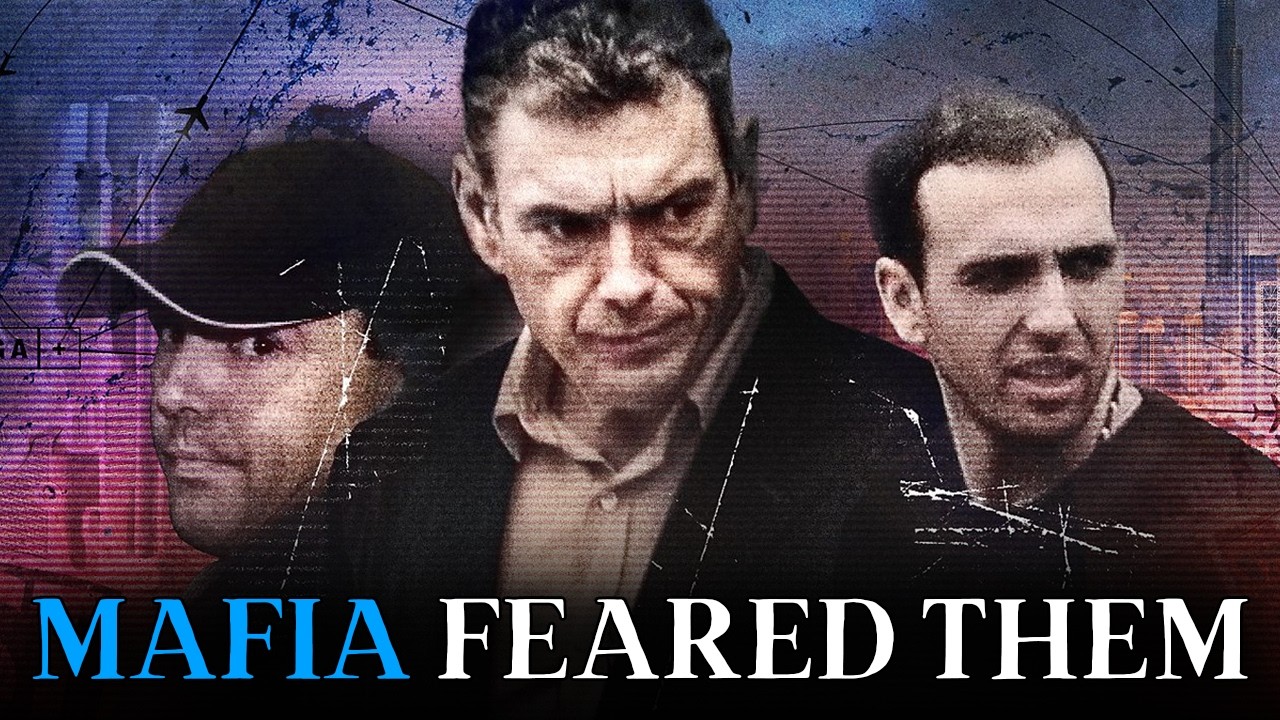
He had been committing crimes since he was a teenager and had spent enough time around Mickey Spillane's operation to understand exactly how it worked and exactly what he would do differently once in charge. What he would do differently was remove the part about not killing people indiscriminately.
Coonan took over Hell's Kitchen in his late 20s and almost immediately began redefining the Westies. Under Spillane, they were a neighborhood crime outfit with rules. Under Coonan, they became something closer to a murder syndicate that also happened to run loan sharks.
The body count climbed. Rivals disappeared. Men who owed money and could not pay had a way of turning up dead, and sometimes not turning up at all, which was actually the preferred outcome from Coonan's perspective.
Coonan was not stupid. He was calculating in his violence, using it as a management tool the way a legitimate CEO might use a performance review. Except instead of a written warning, you got shot.
His right-hand man was Mickey Featherstone, a Vietnam veteran with diagnosed psychiatric problems and a hair trigger that made Coonan look restrained by comparison. Together, they ran Hell's Kitchen like a private country under martial law.
The Italian families in New York, who had been doing business with the neighborhood for years, began paying very close attention.
Jimmy Coonan had a problem that any criminal organization faces eventually: bodies. Specifically, what to do with them. The Mafia had its methods, including weighted trunks in the river, shallow graves in New Jersey, and the occasional disappearance to a mob-connected junkyard. These methods were effective but imperfect, because bodies had a habit of being found.
Coonan's solution was dismemberment. When the Westies killed someone, they did not simply dispose of the body. They took it apart. Limbs were separated from the torso, heads were removed, and pieces were distributed across multiple locations, including dumpsters, the Hudson River, and vacant lots across multiple boroughs.
The logic was brutally simple. A complete body can be identified. Pieces scattered across Manhattan are just evidence of something terrible, not necessarily evidence of any particular crime attached to any particular person.
The FBI, when it eventually began building its case against the Westies, discovered that this practice was not occasional. It was routine. It had become, in the genuinely horrifying phrase used by investigators, the Westy way.
Law enforcement officials who processed those scenes later recalled that even hardened detectives who had worked homicides for decades found the Westy cases uniquely disturbing. There was something about the methodical nature of it, the calculation required, that crossed a line even career criminals recognized.
The Mafia recognized it too, and rather than being disgusted, they were impressed. What the Westies had figured out, accidentally or not, was that if bodies do not exist, cases do not get built. The clearance rate on Westy murders was, for years, almost nonexistent.
By the late 1970s, the five families of New York were watching Hell's Kitchen the way you watch a stray dog that has already bitten three of your neighbors, with wariness, calculation, and the quiet realization that you probably do not want to be the one who tries to put it down.
The traditional Mafia structure had no category for what the Westies were. The five families were hierarchical organizations with a boss, an underboss, a consigliere, capos, made members, and associates. There were rules about who could be killed and when, and with whose permission. There were protocols.
The Westies had Jimmy Coonan and Mickey Featherstone, and a loose collection of Irish and Irish-American men from a 10-block neighborhood who had grown up together, gone to prison together, and would do violence together on essentially no notice and with essentially no documentation.

You cannot negotiate with chaos. You can only try to point it in a useful direction.
The Gambino family, which under Paul Castellano in the late 1970s was the most powerful organization in New York, made a calculation. Going to war with the Westies would be expensive, bloody, and bad for business. The kitchen was not Gambino territory and never had been.
The Westies were generating their own income from their own rackets in ways that did not compete directly with Gambino interests. So Castellano and Coonan did something that would have been unthinkable a decade earlier. They met, and they came to an understanding.
The Westies would be, in practical terms, an enforcement arm available to the Gambino family for specific jobs, contract work in the language of business. In return, the Gambinos would provide protection, political cover, legal connections, and the implicit message that anyone thinking of moving on Hell's Kitchen would be picking a fight with two organizations instead of one.
For Coonan, this was a legitimization of sorts, a recognition. For Castellano, it was a management decision: keep the Westies close enough to be useful, and far enough away that their insanity did not contaminate the larger operation.
It was, by every account, an uneasy arrangement, like hiring a demolition company to do finish carpentry. They will do the job, you just have to be very specific about which walls you want knocked down.
The practical reality of the Westie-Gambino alliance meant that Jimmy Coonan's crew began appearing in places and situations a purely neighborhood gang had no business being. Labor racketeering on the West Side docks, contested territory for decades, suddenly had new enforcers.
Construction projects, which in New York in the 1970s and 1980s basically meant mafia-adjacent everything, found that Hell's Kitchen contractors had very persuasive representation. Certain Gambino operations that required someone to deliver a message in the most physical possible sense had a reliable subcontractor available.
Roy DeMeo, the notoriously violent Gambino associate who ran his own murder operation out of Brooklyn, reportedly expressed admiration for Westie methods. Coming from DeMeo, who had his own documented approach to body disposal, that was a genuinely unsettling endorsement.
The money flowing into Hell's Kitchen increased. Coonan's standing within the criminal ecosystem of New York rose. For a few years in the early 1980s, the Westies were at the peak of their influence, feared by rivals, useful to allies, and protected by an umbrella of Gambino muscle that made law enforcement approaches significantly more complicated.
But the peak is also where the cracks start showing. The Westies were, at their core, a collection of violent, paranoid, frequently intoxicated men who had built their reputation on chaos. Chaos is useful until it turns inward, and it always turns inward.
The beginning of the end, as it so often is in these stories, was a wiretap and a man who decided his own survival was worth more than his loyalty.
Mickey Featherstone, Coonan's right hand, had been arrested many times over the course of his criminal career. He had beaten cases through legal maneuvering, witness intimidation, and the general reluctance of Hell's Kitchen residents to testify against anyone connected to the Westies.
But in 1986, Featherstone was convicted of a murder he insisted he did not commit. He believed, with some justification as it turned out, that he had been set up by members of his own crew, by men he had trusted, by men whose rivals' remains he had helped dispose of.
That realization, combined with a federal RICO investigation closing in on the entire Westie operation, pushed Featherstone to a decision that would have been unimaginable five years earlier. He flipped.

Mickey Featherstone entered the federal witness protection program and began talking to prosecutors. What he gave them was not just details about specific crimes. It was the architecture of the entire Westie operation: the murders, the labor racketeering, the loan sharking, the alliance with the Gambinos, and the body disposal methods.
It was the kind of granular operational detail only a man who had been present for most of it could provide. Featherstone wore a wire. He recorded conversations. He documented crimes going back years.
In 1988, Jimmy Coonan was convicted of racketeering and murder under the federal RICO statute. He was sentenced to 75 years in prison and remains there. Numerous other Westie members received substantial sentences.
The alliance with the Gambinos, which had seemed like an elevation, became instead a complication. It brought additional charges, additional exposure, and additional witnesses with additional things to say.
The Hell's Kitchen the Westies had controlled for a generation changed too, though not only because of the indictments. The neighborhood was gentrifying. The slaughterhouses were closing. The longshoremen were being replaced by real estate developers.
The economic base that had sustained Irish organized crime in that specific corner of Manhattan for 100 years was quietly disappearing, replaced by restaurants, theater districts, and eventually a Hudson Yards development that cost more per square foot than most cities.
Jimmy Coonan's wife, Edna, was also convicted of racketeering. The organization that had terrified Mafia bosses and forced the Gambino family to negotiate rather than simply absorb or eliminate them was gone within a few years of Featherstone's cooperation.
It did not end with a bang, but with a series of federal indictments and a wire recording of men saying things they absolutely should not have said out loud.
Mickey Featherstone received a reduced sentence for his cooperation. He was eventually released and entered witness protection under a new identity. Whether he is quietly living somewhere in Middle America or whether the combination of documented violence and psychiatric history has followed him is not publicly known.
The Westies are a footnote in most histories of American organized crime. They do not get the movies the Gambinos get or the books the Chicago Outfit gets. They were a regional phenomenon, rooted in a specific neighborhood that no longer exists in the form that produced them.
But in the FBI field offices that worked organized crime in New York through the 1970s and 1980s, the Westies are remembered as something distinct. Not because of their sophistication, which they lacked, and not because of their business acumen, which they did not have.
They are remembered because of the specific flavor of violence they brought to their work, and because they proved something the Mafia, for all its hierarchy and tradition and codes, could not quite bring itself to admit. Sometimes chaos works.
The five families of New York had rules because rules protected the organization. The Westies had no rules, and for about a decade, that protected them just as well. You cannot easily build a RICO case against men who leave no bodies. You cannot easily flip witnesses in a crew where everyone is equally compromised and equally afraid. You cannot negotiate from a position of strength with people who have genuinely nothing to lose.
The Mafia feared the Westies not because the Westies were smarter or better organized. They feared them because the Westies were operating on a different frequency entirely, one that the rules of organized crime were not designed to handle.
Jimmy Coonan built his empire on terror and held it together with violence. In the end, it was the trust he broke among his own people that destroyed him. Not the FBI, not the Gambinos, but his own crew.
Hell's Kitchen, the neighborhood that made the Westies, is now one of the most expensive zip codes in New York City. The blood washed out a long time ago. But if you walk those blocks today and you know the history, you can almost still feel it.