The Nazi regime placed enormous pressure on women to bear as many children as possible for the Reich. Financial grants and relief were offered to families with children, and mothers were even awarded a medal known as the Mother's Cross. Many women in Nazi Germany regarded these medals as a great honor, believing they were doing their part for the Nazi cause.
One striking contradiction at the top of the regime was that Adolf Hitler himself had no children. It is widely believed he chose not to, in part so he could maintain his image as a father figure for the entire nation. Some have debated whether he could have conceived a child at all, but the more documented story is what happened to the children of the men in his inner circle.
Several of Hitler's closest associates did have children, and some pursued large families with enthusiasm. Martin Bormann, Hitler's private secretary, was even encouraged by his wife to sleep with other women to get them pregnant. Bormann went on to father ten known children, and it is believed he may have fathered more illegitimately.
Hitler himself, despite having no children, enjoyed the company of children and was photographed many times playing with the offspring of men such as Joseph Goebbels. Children in Hitler's circle looked up to him almost as an uncle. He was particularly fond of the Goebbels children, who would meet the most harrowing fate of all.
Joseph Goebbels, the regime's propaganda chief, and his wife Magda had five daughters and one son between 1932 and 1940. All of the children were given names beginning with the letter H in tribute to Hitler. Their names were Helga, Hildegard, Helmut, Holdine, Hedwig, and Heidrun.
Goebbels was not a model father. He had regular affairs, Magda was also known to have taken a lover, and there was frequent arguing in the family home. Magda wanted a divorce, but Hitler would not allow it, and the couple were forced to stay together.
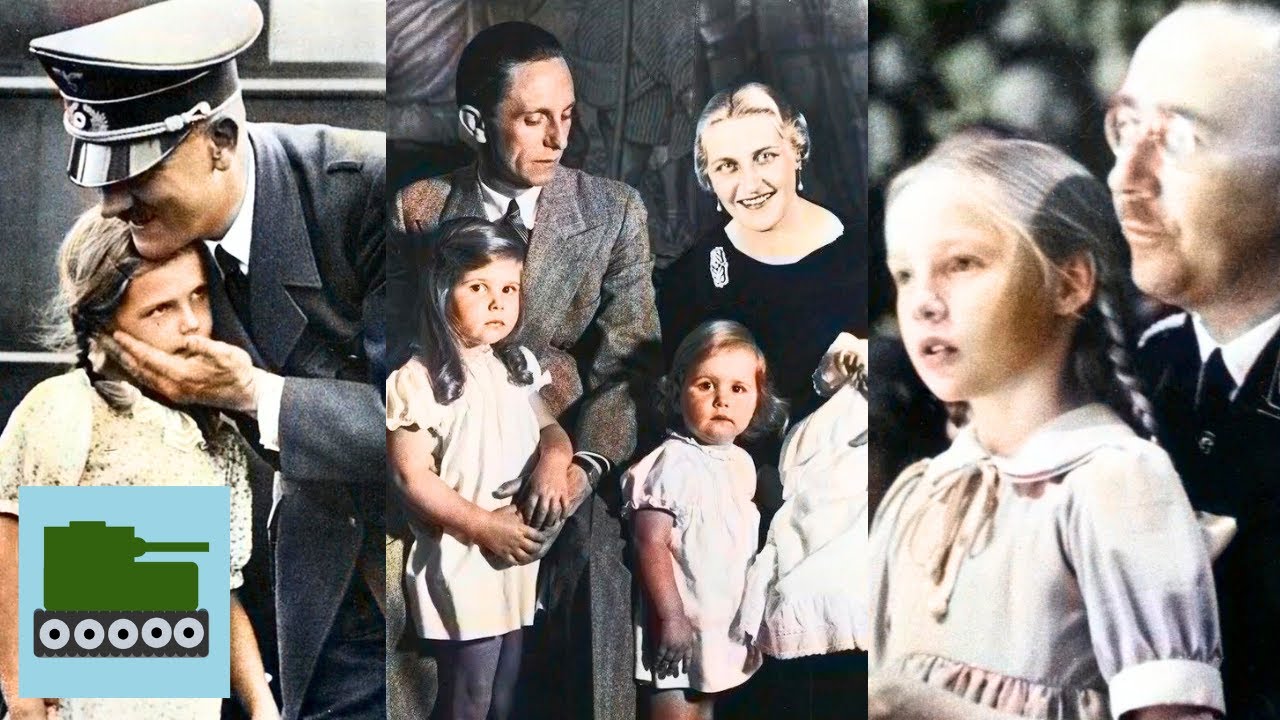
In 1939, Goebbels used film of his own children to present them as healthy Aryan children for propaganda purposes, even though he himself was technically disabled. He used his own children to justify the regime's murderous policies against people considered disabled. The children regularly appeared in newsreels seen by millions across the Reich each week. Hitler often had Helga sit on his lap and was very fond of her. Helmut, the only son, was described by his father as a clown, though he was simply a young boy who loved to play.
In the final days of World War II, the Goebbels family moved into the upper part of the Führerbunker in Berlin with Hitler. The children brought some relief and delight to those inside as Soviet artillery shells struck the capital. After Hitler's death, Magda Goebbels decided, along with her husband, to kill their children. She believed they could not live in a world without Hitler, and she feared they would grow up hearing that their father was one of the worst war criminals. She also worried about what would happen if the children fell into Soviet hands.
Magda had ignored numerous attempts, even weeks earlier, to smuggle the children out of Berlin to safety. It is believed she knew for some time that she intended for her children to die. She arranged for an SS dentist, Helmut Kunz, to inject the six children with morphine. Once they were unconscious, ampules of cyanide were crushed into their mouths. The cyanide was administered by Magda herself, with the help of SS officer Ludwig Stumpfegger, one of Hitler's doctors. The children did not know what was happening, though struggle marks were allegedly found on one daughter's arm, suggesting she may have sensed danger.
Soviet troops later discovered the children's bodies. The charred bodies of their parents were found in the Reich Chancellery garden above where the children's remains lay. The children were initially buried under a Soviet facility in Magdeburg. In 1970, their remains were exhumed, cremated, and their ashes scattered in the Biederitz river.
Martin Bormann took the idea of repopulating the Reich for Hitler very seriously. Known as the "Brown Eminence," he was a dangerous man who operated in the shadows. He was married to Gerda Buch, and together they had ten children: a son named Martin, daughters Ilse and Armgard, sons Rudolf and Heinrich, and children named Eike, Gerda, Fritz, and Volker. They also had a daughter named Ehrengard who died shortly after birth.
Martin, the oldest Bormann son, later became a Catholic priest. Bormann's own whereabouts at the end of the war remain subject to much debate and controversy. After Germany surrendered, his children were taken to Italy. Gerda Bormann was interrogated by the Combined Intelligence Committee about her husband's whereabouts after she was found in Italy, where she had taken the children before the conflict ended. She died on March 23, 1946, from abdominal cancer.

Some of the Bormann children are still living today. The oldest, Martin, named after his father, died in 2013 in a degree of disgrace after accusations were leveled against him during his service as a priest. Another son, Bormann, died in 1958. Some of the younger children are believed to still be alive and in their eighties.
Gudrun Himmler was the daughter of Heinrich Himmler, head of the SS, and his wife Margarete. Born in Munich in 1929, she was Himmler's only legitimate child, though he had other children with his mistress Hedwig Potthast. Himmler adored his daughter, visited her regularly even at his busiest, spoke to her by phone while away, and wrote her a weekly letter. He nicknamed her "Püppi."
Gudrun even accompanied her father to work one day and was photographed visiting Dachau concentration camp, a site where over 30,000 people died. Her "uncle Adolf" gave her a doll and chocolates every New Year. At the end of World War II, her father, regarded as a man with the blood of at least six million people on his hands, died in British captivity after consuming cyanide.
Gudrun and her mother were arrested in northern Italy and held in different camps in Italy, Germany, and France. They testified at the Nuremberg trials and were released in November 1946. Gudrun described this as the most difficult period of her life and said she felt responsible for her father's actions and crimes.
Gudrun Himmler never condemned the Nazis and tried to justify her father's actions. She later married a far-right propagandist and became involved with an organization known as Stille Hilfe, set up to help former members of the SS, many of whom were wanted men. She helped war criminals such as Klaus Barbie and Martin Sommer remain in the shadows, and she sponsored a Protestant old people's home near Munich, presumably housing former Nazis or SS members in hiding.
She was an outspoken member of Stille Hilfe and almost acted as a spokesperson, attending many meetings. It was later found that she had provided financial support to an SS officer, Anton Malloth, who was convicted of beating at least 100 prisoners to death. On May 24, 2018, at the age of 88, Gudrun Himmler died in her home in Munich, still defending her father's evil work until the day she died.
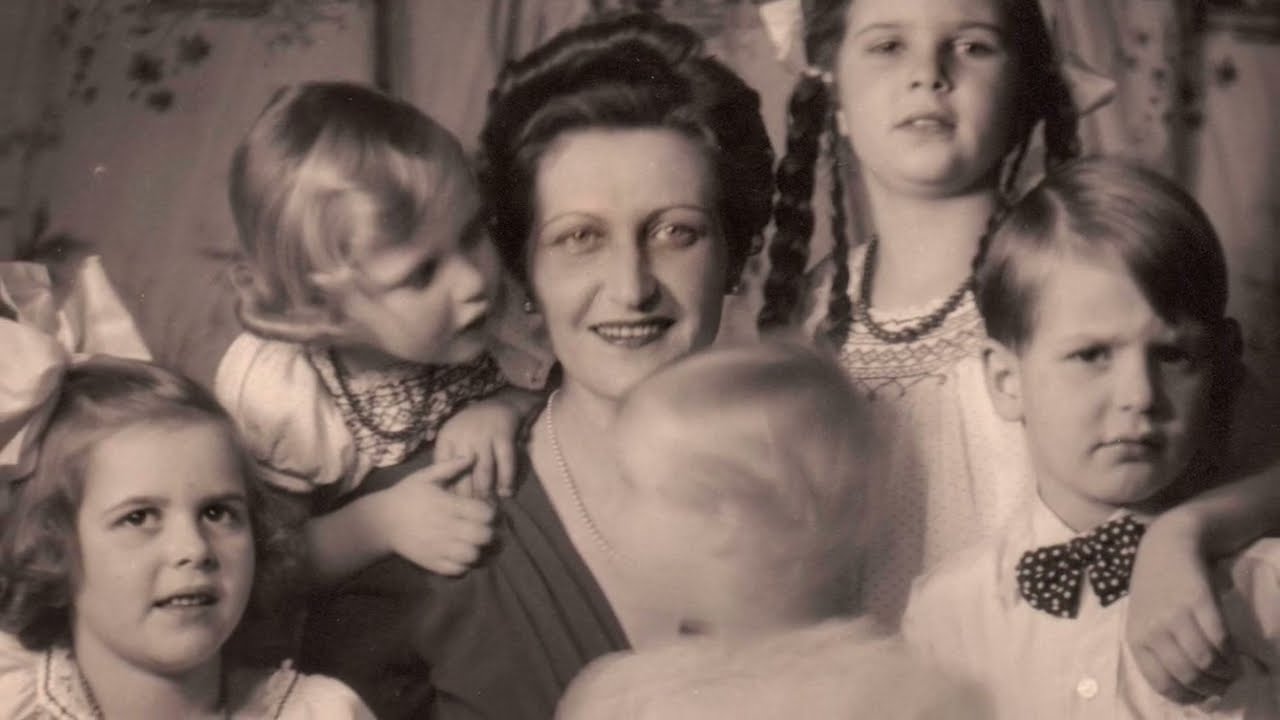
Edda Göring, the daughter of Hermann Göring, the Reichsmarschall and head of the Luftwaffe, is often referred to as the crown princess of the Nazi Reich. Her birth was a celebrity event in its own right, and her father received 600,000 messages of congratulations. Edda grew up incredibly wealthy and was given many historical works of art as gifts. Her father spent a great deal of time with her and loved her deeply, and she was clearly spoiled with the riches of the Reich, given huge palaces to play in.
At the end of the war, she and her mother Emmy were imprisoned at Camp Ashcan in Luxembourg as potential war criminals. Her father was imprisoned and brought to the Nuremberg trials, and when he was sentenced to death, his daughter told him she hoped to meet her daddy in heaven. Göring escaped the hangman's noose hours before his scheduled execution.
As she grew older, Edda mixed in many different circles and rubbed shoulders with former Nazis and associates of Adolf Hitler. Her father was one of the worst art thieves in history, looting and plundering wherever the Nazis went. Edda said of her father that she loved him very much and that it was obvious how much he loved her. She said her only memories of him were loving ones and that she could not see him any other way. She added that she expected most people had a favorable opinion of her father, except maybe in America, and that he was a good father to her.
Edda managed to obtain some works of art that had been taken, proving they had been gifted to her, and she also kept some incredibly expensive jewelry this way. Edda Göring died in December 2018 at the age of 80 and is buried in an unmarked location within the Waldfriedhof in Munich, the same cemetery as her mother.
Reinhard Heydrich was known as the Butcher of Prague, and Hitler referred to him as a man with an iron heart. He was ruthless and brutal. Years earlier, his wife Lina had first convinced him to seek work within the Nazi Party. They had two sons named Klaus and Heider, but as Heydrich spent more time away from home, the marriage became strained and nearly ended in divorce. They reconciled and had another child, a daughter named Silke. The family lived in castles in the Czech lands, the very places where Heydrich terrorized people and had them executed.
Heydrich was assassinated in 1942, and his fourth child was born after his death. In October 1943, his oldest son Klaus was involved in an accident outside his home, struck by a truck, and was killed instantly. It is believed that Heydrich's other children may still be alive today. Heider was interviewed in 2011 and even agreed that it was a good thing his father was assassinated.
The downfall of Deputy Führer Rudolf Hess was one of the strangest in history. He flew to Scotland believing he was on a peace mission for Hitler with the British, which led to him becoming a prisoner of war for the rest of the conflict. Hess was married to Ilse, and they had one son named Wolf, named after Hitler's nickname. After his father's flight, Wolf lived with his mother, but after the war his mother was arrested by the Allies.
Following his father's death in Spandau prison decades after the war, Wolf Hess claimed that the British had murdered his father and covered it up to prevent Hess from gaining parole. He wrote three books about his father. At the age of 63, Wolf Hess died from a stroke.
The children of the highest-ranking Nazis had very different fates at the end of World War II. Some continued to profit and live relatively comfortable lives because of their fathers' legacies, and some may still be alive today.