In 2017, a heartwarming story of a homeless veteran’s selfless act went viral and inspired hundreds of thousands of dollars in donations. The narrative unraveled spectacularly when it was revealed to be an elaborate fabrication, making it one of the most infamous scams in the history of online crowdfunding. The scheme began in November 2017, when Kate McClure claimed she had run out of gas on Interstate 95 in Philadelphia. She said she was on her way home to get items for her terminally ill son, who was battling leukemia.
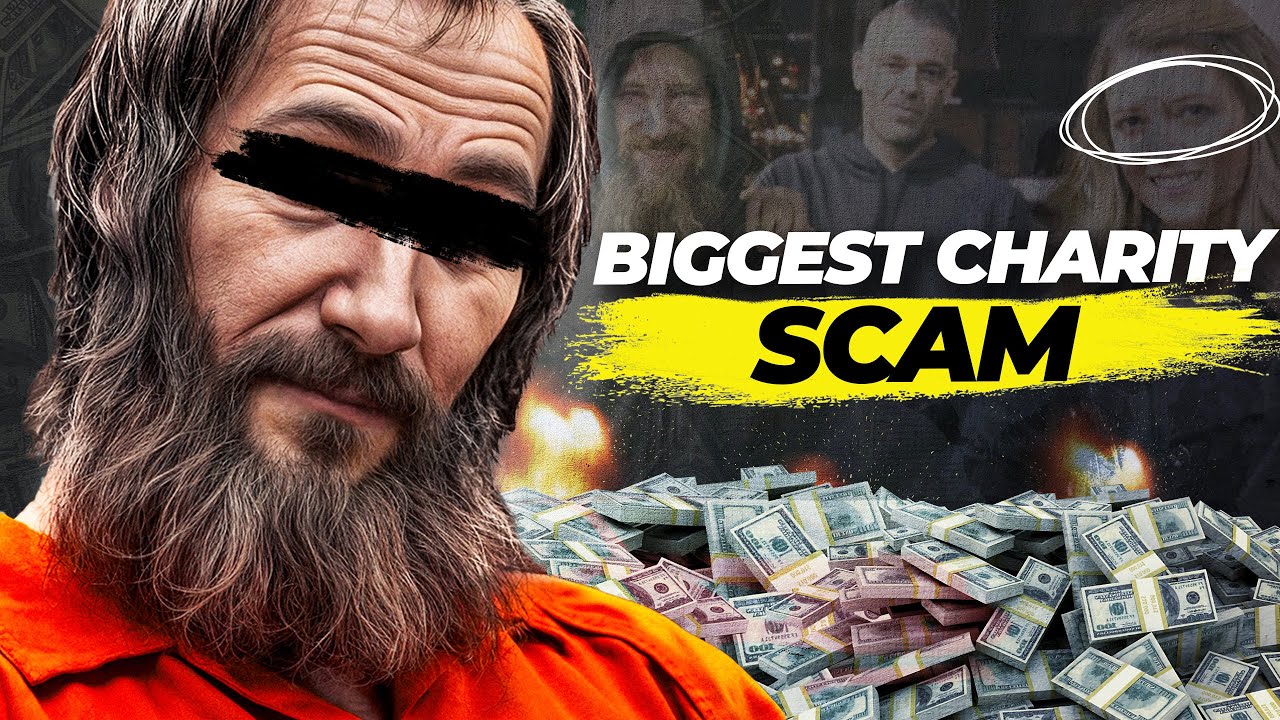
A homeless man named Johnny Bobbitt Jr. allegedly came to her aid, using his last $20 to buy her gas. Touched by his kindness, McClure and her boyfriend, Mark D’Amico, created a GoFundMe campaign titled “Paying It Forward” on November 10, 2017. The goal was to raise $10,000 to help Bobbitt get off the streets.
The story became an overnight sensation, gaining international media coverage, including appearances on “Good Morning America” and “The Ellen Show. ” Donations poured in from compassionate people across the world, ultimately exceeding $400,000 from more than 14,000 donors over 32 days. Initially, Bobbitt was not informed about the campaign. The couple informed him only after it had gained significant traction.
Shortly after Christmas 2017, McClure and D’Amico opened a bank account for Bobbitt and deposited $25,000 of the proceeds into it. Over a three-month period, a total of more than $31,000 was deposited into the account. The feel-good narrative began to fall apart months later when Bobbitt accused the couple of withholding the majority of the funds. He claimed he only received about $75,000 and a camper, which was parked at the couple’s property.
He also said a truck he received was not running and that neither the camper nor the truck was registered in his name. The relationship soured, and the couple kicked him out in June 2018, leaving him homeless again and back to panhandling on the streets of Philadelphia. As questions began to mount about his return to the streets, an investigation was launched into the couple’s spending habits. It was revealed that they were in debt before the campaign began.
One day before the online fundraiser was posted, D’Amico pawned an iPhone. Between February and August 2018, Bobbitt and D’Amico pawned numerous other items, including laptops, an Xbox, watches, a camera, and a power saw. In August 2018, Bobbitt filed a lawsuit against McClure and D’Amico, alleging they mismanaged much of the donations and treated the funds like a personal piggy bank. The couple repeatedly denied any wrongdoing, with D’Amico claiming Bobbitt had spent thousands of dollars on drugs and that withholding money was necessary to prevent him from feeding his addiction.
A judge ordered the couple to appear in court to turn over the remaining funds and account for every dollar collected. The couple’s attorney later confirmed that some of the funds were co-mingled with his clients’ personal money. GoFundMe stepped in, stating its commitment to helping Bobbitt get all the funds raised for him. At this point, it appeared Bobbitt was the victim of a scam perpetrated by the couple.
However, the subsequent investigation revealed a shocking twist: the entire campaign was a lie, and Bobbitt himself was a participant. An hour after the campaign went live, McClure had sent a text message to a friend admitting that the whole story—including running out of gas and Bobbitt’s $20 gesture—was fake. Authorities also discovered that the couple had known Bobbitt for at least a month before the campaign, having met him while panhandling near a casino they frequented. While Bobbitt received some of the donated funds, McClure and D’Amico spent a significant portion on lavish vacations, gambling trips, luxury handbags, and a BMW.
They made over $85,000 in ATM withdrawals at or near casinos in Atlantic City, Philadelphia, and Las Vegas. The FBI eventually became involved in the criminal investigation. In November 2018, Burlington County Prosecutor Scott Coffina announced criminal charges against all three individuals, including second-degree theft by deception and conspiracy. A search of the couple’s home revealed designer handbags valued at nearly $112,000 and casino player cards.
Authorities discovered a trove of evidence, including 60,000 text messages between the couple that detailed their financial woes. D’Amico even pitched a book title, “No Good Deed,” to capitalize on the controversy. Eventually, McClure and Bobbitt pleaded guilty to conspiracy to commit wire fraud, and D’Amico accepted a plea agreement, admitting to spending part of the money collected. McClure was sentenced to one year in federal prison and three years in New Jersey prison, to run concurrently.
She was also ordered to pay $400,000 in restitution and was permanently barred from public employment. D’Amico received a five-year state prison sentence and a 27-month federal sentence, to run concurrently. Bobbitt received three years of probation and was ordered to pay $25,000 in restitution, as well as being admitted into a drug rehabilitation program to avoid prison time. The scam had a significant impact on donors, who felt their goodwill was exploited.
GoFundMe later announced it would fully refund all the money raised, a move intended to restore faith in the platform. The case remains one of the largest frauds perpetrated through a crowdfunding platform, challenging the public’s perception of online generosity.