Jacqueline Kennedy Onassis remains perhaps the most famous first lady in American history. Born Jacqueline Lee Bouvier, she was young, beautiful, and sophisticated, and she lived a life of glamour and status as the wife of President John F. Kennedy.
That life changed forever when Kennedy was assassinated on November 22, 1963. As a widow, Jackie became the focus of the nation's grief and suffered bouts of depression.
She remarried in 1968 to Aristotle Onassis, a Greek shipping magnate. The decision drew backlash from the American press and public, who saw the marriage as a betrayal of her relationship with the fallen president.
Long before she entered the White House, Jackie worked as a reporter and photographer. After attending Vassar University, the Sorbonne, and George Washington University, she got her first job in 1952 at the Washington Times-Herald.
As the paper's inquiring photographer, the future first lady roamed the streets of Washington, D.C., asking strangers their opinions on everything from personal finance to politics and relationships. Among the many people she interviewed was Richard Nixon, the man her future husband would later defeat in the 1960 presidential election.
Before she ever went on a first date with John F. Kennedy, Jackie very nearly married another man. In January 1952, the society pages of the Washington Times-Herald announced her engagement to John Husted, a Yale graduate, World War II veteran, and Wall Street banker.
The 22-year-old soon began having doubts about the match and reportedly expressed reservations about becoming a housewife. In March 1952, she abruptly called off the wedding.
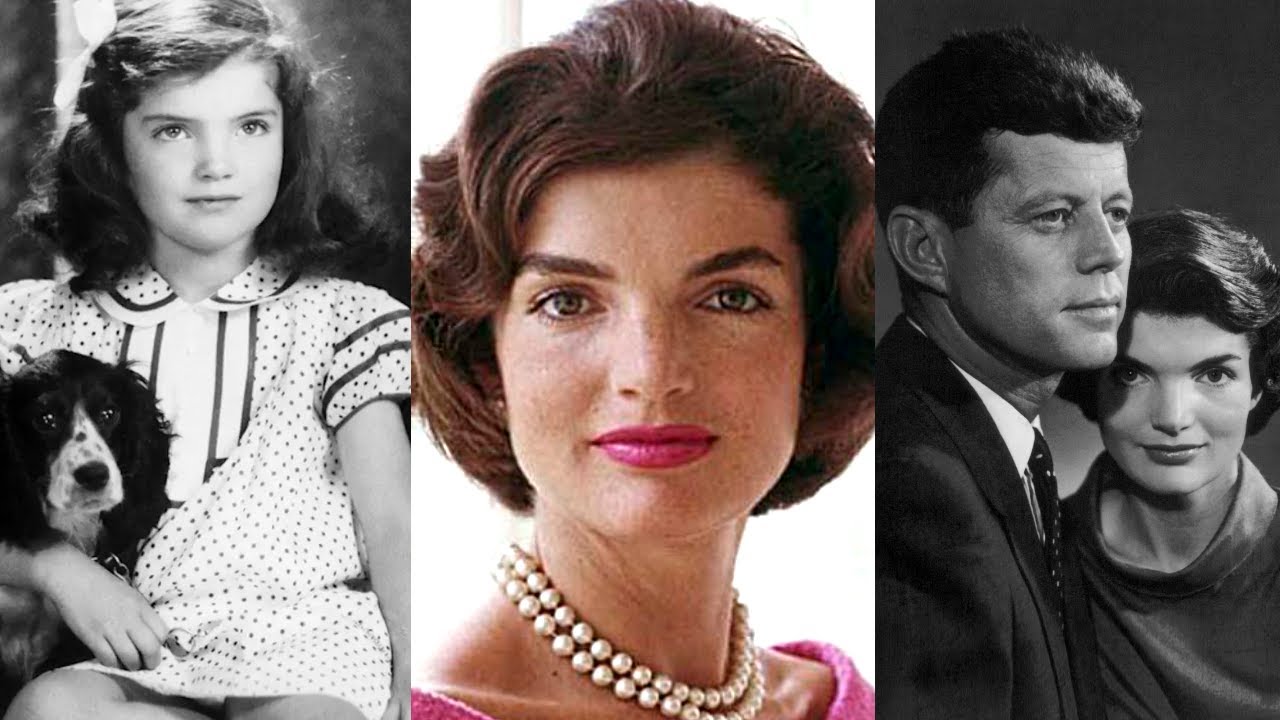
Only a few months later, she began dating Kennedy, then a U.S. congressman, after meeting him at a dinner party. The two married in September 1953.
Jackie was both admired and criticized for her fashionable clothing. She became one of the defining fashion trendsetters of the 1960s, and American women eagerly sought out the famous "Jackie look."
Department stores scrambled to produce affordable imitations of her sleek, classy dresses. Yet her chic sensibility was often a point of contention.
Her obsession with pricey French couture was criticized during the 1960 presidential campaign. After she became first lady, the Kennedy camp worried her taste for foreign clothing could make the family seem out of touch.
To solve the problem, her father-in-law, Joseph Kennedy, helped pair her with American-based designer Oleg Cassini. Cassini went on to design more than 300 of her most iconic outfits and later dubbed himself the first lady's "Secretary of Style."
Shortly after Kennedy won the 1960 presidential election, Jackie turned her famous eye for style toward overhauling the shabby decor of the White House. After burning through her $50,000 budget in a matter of days, she created the Fine Arts Committee for the White House, courted private donors, and went to work acquiring historically significant furniture from museums and collectors.
She soon transformed the presidential mansion into a more elegant space adorned with antiques and artifacts once owned by the likes of George Washington and Abraham Lincoln. In February 1962, she gave a famous televised tour of the renovated White House to Charles Collingwood of CBS-TV.

The performance won her a special Emmy Award and helped cement her celebrity status.
Despite her own background as a reporter, Jackie strove to shield her two children from the media during her time in the White House. When press scrutiny and security concerns made it difficult for her young daughter Caroline to travel into the city, Jackie turned the White House's third-floor solarium into a nursery school.
She invited other children to attend, some of them children of Kennedy administration staff. The school later grew into a fully operational kindergarten, complete with around 10 students, professional teachers, and even a small collection of rabbits, guinea pigs, and other animals.
Jackie was a lifelong student of foreign cultures and became fluent in French, Spanish, and Italian during her school days and European travels. Her facility with languages often proved a valuable asset to her husband's political career.
She translated French books on Southeast Asia for Kennedy when he was still in the Senate. She later wowed campaign audiences by speaking French to voters in Louisiana and Spanish in Texas.
Following a 1961 visit to France, where Jackie won over the public with her ability to speak the local tongue, her husband jokingly introduced himself as "the man who accompanied Jackie Kennedy to Paris." President Lyndon Johnson, no doubt conscious of her fluency in Spanish, later considered making her the U.S. ambassador to Mexico.
On the day of the JFK assassination, Jackie refused to change her bloodstained pink dress. On November 22, 1963, she was sitting alongside her husband when he was killed by an assassin's bullet while traveling in an open car through Dallas.
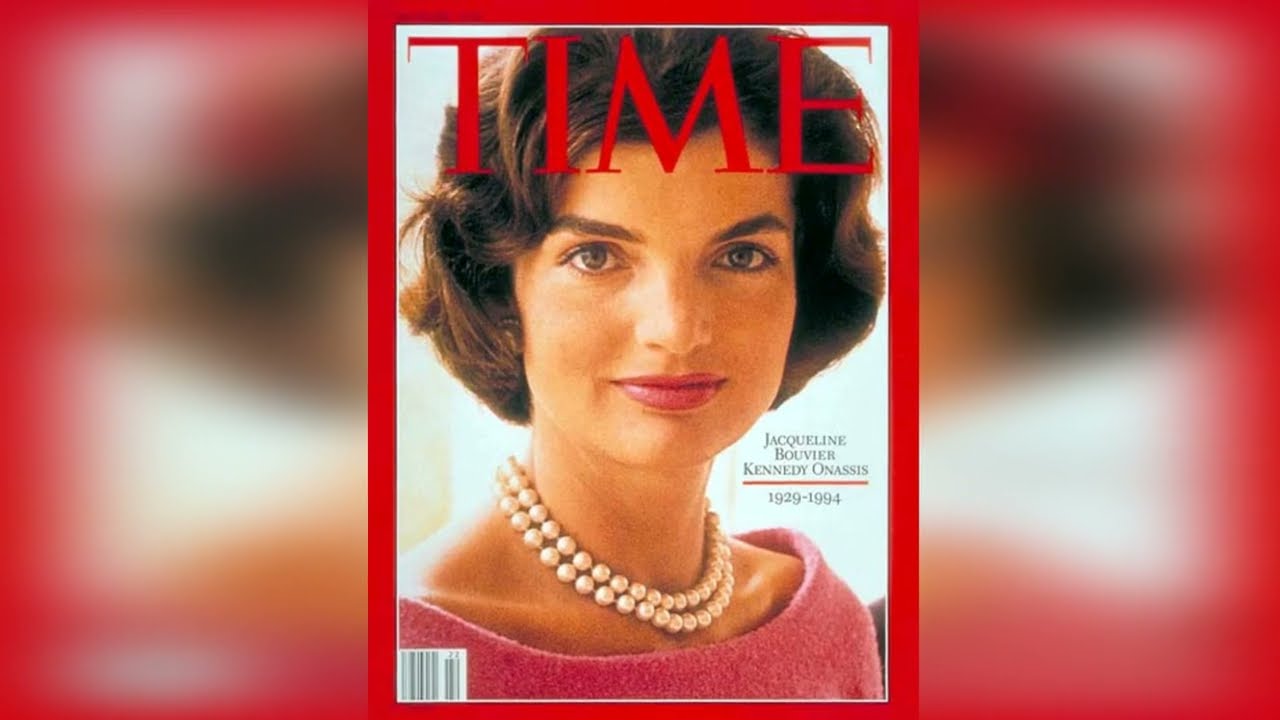
Her iconic pink wool suit was spattered with blood, but the stunned first lady continued wearing the garment even during Lyndon Johnson's swearing-in as the new president. Lady Bird Johnson asked if she wanted a fresh outfit, but Jackie reportedly declined, saying, "Oh, no, I want them to see what they've done to Jack."
The bloodstained suit is now held in the National Archives, but its matching pillbox hat was lost on the day of the assassination and has never been recovered.
Jackie was the first to refer to the Kennedy administration as Camelot. In an interview with Life magazine a week after her husband's death, she described his love for "Camelot," a musical based on the popular Arthurian novel "The Once and Future King."
She noted that the president enjoyed playing a recording of the musical's title song, which featured the line, "Don't let it be forgot, that once there was a spot, for one brief shining moment that was known as Camelot." After quoting the lyrics, Jackie went on to say there would be great presidents again, but there would never be another Camelot.
The interview proved hugely popular, and Camelot soon became shorthand for the myth and glamour of the Kennedy administration.
Following her 1968 marriage to Greek billionaire Aristotle Onassis, Jackie became a favorite target of the paparazzi. Her most persistent admirer was Ron Galella, a notorious photographer who spent several years trailing her through the streets of New York to get candid snaps of her daily life.
In 1973, Jackie sued the paparazzo for harassment and invasion of privacy. After a high-profile trial, she won a court order forbidding him to step within 25 feet of her or 30 feet of her children.
Galella paid little attention to the injunction and even began carrying a measuring tape so he could ensure he wasn't breaking the law. He only gave up his pursuit in the 1980s after Jackie took him to court a second time.
Jackie had literary ambitions from an early age. Following Aristotle Onassis's death in 1975, she moved to New York to pursue a career as a book editor.
The former first lady started out as a consulting editor at Viking Press before moving to Doubleday, where she worked as a senior editor until her death in 1994. During her time in the publishing world, she had a hand in several popular books, including Michael Jackson's autobiography "Moonwalk," Larry Gonick's "The Cartoon History of the Universe," and translations of Nobel laureate Naguib Mahfouz's Cairo Trilogy.