The history books say the Battle of Stalingrad ended on the morning of February 2, 1943, with the surrender of the last pocket of German troops in the northern part of the city. That account, however, leaves out a remarkable and largely ignored chapter of the battle.
Considerable numbers of German troops did not lay down their arms at that time. Soviet records indicate that as many as 11,000 German soldiers continued to fight long after Field Marshal Paulus and the 91,000 survivors of the German Sixth Army were marched off to Soviet captivity.
These holdouts would resist for weeks, forcing the Red Army to mount military operations through the ruins of Stalingrad to root out and, in Soviet terminology, "liquidate counter-revolutionary elements." For a number so large, the omission from standard histories is extraordinary.
Stalingrad is rightly labeled a major turning point in the history of World War II. What had seemed an assured German victory in the summer of 1942 would end as a graveyard for the German army in the east.
When the Germans invaded the USSR in June 1941, the campaign was highly successful until the Russian winter and Soviet resistance stopped the advance on Moscow. By spring 1942, the Germans resumed offensive operations, but instead of trying again for Moscow, Hitler ordered a shift in focus to the south.
The new plan called for a two-pronged assault through the steppes of southern Russia. Army Group A struck south toward the Caucasus and the Soviet oil fields, whose output was vital to German war plans.
Army Group B, which included the Sixth Army, moved toward the Volga River and the industrial city of Stalingrad. Taking the city would give the Germans a base from which to launch a flanking attack on Moscow.
With one master stroke, the Russian armies to the south would be cut off from help. In the north, Russian factories, farms, and armies would be practically cut off from Caucasus oil and from American and British supplies shipped to Russia through Iran and Iraq.
German control of the entrance to the Volga and its two main ports, Astrakhan and Stalingrad, would have been a crippling blow. The Volga was the vital artery through which flowed the lifeblood of Soviet supplies.
One of the Germans' first mistakes was having the Luftwaffe pound the city to ruins. The rubble proved a difficult landscape for German motorized forces to penetrate and a defender's dream.
German spearheads reached the city on August 23, 1942, meeting disorganized though fanatical resistance from the small garrison. After realizing Stalingrad's importance to Hitler's plans, the Soviets rushed in as many units as they could.
By early September, the Germans had partially encircled the city. The Soviets could only supply and reinforce their units inside Stalingrad across the Volga, under constant artillery and air attack.
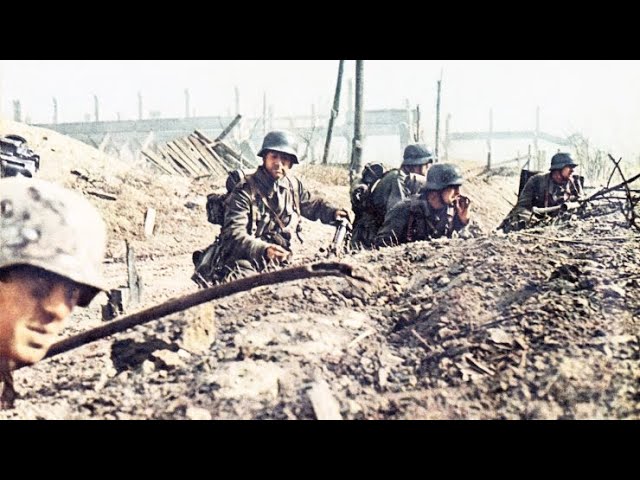
Street fighting was intense, with casualties high on both sides. On one day alone, the railway station changed hands 14 times in just six hours of combat.
Soviet resistance was incredibly stubborn, and the close proximity of German and Soviet forces stripped the Germans of much of their advantage in supporting fire. Static defenses, ruined apartment blocks, wrecked department stores, and the famous factories proved formidable, coupled with very active snipers.
Stalingrad became a mincing machine as both sides fed in more and more units without either achieving complete victory. After three months of this appalling struggle, the Germans had managed to capture 90 percent of Stalingrad and reach the Volga inside the city.
The fighting had cost the Sixth Army over 60,000 men, including 15,000 killed and missing. The Soviets realized that German manpower shortages had opened an opportunity to strike at the flanks of Army Group B.
The Germans had employed Italian, Hungarian, and Romanian forces to bolster their defenses. A 120-mile sector north of Stalingrad was very thinly held by the Hungarian Second Army.
These Axis troops lacked the weapons, vehicles, training, and often the motivation of German forces. The southern flank was equally exposed, protected by the weak Romanian Fourth Army.
On November 19, 1942, the Soviets struck, launching Operation Uranus. The huge pincer attack north and south of Stalingrad cut through the weaker Hungarian and Romanian armies and their overstretched German support.
By November 23, the Soviets had encircled 265,000 German, Romanian, Italian, and Croat troops, including the entire Sixth Army. The Soviets then began to compress the Stalingrad pocket while the Germans launched a desperate relief operation to fight through to the city.
The commander of the Sixth Army, Colonel General Friedrich Paulus, requested permission to withdraw from the city and fight his way out to the west. Hitler refused.
Instead, the Germans attempted to keep the Sixth Army supplied by air until it could be relieved. The Luftwaffe failed to bring in the required daily tonnage of supplies, and the Sixth Army, still defending vigorously, began to run out of ammunition, food, and medical supplies.
The relief operation failed, and Hitler left the sick army to fight on for political reasons, doomed to destruction. Paulus was denied permission to surrender on several occasions and was told by Hitler to fight on to the last man and the last bullet.
Winter greatly exacerbated the suffering. Once the airfields fell to Soviet troops, the only supplies coming in were intermittent parachute drops.

The Sixth Army starved but still fought stubbornly. German soldiers feared Soviet captivity greatly and knew they could expect little quarter after the Germans had treated Soviet prisoners of war with contempt, killing hundreds of thousands and leaving millions to starve or die of disease and exposure.
The primal fear of Soviet retribution and a slow death in one of Stalin's gulags kept German soldiers fighting to the end and beyond. On January 22, 1943, the Soviets made another request for Paulus to surrender.
Paulus reported to Hitler that command was nearly impossible and his men were without food and ammunition. Hitler again refused to countenance surrender.
On January 24, Paulus radioed that there were 18,000 wounded without the slightest aid of bandages and medicines. On January 26, Soviet attacks split the German defense into a northern and a southern pocket.
The northern pocket lost telephone communications with Paulus, who was in a bunker in the city center. By now the number of German sick and wounded was around 40,000 men.
For the Nazis, Stalingrad had become a symbolic struggle and a warning that every German should do his utmost to support the war effort. On January 30, 1943, the 10th anniversary of Hitler's coming to power, the Führer promoted Paulus to field marshal.
No German field marshal had ever surrendered, and Hitler expected Paulus to fight on to the last man and then shoot himself. It was not to be.
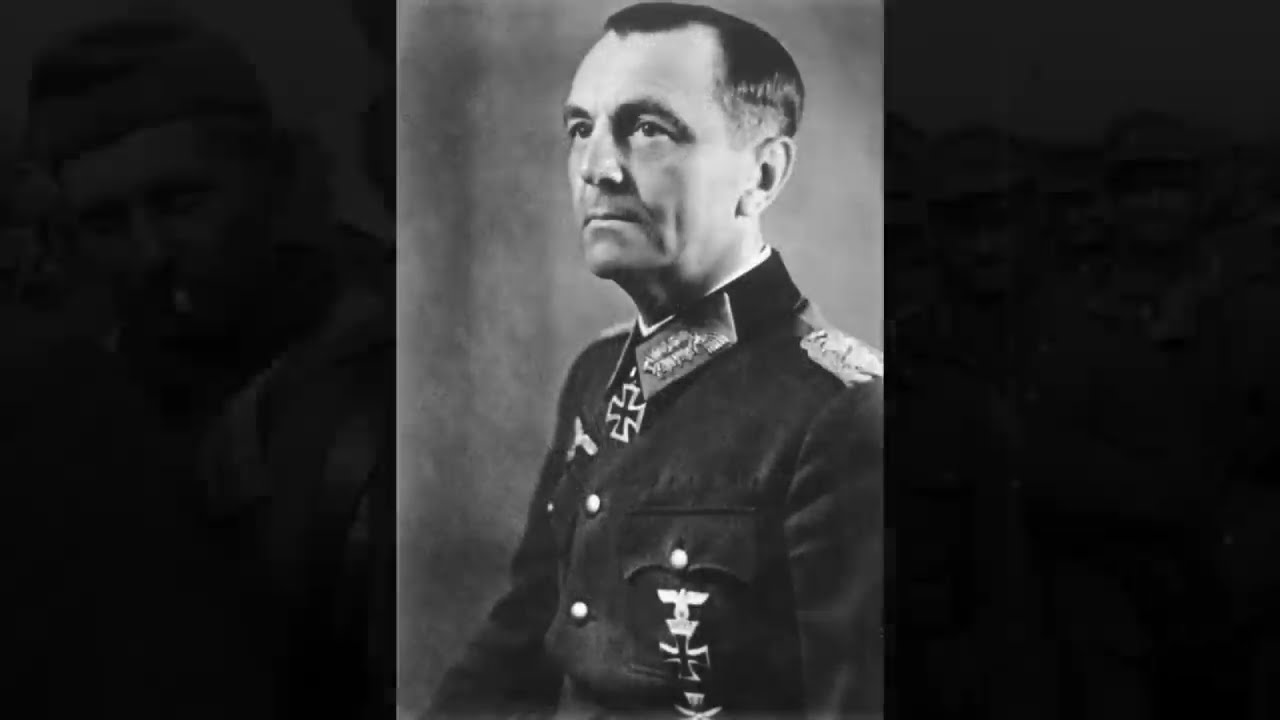
On January 31, the German southern pocket collapsed, and Paulus and his staff were captured in their headquarters in the basement of the Gum department store. Paulus claimed he had not surrendered but had been taken by surprise, and he refused to order the other German forces to surrender.
The northern pocket continued to hold out. General Carl Strecker commanded the Sixth Army's 11th Corps, which formed the northern pocket in Stalingrad.
By late January 1943, Strecker's command was largely isolated from the rest of the Sixth Army. He was determined to hold out as long as possible and forbade any of his staff from committing suicide.
Strecker issued an order that any soldier seen breaking away from his unit or moving toward the Soviets was to be shot on sight. On February 1, 1943, after confirmation arrived that Paulus and all other combat commands had surrendered, Strecker gathered his staff and told them the military situation was hopeless and that all troops under his command had the freedom to act as their conscience saw fit.
On February 2, after further Soviet attacks, Strecker surrendered the 11th Corps. Paulus and 22 generals were separated from the other prisoners and held under tolerable conditions as VIPs.
Because most German prisoners were captured in a starving and often sick condition, Soviet treatment condemned most of them to death. They were force-marched through winter conditions to labor camps, where they died of malnutrition, wounds received in battle, diseases such as typhus, the cold, and overwork.
Out of 91,000 captured, only about 5,000 ever saw Germany again. It was this justified fear of Soviet captivity that kept over 11,000 German soldiers in the ruins of Stalingrad after General Strecker's surrender on February 2, 1943.
In small units, in groups, or as individuals, huge numbers of German troops went to ground in the ruins. They lived in basements or the sewers, hiding by day and scavenging what supplies they could find at night.
These were armed and dangerous fugitives with no command to report to and no hope of rescue. For many, subsisting in the snow-laden wreck of a city was preferable to the labor camps, and these desperate men remained dangerous opponents.
Soviet units under NKVD direction were ordered to root out these last German soldiers and either kill or capture them. The process lasted well into March 1943.
The 10th NKVD Division had been present in the Stalingrad area since the previous summer, capturing Soviet deserters and suppressing banditry and criminality in the rear areas. The NKVD was assisted until March 1 by the veteran 252nd Rifle Division.
Records are incomplete, but the NKVD reported that 2,418 Germans were liquidated by security forces after the surrender. For the first week after the final German surrender on February 2, Soviet troops searched the city for Germans, engaging in running gun battles with isolated pockets and smoking them out of the sewer system.
On February 5, for example, Don Front headquarters reported that its 38th Motorized Rifle Brigade had located what it called 18 SS soldiers in a basement position. After they refused to surrender, they were all killed during an exchange of fire.
As no significant SS units were engaged in the Battle of Stalingrad, these were German army troops. Constant mopping-up operations resulted in many more prisoners being taken aside from the 2,418 Germans killed after the final surrender.
Some of the still-fighting Germans did attempt to reach German lines. In March 1943, a directive was sent to the district department of the NKVD at the Stalingrad region reporting cases of German officers and soldiers hiding out and trying to cross the Soviet lines to reach German-held territory.
"On the way they are engaged in robberies and murders," the report read. "Some of the Germans penetrate the villages where they acquire civilian or military clothing from the population and change clothes so that it is more convenient to hide."
The Stalingrad region was ordered to be combed to find such men. There were even a few instances, as reported by the NKVD, of Germans having escaped from nearby POW camps.
The NKVD reported that up to March 1943, 8,646 Germans had been captured. More work needs to be done in the Russian archives to fully tell the story of the Stalingrad holdouts.
What is known gives an idea of the desperate plight of the remnants of the trapped Sixth Army. They are more than 11,000 stories that were never told, the forgotten conclusion to the Battle of Stalingrad.