Franz Reichleitner was born on December 2, 1906, in Ried im Innkreis, then part of Austria-Hungary. He was 26 years old when Adolf Hitler was appointed chancellor of Germany on January 30, 1933.
Reichleitner joined the Nazi Party in 1936 and became a member of the SS in 1937. The SS, or Schutzstaffel, had been founded in April 1925 to protect Hitler and other Nazi leaders and to provide security at political meetings.
In January 1929, when the SS numbered only 280 men, Hitler appointed Heinrich Himmler as Reichsführer-SS. Four years later, after the Nazis seized power, SS membership exceeded 52,000.
As a reward for its role in the murder of Ernst Röhm and the SA leadership between June 30 and July 2, 1934, Hitler declared the SS an independent organization. Himmler now answered directly to Hitler.
As Führer, Hitler was no longer bound by the legal constraints of the German state. Himmler received authority directly from Hitler to carry out ideological policies that state law might not permit, enabling indefinite incarceration in concentration camps and mass murder.
When World War II began on September 1, 1939, Reichleitner was working for the Nazi euthanasia program codenamed T4. The program systematically murdered institutionalized patients with disabilities in Germany.
Patients were transported by bus or rail to six killing centers, where they were gassed, shot, or killed by lethal injection. Those deemed "unworthy of life" included residents of welfare institutions, some concentration camp inmates, the chronically sick, the mentally and physically disabled, homosexuals, and even sick German soldiers.
Reichleitner worked at the Hartheim center in Austria, first as an assistant supervisor under Christian Wirth before assuming Wirth's position as chief supervisor. The T4 program predated the Holocaust by roughly two years, and historians estimate it claimed the lives of 250,000 men, women, and children.
In the fall of 1941, Nazi Germany began implementing a plan codenamed Operation Reinhard to systematically murder almost 2 million Jews living in the German-administered territory of occupied Poland known as the General Government. Three killing centers were established under the plan: Belzec, Treblinka, and Sobibor.
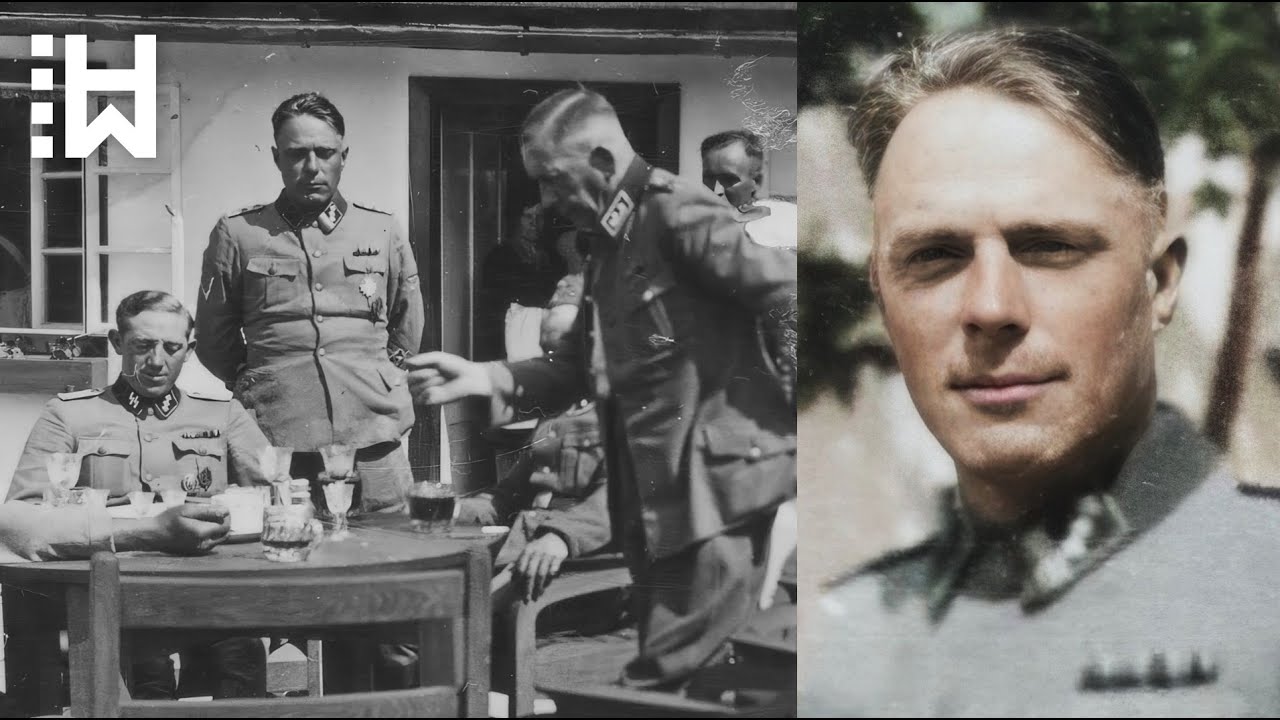
On September 1, 1942, with the rank of SS-Obersturmführer, Reichleitner took command of the Sobibor extermination camp on the orders of Christian Wirth and Odilo Globocnik. He assumed command following Franz Stangl's departure to Treblinka.
German SS and police officials conducted deportations to Sobibor between May 1942, when regular gassing operations began, and the fall of 1943. Most Jews brought to Sobibor were immediately gassed by carbon monoxide piped into the gas chambers from an engine. About 250,000 victims were murdered at the killing center.
The Germans constructed Sobibor as a rectangle measuring 1,312 by 1,969 feet. A double barbed-wire fence woven with tree branches surrounded the perimeter, designed to hide what was inside. The camp had two side-by-side gates, one for trains and another for foot traffic and vehicles.
The Nazis paid special attention to the front compound, which consisted of living quarters and recreational buildings for camp personnel. SS officers lived in cottages with colorful names, which helped conceal the camp's purpose from new arrivals who stepped onto the adjacent ramp.
When a transport of 40 to 60 freight cars arrived at the Sobibor railway station, only 20 cars at a time were taken into the camp. The rest of the victims remained locked in the rail cars.
Victims were brought into the so-called arrival area, where an SS man gave a speech welcoming them and saying they had reached a transit camp on their way to labor camps. They were told they would take showers, have their clothing disinfected, and get a meal before continuing their journey.
Men and women were separated, and children were sent with the women. The Nazis ordered the victims to remove their clothing and hand over their valuables. The Jews were then marched on the run to the gas chambers.
The honking of geese was used to obscure the cries of the victims from those still locked in the rail cars, as they were beaten, screamed at, and had warning shots fired at them. About 450 to 550 Jews were forced into the chambers at a time.
Once the maximum number of victims was inside, the gas chambers were sealed and poisonous gas was piped in. Within 20 to 30 minutes, all those inside were dead. Those too ill, weak, or elderly to make the walk to the gas chambers were shot in an open pit.

SS personnel at Sobibor enjoyed privileges including higher pay and regular visits home every three months, when they could see their families for two weeks. The SS also stole possessions from victims, including gold, food, hair, and other valuables. Guards even took toys from murdered children back home to their families.
Reichleitner was a heavy drinker who rarely showed his face in the camp but ruled the death camp more strictly than his predecessor, Franz Stangl. Moshe Bahir, a Holocaust survivor, described Reichleitner as a man in his late 40s with an Austrian accent who was always dressed with great elegance and wore gloves.
Bahir said Reichleitner did not have direct contact with the Jews in the transports because he knew he could rely on his subordinates, who were very frightened of him. According to Bahir, Reichleitner ran the camp with German precision, and during his time in charge all transports that arrived on a certain day were liquidated; he never left them for the following day.
This differed from Treblinka, which at that time was run by Reichleitner's predecessor, Franz Stangl. After the war, Yechiel Reichman, a survivor of Treblinka, testified about what happened when Stangl was the camp's commandant.
When guards did not expect a new shipment of prisoners for several days, they would seal victims inside the gas chambers to suffocate. The victims would die by themselves, and when the chambers were opened 48 hours later, all the bodies were black and everything was one solid mass. Reichman said he shuddered at how it was possible for a two-legged animal to perpetrate such deeds.
Another survivor, Stanisław Szmajzner, in his book "Hell in Sobibor," described Reichleitner as an obese man who was nearly as round as he was fat. He was nicknamed by the Jews "Idiot," because that was the word he used to call them.
According to Szmajzner, Reichleitner loved to show off his authority by talking very little, even with his officers. He always shouted at inmates and liked to give them continuous orders that had to be obeyed to the last dot.
Reichleitner did not tolerate disobedience and despised the Jews. On one occasion, when an old man from the transports slapped SS officer Karl Frenzel, Reichleitner took the man aside and shot him on the spot in front of his family and the entire convoy of people.
After Reichsführer-SS Heinrich Himmler visited Sobibor on February 12, 1943, he promoted Reichleitner to SS-Hauptsturmführer. Himmler also instructed that the camp be made even more secure, with a second installation of barbed wire and minefields laid around the perimeter.
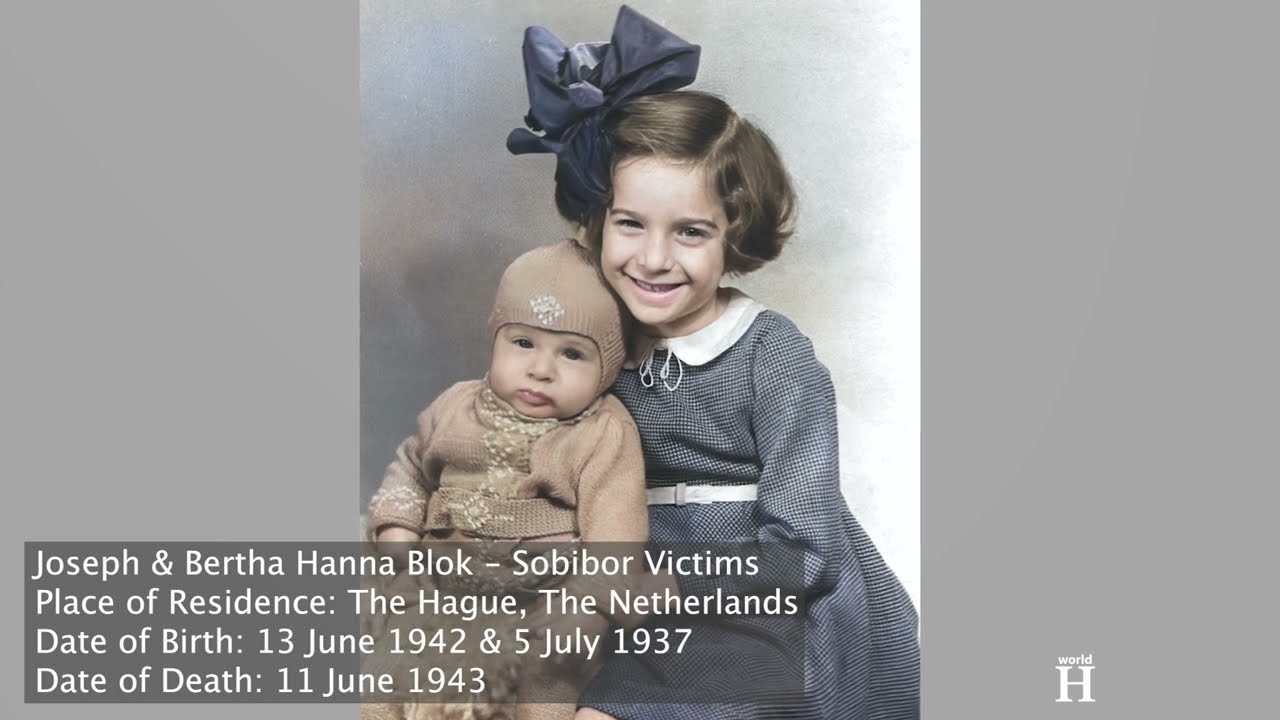
In the summer of 1943, rumors began circulating that Sobibor would soon cease operations, and prisoners understood this meant certain death for all of them. The Sobibor prisoners knew this because Belzec prisoners who did the same work had sewn messages into their clothing before they were killed by Sobibor guards who shot them the same day they arrived.
The next day, Sobibor inmates found all their clothing full of blood. Chaim Mel, a Polish Jewish prisoner, found a note in a pocket that said: "We worked at Belzec for one year and did not know where we would be sent next. They said it would be Germany. Now we are in Sobibor and know what to expect. Be aware that you will be killed also. Avenge us."
And they did. In September 1943, 20 Jewish Red Army prisoners of war, soldiers with the necessary expertise to pull off an escape, arrived at Sobibor in a transport from the Minsk ghetto and were selected for labor. One of them, Alexander Pechersky, would become a leader of the revolt.
The revolt began around 4:00 in the afternoon on October 14, 1943. One hour later, a total of 11 SS officers had been killed by the rebels, some of them with an axe.
Chaos then took over. Prisoners had to escape by climbing over a barbed-wire fence or by running out the main gate through a minefield under heavy machine gun fire. Some stepped on mines, while some gave up and did not run at all.
Approximately 300 prisoners were able to escape, but most were chased down and killed. However, some 50 of the escapees did survive the war.
Reichleitner was on holiday when the revolt took place. When he returned, he was ordered by Himmler to dismantle the gas chambers and other camp facilities to remove any traces of Sobibor's existence.
After the closure of Sobibor in the autumn of 1943, Reichleitner, like most officers of Operation Reinhard, was sent to Italy to fight against local partisans and to murder Jews. Reichleitner was 37 years old when he was shot by partisans on January 3, 1944, near Fiume, today's Rijeka in Croatia.
After the war, he, along with Christian Wirth and Gottfried Schwarz, Wirth's deputy at the Belzec extermination camp, was buried in the German military cemetery at Costermano in the province of Verona.
Decades later, in 1988, the criminal past of Franz Reichleitner led to a scandal in West Germany. Manfred Steinkühler, the German consul general in Milan, Italy, refused to pay homage to the approximately 22,000 German soldiers buried at the Costermano cemetery when he learned that Nazi criminals including Christian Wirth, Gottfried Schwarz, and Franz Reichleitner had been buried there.
He insisted that unless the remains of the three Nazi murderers were removed from the cemetery, he would not, in his role as German consul general in Italy, lay a wreath on Remembrance Day to pay respect to the fallen German soldiers. He justified this with their involvement in Operation Reinhard, where the three Nazi criminals were responsible for the extermination of hundreds of thousands of Jews.
He suggested that the remains of the three war criminals be exhumed and transferred to a civilian cemetery in Germany, but the proposal was rejected by the West German government. In the end, as a compromise, the names of the three SS men were erased from the cemetery's book of honor and their ranks were removed from the gravestones.