By the end of the 1960s, Elvis Presley had been written off by critics as a Hollywood joke. The 1968 comeback special changed that overnight, reminding the world that the most magnetic performer in American music was still alive. But instead of unleashing him on the world, his manager locked him into a Las Vegas hotel contract that would define the rest of his life. The man responsible was Colonel Tom Parker, the Dutch-born manager whose real name was Andreas Cornelis van Kuijk.
He had entered the United States illegally in the late 1920s and never became a citizen. Because he had no valid passport, he could never leave the country. That meant he could never manage a client who toured internationally. So Elvis Presley, the original rock and roll star, never performed outside North America.
Not once. Parker always had a reason, but the real one was the passport. After the 1968 special, Parker did not see a world tour. He saw a hotel contract.
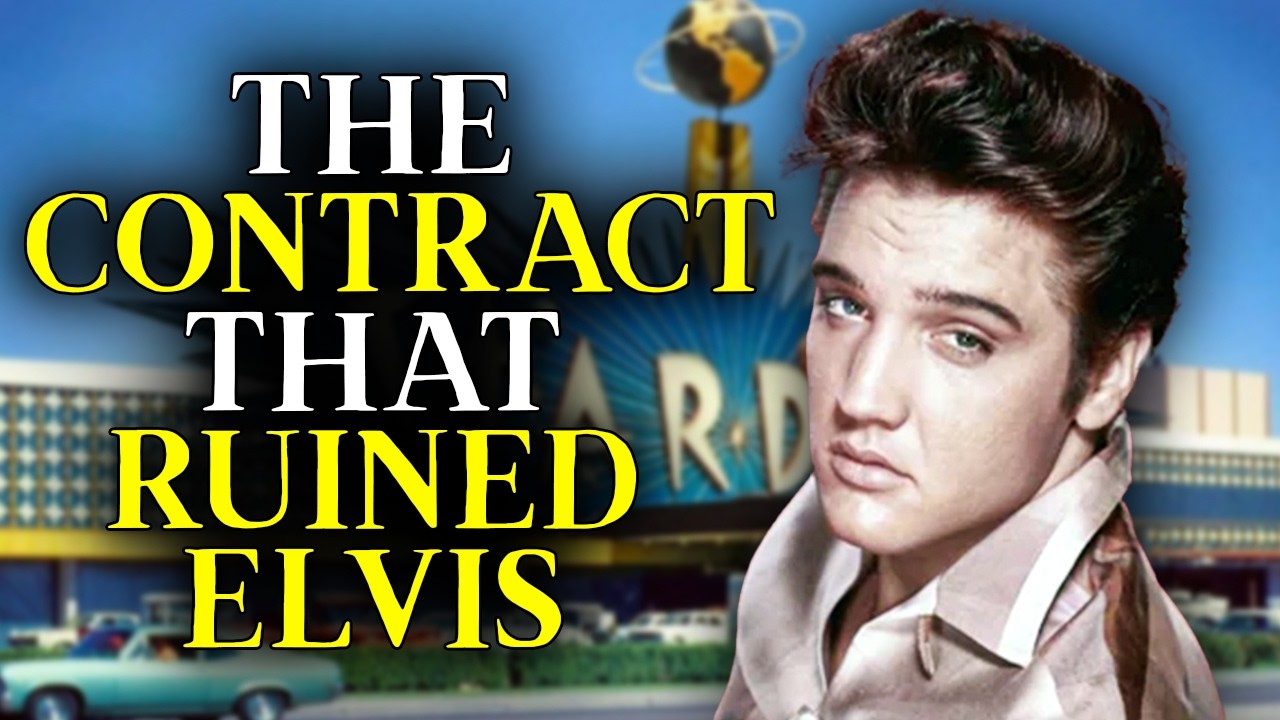
The International Hotel in Las Vegas, then the largest hotel in the world, needed a signature act to open in the summer of 1969. Its president approached Parker, and a deal was struck. Elvis would play 57 shows over four weeks for $400,000, the highest guarantee ever paid to an entertainer in Vegas history. It sounded extraordinary.
But the terms underneath were less noble. Parker negotiated a five-year deal, later extended, locking Elvis into two engagements per year, each lasting four weeks and requiring 57 performances, usually two shows a night. The schedule was relentless by design. The hotel wanted maximum revenue, and Parker, whose cut had climbed to 50 percent of Elvis’s gross earnings, wanted the same.
Parker’s share was far beyond the usual 10 or 15 percent managers took. He had his own suite at the hotel and side deals for merchandise and programs that brought him money Elvis never saw. The contract left almost no room for film work or serious recording. Parker filled the gaps between Vegas runs with grueling domestic tours built on one-night stands, often booked so cheaply that promoters made more than Elvis.
When Elvis opened at the International on July 31, 1969, the night was a triumph. He had spent months rehearsing with a full orchestra, a gospel choir, and some of the best musicians in the country. He was terrified after eight years off the stage. He walked out in a black karate-influenced jumpsuit, and the room exploded.
He played for ninety minutes, magnetic and funny, and the next morning critics called it the most exciting live performance Vegas had ever seen. The engagement sold out every night. Elvis went home to Graceland feeling like himself again. He told people those first Vegas months were the best he had felt in years.
But the shape of the relationship had already been set. The hotel loved him because he printed money, and a machine that prints money does not get time off. Two shows a night meant Elvis rarely finished before three in the morning. He could not sleep with adrenaline still running through him, so he stayed up until dawn and slept through the day.
His days and nights inverted completely, and his body never adjusted. By 1972, the people around him noticed the changes. His voice was still extraordinary, but the range was narrowing and the effortless control was gone. The performances were becoming ritualized, the same songs, the same jokes, the same moves.
Elvis was not a confrontational man. He complained to friends but never confronted Parker. He signed what he was told to sign and showed up where he was told to show up. Las Vegas is built to remove every natural cue that tells a person to stop.
No windows in the casino, no clocks on the walls, constant light and temperature. Elvis lived inside that environment for months out of every year for seven consecutive years. The Memphis Mafia, the group of friends and employees around him, became enablers by necessity. What Elvis increasingly wanted were prescription drugs, and the pills became a structured part of his daily routine.
Uppers to get through the shows, downers to come off the adrenaline, sleeping pills to force rest, painkillers for the accumulated damage. In the last twenty months of Elvis’s life, Dr. George Nichopoulos, later known as Dr. Nick, prescribed more than 10,000 doses of various drugs.
But the drugs were a response to a schedule no human body could sustain without chemical assistance. They were not the disease. The disease was the contract. Vegas took his marriage too.
Priscilla Presley later said the Vegas years changed him fundamentally, with the isolation, the inverted schedule, and a parade of women always available in ways she could not be. They divorced in 1973. Elvis was devastated, and the shows went on. By 1976, Elvis was 41.
Photographs from that year show a man under sustained stress, with significant weight gain, a puffy face, and shaking hands. There were nights on stage when he forgot lyrics and slurred his speech. Some critics who had praised the early shows now wrote with concern. Parker had his own reasons to keep the machine running.
He had developed a serious gambling habit and was reportedly losing millions at the Hilton’s casino tables. The hotel held that debt and collected on it by keeping Elvis under contract. Parker had a personal financial incentive to keep Elvis performing regardless of his condition. The hotel knew Elvis was declining.
They renewed the contract anyway because even a diminished Elvis still sold out every show. Elvis told members of his inner circle he felt trapped and wanted to stop. People who were there said he talked about the contract the way a prisoner talks about a sentence. On August 16, 1977, Elvis Presley was found unresponsive on the bathroom floor of Graceland.
He was 42. The official cause of death was cardiac arrhythmia. The tabloids focused on drugs and weight, but the fuller story is that the contract demanded a decade of physical punishment. Elvis could have had a different career.
John Huston wanted him. Barbra Streisand wanted him for A Star Is Born. Parker turned them down because the Vegas schedule left no room. Streisand made the film with Kris Kristofferson, and it became a massive hit.
Elvis could have done a world tour. The Beatles filled stadiums in Tokyo and London, and the world had waited twenty years for Elvis to arrive. He never came because one man without a passport could not leave with him. When Parker was told Elvis was dead, he reportedly asked whether the death would affect the upcoming tour dates.
After Elvis died, Parker moved quickly to secure his position with the estate. Priscilla Presley, as executor, later had his contract reviewed by a court. The review found that the 50 percent arrangement constituted a conflict of interest and a failure of fiduciary duty. In 1983, Parker was removed from the estate.
He moved to Las Vegas and remained there until his death in 1997. Priscilla Presley transformed Graceland into a destination that now draws over 600,000 visitors annually. Lisa Marie Presley, who grew up in the shadow of her father’s legend, died in January 2023 at the age of 54. The International Hotel, rebranded as the Las Vegas Hilton, then the LVH, then Westgate Las Vegas, still stands.
Elvis’s photographs hang on the walls, his name is on plaques, and the showroom where he played bears his name. The hotel built a monument to the man it helped destroy, and it charges admission to see it.