An FBI evidence team spent June 17, 2013, breaking through the concrete floor of a small house near Liberty Avenue in Queens, New York. Forensic experts waited beside an open pit as investigators removed the broken cement layer by layer. A few blocks away, an aging Bonanno crime family associate named Vincent Asaro sat behind the wheel of his car. The man who got into the passenger seat was Gaspar Valenti, Asaro’s cousin and longtime criminal partner.
What Asaro did not know was that Valenti was cooperating with the government, and a recording device was capturing every word. Valenti told Asaro that federal agents were swarming around Liberty Avenue. Asaro seemed confused. Valenti avoided giving the exact address, knowing the recording had to sound natural.
When he mentioned the location near Liberty Avenue, Asaro suddenly understood. For a few seconds, neither man needed to say the name Paul Katz, the truck driver and warehouse worker who had vanished 44 years earlier after leaving his home to meet men connected to Jimmy Burke. Valenti asked what he could do. Asaro replied that there was nothing to be done.
Then came the warning: “Don’t call me. ” Inside the basement, the FBI kept digging. The mob had believed Paul Katz’s remains were removed twice. First, the body was buried beneath the floor.
Years later, men returned, smashed the concrete, and tried to move every remaining piece. But they missed something. Bones, teeth, scraps of clothing, and small fragments of a murdered man were left under a home tied to people close to Jimmy Burke for decades. The remains waited beneath the neighborhood longer than many of the investigators searching for them had been alive.
The man who told the FBI where to dig was sitting next to one of the people prosecutors believed helped put Katz there. Paul Katz was not killed because of the Lufthansa heist. He had already been dead for nine years when Burke’s crew robbed the airport. His connection to Lufthansa mattered more than participation in it.
Katz knew the criminal machine before it became famous. He knew where Jimmy Burke stored stolen merchandise. He knew which trucks arrived carrying stolen goods. He knew which men unloaded them.
He knew how Burke’s gang made money before millions of dollars disappeared from the Lufthansa terminal. And when police raided his warehouse, Jimmy Burke began asking the only question that could turn a business partner into a corpse. Paul Katz lived in Queens with his wife and five children. He earned a living as a truck driver and warehouse worker.
Around John F. Kennedy Airport, the docks, shipping terminals, factories, and highways, access to trucks meant access to wealth. A single truck could hold goods worth thousands of dollars. Cargo could be sold quickly because buyers did not always ask where the discount came from.
Truck hijacking was just the beginning. Thieves needed information about what a vehicle carried and when it would leave. That information could come from a driver, dispatcher, warehouse worker, airport employee, or someone watching a loading area. The crew would intercept the vehicle, threaten or restrain the driver, and move the truck before police had a clear description.
Stolen goods created another problem: they take up space. A truckload of clothes or furniture could not be hidden behind a social club. The cargo had to be unloaded, separated, and stored until middlemen found buyers. Warehouses became essential.
They created distance between the theft and the sale. The hijackers brought the truck. Other men unloaded it. Middlemen moved the goods to stores, private homes, or businesses willing to buy stolen merchandise.
The money traveled back through the same chain. Jimmy Burke was one of the men who connected those layers. He was an Irish-American criminal associated with the Lucchese crime family. Because he was not Italian, he could not formally join the Mafia, but he did not need a title to control thieves and killers.
He ran his operations out of Robert’s Lounge in South Ozone Park. To outsiders, it looked like an ordinary bar. Inside, it functioned as an office for men whose work could not produce formal contracts. Burke heard about potential heists there.
Drivers and hijackers brought information. Criminal partners discussed stolen goods, gambling, loans, and disputes. No secretary recorded decisions, and no accountant logged every payment. The lack of paperwork protected Burke from investigators.
It also made personal knowledge extremely dangerous. A person who attended meetings inside Robert’s Lounge might know who arranged a theft even when the stolen property could not be traced. Paul Katz connected to this world through his warehouse. According to testimony given years later, Gaspar Valenti visited the warehouse several times during the late 1960s.
Trucks could back up to the loading dock, allowing men to move goods directly inside. Valenti recalled seeing people unload stolen cargo. The warehouse was valuable because it sat between Burke’s thieves and the buyers receiving stolen goods. Katz did not control Jimmy Burke’s gang, but he controlled a location the gang needed.
That gave him extensive knowledge. He could identify the men who delivered trucks. He could identify the types of goods. He could link stolen shipments to the people storing them.
He could explain where merchandise went after disappearing from the road. For a while, that knowledge made him useful. His family began noticing changes. His son Lawrence later testified that merchandise began entering their home during 1969.
Clothes, fur coats, furniture, and electronics were brought inside, sometimes through a bedroom window. The goods never stayed long. They arrived, were stored, and then someone came to collect them. Lawrence was a small child.
He saw things but could not understand the criminal operation behind them. His mother understood more. Paul’s involvement caused arguments inside the home. Stolen goods might bring money, but they also brought fear, arrests, and men whose loyalty depended on silence.
The operation continued until law enforcement reached the warehouse. Police raided the location and arrested men connected to stolen property. Vincent Asaro was among those arrested. Asaro was a Bonanno family associate who worked closely with Burke despite belonging to a different Mafia family.
According to Valenti’s testimony, Asaro returned to Robert’s Lounge after the arrest in a rage. He complained that other men got out while he was left in jail overnight. That detail mattered. In the criminal world, an arrest rarely seemed accidental.
If one man remained held while others walked free, questions began. Who received special treatment? Who talked secretly with investigators? Who gave information to protect himself?
Suspicion fell on Paul Katz. After Katz was released on bail, law enforcement officers began calling his home. His son remembered hearing the name Detective Salvatore “Sal” Pietruszka. Lawrence later testified that he understood the officers would help his father.
The phone calls heightened fear inside the family. Paul argued with his wife. His mother seemed tense and frightened. Paul began talking about leaving New York.
The family had purchased property upstate. He showed them plans for a house in the country, far from stolen trucks, criminal partners, and detective phone calls. To his children, the move looked like a quiet fresh start. To Jimmy Burke’s men, it looked like an attempt to flee.
If Katz had started helping police, moving would not erase what he had already revealed. If he had not started helping them, the mere contact with law enforcement was enough to get him killed. That was the Mafia rule. A suspected informant did not get a chance to prove his innocence in conversation.
Suspicion alone was sufficient evidence. The danger was not only what Katz had said but everything he could say. He knew the warehouse. He knew the stolen goods.
He knew the people connected to Robert’s Lounge. He knew Burke’s methods. Investigators did not need Katz to solve every robbery. They needed him to provide a starting point.
One name could lead to surveillance. One warehouse could lead to another location. One truck could connect a driver to a fence. The entire criminal machine depended on each layer staying separate.
Paul Katz could link them together. On December 6, 1969, Katz’s children were at home watching television when the phone rang. Paul answered. According to what his daughter later said in court, he said he had to meet some men at the candy store.
The description sounded innocent. Candy stores and small cafes were common neighborhood meeting places. Men went in, bought cigarettes or coffee, and talked without scheduling a formal meeting. But Paul’s wife was immediately afraid.
She begged him not to go. When he refused, she asked him to take one of their children. A child might protect him from violence. He refused.
She asked him to take the family dog. He refused again. According to his son, Paul told the family that if he did not return within two hours, they should call the police. That statement revealed what he fully understood.
This was not an ordinary meeting. He knew there was a chance he would not come back. But refusing to meet Burke’s associates might look like proof that he had betrayed them. Paul left the house.
His wife locked the doors and turned off the lights. She made the children hide quietly inside while she waited. An hour passed, then another. Paul never returned.
His wife called Detective Pietruszka the next day and reported him missing. That choice later became part of the government’s argument that Katz had been cooperating. She did not call any of Paul’s criminal partners. She called the detective who had been speaking with him after his arrest.
Searches turned up nothing. No witness came forward with a full account. No one admitted to arranging the meeting. Paul Katz simply disappeared from Queens.
His wife and children left New York shortly afterward. They had no proof he was dead. All they knew was that he went to meet men from the criminal world and never came home. That uncertainty lasted for decades.
Certain death produces grief. Disappearance creates questions that return every morning. Was Paul killed? Did he flee to protect them?
Was he living somewhere under another name? Could he still walk back through the door? His wife never remarried. According to the family, she kept hoping he would return.
She died without knowing what happened to her husband. The government’s reconstruction of the murder did not become public until many years later. Gaspar Valenti eventually told investigators that Vincent Asaro had contacted him around the time of Katz’s disappearance. Asaro needed access to an empty house under construction near Liberty Avenue.
Valenti had connections to properties being built in the area. The address was 8148 102nd Road. The basement was unfinished. A hole could be dug before the floor was poured.
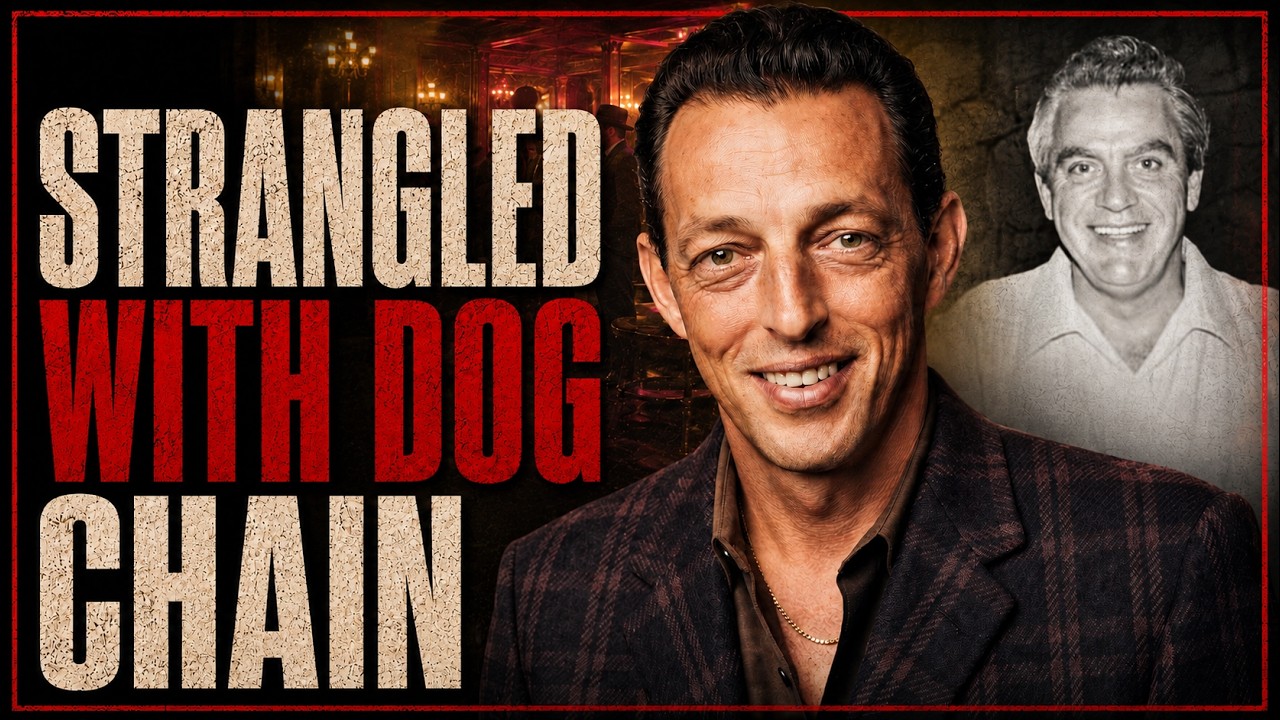
According to Valenti, Jimmy Burke and Vincent Asaro strangled Paul Katz with a dog chain because they believed he was an informant. Valenti did not claim to have witnessed the murder itself. He said he participated in hiding the result. A body was brought to the empty house.
The hole was waiting. Paul Katz was placed beneath the basement floor. Valenti covered the grave with concrete. The house was finished.
Walls went up. Families eventually occupied the rooms. Every ordinary sound inside the building happened above a secret. Footsteps crossed the floor.
Furniture was moved. Children may have played only feet from where Paul Katz was hidden. Jimmy Burke understood that controlling the property reduced the risk of discovery. According to trial evidence, the house was purchased through people connected to his circle and remained tied to Burke’s family for decades.
The concrete grave protected the killers because no one searching for a missing truck driver had reason to break through the floor of a private basement. Time passed. Burke’s criminal empire grew. Robert’s Lounge became connected to larger heists.
Then, in December 1978, Burke’s crew carried out the Lufthansa heist at JFK Airport, stealing more than $5 million in cash and about $1 million in jewelry. Paul Katz was not part of that robbery. He had been under the basement for nine years. But the heist was planned by the same kind of network he had known.
Inside information, airport connections, drivers, storage locations, fences, and trusted men who understood that silence was permanent. The Lufthansa heist made Jimmy Burke famous. The Katz murder showed that Burke had been protecting his secrets with violence long before the airport job. Men connected to the heist began disappearing as Burke feared witnesses, mistakes, and disputes over money.
Paul had experienced that system before the millions were stolen. The warehouse raid taught Burke that a man did not need to openly betray the gang to become dangerous. It was enough that Burke felt uncertain. By the mid-1980s, Jimmy Burke was in prison.
Then word reached his partners that investigators were asking about Paul Katz again. The basement grave no longer seemed safe. According to Valenti’s testimony, Vincent Asaro summoned him to a stolen goods business and delivered a message from Burke. The body had to be moved.
Valenti later described Burke as paranoid and anxious during his imprisonment. The crime had stayed hidden for years, but Burke seemed to fear that someone would identify the house. Asaro directed Valenti and his son Jerome Asaro to return to the basement. They broke up the concrete floor.
The men found skeletal remains and deteriorated clothing inside the grave. They tried to remove everything. The remains were placed in containers and taken away. Where most of Paul Katz’s body was taken was never publicly known.
The men repaired the floor again. They believed they had erased the last piece of evidence. But removing a skeleton from a narrow grave is difficult. Small bones separate.
Teeth stay in the soil. Fragments become wedged under concrete. The men missed parts of Katz’s hand and wrist. They missed vertebrae.
They missed pieces of other areas of his body. The basement kept what they failed to collect. Jimmy Burke died in a federal prison in 1996 while serving a sentence for another murder. He never stood trial for killing Paul Katz.
Robert’s Lounge disappeared. The Lufthansa money became legend. Books and films turned Burke’s criminal world into entertainment. Paul’s family still had no grave.
Then Gaspar Valenti began cooperating. Valenti had spent decades around the Bonanno family and Vincent Asaro. He admitted his own crimes and hoped cooperation with the government would reduce his sentence. That gave the defense a clear argument: a cooperating criminal has reasons to lie.
Valenti needed evidence to support his story. He gave the FBI the address. On June 17, 2013, agents entered the Queens home with a search warrant and began digging in the basement. That was the morning Valenti got into Vincent Asaro’s car wearing a recording device.
The conversation was powerful because neither man spoke openly. Valenti mentioned federal agents near Liberty Avenue. Asaro asked why they were there. When Valenti clarified which location he meant, the tone of the conversation changed.
Valenti asked what he could do. Asaro told him there was nothing to be done. Then came the final instruction: “Don’t call me. ”
After Valenti left the car, FBI surveillance tracked Asaro’s movements.
Agents observed him driving near the excavation site and later going to a business connected to his son Jerome. Inside the house, forensic experts found human remains, hair, teeth, and pieces of clothing. DNA tests compared the remains to samples from Paul Katz’s children and sister. The result confirmed the victim’s identity.
The bones belonged to Paul. The medical examiner classified the death as homicide. Forty-four years after he left to meet the men at the candy store, Paul Katz was finally found. What remained was not enough to explain every detail of the killing.
But it was enough to prove he had not voluntarily abandoned his family. The discovery led to federal charges against Vincent Asaro and others in January 2014. The indictment placed Paul’s murder within the same racketeering case as the Lufthansa heist. That connection created a misunderstanding that continues today.
Paul Katz did not participate in the Lufthansa robbery. His murder was included because prosecutors argued that Vincent Asaro’s criminal partnership with Jimmy Burke spanned decades, from the warehouse operation and Katz’s killing to the famous airport robbery. Jerome Asaro admitted to helping move the body during the 1980s.
He pleaded guilty to racketeering charges that included being an accessory after the fact.