Two gunshots rang out deep in the Vienna Woods on the morning of January 30, 1889, echoing through a hunting lodge that belonged to the Austro-Hungarian imperial family. Inside a locked room, Crown Prince Rudolf of Austria had just shot his 17-year-old mistress, Baroness Mary Vetsera, before turning the revolver on himself. The heir to the Austro-Hungarian throne was dead at 30, and the Habsburg dynasty would never recover. Rudolf had traveled to Mayerling, a hunting estate about 20 miles outside Vienna, under the pretext of a poaching party.
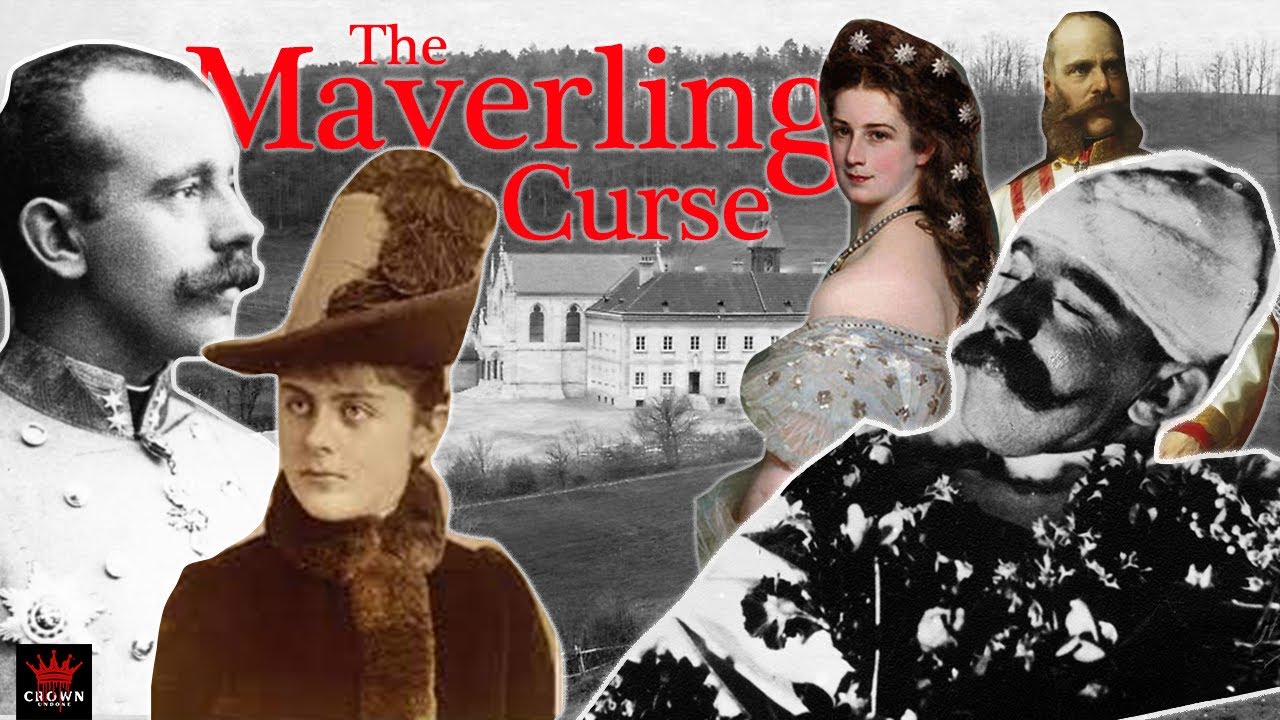
In reality, he had brought Mary with him, secretly smuggled into the estate and hidden in a locked room. The Crown Prince had been planning his own death for some time, and he had made clear he did not want to die alone. Born in August 1858 at Schloss Laxenburg, Rudolf was the eldest son of Emperor Franz Joseph and Empress Elisabeth, known as Sisi. His birth was greeted with a 101-gun salute across Vienna, finally giving the empire the male heir it had desperately demanded.
But his childhood was harsh. His first tutor, Count Leopold Gondrecourt, subjected the sensitive boy to brutal training meant to toughen him up, including being woken at night by pistol shots, locked in animal enclosures, and forced through extreme physical exercise. After two years, Sisi discovered Rudolf training in deep snow before sunrise and had the count dismissed. A later tutor, Joseph Latour von Thurmburg, nurtured Rudolf’s intellectual interests, but the Crown Prince was barred from attending university.
He lamented that even the lowest petty official had more influence than he did, and that he was condemned to idleness. In 1878 he was sent to Prague to serve in an infantry regiment, eventually rising through the ranks to become a general infantry inspector by 1888. In 1880, the Austrian court arranged a marriage for Rudolf with Princess Stephanie of Belgium, daughter of King Leopold II. The wedding took place in 1881, when Rudolf was 22 and Stephanie was 17.
Their only child, a daughter named Elisabeth, was born in September 1883, dashing hopes for a male heir. Rudolf grew increasingly withdrawn from court life after his daughter’s birth. He spent long periods outside Vienna, befriended anti-monarchists, and published anonymous political writings in newspapers. He also pursued numerous extramarital affairs.
According to some allegations, he may have fathered as many as 30 illegitimate children. By 1886, Rudolf had fallen dangerously ill. Official diagnoses cited stomach disease and bladder infections, but the far more likely cause was a sexually transmitted infection contracted through years of unprotected affairs. The infection probably spread to Stephanie, who may have been left infertile at just 22, ending any hope of another legitimate heir.
Prescriptions of opium, morphine, and possibly mercury likely worsened Rudolf’s psychological state rather than helping it. Around that time, Rudolf asked one of his regular lovers, Mizzi Kaspar, whether she would be interested in a suicide pact, admitting that it would be too lonely to die alone. Mizzi never entertained the idea and reportedly reported Rudolf’s suicidal thoughts to the Austrian chief of police, but her concerns were ignored. In November 1888, Rudolf met Mary Vetsera at the races.
Mary, the daughter of a top Armenian banker and a lesser Austrian noble family, wrote in her diary that a passion was born the moment she locked eyes with him. Historians have described Mary as a girl who wore too much jewelry and flirted with married men, raised with only one aim in view: to attract and please men. She had a strained relationship with her mother, writing to a friend that her mother had no love for her and treated her like something to be disposed of to the best advantage. With the help of Rudolf’s cousin Countess Marie Larisch, Mary arranged secret meetings with Rudolf at his apartments in the Hofburg Palace.
The pair consummated their affair on January 13, 1889, a date Mary commemorated with an engraved cigarette case reading “13th of January, thanks to fate. ” Rudolf marked the occasion with an iron ring on a silver chain, engraved inside with letters standing for the German phrase “united in love until death. ”
A few days later, Rudolf invited two friends, Prince Philip of Coburg and Count Josef Hoyos, on a hunting trip to Mayerling. On January 28, Mary was secretly transported to the Hofburg and then smuggled into a car with one of Rudolf’s drivers, Josef Bratfisch, to meet the Crown Prince at a nearby hotel before the final journey to the lodge.
The next morning, Prince Philip and Count Hoyos arrived at the hunting lodge around 8 a. m. Rudolf received them as usual, explained he had caught a cold on the drive from Vienna, and excused himself from the day’s hunting. He did not mention that Mary was already in the estate, hidden in a locked room.
Philip and Hoyos went hunting without him. Philip returned early to join Rudolf for lunch, as he had to attend a state dinner in Vienna that evening. Rudolf said he could not attend because his cold had worsened, and promised to make excuses to the emperor. That night, only Rudolf and Hoyos dined together.
Hoyos later recalled a simple meal of soup, goose liver pie, roast beef, venison, and pastry. Rudolf told him he would see him at breakfast the next morning. After Hoyos retired, Rudolf collected Mary, and the two were entertained by their driver Bratfisch. They exchanged gifts, and Mary apparently told him this would be the last time they would see each other.
Rudolf then prepared their room and ordered his valet, Johann Loschek, not to disturb him under any circumstances. “Don’t let anybody come in,” he said with a slight shake in his voice, “even if it is the Emperor. ”
The Crown Prince locked the door, and the pair sat at the room’s desk to pen their final letters. To Stephanie, Rudolf wrote: “You are relieved of my presence and vexations.
Be happy in your own way. Be kind to the poor little one who is all that remains of me. ” Mary wrote to her mother: “Forgive me for what I have done. I could not resist my love.
” To her sister she wrote: “We are both going blissfully into the uncertain Beyond. ”
The valet said he could hear the couple speaking late into the night. Then Rudolf kissed Mary passionately, stroked her hair, stepped back, and shot her through the head. He then paced the room for hours, working up the courage to honor his side of the pact.
At around 6:10 a. m. , Loschek said Rudolf came into his room fully dressed and ordered him to prepare the carriage. Loschek had not even reached the courtyard before two gunshots went off behind him.
He sprinted back, but the door was locked from the inside. Count Hoyos, who had stayed in a workman’s cottage on the estate, was walking toward the main dining room for breakfast when Loschek ran in, exclaiming that Rudolf’s door was locked and he would not answer. Hoyos was not immediately alarmed. “He’s probably sleeping very well and soundly,” he replied.
But Loschek explained that the Crown Prince had been awake and fully dressed only an hour before. The two men returned to the room, now worried, and Hoyos struck the locked door with a hammer. When there was still no response, Prince Philip returned from his state dinner and suggested they break the door down. Loschek went in first.
He saw Crown Prince Rudolf fully dressed, leaning over the side of his bed, bleeding from the mouth. The Crown Prince had blown his skull apart with the revolver that lay by his side. On her own bed lay Mary Vetsera, the blood on her temple already congealed. Rudolf had sat with her lifeless body for hours before turning the gun on himself.
Visible from where the valet stood was a folded note addressed to Loschek himself. It read: “Get a clergyman and bury us in a shared grave. ” Loschek knew immediately that the Crown Prince’s last wish would never happen. Count Hoyos traveled back to Vienna to tell Emperor Franz Joseph.
He arrived at the Hofburg Palace at 10 a. m. but could only find Empress Elisabeth, who had just finished a workout in the gymnasium. Hoyos later reported it was dreadful to see her so unprepared.
He found the strength to tell her she must break the news to the emperor. Sisi only had the heart to tell her husband that Mary had fatally poisoned Rudolf and the two were dead. A postmortem was carried out that afternoon. It concluded that Rudolf had committed suicide as a result of morbid nervous exhaustion, an excuse that conveniently allowed for a dispensation from the Vatican for a proper funeral and burial in the Imperial Crypt.
The cover-up had begun. The royal family destroyed the majority of letters and documents, demanded silence from witnesses, and by January 31 newspapers circulated the lie that the Crown Prince had died of a stroke. Some reports referred to a sudden heart attack. Mary’s involvement was kept out of every official report.
As far as the authorities were concerned, she was never there. Mary’s corpse was transported from the lodge in the back of a carriage between two of her uncles, propped up with a broomstick and dressed as if alive. She was buried on her own in a village cemetery in the southern Vienna Woods on February 1. By May, her family had located the grave and reburied her in a copper coffin.
Her remains have been exhumed twice since 1889. Rudolf was given a Roman Catholic burial in the Imperial Crypt. The funeral was small and private. Foreign royalty were not allowed except for Princess Stephanie’s parents, who insisted on attending.
Neither Sisi nor Stephanie attended. Just six people accompanied Franz Joseph into the crypt. The emperor, who never cried and who had resented his son’s sensitivity, intelligence, and liberalism, fell to his knees and wept at the sight of Rudolf’s fractured skull held together with white bandages. Rudolf’s name was no longer allowed to be uttered at court.
Franz Joseph had the Mayerling hunting lodge converted into a convent for nuns of the Discalced Carmelite order. According to local belief, the nuns still hear the gunshots at night. The Habsburg line had imploded in an instant. Rudolf’s death left his cousin Franz Ferdinand as the new heir to the throne.
His assassination in Sarajevo in 1914 would trigger the chain of events that led to the outbreak of World War I, making the tragedy at Mayerling not merely a royal scandal but a turning point in world history.