Inside a glass case at the John F. Kennedy Presidential Library in Boston sits a carved coconut shell. It was scratched with a rescue message in August 1943, after a Japanese destroyer split PT-109 in two in the Solomon Islands. That shell stayed on the Oval Office desk through all 1,036 days of the Kennedy administration.
It is the essential artifact of a sacred American story: the heroic officer, the Silver Star recipient, the golden young leader who rose from a prominent family to command the free world. That is the official legend. But primary historical records, internal memos, and secret cable transcripts tell a very different story.
Those records show that on November 8, 1960, when John F. Kennedy narrowly won the presidency by 112,827 votes, the man who effectively bought the election was sitting in a suite at the Carlyle Hotel in Manhattan. He watched the returns on a black-and-white television and made calls to Mafia-linked political leaders in Chicago and political operatives in West Virginia. His name was Joseph Patrick Kennedy Sr.
The second son, the frail young man with chronic illness who now carried the burden of the presidency, was not the son Joe Sr. had spent 30 years preparing for that mission. Jack was the substitute. He was the emergency plan, activated only after the preferred design shattered over the English Channel in August 1944.
When people ask whether Joe Kennedy Sr. despised his second son, they are asking the wrong question entirely. You do not spend 30 million dollars over four decades, employ international liquor distribution networks, influence Hollywood studios, and buy the loyalties of newspaper publishers for a son because you despise him. You do it because you are an architect, and he is the physical asset you deploy in the market.
That leads to the truth of who Joseph P. Kennedy Sr. was before he was anyone's father. Start with the wealth, because the myth of Kennedy money is where the distortion begins and where it never stopped.
For nearly a century, American political lore insisted that Joe Kennedy made his initial fortune bootlegging premium whiskey during Prohibition, alongside mobsters like Frank Costello and Meyer Lansky. It is a colorful narrative. It has cinematic flair. It suggests the charm of an outlaw outsider. The reality is colder, sharper, and far more corporate.
Joe Kennedy did not evade federal agents in speedboats across Rum Row. He was far too cautious for physical risk. Instead, while other men were taking bullets, Joe Kennedy used his position as the youngest bank president in America at Columbia Trust in East Boston to learn the fine mechanics of market manipulation.
During the 1920s, he worked inside Wall Street's short-selling pools, deliberately driving up the stock prices of weak companies, selling his shares at the peak to unwitting individual investors, and walking away with millions. Then came the Hollywood years.
Between 1926 and 1930, Joe Sr. systematically bought struggling film studios, including FBO and the American Film Booking Offices, reorganized them with brutal corporate efficiency, extracted millions in cash, merged them to create RKO Pictures, and exited the industry. He did not care about the art of cinema. He cared about two things: cash flow and the unprecedented psychological power of mass media in shaping public perception.
As the end of the Prohibition era approached in the fall of 1933, Joe Kennedy executed his most important financial maneuver of all. He did not run alcohol. He took a trip to London with James Roosevelt, the son of President Franklin D. Roosevelt, and used that political influence to secure exclusive U.S. import rights for Haig & Haig, Dewar's, and Gordon's Gin through his company Somerset Importers.
He obtained government permits to import liquor for medicinal purposes months before the ratification of the 21st Amendment. When Prohibition was officially repealed on December 5, 1933, Joe Kennedy was the only man in America whose warehouses were already stocked with legal, duty-paid scotch, ready for immediate distribution. He did not break the law. He manipulated the law before it was even written.
This was the system Joe Sr. built. And when he turned his attention to his family, he applied the exact same corporate structure inside the home. His nine children were not raised in a traditional household. They were raised inside an incubator designed to manufacture aristocratic influence.
Trust funds were established for each child in the late 1920s and 1930s, structured to ensure that none of them ever needed to earn a salary and, more importantly, that all of them remained entirely dependent on their father's grand political strategy.
At the dinner table in Hyannis Port, the meal was a test. The children were expected to discuss international affairs, report on their daily achievements, and justify how they spent their time. There was no praise for second place. It was considered a moral failure.
"We don't want any losers in this family," Joe Sr. would repeat to them. "In this house, there is room only for the one who finishes first."
From the beginning, Jack was not the chosen man to finish first. That was the eldest son, Joseph P. Kennedy Jr. To understand why Jack Kennedy felt the weight of his father's harsh judgment through the first 27 years of his life, you have to grasp the psychological shadow cast by his older brother.
Joe Jr. was everything his father valued. He was broad-shouldered, tall, physically powerful, aggressively competitive, and utterly free of self-doubt. He was a natural athlete, a star at Harvard, and an outspoken political partisan who absorbed his father's isolationist views without question.
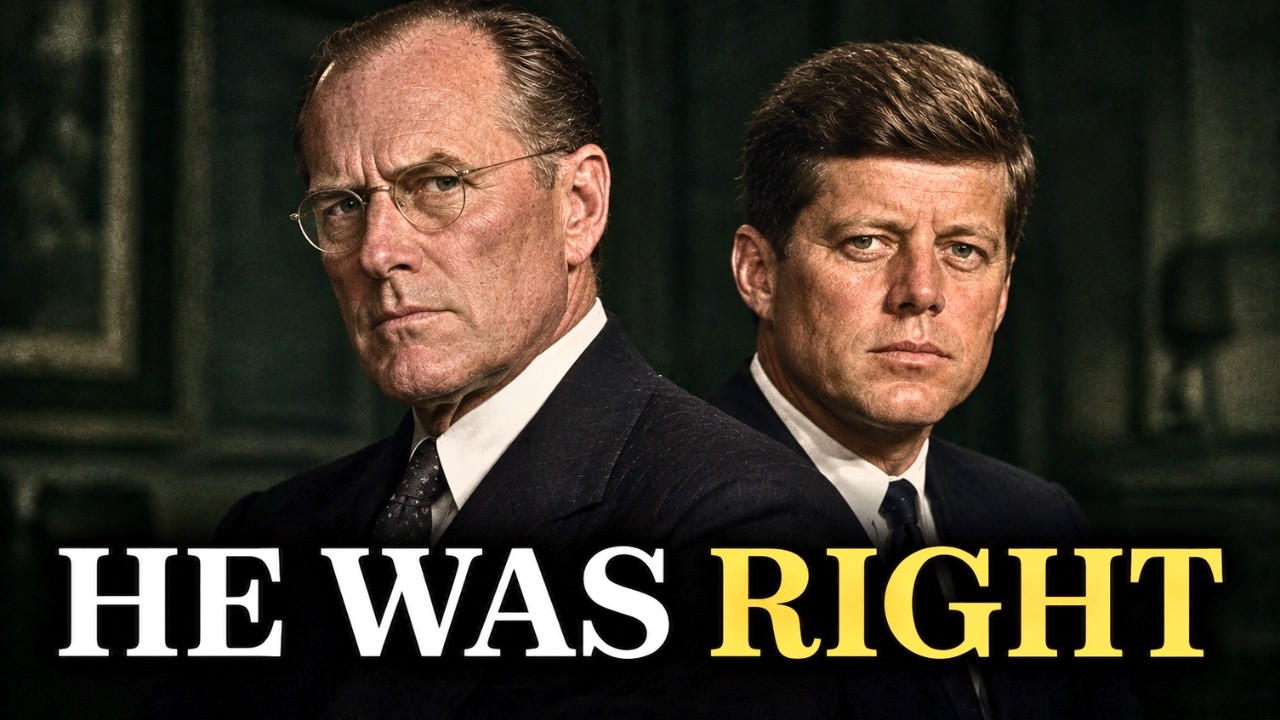
Joe Sr. looked at Joe Jr. and saw a mirror image of himself. He was the chosen heir. The political machine was built specifically to install Joseph P. Kennedy Jr. as the first Catholic president of the United States.
Jack, born in May 1917, was the exact opposite. To understand why Joe Kennedy Sr. demanded absolute, unforgiving perfection from his children, you have to understand the deep, festering scar that drove his entire life.
It originated in the elite salons of Boston in the late 19th century. Although his father, P.J. Kennedy, was a prosperous saloon owner and influential East Boston political leader, Joe Sr. grew up under the stifling ceiling of Boston Brahmin prejudice.
In the early 20th century, Anglo-Saxon Protestant elites controlled money, politics, and social life in Massachusetts. To them, no matter how much money an Irish Catholic made, he remained an outsider and a second-class citizen in his own city.
When Joe Sr. entered Harvard with the class of 1912, he was systematically excluded from the final elite clubs, such as Porcellian and the A.D. Club, secret strongholds of the elite where real American power was passed down as family inheritance. He never forgot the bitterness of that rejection.
Decades later, after he became a millionaire, when he tried to buy a house in the aristocratic neighborhood of Cohasset, Massachusetts, local elites made it clear that his family was not welcome. Joe Kennedy did not respond to exclusion by seeking acceptance. He responded with a determination to buy the elite institution that despised him, surpass it, and break it.
His life became a campaign for absolute dominance. He decided to build a political dynasty so vast and powerful that the Protestant elite would have no choice but to bow to it. His primary instrument for that revenge was his eldest son, Joe Jr.
While Joe Sr. was cold and calculating, Joe Jr. was his physical hammer. He was trained from birth to be the absolute winner. He inherited his father's loud physical confidence, his unyielding toughness, and his total desire to dominate any room he entered. When Joe Jr. arrived at Harvard, he was not merely a student. He was the physical embodiment of the Kennedy counterattack.
Jack, meanwhile, was a burden to the family. From the moment of his birth, John F. Kennedy was a shockingly fragile child. At age two, he nearly died of scarlet fever. Throughout his childhood and adolescence, he suffered a continuous series of painful and unexplained illnesses, severe intestinal disorders, high fevers, debilitating joint pain, asthma attacks, and persistent weight loss.
He spent months bedridden in hospitals or confined to his room, reading history and biographies, while his older brother dominated the playing fields. In a family that treated physical weakness as a character flaw, Jack's frail health was a source of embarrassment to his father.
Joe Sr. routinely scolded Jack for his lack of discipline, his messiness, and his inability to match Joe Jr.'s physical drive. To Joe Sr., Jack was careless, irresponsible, and fundamentally unsuited to the brutal collision-based reality of American politics.
Jack received an allowance, but unlike his older brother, he received constant reprimands for his financial recklessness and lack of focus. The relationship between the brothers was extremely harsh. Joe Jr. physically bullied Jack, often starting fights that left the younger, thinner, weaker brother injured and exhausted. Yet Jack desperately craved his father's approval, an approval that was almost entirely reserved for the eldest son.
Then World War II erupted, and the balance of power in the Kennedy family flipped upside down. In the late 1930s, President Franklin Delano Roosevelt appointed Joe Kennedy Sr. as U.S. ambassador to the Court of St. James's in London. It was the peak of Joe Sr.'s career.
But once he arrived, his cold, transactional realism produced catastrophic results. Convinced that Nazi Germany was invincible and that British democracy was doomed, Joe Sr. publicly advocated appeasing Adolf Hitler. He gave unauthorized newspaper interviews declaring that democracy was finished in England.
Roosevelt was furious. In 1940, Joe Sr. was effectively recalled in disgrace, and his political ambitions for the presidency were permanently shattered. From that moment, Joe Sr.'s obsession with power transferred entirely to Joe Jr. The son would achieve what the father was denied.
Joe Jr. joined the U.S. Navy as a pilot, determined to build a war record that would propel him straight to the White House. When Jack joined the Navy, thanks to his father's political influence overriding his severe medical disqualifications, and later became a national hero after the sinking of PT-109 in August 1943, the family dynamics reached a dangerous breaking point.
The New Yorker and national newspapers celebrated Jack's heroism. It was a media campaign orchestrated by Joe Sr. himself, who recognized the marketing value of Jack's survival story. But for Joe Jr., Jack's sudden fame was an unbearable blow. The younger, weaker brother had stolen the spotlight.
Driven by an urgent need to reclaim his place as the family's foremost hero, Joe Jr. volunteered in August 1944 for an extremely dangerous secret military mission known as Operation Anvil. He was assigned to pilot a B-24 Liberator loaded with 21,000 pounds of explosives to target German V-2 rocket sites in France, bailing out over the English Channel before the guided aircraft detonated.

On August 12, 1944, off the coast of Suffolk, England, the explosives detonated prematurely in midair. Joe Jr.'s body was vaporized instantly. He was 29 years old.
The news reached Hyannis Port on a sunny Sunday afternoon. Joe Kennedy Sr. went up to his room, closed the door, and stayed there in total darkness for hours. The machine he had spent 20 years tuning, the golden boy built to conquer Washington, had all evaporated into the air.
When Joe Sr. finally emerged, he did not display his grief publicly. He did not adjust his grand strategy. He simply looked at his second son, the sickly, literature-loving, chronically ill Jack, and reassigned him to the mission.
"Joe is dead," the father told Jack in a tone that carried no consolation, only an absolute demand. "It is your turn now."
Jack did not want a career in politics. He wanted to become a journalist, a writer, or a historian. But in the Kennedy family system, individual desires were irrelevant compared to the collective mission of the dynasty. Jack was handed the political destiny of his late brother. He was the backup option forced onto the field. And his father was about to deploy every dollar, every connection, and every ruthless mechanism at his disposal to ensure this fragile substitute did not fail.
To understand what Joe Kennedy Sr. was capable of doing to protect the political viability of his brand, you only need to look at what happened in late 1941 to his eldest daughter, Rosemary Kennedy.
Rosemary Kennedy was born in 1918. Due to a lack of medical oxygen during her birth, she lived with developmental delays and behavioral swings. By her early twenties, her mood swings had become unpredictable, and she began slipping out of the house at night. To anyone else, she was a vulnerable young woman in need of care. To Joe Kennedy Sr., she was an existential threat to the family's public image.
In a world where political dynasty required pure, unblemished perfection, Joe Sr. did not view Rosemary's condition as a medical tragedy but as a liability to the brand. In November 1941, without telling his wife Rose, Joe Sr. arranged for the 23-year-old Rosemary to undergo an experimental lobotomy performed by Dr. Walter Freeman.
The operation went catastrophically wrong. Rosemary became permanently incapacitated, unable to speak clearly or care for herself, and was quietly moved to a private institution in Wisconsin. For decades, the family told the public she had simply become reclusive or chosen a quiet life of teaching. She was effectively erased from the public narrative, a living lesson to every other Kennedy about what happens when an individual threatens the collective machine.
Jack was more aware of the stakes than anyone. Because while Rosemary's secret was hidden in Wisconsin, Jack was battling his own hidden physical collapse, a secret his father spent millions trying to conceal from the press.
The public saw a bronzed war hero with a smile, tousled hair, and seemingly effortless energy. The medical records reveal a terrifying reality. Jack suffered from Addison's disease, a rare and debilitating failure of the adrenal glands, along with severe fragmentation of his spine that left him in near-constant agony. He required daily injections of steroids, procaine, and amphetamines just to stand upright at political gatherings.
Throughout his campaigns for Congress and the Senate, Jack carried a traveling medical bag, underwent multiple serious back surgeries, and secretly received the Catholic last rites on four separate occasions before he turned 44. Had American voters known the truth about Jack's health, his political career would have ended within 48 hours. Joe Sr. made sure they never knew.
He bought the loyalties of journalists, concealed medical records, and publicly denied that Jack had Addison's disease, framing his collapses as old war injuries. To Joe Sr., Jack was a political product, and the product must never appear defective on the shelf.
With Joe Jr. gone, the political campaign shifted into a higher gear. In 1946, Joe Sr. set his sights on Massachusetts's 11th Congressional District. It was a tough, working-class Democratic district made up of Boston's Irish and Italians. Jack was not a natural fit for that environment. He was the educated Harvard graduate with the polished accent who had spent years in mansions.
But Joe Sr. flooded the district with money. He famously said, "With enough money, you can make my chauffeur get elected." He bought print ads, paid local ward bosses, funded community organizations, and deployed his daughters to host lavish tea parties for working-class voters.
Jack worked hard, walking the streets and climbing the stairs of three-decker apartment buildings despite his agonizing back pain, but the financial force behind him was overwhelming. Jack won the seat. He was 29 years old.
By 1952, Joe Sr.'s ambition was higher, aimed at the U.S. Senate, targeting incumbent Henry Cabot Lodge Jr., the Protestant elite Republican. It was a decisive personal showdown for Joe Sr., Kennedy taking down Lodge, the symbol of the old Boston Protestant establishment.
Joe Sr. did not just fund the campaign. He ran it from behind a thick curtain. He ensured the Boston Post supported Jack by making a secret $500,000 loan to the newspaper's struggling publisher. When campaign decisions were made, Joe Sr. sat in hotel suites in Boston and Washington, pulling strings, directing strategy, and shouting at campaign managers who failed to meet his standards.

Jack felt humiliated at being treated like a puppet. He loved his father, but he resented his tight ownership of him as if he were a business project. During one planning session, as Joe Sr. berated campaign staff and issued orders, Jack turned to an associate and muttered quietly, "My father wants me to win, but he wants to make sure everyone knows he did it."
By 1960, the ultimate goal was within reach, the presidency of the United States. The main obstacle was not Jack's youth or his thin legislative record. It was his religion. No Catholic had ever been elected president of the United States, and the primary battle in West Virginia, a working-class Protestant-majority state, threatened to kill the campaign before it reached the convention.
Joe Sr. stayed out of sight to handle West Virginia himself. Money flowed across the state in briefcases. Financial support was delivered to local sheriffs, political machine operators, and church organizers. At the same time, Joe Sr. used his vast network of relationships, including ties built through his business empire, to recruit union bosses and organized crime figures such as West Virginia and Chicago operators to ensure turnout in key areas.
When rumors began spreading that Joe Sr. was spending huge sums to buy votes in the primary, Jack joked to the audience at the Gridiron Dinner: "I just received a telegram from my generous father. It says: 'Dear Jack, don't buy one more vote than necessary. I'll be damned if I'll pay for a landslide.'"
The audience laughed. It was presented as a witty, self-deprecating joke, but inside the campaign offices, no one was laughing. Everyone knew that without Joe Sr.'s money, his ruthless control, and his absolute refusal to lose, John F. Kennedy would never have reached the national ticket.
Jack won the nomination. He was on the verge of reaching the White House, but the relationship between the father who built the empire and the son who wore the crown was about to reach a dangerous and explosive turning point.
On November 8, 1960, John Fitzgerald Kennedy won the election. The Irish Catholic grandson of an East Boston saloon owner had reached the highest office in the land. But on the morning after the election, when the cameras gathered at the Hyannis Port compound, Joe Sr. did not stand beside his son.
As Jack faced the world's press in a dark suit, radiant and young, Joe Sr. stood to the side, wearing sunglasses, almost completely hidden from view by the crowd. It was a deliberate choice. Joe Sr. knew that his reputation, his appeasement record, his Wall Street past, and rumors of his Mafia connections were toxic to the new administration. The architect had to retreat into the shadows so the product could shine.
Yet inside the White House, the father's hand still held the reins. When Jack was forming his government, Joe Sr. issued an ultimatum that created an immediate crisis within the family. Robert Kennedy had to be appointed attorney general. Jack resisted strongly. He knew that appointing his 35-year-old brother to lead the Justice Department would look like blatant, indefensible nepotism. The administration would face scathing criticism.
"I don't want to appoint Bobby," he told friends. "It looks terrible." But Joe Sr. refused his request. In a sharp, closed-door argument at the Carlyle Hotel, the father laid down family law. "I built this," Joe Sr. told Jack. "Bobby sacrificed years of his life running your campaigns. You owe him. Family comes first."
Jack eventually relented. He cleverly tried to soften the situation with humor, joking to reporters that he saw no harm in giving Bobby a little legal experience before he practiced law. But the reality was clear. Even as commander in chief, Jack could not fully break free from his father's authority.
Then came December 19, 1961. While playing golf in Palm Beach, Florida, 73-year-old Joe Kennedy Sr. suffered a catastrophic stroke. The man who had dominated Wall Street, conquered Hollywood, and bought his family a seat in history was suddenly mute and paralyzed on his right side. He could no longer speak words. He made garbled sounds and gestured with his trembling left hand.
During the last two years of Jack's presidency, the father-son relationship completely reversed. Jack would visit his father in Palm Beach or Hyannis Port, sitting beside the bed of the helpless giant. The father who had controlled every dollar, edited every speech, and demanded absolute perfection was now trapped in his body, watching his son on television handle the Bay of Pigs, the Cuban Missile Crisis, and the civil rights movement.
For the first time in his life, Jack was entirely on his own. He was no longer executing his father's grand strategy. He was forced to become his own independent man. When Jack faced the Soviet Union during those tense 13 days in October 1962, he did so by rejecting the aggressive instincts his father's generation had always preached. The sickly second son had surpassed the builder.
On November 22, 1963, in Dallas, Texas, the machine stopped violently and tragically. When the news reached Palm Beach, the family hesitated to tell the stroke-stricken father. They turned off the television in his room. When the news was finally conveyed to Joe Sr., the old man closed his eyes and wept silently, unable to express the pain of outliving another child he had pushed toward power.
Six years later, in November 1969, Joe Kennedy Sr. died at the age of 81, having lost four of his nine children: Joe Jr., Rosemary, Jack, and Bobby.
So did Joe Kennedy Sr. despise Jack? No, that word is inaccurate, and the historical record does not support it. Joe Sr. did not despise Jack. He evaluated him. He viewed him through the cold, harsh lens of an investor assessing one of his assets.
To Joe Sr., Jack was a fragile backup plan, a sickly and irresponsible young man who had to be polished, funded, and engineered into a hero, because the primary blueprint had exploded in the skies over England. Joe Sr. did not give Jack love in the way ordinary fathers give love to their children. He gave him a mission.
He spent 40 years and tens of millions of dollars manufacturing a president, using every tool of public relations, political machine influence, and raw financial power available in 20th-century America. In the process, he built a family dynasty so powerful that its glow obscured the cold, harsh sacrifices required to create it.
Now return to the coconut shell in the glass case at the Kennedy Library. It sits there under museum lights, a symbol of courage, survival, and dedicated service. It is a real piece of history. But right beside it are things invisible to the public: the secret records, the campaign bank accounts, the hidden medical files.
Joe Kennedy Sr. built the myth, paid for the stage, and owned the show. Jack wore the crown, but the tragedy of the Kennedy dynasty was that the price of the presidency had to be paid in advance, from the health of a second son who never wanted the office, from the tragic erasure of a daughter who did not fit the family image, and from the complete, unconditional surrender of an entire family to one man's obsession with winning.