OSWIECIM, Poland — Rudolf Hoss, the longest-serving commandant of the Auschwitz concentration camp and the architect of its transformation into the most efficient killing machine in human history, was hanged on April 16, 1947, on the grounds of the very camp where he oversaw the murder of an estimated 2.5 million people, bringing a measure of justice to a world still reeling from the horrors of the Holocaust.

The execution took place at 10:08 a. m. local time, just yards from the building that once housed Hoss’s own office at Auschwitz I, the administrative heart of a sprawling complex that stretched across roughly 20,000 acres and included the extermination center at Birkenau and the slave labor facility at Monowitz.
He was 46 years old.
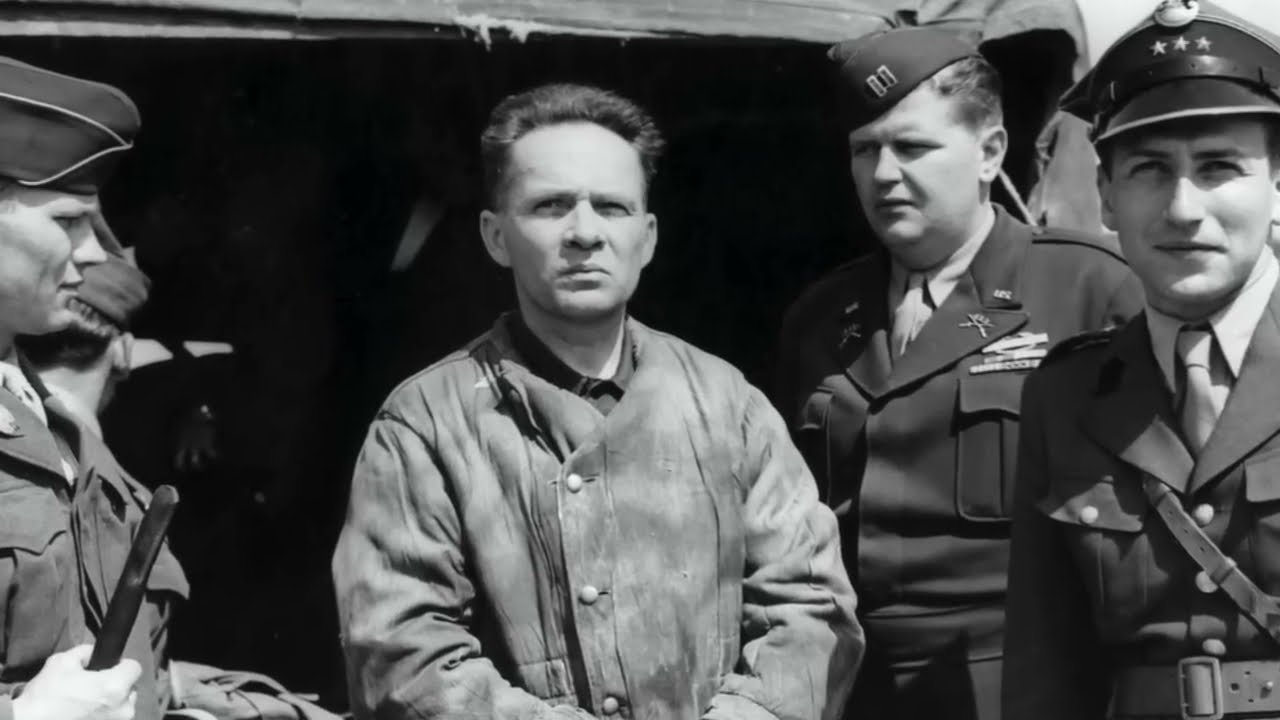
Hoss arrived at the camp at 8 a. m. under heavy guard, having been transported from a Polish prison where he had been held since his arrest by British forces in March 1946.
According to witnesses, he requested a cup of coffee upon arrival and drank it calmly before being escorted to a cell in Block 11, the notorious “death block” where countless prisoners had been held before their own executions.
At 10 a. m. , he was led from his cell.
His hands were handcuffed behind his back, and he walked with a steady, confident stride through the camp he had once commanded. Guards flanked him as he made his way toward the gallows, a structure built by German prisoners of war specifically for the occasion, complete with a trapdoor mechanism designed to ensure a swift death.
A priest, Father Zaremba, approached Hoss as he stood on a stool placed above the trapdoor. The prosecutor then read aloud the sentence handed down by the Polish court on April 2, 1947: death by hanging. The executioner placed the noose around Hoss’s neck.
According to accounts from those present, Hoss adjusted the rope slightly with a movement of his head, displaying the same chilling composure he had shown throughout his trial.
The hangman pulled the stool away. The trapdoor opened, and Hoss fell. The priest began reciting a prayer for the condemned and dying as the former commandant hung suspended.
At 10:21 a. m. , a physician pronounced him dead.
 His body was likely cremated, with his remains reportedly scattered in an unknown location, denying him the burial site that so many of his victims were never afforded.
The decision to execute Hoss at Auschwitz was not made lightly. The day after his death sentence was announced, former prisoners of the camp petitioned the court to carry out the execution on the grounds of Auschwitz itself, a symbolic act of justice that would forever link the perpetrator to the scene of his crimes. The original date was set for April 14, but authorities postponed it after receiving intelligence that local residents might attempt to lynch Hoss as he was being transported to the site.
Hoss’s path to the gallows was paved with decades of violence and ideological fervor. Born in 1900, he joined the Nazi Party in 1922 after hearing a speech by Adolf Hitler in Munich. His early years in the party were marked by brutality; he participated in the beating death of a schoolteacher and was tried as a ringleader, receiving a 10-year prison sentence.
After his release, he married and had five children, but his commitment to Nazi ideology only deepened.
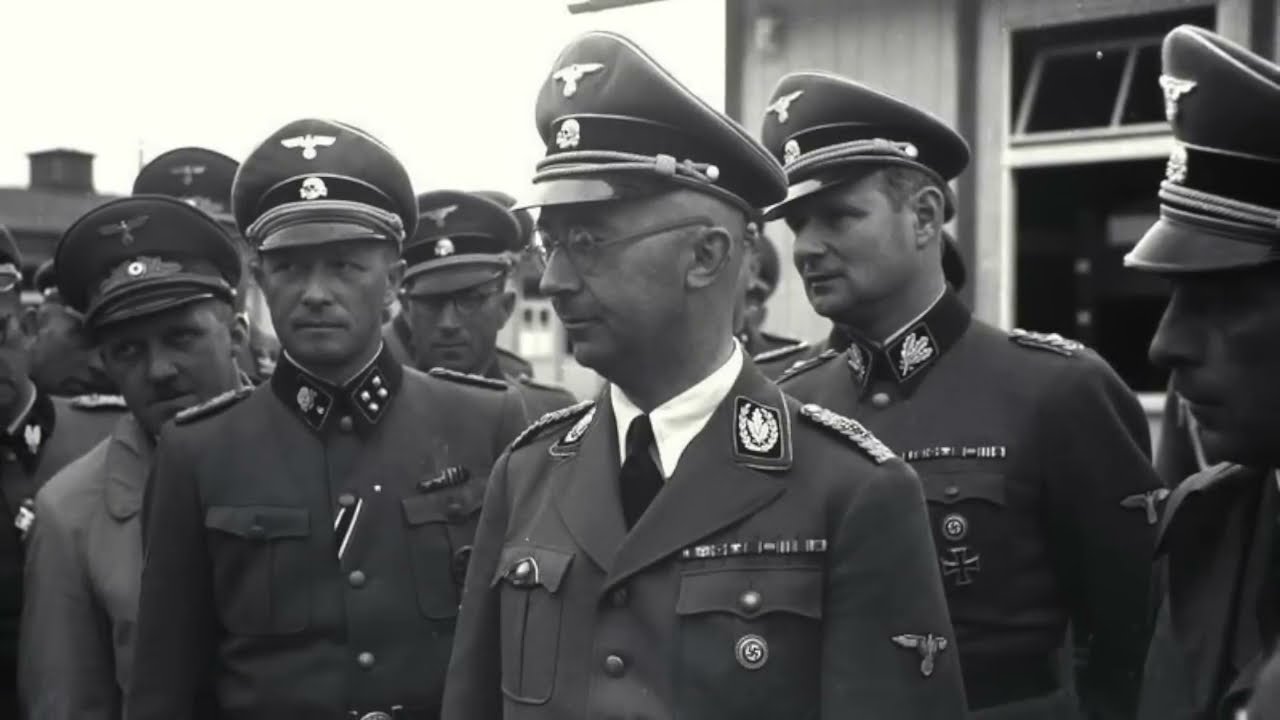
He became acquainted with Heinrich Himmler and joined the SS on April 1, 1934, quickly moving into the Death’s Head Unit. Hoss idolized Himmler, even preferring him to Hitler himself. His first assignment was at Dachau concentration camp in December 1934, where he served as a block leader.
After being promoted to captain, he became an adjutant to Hermann Baranowski at Sachsenhausen, where he led the firing squad and personally carried out the execution of August Dickmann, the first conscientious objector to be executed after the war began on September 15, 1939. Hoss fired the final, fatal shot from his pistol.
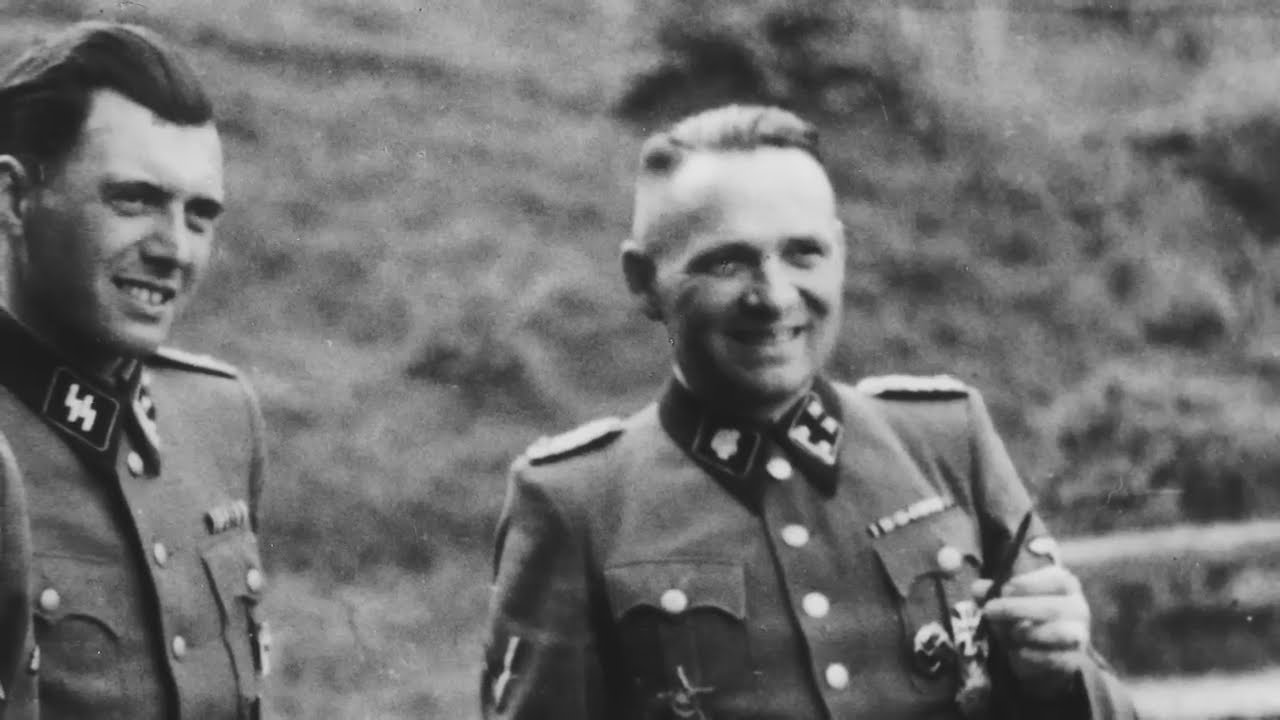
On May 1, 1940, Hoss was appointed commandant of a prison camp in western Poland, built around an old army barracks. The camp was named Auschwitz. What began as a facility designed to hold 10,000 prisoners was transformed by Hoss into a vast, industrial-scale extermination complex.
He moved into a villa on the camp grounds with his wife and children, living a relatively normal home life while orchestrating mass murder on an unprecedented scale.
 In June 1941, Hoss met secretly with Himmler after learning of the order for the Final Solution. Himmler had chosen Auschwitz for the extermination of Europe’s Jewish population due to its easy access by rail and its expansive site. Hoss began developing and testing methods of mass killing, experimenting with different gassing techniques to maximize efficiency.
Under his command, Auschwitz became the most efficient instrument of the Holocaust.
At its peak, the Auschwitz complex consisted of three main facilities: Auschwitz I, the administrative center; Auschwitz II-Birkenau, the extermination camp; and Auschwitz III-Monowitz, the slave labor camp serving German industrial conglomerates. The camp was served by numerous sub-camps and covered approximately 20,000 acres.
Hoss was removed from Auschwitz in 1943 after having an 𝒶𝒻𝒻𝒶𝒾𝓇 with an inmate, a 𝒔𝒄𝒂𝓃𝒹𝒶𝓁 that could have ended his career. But he returned on May 8, 1944, to oversee Operation Hoss, the deportation and murder of 430,000 Hungarian Jews in just 56 days. The scale of the killing was so immense that the camp’s crematoria could not keep up, and thousands of bodies were burned in open pits.
After his time at Auschwitz, Hoss finished his career at Ravensbruck, organizing the extermination of prisoners there. He was arrested in March 1946, despite attempting to bite a cyanide pill. He was called to testify at the Nuremberg trials as a defense witness for Ernst Kaltenbrunner, where he revealed his own estimate that 2.
5 million people were executed at Auschwitz during his time in command, representing 70 to 80 percent of all those sent to the camp. He dismissed the figure of 3. 5 million murders with which he was charged, claiming the rest died from disease and starvation.
During his trial in Poland, Hoss was calm and controlled. He knew what fate awaited him. At the end of the proceedings, he asked to send his wedding ring to his wife.
The court announced its verdict on April 2, 1947: death by hanging.
Four days before his execution, Hoss wrote a final statement acknowledging the enormity of his crimes. “As commandant of Auschwitz, I was responsible for carrying out part of the cruel plans of the Third Reich for human destruction,” he wrote. It was a rare moment of admission from a man who had spent years denying the full extent of his actions.
But the confession did little to diminish the legacy of horror he left behind. Auschwitz, under Hoss’s direction, became synonymous with the darkest depths of human cruelty. The camp was liberated by the Red Army on January 27, 1945, revealing to the world the true scale of Nazi atrocities.
Over a million people had been murdered within its walls, and more than 7,000 prisoners remained alive when Soviet forces arrived.
The liberation of Auschwitz and other camps shocked the world and cemented the Third Reich as one of the most evil regimes in history. The subsequent trials, including Hoss’s, were part of a broader effort to bring perpetrators of the Holocaust to justice. But for many survivors, no punishment could ever fully account for the suffering they endured.
Hoss’s execution at Auschwitz was a symbolic act of retribution, carried out on the grounds where he had inflicted so much pain. It was a moment of closure for some, but it could never undo the horrors he had orchestrated. His name would forever be associated with the Holocaust, a reminder of the capacity for evil that exists when ideology and power go unchecked.
As the sun rose over Auschwitz on the morning of April 16, 1947, the camp that had once been a site of unimaginable suffering became the site of justice. Rudolf Hoss, the commandant who had turned a barracks into a death factory, was dead. But the memory of his crimes, and the millions who perished under his watch, would never be erased.