The assassination of President John F. Kennedy on November 22, 1963, became one of the most enduring mysteries of the modern era. The death of a young, democratically elected and deeply beloved president ignited decades of speculation about who was really responsible. Countless books, movies, and investigations have tried to uncover whether a hidden cabal orchestrated his end.
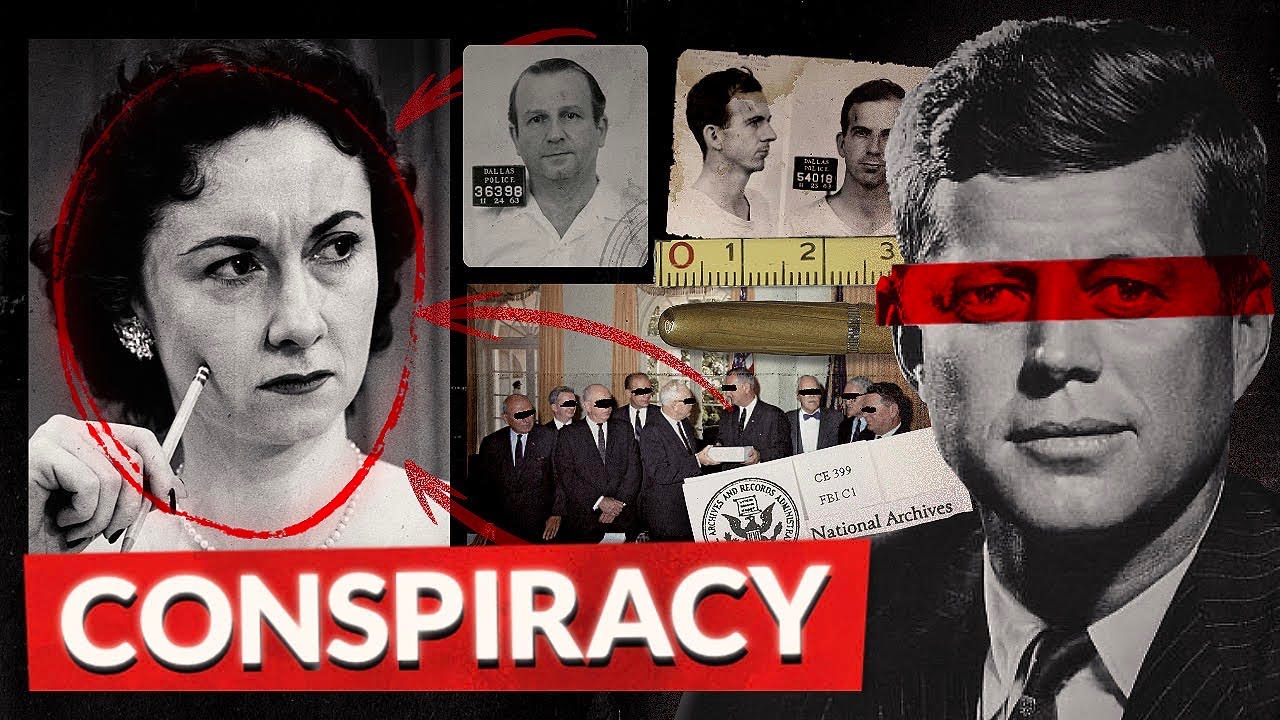
Many of those who chased the truth faced immense pressure and threats. In some cases, they paid the ultimate price. Such was the fate of Dorothy Kilgallen, the journalist who may have uncovered what really happened to President Kennedy.
News of Kennedy's death spread like wildfire, plunging the United States into profound mourning. Millions watched in disbelief as television networks provided continuous coverage of the tragedy in Dallas. The president, his limp body carried in the arms of his wife, Jacqueline, was rushed to Parkland Hospital.
Just two days later, another shock occurred. Lee Harvey Oswald, the man accused of killing the president, was himself gunned down on live television by Jack Ruby, a shady nightclub owner.
The deaths of both Kennedy and his alleged shooter sent shockwaves throughout the United States and the world. In the midst of it all, the federal government launched what seemed to be an extensive investigation. The newly sworn-in President Lyndon Johnson established the Warren Commission to examine every piece of evidence surrounding the shooting.
After months of testimony from hundreds of witnesses and painstaking analysis of ballistic and photographic evidence, the commission released its controversial final report in 1964. Its conclusion was that Lee Harvey Oswald acted alone, firing from the sixth floor of the Texas School Book Depository.
But not everyone was convinced by the official story. Many Americans and people around the world doubted the commission's report, seeing it as a concealment of what really happened. To them, the Warren Commission was a charade, a mask to conceal a darker and deeper conspiracy behind Kennedy's death.
Kennedy was not just a president. He was a cultural phenomenon — charismatic, confident, and effortlessly charming. He embodied the image of youthful American optimism, with a beautiful family and an almost movie star aura.
But when Kennedy took the oath of office, he stepped into a deeply divided and hostile political landscape. The United States was at the height of the Cold War, locked in a tense standoff with the Soviet Union. Inside Washington, America's military and intelligence apparatus operated with alarming autonomy, funding proxy wars, toppling foreign governments, and killing foreign leaders who threatened American interests.
Kennedy did not like this at all. In his view, these actions were not protecting American democracy — they were abusing American power. He envisioned a different path, one of diplomacy and peace instead of covert operations and warfare. That vision put him on a collision course with some of the most powerful institutions in the country.
He began dismantling the dark alliances that were controlling American foreign policy. At one point, he even declared that he wanted to splinter the CIA into a thousand pieces and scatter it to the winds. When he was murdered, despite what the Warren Commission concluded, many saw his death as a calculated response and a warning from the very forces he tried to challenge.
In the following years, many journalists, investigators, and sleuths who refused the official story started digging deeper. Among them was one particularly fearless journalist.
At the time of Kennedy's death, Dorothy Kilgallen was one of the most prominent journalists in America. She had a nationally syndicated newspaper column and was a well-known television personality. Most of her columns focused on show business, celebrity gossip, Broadway, and Hollywood, but she occasionally ventured into deeper waters — politics, organized crime, and corruption.
When President Kennedy was murdered, Kilgallen's investigative instincts kicked in. She was one of the very first journalists in American media to question the official story being so quickly fed to the public. In her columns, she openly criticized the inconsistencies in the investigation and cast doubt on the Warren Commission's evidence.
Kilgallen began voicing what many were thinking but few dared to say: that Lee Harvey Oswald was not a lone gunman, and that Kennedy had likely been shot by multiple perpetrators. Determined to uncover the truth, she threw herself into the case. She attended hearings, studied transcripts, and covered key trials surrounding JFK's death, including that of Jack Ruby.
To Kilgallen, Ruby was an anomaly, something that did not fit the script. He was a shady Dallas nightclub owner, allegedly deeply entangled with the mafia and the criminal underworld. Yet the public was told that this shady character, out of sheer grief and anger, walked past Dallas police and gunned down Oswald in front of the entire world while the cameras were rolling.
Kilgallen did not buy it, and it was suspicious to her from the start. She began digging into Ruby's past and following his trial, a pursuit that would eventually put her life in grave danger.
Kilgallen was among the first journalists to uncover and report that ten witnesses had signed sworn depositions to the Warren Commission, claiming that Lee Harvey Oswald and Jack Ruby knew each other before Kennedy's demise. Then, in February of 1964, she published that government attorneys had agreed to provide Ruby's defense team with reams of helpful information they would never have been able to get without government men — but under one remarkable condition: that they ask nothing about Ruby's alleged victim, Lee Harvey Oswald.

Kilgallen wrote that it appeared Washington knew or suspected something about Lee Oswald that it did not want Dallas and the rest of the world to know or suspect. She asked why Oswald was being kept in the shadows as dim a figure as they could make him, even as the defense tried to rescue his alleged killer with help from the FBI.
Jack Ruby and the twisted, intricate criminal web surrounding him became the center point of Kilgallen's investigation. His persona, his words, his trial — she followed all of it with meticulous attention. One of the most remarkable moments in her pursuit of the truth was landing a private interview, the only one ever conducted with Jack Ruby during his trial.
At the time, reporters were only allowed to question Ruby during court sessions. Somehow, Kilgallen managed to arrange a closed-door conversation with the man who had shot Lee Harvey Oswald live on television. It was an extraordinary feat that spoke to both her determination and her reputation as a fearless reporter.
However, the content and details of that private conversation with Ruby were never released to the public. In the weeks following the interview, Kilgallen hinted to colleagues and friends that Ruby told her something explosive, something that pointed directly to a larger conspiracy behind Kennedy's death.
Even setting aside Kilgallen's secret files, Jack Ruby remained one of the most puzzling and under-examined figures in the entire JFK saga. In his public appearances during that time, he spoke with a bluntness and honesty that was largely brushed off — and in hindsight, was truly revealing.
Ruby said the world would never know the true facts of what occurred, or his motives. He said the people who had so much to gain had put him in the position he was in, and that the true facts would never come out the way they were meant to reach the world.
After one encounter with reporters, as Ruby stood up and began walking away from the cameras, a journalist asked him about a remark he had made concerning Adlai Stevenson, one of Kennedy's former potential vice presidential picks. Ruby turned and replied that if Stevenson had been vice president, there would never have been an assassination of their beloved President Kennedy. When pressed to explain, Ruby simply replied, "Well, the answer is the man in office now."
He was referring to Lyndon Baines Johnson, who has been implicated in many JFK theories as one of the main orchestrators of Kennedy's death, fueled by political motivations and, frankly, a jealousy toward JFK.
In the years that followed, Ruby continued to insist that he knew who was behind President Kennedy's murder. He claimed that powerful people were trying to paint him as insane so that no one would ever take his story seriously.

Ruby's trial and his whole persona were screaming red flags. Ruby's psychiatrist during the trial was Dr. Jolly West, one of the key figures in the CIA's clandestine MK Ultra mind control program. That program was a clandestine umbrella operation run by the CIA and the military in the United States, meant to create a Manchurian candidate — a kind of perfect killing machine who would not remember his deeds afterward.
Ruby saw himself as a pawn in a much larger game. He believed he had been blackmailed into shooting Oswald by people who threatened to expose his own criminal dealings, including alleged gun-running operations connected to Fidel Castro's Cuba. In his final words to another psychiatrist, Ruby said, "I am doomed. I do not want to die, but I am not insane. I was framed to kill Oswald."
Kilgallen was following every twist and turn of the JFK investigation and the subsequent trial of Jack Ruby with a laser focus. She was getting closer and closer to the truth, especially after her interview with Ruby. She told friends and colleagues that she was on the verge of publishing an exposé that would reveal one of the biggest conspiracies in American history.
Because of it, she was reportedly being followed and surveilled for months. Both the FBI and CIA allegedly maintained secret files on her, and her phone lines were reportedly tapped. Then, right on the verge of her bombastic exposé, on November 8, 1965, Dorothy Kilgallen was found dead in her Manhattan townhouse.
The official cause of death was an accidental overdose, but few people believed this explanation. Her friends, colleagues, and even police officers who first arrived at the scene thought something was off. She was found in a bedroom she never used, in the very bed where she had once caught her husband cheating.
The bed itself was spotless, and she was fully dressed, still wearing her makeup, wig, and false eyelashes — items she always removed before sleeping. Even the book she had supposedly been reading was placed oddly, inconsistent with someone who had simply set it down before dozing off.
New York homicide detectives did not reach her home until six hours after news of her death broke. Detective Jack Doyle, one of the investigators, later revealed that Kilgallen's body contained a high level of nicotine despite the fact that she did not smoke. Nicotine, when injected into someone, can cause a heart attack.
Because of all of this, Detective Doyle publicly stated that he did not believe Kilgallen had overdosed. However, four months later, he was gone from the NYPD. In the years that followed, he reportedly moved across the country several times, each move coinciding with a renewed interest in Kilgallen's death.
It is also notable that just days before her death, Kilgallen had handed a draft copy of her JFK exposé to her closest friend and co-worker, Florence Pritchett. However, the day after Kilgallen's body was discovered, Pritchett was found dead as well, and her investigation files vanished. Her notes, drafts, her Ruby interview and transcripts — all gone. To this day, no one knows where they went or who took them.
Dorothy Kilgallen is just one of many people who paid the ultimate price for simply seeking the truth of what happened to a democratically elected president. Her story, and similar stories, should always be talked about and never forgotten.