On March 26, 1945, US Army units advancing toward Central Germany liberated the town of Hadamar and its psychiatric clinic, one of six killing facilities in the Nazi so-called euthanasia program. The soldiers found catastrophic conditions. More than 500 patients were starved and weakened by systematic neglect and targeted malnutrition.
Although the US Army provided medical care and additional rations, for many the help came too late. Several patients died in the days and weeks following the liberation as a result of inadequate care.
The US Army launched an investigation immediately after the liberation. Key members of the hospital management still on site were taken into custody and interrogated, and witnesses were questioned about the murders. Evidence was seized.
Among the staff arrested by the Americans was the Hadamar chief physician and medical director, Adolf Wahlmann.
Wahlmann was born on December 10, 1876, in Koblenz, in the Rhineland, then part of the German Empire. After graduating from high school in Laak in 1897, he studied medicine in various German cities, including Giessen, Marburg, Erlangen, and Kiel. He completed his studies with a dissertation in 1903.
As a young assistant doctor, Wahlmann worked at the Maxen state sanatorium until 1905, the same year he received his specialist qualifications as a psychiatrist. From 1905 to 1906 he worked at the Vinster state sanatorium, and then at the Ibag state sanatorium until 1908.
Wahlmann interrupted his work at the Ibag state sanatorium to serve as chief physician at the Hadamar State sanatorium from 1908 to 1911. He then returned to Ibag, where he remained until 1933.
The director of the Ibag state sanatorium and Wahlmann's brief superior, Wilhelm Hinson, characterized Wahlmann as a gifted man who had been very popular with his patients. Because he behaved better toward his patients than toward his staff, he earned the nickname "Jesus Christ" among the staff at the Ibag institution.
Adolf Hitler and the Nazi Party came into power in January 1933. On April 1 of the same year, Wahlmann joined the Nazi Party, and one year later, in 1934, he became a member of the SS.
Many of Nazi Germany's racial policies were shaped by racial hygiene. Medical professionals implemented many of these policies and targeted individuals the Nazis defined as hereditarily ill, including those with mental, physical, or social disabilities. The Nazis claimed these individuals placed both a genetic and financial burden upon society and the state.
Nazi authorities resolved to intervene in the reproductive capacities of persons classified as hereditarily ill. One of the first eugenic measures they initiated was the 1933 Law for the Prevention of Offspring with Hereditary Diseases, known as the hereditary health law.
The law mandated forcible sterilization for nine disabilities and disorders, including schizophrenia and hereditary feeble-mindedness. As a result of the law, 400,000 Germans were ultimately sterilized in Nazi Germany.
Eugenic beliefs also shaped Germany's 1935 marital hygiene law, which prohibited the marriage of persons with diseased, inferior, or dangerous genetic material to healthy German Aryans.
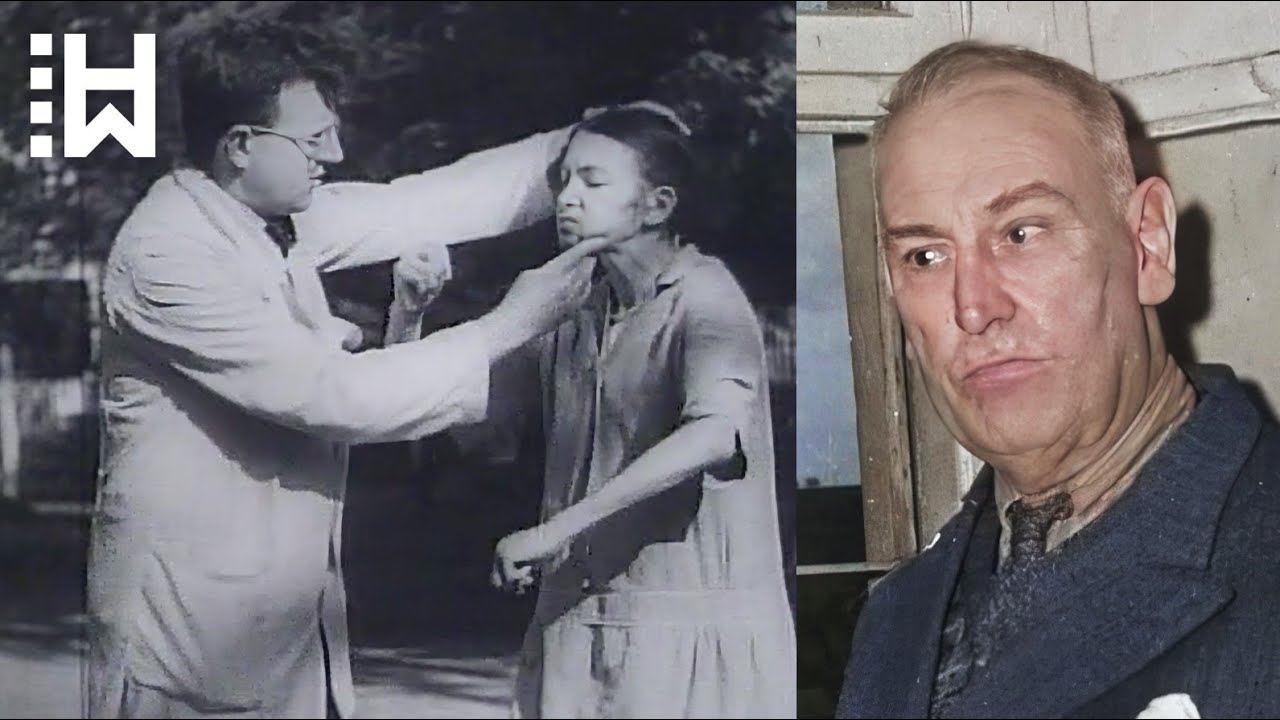
Eugenics not only provided the basis for the Nazi compulsory sterilization policy but also underpinned the murder of the institutionalized disabled in the clandestine euthanasia program. That program was the systematic murder of institutionalized patients with disabilities in Germany.
It predated the genocide of European Jewry, the Holocaust, by approximately two years and was one of many radical eugenic measures aimed at restoring the so-called racial integrity of the German nation. It sought to eliminate what eugenicists and their supporters considered life unworthy of life.
According to the Nazis, those individuals, because of severe psychiatric, neurological, or physical disabilities, represented both a genetic and a financial burden on German society and the state.
In the spring and summer months of 1939, several planners began to organize a secret killing operation targeting disabled children. They were led by Philipp Bouhler, director of Hitler's private chancellery, and Karl Brandt, Hitler's attending physician.
On August 18, 1939, the Reich Ministry of the Interior circulated a decree requiring all physicians, nurses, and midwives to report newborn infants and children under the age of three who showed signs of severe mental or physical disability.
Beginning in October 1939, public health authorities began to encourage parents of children with disabilities to admit their young children to one of several specially designated pediatric clinics throughout Germany and Austria. In reality, the clinics were children's killing wards. There, specially recruited medical staff murdered their young charges by lethal overdoses of medication or by starvation.
At first, medical professionals and clinic administrators included only infants and toddlers in the operation, but as the scope of the measure widened, they included youths up to 17 years of age. Conservative estimates suggest that at least 10,000 physically and mentally disabled German children perished as a result of the child euthanasia program during the war years.
However, euthanasia planners quickly envisioned extending the killing program to adult disabled patients living in institutional settings. In the autumn of 1939, Adolf Hitler signed a secret authorization in order to protect participating physicians, medical staff, and administrators from prosecution. This authorization was backdated to September 1, 1939, to suggest that the effort was related to wartime measures.
The Führer Chancellery was compact and separate from state government and Nazi Party apparatuses. For these reasons, Hitler chose it to serve as the engine for the euthanasia campaign. The program's functionaries called their secret enterprise T4.
According to Hitler's directive, Führer Chancellery director Philipp Bouhler and physician Karl Brandt led the killing operation. Under their leadership, T4 operatives established six gassing installations for adults as part of the euthanasia action.
These were Brandenburg on the Havel river near Berlin, Grafeneck in southwestern Germany, Bernburg in Saxony, Sonnenstein also in Saxony, Hartheim near Linz on the Danube in Austria, and Hadamar in Hesse, where Adolf Wahlmann worked as a chief physician.
Using a practice developed for the child euthanasia program, in the autumn of 1939 T4 planners began to distribute carefully formulated questionnaires to all public health officials, public and private hospitals, mental institutions, and nursing homes for the chronically ill and aged.
The limited space and wording on the forms, as well as the instructions in the accompanying cover letter, combined to give the impression that the survey was intended simply to gather statistical data. The categories for the patients were those suffering from schizophrenia, epilepsy, dementia, and other chronic psychiatric or neurological disorders; those not of German or related blood; the criminally insane or those committed on criminal grounds; and those who had been confined to the institution in question for more than five years.
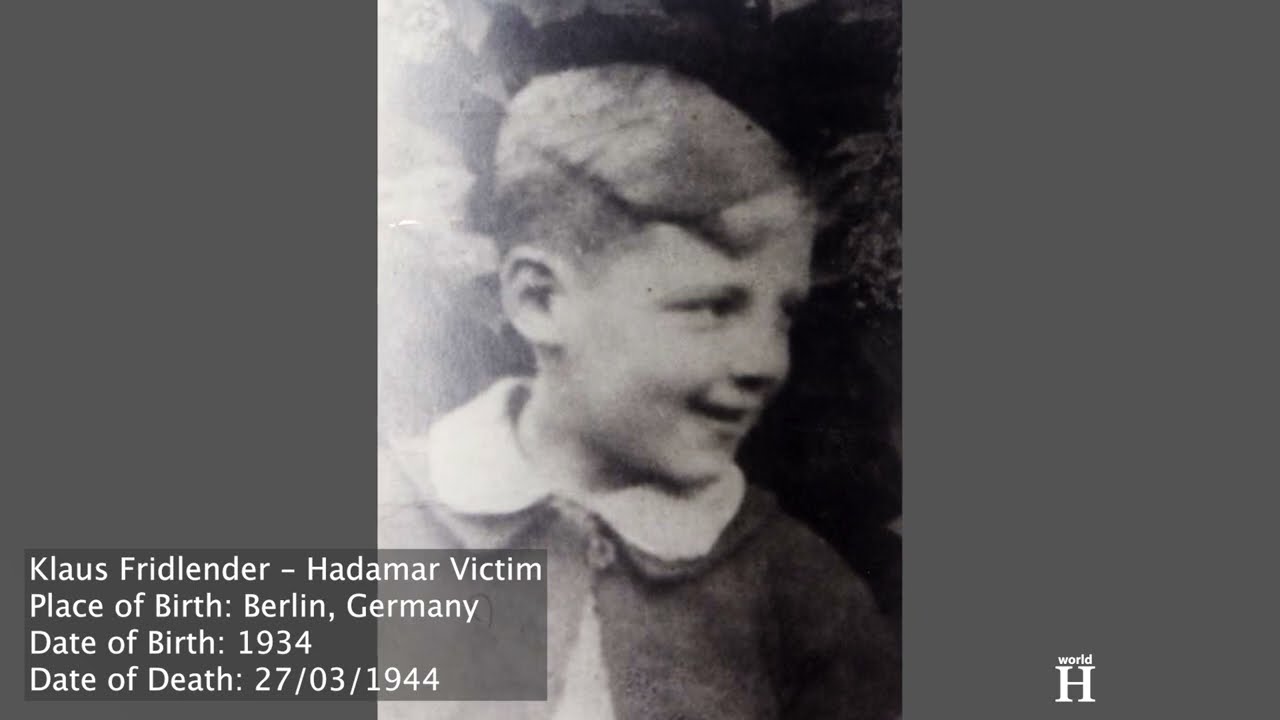
Secretly recruited medical experts, many of them physicians of significant reputation, worked in teams of three to evaluate the forms on the basis of their decisions. Beginning in January 1940, T4 functionaries began to remove patients selected for the euthanasia program from their home institutions.
The patients were transported by bus or by rail to one of the central gassing installations for killing. Within hours of their arrival at such centers, the victims perished in gas chambers disguised as shower facilities, using pure bottled carbon monoxide gas.
T4 functionaries burned the bodies in crematoria attached to the gassing facilities. Other workers took the ashes of the cremated victims from a common pile and placed them in urns to send to the relatives of the victims. The families or guardians of the victims received such an urn along with a death certificate and other documentation listing a fictitious cause and date of death.
In the first phase of the killing operations, between January and August 1941, around 10,000 men, women, and children were asphyxiated with carbon monoxide in Hadamar's gas chamber, made to look like a shower room. The victims murdered at Hadamar Psychiatric Hospital were brought in by train and great buses.
The victims were sent before physicians such as Adolf Wahlmann, who identified each person with a different colored sticking plaster for one of three categories: murder; murder and removal of brain for research; and murder and extraction of gold teeth.
When in the summer of 1941 the staff celebrated the cremation of their 10,000th patient, they celebrated with beer and wine. Since the crematorium ovens were often filled with two corpses at a time, the cremation process was less than perfect, which often resulted in a thick acrid smog that hung over the town.
Because the program was secret, T4 planners and functionaries took elaborate measures to conceal its deadly designs. Even though physicians and institutional administrators falsified official records in every case to indicate that the victims died of natural causes, the euthanasia program quickly became an open secret.
There was widespread public knowledge of the measure. Private and public protests concerning the killings took place, especially from members of the German clergy. Among these clergy was the bishop of Münster, Clemens August Count von Galen, who protested the T4 killings in a sermon on August 3, 1941.
Considering the widespread public knowledge and the public and private protests, Hitler ordered a halt of the euthanasia program in late August 1941. According to T4's own internal calculations, the euthanasia effort claimed the lives of 7,273 institutionalized mentally and physically disabled persons at the six gassing facilities between January 1940 and August 19, 1941.
However, Hitler's call for a halt of the T4 action did not mean an end to the euthanasia killing operation. Child euthanasia continued as before. Moreover, in August 1942 German medical professionals and healthcare workers resumed the killings, although in a more careful and concealed manner than before.
More decentralized than the initial gassing phase, the renewed effort relied closely upon regional exigencies, with local authorities determining the pace of the killing using drug overdose and lethal injection, already successfully used in child euthanasia. In this second phase, as a more covert means of killing, the euthanasia campaign resumed at a broad range of institutions throughout the Reich. Many of these institutions also systematically starved adult and child victims.
Hadamar was no exception. From August 1942 to March 24, 1945, approximately 4,420 persons died at Hadamar. Resident physicians and staff directly killed most of these victims.
Among them were geriatric patients with disabilities, mentally disoriented elderly persons from bombed-out barriers, half-Jewish children from welfare institutions, psychologically and physically disabled forced laborers and their children, and German soldiers and foreign Waffen soldiers deemed psychologically incurable.
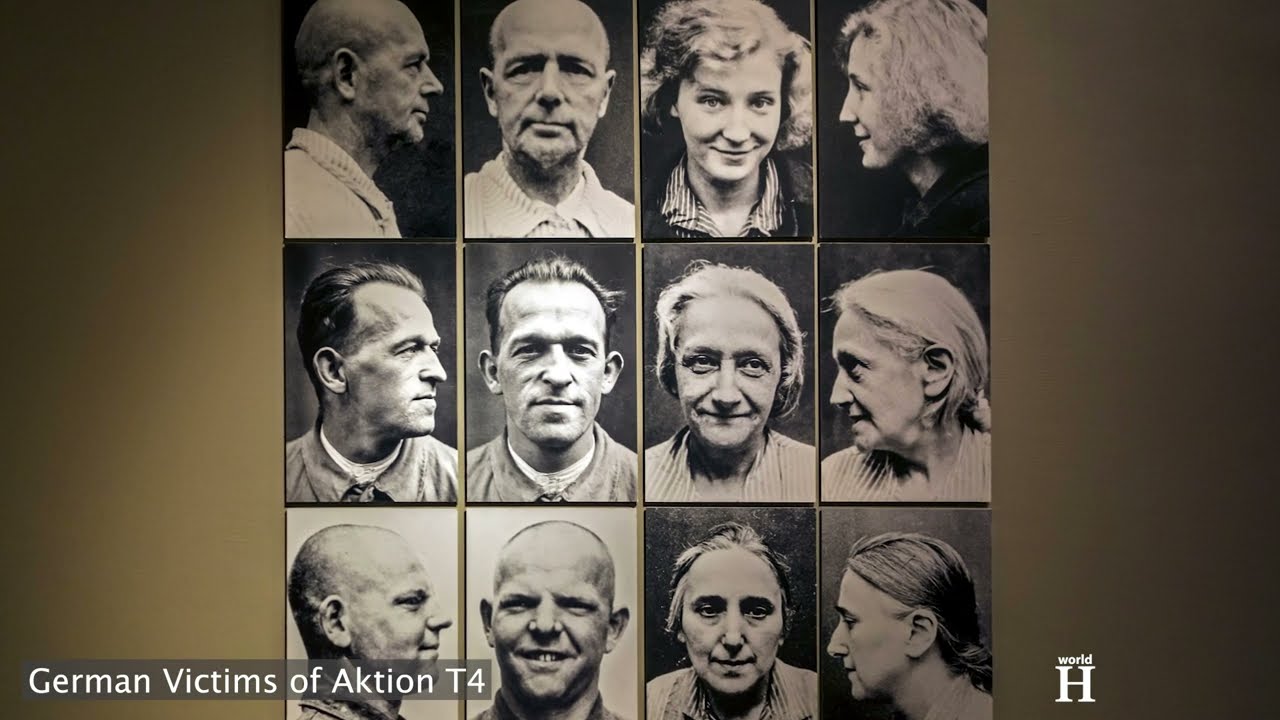
The medical personnel and staff at Hadamar killed almost all of these people by lethal drug overdoses and deliberate neglect. The euthanasia program continued until the last days of World War II, expanding to include an ever wider range of victims, including geriatric patients, bombing victims, and foreign forced laborers.
Historians estimate that the euthanasia program in all its phases claimed the lives of 250,000 individuals.
On March 26, 1945, on their way to Central Germany, US Army units reached the town of Hadamar and liberated the town and the institution. Hadamar was one of the first major murder sites to be liberated by the US Army.
The obvious traces left by the murder of the ill led to the first US Army investigation, which began immediately after liberation. The key members of hospital management still on site were taken into custody and interrogated. Witnesses were also questioned about the murders, and evidence was seized.
Adolf Wahlmann, then chief physician of the hospital, was among the staff arrested by the Americans. The evidence gathered during the investigation led to a first trial in October 1945, conducted in a US military court in Wiesbaden against the staff members who undertook the killings.
Wahlmann was tried with several other staff members of the Hadamar institution. Among them were Alfons Klein, the former director of the institute, as well as two male nurses, Heinrich Ruoff and Karl Will. The three, Klein, Ruoff, and Will, were sentenced to death and went to the gallows on March 14, 1946.
During the trial, Wahlmann tried to downplay his role in the Nazi Party and his devotion to Nazi ideology. He argued that he was a devout Christian and leader of a church choir, and that he was as much a musician as a doctor.
He added that the reason he had joined the Nazi Party in 1933 was because everyone else had done so. He said he did not accept any party posts because it would have irritated him and prevented him from devoting his free time to music and church.
He argued that in fact he had various difficulties with the Nazi Party, especially because he had stayed away from party meetings since he did not want to miss church choir. His lies, however, did not help him escape justice.
On October 15, 1945, Wahlmann was sentenced to life imprisonment by a US military court for the murder of Polish forced laborers. In 1947, Wahlmann was also among the 25 persons tried at the later German-convened Hadamar trial, which involved German nationals who had participated in the murder of thousands of their fellow citizens.
In its verdict of March 26, 1947, the Frankfurt Regional Court sentenced Wahlmann to death for murder in at least 900 cases. In the appeal proceedings before the Higher Regional Court of Frankfurt, the verdict was confirmed, but it was now found to be incitement to murder instead of complicity as before.
However, after the Basic Law came into force on May 23, 1949, and the death penalty was abolished, the sentence was amended to life imprisonment. In 1953, due to his age, Wahlmann was pardoned and moved to the town of Mikkelfelden, Barden-Wenberg, where he lived until his death.
When Adolf Wahlmann died on November 1, 1956, he was 79 years old. There were no tears shed for Adolf Wahlmann.