Queen Victoria, Britain’s second-longest reigning monarch, was born at Kensington Palace on May 24, 1819, to Princess Victoria and Edward, Duke of Kent. She ascended the throne at 18 after her father’s older brothers died without legitimate heirs, beginning a reign that lasted more than 63 years. Her marriage to Prince Albert of Saxe-Coburg and Gotha spanned 21 years and produced nine children, with 17 years between the eldest and the youngest. Here is what became of Victoria’s five daughters and four sons.
The eldest daughter, known as Vicky, was born in 1840 and received the title Princess Royal a year later. At 14, she was betrothed to Prince Frederick William of Prussia, and in 1888 she became Empress of Germany for just 99 days before her husband’s death. Vicky had eight children; her eldest son, Wilhelm, would go on to become the final German emperor. She died of breast cancer in 1901, the same year as her mother.
Victoria’s second child and first son, Albert Edward, known as Bertie, was born in 1841. He was heir to the British throne for 60 years before his eventual accession. Despite his parents’ strict approach to upbringing, Bertie was rebellious and extravagant. In 1863 he married Princess Alexandra of Denmark, and the couple had five children who survived to adulthood, including the future King George V.
When his mother died, Bertie became King Edward VII and reigned until his death from heart problems in 1910 at age 68. The third child and second daughter, Alice, was born in 1843. She is remembered for her caring nature, nursing her father as he was dying and later supporting her grief-stricken mother. Alice married Prince Louis of Hesse and by Rhine in 1862 and had seven children; her great-grandson Prince Philip would marry Queen Elizabeth II.
She developed an interest in nursing during Germany’s wars against France and Austria and befriended Florence Nightingale. Alice died of diphtheria in 1878 at just 35, becoming the first of Victoria’s children to pass away. The second son, Alfred, was born in 1844 and made Duke of Edinburgh in 1866. He joined the Navy at 14 and eventually became an admiral of the fleet.
When King Otto I of Greece was deposed in 1862, Alfred was elected in a plebiscite to ascend the Greek throne, though he was ruled out of the running. During a world voyage in 1867, he was shot and wounded in Sydney by Irishman Henry James O’Farrell; he recovered quickly, and Sydney’s Royal Prince Alfred Hospital was named in his honor. Alfred married Grand Duchess Marie of Russia in 1874, and the pair had four children. In 1893 he succeeded his uncle Ernest II as Duke of Saxe-Coburg and Gotha, reigning for seven years before dying of throat cancer, six months before his mother’s death.
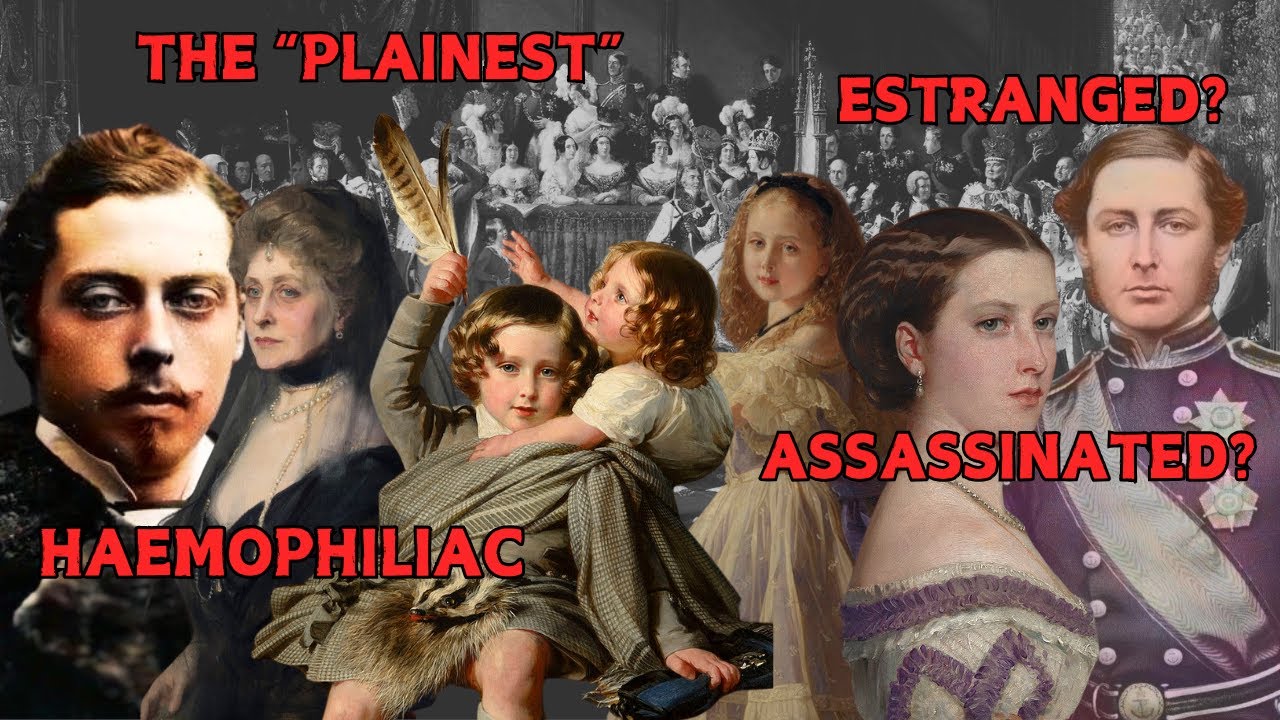
Helena, born in 1846, has been described as the plainest of the Queen’s children. She married Prince Christian of Schleswig-Holstein in 1866, and the couple had five children. In 1916, Helena became the first of Victoria’s children to celebrate a 50th wedding anniversary. She died in 1923 at age 77 after contracting a severe bout of influenza and suffering several heart attacks.
Princess Louise, born in 1848, was naturally artistic and attended classes at the National Art Training School before becoming the first royal to work as a public artist. She designed a full-size statue of Queen Victoria erected outside Kensington Palace, as well as memorials to colonial soldiers killed in the Boer War and a memorial to her brother-in-law Prince Henry of Battenberg. In 1871, Louise married John Campbell, the ninth Duke of Argyll, a Liberal MP who would later serve as governor general of Canada. The couple had no children.
Louise died in 1939 at Kensington Palace at age 91. Arthur, born in 1850, was allegedly the Queen’s favorite child. He became interested in the military and joined in 1866 after enrolling at the Royal Military College. Arthur served in Canada, Ireland, South Africa, Egypt, and India and eventually became governor general of Canada.
He married Princess Louise Margaret of Prussia in 1879, and the couple had three children. Arthur died in 1942 at age 91. Victoria’s last son, Leopold, was born in 1853 and made Duke of Albany in 1881. He was an anxious child, and it was soon discovered that he had hemophilia, a condition preventing blood from clotting properly.
Due to his health, Leopold studied at Oxford rather than pursuing a military career and eventually became an unofficial secretary to his mother. He married Princess Helena of Waldeck and Pyrmont in 1882 and had two children before dying suddenly at just 30 after a fall and subsequent brain hemorrhage. The youngest of Victoria and Albert’s children was Beatrice, born in 1857. She spent much of her early life being carefully watched over by her mother and became a close companion to the Queen after Albert’s death.
Victoria was utterly shocked when Beatrice announced in 1885 that she would marry Prince Henry of Battenberg. The Queen eventually agreed, but only on the condition that the couple live with her. Henry died in 1895 after catching malaria during a military expedition in Africa, and Beatrice remained her widowed mother’s companion.
Beatrice died in 1944 at age 87.