In December 1944, the war in Europe was supposed to be winding down. Allied forces had been pushing Germany back for months, and victory felt inevitable. Soldiers wrote letters home promising they would be back soon.
Then, in the frozen Ardennes Forest, a nightmare unfolded.
At 5:30 a.m. on December 16, the winter darkness exploded with fire. More than 200,000 German troops, supported by nearly 1,000 tanks, crashed through thinly defended American lines. It was Germany's last desperate gamble.
The offensive was designed to split the Allied armies in two, recapture the vital port of Antwerp, and force a negotiated peace. The surprise was complete.
American units, many of them inexperienced, were overrun. Communications broke down. Entire battalions were cut off from their command. Within days, German forces had driven a 50-mile bulge into the American lines, giving the battle its name.
At the center of the chaos stood Bastogne, a small Belgian crossroads town that most soldiers had never heard of. But Bastogne controlled seven major roads, the arteries of movement through the Ardennes. Whoever held Bastogne controlled the entire region.
The 101st Airborne Division, still recovering from its brutal drop into Normandy six months earlier, rushed to defend the town. They arrived just hours before German forces completely encircled it.
By December 20, more than 10,000 American soldiers were trapped, surrounded by over 50,000 German troops. They were low on ammunition, medical supplies, and food, and the temperature was dropping below freezing.
Two hundred miles to the south, General George S. Patton was in the middle of his own offensive. His Third Army was smashing through German defenses, advancing toward the Rhine River. He was doing what he did best: attacking.
Then came the urgent call from Supreme Headquarters. General Dwight D. Eisenhower was convening an emergency meeting in Verdun, France. Every senior commander needed to be there immediately.
Patton arrived on December 19 knowing exactly what the meeting would be about. While other generals walked in somber and shaken, discussing the magnitude of the German breakthrough, Patton was different. His staff had already been wargaming this exact scenario for two days.
The room fell silent as Eisenhower outlined the dire situation. German forces were advancing. American units were scattered. Bastogne was surrounded. The Supreme Commander looked around the table at his generals. The mood was grim.
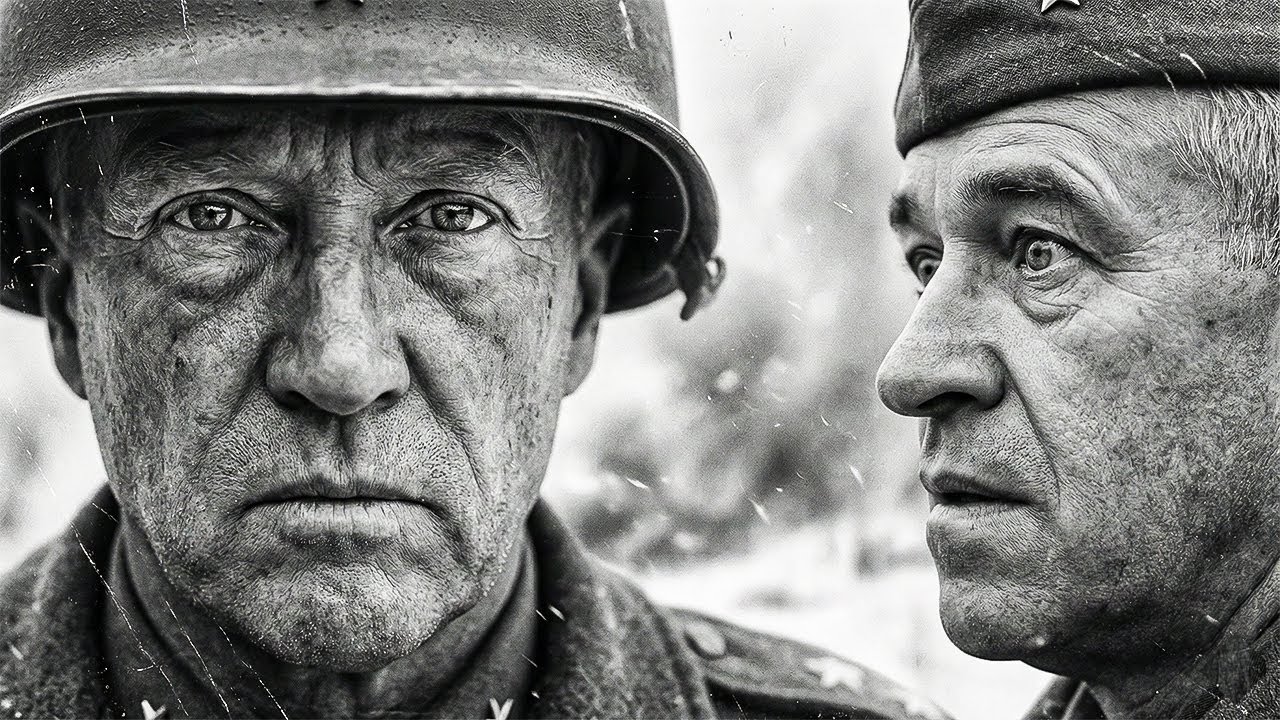
Patton suddenly announced that the present situation should be regarded as an opportunity, not a disaster. He suggested letting the Germans go all the way to Paris, then cutting them off and chewing them up.
Eisenhower was not amused. He needed solutions, not bravado. He told Patton to take command of the battle, get up to Luxembourg, and take charge.
When can you attack, Eisenhower asked.
Without hesitation, Patton replied: the morning of December 22, with three divisions.
The room erupted. Seventy-two hours to disengage from active combat, pivot 90 degrees, move three divisions over icy roads, and launch a coordinated attack. Officers who had spent their entire careers in military logistics knew this was madness.
Patton's own staff sat in stunned silence. They knew what he had promised because they had been planning it. But hearing their commander commit to it in front of Eisenhower made it terrifyingly real.
Eisenhower told Patton not to be fatuous, thinking he was joking. But Patton was not joking. He pulled out a small notebook and presented three complete attack plans, each using different combinations of divisions depending on how quickly he could disengage them from their current positions. He had thought through every contingency.
General Omar Bradley, who knew Patton better than anyone, watched with a mixture of admiration and concern. He had seen Patton pull off the impossible before, but this was something else entirely.
Eisenhower studied Patton's face. He saw absolute conviction. Fine, the Supreme Commander finally said. Get moving.
Patton walked out of that meeting having committed Third Army to an operation that violated every principle of conventional military planning. What happened next has been studied in military academies ever since.
Patton's staff had prepared coded messages in advance. The moment the meeting ended, a single radio transmission went out: Play ball. That two-word signal set in motion the movement of over 100,000 men.
But planning and executing are two completely different things. The Third Army was actively fighting. You cannot just pull divisions out of combat. Enemy forces will exploit every gap. Patton had to execute a carefully choreographed withdrawal, replacing each departing unit with another, all while maintaining defensive lines.

Then there were the roads. The same winter storm that was making life hell for the trapped soldiers in Bastogne was now Patton's enemy. Roads turned to ice. Vehicles skidded and crashed. Fuel trucks could not keep up with advancing columns. Men marched through blinding snow, their faces frozen, barely able to see ten feet ahead.
The logistics were staggering. Each division needed fuel for thousands of vehicles, ammunition for every weapon system, food for thousands of men, medical supplies, and spare parts. All of it had to be rerouted 90 degrees north on roads that were not designed for this kind of traffic in the middle of the worst winter in decades.
Patton's logistics officers worked around the clock. They commandeered every available truck. They rerouted supply convoys mid-journey. They established new fuel dumps and ammunition depots. They did in three days what normally took three weeks.
Through it all, Patton drove up and down the columns, his jeep sliding on icy roads, personally checking on his men. When he found units stuck in traffic, he got out and directed traffic himself. When he found commanders hesitating, he pushed them forward.
Drive like hell, he told his tank commanders. We are going to Bastogne.
His staff watched him work with something approaching awe. One officer later wrote that he was everywhere, checking, encouraging, demanding. He seemed to need no sleep.
But the clock was ticking. Every hour of delay meant more men dying in Bastogne. The surrounded troops were running out of everything. German forces were preparing for a final assault. If Patton did not arrive in time, 10,000 Americans would be captured or killed.
December 22 came and went. The attack launched, but progress was brutal. German forces, realizing what Patton was attempting, threw everything they had at his advancing columns. Every village became a fortress, every hill a killing ground.
The 4th Armored Division, leading Patton's assault, fought for every mile. Tank battles in blinding snow. Infantry charges across frozen fields. Artillery duels that lit up the night sky.
Patton pushed them harder. Drive on, he radioed. Do not stop for anything.
At 4:45 p.m. on December 26, 1944, Lieutenant Colonel Creighton Abrams, commanding officer of the 37th Tank Battalion, 4th Armored Division, stood in his tank turret, peering through the falling snow. For six days, his men had been fighting non-stop. They were exhausted, freezing, and low on ammunition. But they were less than a mile from Bastogne.
Ahead, German positions blocked the road. Abrams made a decision. Instead of a careful, methodical assault, he would charge full speed right through them.

Let us go, he shouted over the radio.
Five Sherman tanks roared forward. German anti-tank guns opened fire. One Sherman exploded. Another threw a track. But Abrams kept going, his tank at the head of the column, machine guns blazing.
They burst through the German lines, and suddenly they could see it. Bastogne, the surrounded town, still flying American flags.
Inside the perimeter, the men of the 101st Airborne heard the rumble of tank engines. After ten days of siege, of German artillery and propaganda broadcasts promising annihilation, they heard friendly tanks. Soldiers emerged from their frozen foxholes cheering. Some wept. Others just stood in stunned silence.
Abrams's tank rolled up to the first American position. He climbed out covered in soot and ice and shook hands with the first paratrooper he saw. How are you, the tanker asked.
The paratrooper, half frozen and half starved, grinned. We are fine, he said. We have been expecting you.
The relief of Bastogne was complete. News of the breakthrough spread through Third Army like electricity. Patton, when he received the radio message, allowed himself the briefest smile before issuing orders to expand the corridor and secure the supply lines.
General Bradley later called it one of the most astonishing feats of generalship of the campaign in the West. Eisenhower, never known for excessive praise, admitted that Patton had accomplished something remarkable.
But for Patton, it was simply what needed to be done. When staff officers congratulated him on the impossible maneuver, he dismissed it. The impossible, he said, only takes a little longer.
The Battle of the Bulge would rage on for another month. Tens of thousands would die in the frozen forests. But the relief of Bastogne broke the back of the German offensive. Hitler's last gamble had failed.
What made it possible? Superior resources, better equipment, luck perhaps. But at its core, the relief of Bastogne came down to one man's refusal to accept that something could not be done. While others calculated odds and worried about risks, Patton saw only the mission and the men who needed him.
Forty-eight hours. That is all it took to prove that with enough determination, enough planning, and enough courage, the impossible becomes merely difficult. And difficult, as Patton's Third Army had just demonstrated, is what Americans do best.