On January 30, 1933, Adolf Hitler was appointed Chancellor of Germany, bringing an end to German democracy. After the Nazi seizure of power, the regime established a Reich Ministry of Public Enlightenment and Propaganda under Joseph Goebbels, tasked with ensuring the Nazi message reached the German population.
In the years that followed, the regime used propaganda effectively to mobilize support for its wars of conquest. On September 1, 1939, Nazi Germany invaded Poland, marking the beginning of the Second World War.
While German soldiers fought and fell on distant battlefields, a different kind of terror took hold in Berlin. Amid wartime blackouts and air raids, a sexual predator stalked the streets of the German capital, assaulting, raping, and murdering women who were waiting for their husbands to return from the front.
To avoid undermining the image of law and order in Nazi Germany, Goebbels imposed a media blackout on the killings. The man behind them became known as the S-Bahn murderer.
His name was Paul Ogorzow. He was born on September 29, 1912, in the village of Monttoan, today's Polish Montowo, then part of the German Empire. The illegitimate son of a farm laborer, he grew up without ever knowing the identity of his biological father.
At the age of 12, Ogorzow was adopted and moved to the Haland region near Berlin, where he worked on his adoptive father's farm. As he grew older, he found employment at a blast furnace in the Brandenburg Steel Works.
In April 1932, he joined the Nazi party and later became a member of the SA, the Nazi paramilitary organization. In 1934, shortly after the Nazis consolidated their grip on power, Ogorzow secured a position with the Deutsche Reichsbahn, Germany's national railway company.
He began his career as a track worker responsible for maintaining and installing railway lines across Berlin. Through steady and diligent work, he gradually rose within the organization, eventually becoming an assistant signalman stationed at a freight yard in the Rummelsburg district.
His supervisors considered him reliable and competent. Colleagues often described him as friendly and conscientious, someone capable of operating both light signals and telegraph communications simultaneously, a task requiring significant attention and skill.
In 1937, Ogorzow married Gertrude Ziegelmann, a saleswoman two years older than himself. The marriage produced two children, a son and a daughter.
The couple initially lived with Ogorzow's mother in a modest working-class area of Berlin surrounded by allotments, apartment blocks, and small tenement houses. They later moved to an apartment in Karlshorst, a suburban district that would later be associated with his future crimes.
To outward appearances, Ogorzow seemed to embody the role of an ordinary family man. Neighbors recalled seeing him playing with his children, tending a vegetable patch in front of their building, or picking cherries from the small orchard behind their home. He was perceived as approachable, kind, and typical of the working-class community.
Each day, he commuted to work by train, on foot, or by bicycle, maintaining a quiet, steady routine that further cemented his reputation as a diligent and dependable citizen. Despite his seemingly stable home life, darker elements soon surfaced behind closed doors.
At his later trial, his wife Gertrude testified that he often became violent and abusive, obsessively accusing her without cause of being unfaithful. Nevertheless, within the neighborhood, Ogorzow continued to be regarded as trustworthy and unremarkable.
One neighbor later recounted standing beside him as her father posted a wanted notice for an unknown attacker and casually remarking that the perpetrator might live nearby. Ogorzow, standing right there, simply replied, "You might be right."
While he maintained the image of a hardworking railway employee and devoted family man, a much darker reality was taking shape. His violent urges, initially limited to harassment and assaults, soon escalated into something far more sinister.
During his early attacks between August 1939 and July 1940, Ogorzow attempted to murder his victims but failed. Three women he targeted and stabbed in the garden colonies between Rummelsburg, Friedrichsfelde, and Klesch survived their ordeals and would later testify against him.
In August 1940, on board Berlin's S-Bahn, Ogorzow bludgeoned and raped a woman, mistakenly believing she had died after losing consciousness. The following month, he escalated further when he attempted to strangle another woman and throw her from a moving train. It was the first of the attacks he committed on the rail network that would become his signature hunting ground.
On the evening of September 20, 1940, Gerda Cargle boarded a train home after a long day. Tired and disoriented, she accidentally traveled past her station. To avoid a fine, she attempted to return by boarding a different train.
Ogorzow, in his railway worker's uniform, appeared to offer help, inviting her to the second-class compartment where he had more privacy to act. Once the train was en route to Karlshorst station, he seized Cargle, attempting to strangle her into unconsciousness.
When the struggle took longer than expected and the train neared the next station, he panicked, believing he had killed her, and threw her body from the moving train. Miraculously, Cargle survived, landing in a pile of sand. Because she had not been raped and her belongings were found nearby, authorities concluded it was an accident or a drunken mishap.
This attack marked a pivotal moment. Forensic psychiatrist Dr. Waldemar Weimann later concluded that throwing Cargle's seemingly lifeless body from the train triggered Ogorzow's realization that he derived satisfaction from killing. From that point forward, he would target women not just for rape, but for murder.
His first confirmed murder occurred on October 3, 1940. He visited the home of Gertrude Ditter, a 20-year-old mother of two whose husband was away serving in the military. Under the cover of a blackout, he gained entry into her kitchen and, after lulling her into a false sense of security, attacked her.
He strangled her with such force that her hyoid bone fractured. Although still alive after the strangulation attempt, Ditter was then fatally stabbed in the neck with a knife Ogorzow had brought. Her body was discovered the following day by a worker from the Nazi welfare organization.

Initial assumptions of suicide were quickly discarded, and the case was handed to the Berlin criminal police. Despite some promising early leads, including her husband, the investigation stalled and the case grew cold.
Exactly one month later, Ogorzow resumed his attacks on the Berlin rail network. On December 4, 1940, he targeted 30-year-old Elisabeth Bendorf, a train ticket saleswoman returning home from Friedrichshagen station.
As with Cargle, Ogorzow bludgeoned her with a thick piece of lead-encased telephone cable. Bendorf, however, survived multiple blows from her attacker, who ran out of time before the next station stop and decided to throw her unconscious body from the train.
His next victim fared far worse. On the same night he attacked Bendorf, he murdered Irmgard Frank, a 26-year-old nurse. Armed with an iron rod found at his workplace, Ogorzow struck her hard on the head inside a second-class train compartment at Karlshorst Station, forcing pieces of her skull into her brain. He then dragged her body to the door and threw her onto the tracks.
Frank's brutal murder raised alarm among investigators, with forensic experts beginning to suspect a pattern. Just hours later, Ogorzow claimed his next victim. Nineteen-year-old Irmgard Freese was walking alone when Ogorzow struck her repeatedly with the same iron rod used to kill Frank.
He then raped her before returning to work at the railway signal station. Freese was found alive but died from her injuries without ever regaining consciousness. However, Elisabeth Bendorf survived Ogorzow's attack, and her testimony added to the growing evidence that someone was preying on women aboard Berlin's trains.
Investigators recovered the makeshift weapon Bendorf had been attacked with, a heavy piece of telephone cable marked with identification numbers. Tracing the cable's origin, they found it had been installed near the Rummelsburg station, bringing authorities a step closer to locating the attacker's base of operations.
However, Ogorzow remained unidentified and free to strike again. The police, now convinced that a serial attacker was operating on the rail network, intensified their efforts. Dr. Weimann and criminal commissar Wilhelm Lüdtke began to suspect that the murder of Gertrude Ditter and the rail attacks might be linked, but conclusive evidence was still lacking.
On December 22, 1940, shortly before Christmas, Ogorzow murdered Elisabeth Büngener, a woman traveling to visit her husband stationed near Berlin. Struck with a blunt object and thrown from the train, Büngener initially appeared to have committed suicide, but forensic examination revealed evidence of foul play.
A week later, on December 29, 1940, Ogorzow attacked and murdered Gertrude Siewert, a 40-year-old woman traveling between the Berlin districts of Karlshorst and Rummelsburg. As with his previous victims, he incapacitated her with a blow to the head and threw her from the moving train. Although she survived the initial assault, she died later in hospital.
On January 4, 1941, Ogorzow targeted 27-year-old Hedwig Ebauer. Pregnant at the time, Ebauer was strangled and thrown from the train near Wuhlheide station. Though initially surviving the fall, she died soon after. This marked Ogorzow's third attack in the early hours of a Sunday, suggesting a pattern in his behavior.
Despite growing public unease and whispers of a serial killer on the trains, Nazi authorities under Goebbels imposed a media blackout to avoid undermining the image of law and order in Nazi Germany. Meanwhile, the Berlin police struggled to catch the elusive killer.

Ogorzow narrowly avoided capture when he approached an undercover female officer posing as a lone traveler but managed to flee. On February 11, 1941, Johanna Vogt, a 39-year-old pregnant woman, was murdered after boarding a train with Ogorzow. Trusting him due to his railway uniform, she was attacked almost immediately.
After repeated blows to the head, she was thrown from the train and succumbed to her injuries. Following Vogt's death, investigators noted a troubling pattern: missing train tickets among the victims. This suggested that the killer might be a railway employee with access to restricted areas of the trains.
Efforts were intensified to interview and monitor thousands of Reichsbahn employees, but progress remained slow. With increasing police presence, Ogorzow temporarily halted his attacks, waiting for the surveillance to ease. Months passed and the sense of urgency faded.
On July 1, 1941, Berlin's criminal commissar Lüdtke orchestrated a risky tactic, spreading the false rumor that the manhunt had ended. Believing the danger was over, Ogorzow struck again two days later.
On July 3, 1941, he murdered 35-year-old Frieda Koziel. After stalking her as she left the Rummelsburg station alone, he approached her from behind wearing his railway worker's uniform. When Koziel refused his offer to walk her home and continued walking, Ogorzow smashed her in the back of the head with his iron rod, caving in her skull.
As she lay dying, he raped her and left her body where it fell, naked from the waist down. A trail of footprints found near Koziel's body briefly led police to another suspect, but further investigation cleared him.
After the murder of Koziel, investigators began narrowing their focus on railway employees, leading them to Paul Ogorzow, who was known among his co-workers for making misogynistic remarks and openly expressing a disturbing fascination with killing.
A colleague eventually reported that Ogorzow had been seen climbing over the fence of the Rummelsburg depot during working hours, a suspicious act he later attempted to explain by claiming he was secretly meeting a mistress whose husband was away serving in the military. Chief investigator Wilhelm Lüdtke personally examined Ogorzow's uniforms and found numerous blood stains, further raising suspicions.
On July 12, 1941, Ogorzow was arrested by the criminal police. During a tense and psychologically aggressive interrogation conducted under the glare of a single light bulb, he was confronted with a woman who had survived his attack and a tray displaying the skulls of several of his murdered victims.
In a case summary submitted on July 17, the criminal police cited his motives as an excessive sex drive, a pathological hatred of women, and a sexual attraction to the resistance of his victims. Although Ogorzow confessed willingly, he attempted to blame his actions on alcoholism and even accused a Jewish doctor of having incompetently treated him for gonorrhea.
Just days before his indictment, he was formally expelled from the Nazi party and subsequently pleaded guilty to eight murders, six attempted murders, and 31 sexual assaults. The official narrative emphasized that Ogorzow was a traitor to German society, and he was declared an enemy of the people by the Nazi authorities.
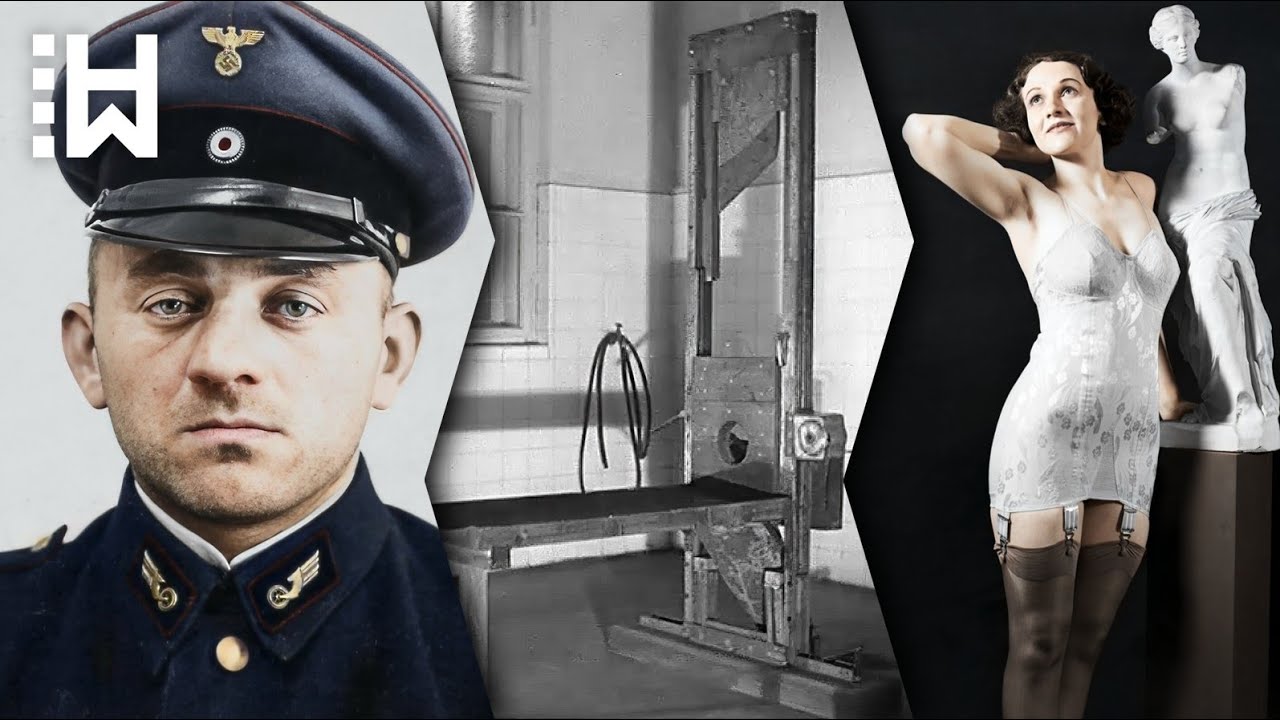
On July 24, 1941, the Berlin regional court sentenced him to death in the presence of eight witnesses. Paul Ogorzow was 28 years old when, on July 26, 1941, he was executed by guillotine at Plötzensee prison in Berlin. As was common practice at the time, a charge for the wear and tear of the guillotine blade was sent to the prisoner's relatives. In this case, it went to Mrs. Gertrude Ogorzow.