When World War II ended in 1945, the machinery of the Third Reich collapsed with Germany's surrender. Members of the SS, one of the most feared organizations of the Nazi regime, faced very different fates. Some were captured and tried, others managed to disappear for decades, and a small group reintegrated into society under false identities.
The fall of the Reich did not mean the end of its legacy, nor did it prevent many perpetrators from evading justice. Over the years, the Allies and various intelligence agencies undertook a global manhunt against those responsible for the Holocaust and other war crimes. From the Nuremberg trials to secret missions in South America and the Middle East, the pursuit extended for more than seven decades.
By the end of 1944, both the Axis and the Allies understood that the war was tilting irreversibly against Nazi Germany. What had once been a solid regime began to crumble rapidly. Hitler lost control over his troops, and conspiracies arose within his own circle.
Operation Valkyrie, designed as an emergency mechanism to ensure continuity of command in a crisis, became an assassination attempt against Hitler by high-ranking officers. The conspiracy failed, keeping Hitler in power until the total collapse in 1945.
While British and American forces advanced in the liberation of France, Soviet troops launched their final offensive from the east. By early 1945 they were rapidly approaching the German capital. Relentless bombing forced several cities to capitulate, making clear that Hitler's dream of absolute domination was crumbling.
Berlin became the epicenter of the battle. Sheltered in his underground fortress, Hitler disconnected from reality. Joseph Goebbels, in charge of propaganda, kept him in a bubble of illusions with fictitious reports of non-existent victories while Soviet artillery resonated at a short distance.
The civilian population faced a devastating scenario. Basic supplies were insufficient, infrastructure lay in ruins, and most people sought refuge in bunkers or fled to rural areas. Regional Nazi Party leaders clung to power, imposing brutal measures against those who attempted to desert or show discontent.
Fragmentation was evident even within the Nazi leadership. On April 23, Hermann Göring sent a message to Hitler proposing to assume leadership, which unleashed the dictator's fury and accusations of treason. Göring fled south hoping to negotiate a surrender with the Allies.
Meanwhile, Heinrich Himmler, the leader of the SS, attempted to reach a secret agreement with the Western powers. He was captured and held in custody, where he ended his days as a prisoner.
In the early hours of April 29, with his fate sealed, Hitler married Eva Braun and left his final will in writing. At 3:30 in the afternoon of April 30, a strong detonation shook the underground refuge. SS soldiers entered the Führer's office and found both Hitler and Eva lifeless.
Their closest followers ensured the bodies were incinerated to prevent the Allied armies from capturing them. They were never found. The announcement of Hitler's death plunged Germany into absolute chaos.
Joseph Goebbels and his wife Magda decided to follow the same fate. Before doing so, they ensured that their six children would never be taken by the enemy. On May 2, when Berlin was already completely besieged, Soviet soldiers took the Reichstag building and raised the red flag at its top.
Nazi domination had ceased to exist in practical terms. Despite the fall of the capital, confrontations in various parts of Germany continued for a few more days. Finally, on May 7, Grand Admiral Karl Dönitz, who had assumed leadership of the Reich after Hitler's death, signed the unconditional surrender, sealing the end of the war in Europe.
Peace did not come immediately. At that moment, the Allies began an intense pursuit to capture and try the perpetrators of the Nazi regime, who were attempting to disappear and escape as far from Germany as possible.
Some of Hitler's closest collaborators, such as Martin Bormann, Heinrich Himmler, and Robert Ley, preferred to disappear rather than face trial in Nuremberg. Others decided to surrender with the hope of obtaining clemency.
Hermann Göring, who had been arrested for planning a coup against Hitler, was released on May 5 after being rescued by a Luftwaffe unit. He then headed directly to the American lines to surrender, trusting that treatment from the Americans would be more lenient than from the Soviets. This decision probably allowed him to stay alive, as the Red Army did not usually show mercy to Nazi officers who fell into its hands.
Before the war came to an end, the Allied powers had already designed a plan to try the perpetrators of the Nazi regime through an international tribunal. This involved not only the arrest of as many officers and officials of the Third Reich as possible but also obtaining key witnesses who could testify against them.
Among these were the wives of some high-ranking officials. Gerda Bormann, wife of Martin Bormann, attempted to escape from Germany with her nine children amid the chaos caused by the entry of Soviet troops into Berlin. She posed as the director of an orphanage, dressing some of her children as orphans.
With this false identity she managed to board a school bus and cross the border into Italy, where she found refuge in South Tyrol. There she was received by a local Nazi Party leader who provided her with a hiding place and safeguarded sensitive documents she carried with her. Eventually the family settled in a small village about 50 kilometers from Bolzano.
Despite having temporarily evaded capture, Gerda's health was rapidly deteriorating due to ovarian cancer, making urgent surgery necessary. Her whereabouts did not go unnoticed. Allied intelligence agents located her and notified British forces in the area.
A local doctor, when interrogated, informed them about her health condition and location. Shortly afterward a British officer presented himself at her residence. Frightened, she believed she would be sent to a prisoner camp, but the officer assured her that she was not in danger. Instead of being arrested, she was transferred to a military hospital in Merano. Despite the surgical intervention her condition did not improve, and she passed away on March 23, 1946, months before turning 37.
Some lower-ranking members within the Nazi regime, realizing that their only option to survive was to cooperate with the victors, decided to collaborate with the United States Office of Strategic Services, the future CIA. A representative case was that of Wilhelm Höttl, who had been a major in the SS in Austria with a doctorate in history.
He spent most of his career working as an agent for both the security police and the SS. When the war was nearing its end, Höttl understood that German defeat was inevitable. He made several trips to Switzerland to meet with the head of the OSS station in Bern, seeking to gain the favor of the Americans by offering information about the Axis's military plans for a last defense in the Alps and about gold reserves hidden in the Austrian mountains.
Events moved faster than expected. Before a deal could be struck, Soviet troops were already near Berlin. In May 1945 he attempted to cross into Switzerland, but French troops at the border prevented his passage. Detained in Lienz, he opted to return to Austria in search of a safe place. That same month he surrendered to American forces in Bad Aussee.
He was later transferred to Germany and in October 1947 was sent to Lager Kelheim in Salzburg. During this time Höttl became a key witness in the Nuremberg trials, providing relevant information for the prosecution. In December 1947 he was released as part of an agreement with American intelligence services, after which he began collaborating with them in espionage tasks against the Communist Party of Austria. In subsequent years, in addition to continuing his intelligence work, he dedicated himself to writing and published several books.
Not all members of the Nazi regime managed to evade justice. Rudolf Höss, known for directing the Auschwitz concentration camp and responsible for the death of over a million Jews, managed to remain hidden for almost five months after the fall of the Third Reich. To avoid being discovered he adopted a false identity and established himself as a farmer in a rural area of northern Germany near the Danish border.
His capture occurred when American forces first detained his wife. During interrogation she provided the information that led to his location. Two Army units surrounded the farm where he was hiding and found him completely unprepared, still dressed in his sleepwear. After his arrest he was transferred to Auschwitz, where he faced his sentence. There, a short distance from the house where he had lived with his family until 1945, his execution was carried out.
On July 3, 1946, a report from the United States Army Counter Intelligence Corps was sent to the president. It stated that the Nazis had designed escape routes since at least 1944. This strategy was dubbed ODESSA, an acronym for Organization of Former SS Members.
To date there is no certainty whether it was a coordinated effort by the Nazi government or a series of independent plans executed by different groups within the regime. What is certain is that these routes allowed many Nazis to leave the country undetected with surprising success.
In Argentina alone it is estimated that at least 300 former military personnel of the Third Reich took refuge. Other nations where they found asylum included Brazil, Paraguay, and some Middle Eastern countries. In total, about 10,000 people linked to the Nazi Party left Germany before the end of 1945.
Some historians have pointed to the involvement of institutions such as the Red Cross, the Vatican, and even the United States Army in this mass escape. Amid the devastation of the postwar period, however, controlling every exit from the country proved to be an almost impossible task.
To evade the authorities, many fugitives resorted to false identities, posed as displaced persons, or sought help from various organizations. It was not until years later that the CIA, the Mossad, and MI5 took concrete measures to locate, identify, and arrest these criminals in various parts of the world.
The immediate priority after the conflict was to stabilize the region and rebuild what remained of Germany. Whether ODESSA existed as an organized structure or only in the minds of American intelligence agents, the networks that helped thousands of Nazis escape were an undeniable reality.
In the first years after the war it is estimated that about 90 percent of the fugitives escaped through the Alps to Italy, similar to what Gerda Bormann did. The first destination was usually the South Tyrol region in northern Italy. There many Nazis found temporary refuge in Catholic monasteries, including the Order of the Teutonic Knights in Merano, the Capuchins near Bressanone, and the Franciscans in the vicinity of Bolzano.
This escape route was known as the monastery route, contributing to the myth that the Vatican and Pope Pius XII played a key role in protecting war criminals. It was not an outlandish idea, as it was well known that Pius XII saw communism as the greatest threat to the church and the Western world.
In South Tyrol, priests provided documents confirming the identities of the fugitives even though the information was completely false. These documents allowed the fugitives to obtain Red Cross passports without much scrutiny. Between 1945 and 1951 at least 120,000 of these documents were issued.
Long before the decade ended, American authorities were already aware of what was happening. In 1946, following a mass escape from a prisoner of war camp in Rome, American soldiers discovered that former SS officers were hiding in local monasteries and obtaining travel documents issued by the Red Cross.
Even before those events, after the arrival of American troops in Rome, some Georgian clerics obtained authorization from the pope to establish a seminary in the city. A few months later Allied authorities began to notice an unusual fact: several of the seminarians appeared to be in romantic relationships. After a thorough inspection it was discovered that the place served as a refuge for SS officers who had set up a radio station with advanced technology in the basement.
When examining the Vatican's involvement in protecting Nazi criminals, the name Alois Hudal stands out. This Austrian bishop had openly expressed his affinity for the Hitler regime and later justified his actions by claiming that many of those persecuted were innocent. He argued that providing them with false documentation was the right decision.
The most accessible and convenient destination for the Nazis, however, was Spain, governed at that time by General Francisco Franco. Due to the absence of precise official records, it is difficult to determine how many former members of the Nazi regime found refuge there. The emergence of numerous neo-Nazi groups in the country in subsequent decades suggests that there were several thousand.
One of the most famous refugees was Léon Degrelle, commander of the Walloon SS. From his hideout in Málaga he repeatedly spoke out without being subjected to a trial for his war crimes. In the 1980s, however, he faced charges related to Holocaust denial.
Unlike ODESSA, there existed another group called Stille Hilfe, or Silent Help, which operated within Germany and other nations after the war. Its purpose was to support former SS members who had been arrested, convicted, or were fugitives. They provided legal assistance, facilitated resources, and in many cases helped them hide or escape.
Through this network hundreds and even thousands of Nazis managed to flee to South America and the Middle East. In 1951 Stille Hilfe acquired legal status as a nonprofit organization, allowing it to receive funding through donations. Its founding act took place in Munich, a city that three decades earlier had been the cradle of the Nazi Party.
From the beginning of the Nuremberg trials the group attempted to influence public opinion to avoid death sentences. They used media campaigns, personal and collective letters, and various petitions to present the accused as victims. The legal representation of the detainees was handled by Rudolf Aschenauer, who also managed clemency requests and appeals of sentences.
The organization promoted benefits such as prison leaves, financial compensations, and aid for the families of prisoners. They did not limit themselves to providing humanitarian support but also promoted revisionist activities, organizing meetings and sending demands to the authorities. One of their most stealthy actions was direct aid in the evasion of Nazi criminals.
One beneficiary of this network was Johann von Leers, a prominent member of the Waffen-SS and a relevant editor within the Ministry of Propaganda. After the war he escaped to Italy and lived there for five years. In 1950 he moved to Argentina, where he continued his ideological work. During this time he collaborated with Der Weg, a Nazi-leaning publication founded in Buenos Aires in 1947.
His stance earned him recognition from Haj Amin al-Husseini, the Grand Mufti of Jerusalem, who praised him for his support of Arab nationalism. This relationship influenced his decision to convert to Islam and settle in Egypt, where he served as an adviser to the government of Abdel Nasser in drafting propaganda materials.
Another individual who managed to escape with the support of Stille Hilfe was Erich Priebke. His name is remembered for his participation in the mass execution of civilians in the Ardeatine caves near Rome on March 24, 1944. More than 330 people were taken to that site with their hands tied. They listened to their names being called before being led in groups of five into the cave.
Priebke, who supervised the procedure, used an Italian machine gun to kill two victims. The massacre ended before nightfall, and afterward access to the caves was sealed with explosives. Unlike other Nazis who took refuge in Italy, he chose to go to Libya before boarding a ship bound for Argentina, where he settled in Bariloche under the identity of Otto Pape.
For almost 50 years he managed to remain anonymous until he was discovered and extradited to Italy in 1995. Three years later he received a life sentence and spent his final days under house arrest until his death on October 11, 2013.
Walter Rauff designed the mobile gas chambers in which toxic gases from the engines were channeled into the rear compartment of modified trucks. According to the report of his capture, he is attributed with the death of at least 97,000 people. In 1949 he escaped with his wife and children following a clandestine route that first took him to Quito, Ecuador, and then to Chile.
In 1963 West Germany requested his extradition, but Chilean authorities rejected the request, arguing that the crimes for which he was accused had prescribed under local legislation. In Chilean territory he prospered economically in the food industry and died of a heart attack on May 14, 1984.
Franz Stangl, a former SS commander and key figure in the T4 euthanasia program, worked for Volkswagen do Brasil for 16 years before being arrested in 1967. Before his capture he oversaw extermination facilities where hundreds of thousands of people lost their lives. He was notable for his absolute indifference and lack of remorse, which facilitated his work in the camps of Treblinka, Sobibor, and Trieste. Once arrested he faced trial, but he died of a heart attack in 1971 before receiving his sentence.
For some lower-ranking members of the Nazi regime, capture was not a priority because the cost of locating them exceeded the gravity of their crimes. In cases like that of Josef Mengele, however, his atrocities were so indescribable that no effort seemed excessive if it led to his lifelong imprisonment.
During the war his name was not among the most recognized, but after the conflict his crimes came to light, revealing his brutality. Only then did the Allies discover the magnitude of his sadism, exercised under the guise of scientific research. His role in Auschwitz was decisive, as he decided who would be sent directly to the gas chamber and who would temporarily retain their life.
For Mengele, the elderly, the sick, pregnant women, and children were dispensable, while those in better physical condition could be used in his experiments. These prisoners were forced to undress, their heads were shaved, and then they were transferred to the hospital to be subjected to his studies.
His main obsession was what he called racial hygiene, a pseudoscientific doctrine that sought to justify the supposed superiority of the Aryan race over others. His experiments with twins are infamously renowned. He subjected them to interventions without anesthesia, amputated healthy limbs, introduced viruses into their bodies, and deliberately caused infections in their wounds. He sought to analyze how the bodies of those he considered inferior responded to pain, diseases, and extreme stress.
Upon learning of Hitler's death, Mengele joined a group of German soldiers heading to Bavaria under American control. Disarmed and disoriented, they were apprehended and taken to the Stetten prisoner of war camp about 120 kilometers from Nuremberg. There Mengele reunited with Dr. Krayer, an old acquaintance. Since the American soldiers did not know his true identity and he introduced himself as Josef Mengele, they managed to deceive their captors.
He also avoided being identified as an SS member, as he never allowed his blood type to be tattooed on his arm, something common among officers of that unit. Thanks to this he and Krayer were released, considered simple doctors without serious antecedents.
After his release Mengele headed to Auschwitz with the intention of recovering his notes, which he considered valuable. He then managed to escape by crossing the southern border to Italy, where he arrived in Genoa in 1949. There he obtained a Red Cross passport in the name of Helmut Gregor. In July of the same year he set sail for Argentina, settling in Vicente López.
During his stay in the South American country he first worked as a carpenter and later in the sale of agricultural machinery. Convinced that no one was looking for him, he used his real name without fear. In 1958, however, he was interrogated along with other doctors on suspicion of practicing medicine without authorization after the death of a young woman in an abortion procedure. No charges were brought against him, but this made him reflect on the danger of being identified.
To avoid possible capture he decided to move to Paraguay, where in 1959 he obtained citizenship under the name José Mengele. The name appeared several times during the Nuremberg trial proceedings in the second half of the 1940s, but the Allies assumed that he had probably died.
It was not until the 1960s that the Mossad began its search with the intention of capturing him and bringing him to justice in Israel. Investigations carried out in Paraguay did not yield clear indications of his whereabouts, and attempts to track his correspondence with Martha, his wife residing in Italy, were fruitless. An undercover agent sent to South America managed to reach a rural area on the outskirts of São Paulo where they identified a European man who could have been Mengele. Due to the lack of absolute certainty, however, the Mossad decided to halt the operation in 1962.
This decision allowed one of the most infamous Nazi criminals, known as the Angel of Death, to spend the rest of his days undisturbed in southern Brazil. In 1979, while swimming, he suffered a stroke and drowned.

When the Germans took control of France, Klaus Barbie, an SS intelligence officer, was initially sent to Dijon. Shortly afterward he was transferred to Lyon, where he established his base of operations in the Hotel Terminus. There he subjected prisoners, both adults and children, to brutal torture sessions. He also trained German Shepherd dogs to attack detainees indiscriminately. His ruthless behavior earned him the nickname the Butcher of Lyon. He is estimated to have been directly responsible for the death of 14,000 people in French territory.
After the war ended, the provisional French government sentenced him to death in absentia, as his whereabouts were unknown. Later it was discovered that he had been under the custody of American forces, which led France to demand his extradition. Instead of complying with the request, the Americans helped him escape to Bolivia, where he spent the next three decades with a new identity, Klaus Altmann.
There he collaborated with the United States counterintelligence corps, which at that time sought to curb the spread of communism in Latin America. Barbie also maintained close ties with military governments in Bolivia and Peru, where he contributed to the persecution of Che Guevara.
In 1971, while visiting Peru, his true identity was discovered by French groups dedicated to locating fugitive Nazis. Due to the lack of an extradition agreement between France and Bolivia, however, he remained safe. A year later a journalist traveled to La Paz to interview him. When asked if he was the German war criminal, he vehemently denied any connection to that name, even when shown photographs of victims who had suffered under his command. He insisted he did not recognize anyone.
When returning the photographs, however, he left his fingerprints, which allowed his true identity to be confirmed. Despite this, the Bolivian government continued to reject extradition. The situation changed when a new democratic government took power and allowed his arrest. He was subsequently sent to France to face justice.
In 1984 he was tried for the atrocities committed during his time at the head of the Gestapo in Lyon between 1942 and 1944. Among his worst crimes was the raid on the Rue Sainte-Catherine, when he ordered the capture of 86 Jews who were sent to extermination camps. To carry out the operation he chose a Tuesday, as on that day a Jewish federation offered assistance and free food. First he detained the workers of the place and then arrested each person who entered the building. None returned home. The victims were deported to Bergen-Belsen, Sobibor, and Auschwitz, and only three survived.
On July 4, 1987, Klaus Barbie was declared guilty and received a life sentence. Four years later, at the age of 77, he died in a prison in Lyon due to leukemia and cancer in the spine and prostate.
Both Barbie and Wilhelm Höttl were part of the small group of Nazi criminals recruited by American agencies such as the Counter Intelligence Corps. Another collaborator was Robert Jan Verbelen, a member of the Flemish SS responsible for at least 101 murders in Belgium during the war. In addition to ordering executions, Verbelen carried out grenade attacks in bars and cafes.
In 1946 American authorities hired him in Austria to work on Project Newton, whose objective was to infiltrate the Austrian Communist Party. In 1959 he obtained Austrian citizenship, but in 1965 he faced a war crimes trial. Despite the evidence he was acquitted and was able to live freely until his death in 1990.
The case of Verbelen revealed two realities: first, that the United States government did not always prioritize prosecuting Nazi criminals; second, that if Israeli Jews wanted these individuals to face justice, they would have to take matters into their own hands.
During the 1960s Israel decided to take justice into its own hands without relying on international tribunals. The foreign intelligence service of Israel, known as the Mossad, was tasked with locating and eliminating Herberts Cukurs. This man, nicknamed the Butcher of Riga, was involved in the execution of at least 30,000 Jews in Latvia.
His elimination, whose authorship was never officially recognized by Israel, was designed to expose his atrocities and demonstrate that Nazi criminals would not go unpunished. It also served as a warning to those who still remained unaccounted for.
Before the conflict Cukurs was a respected figure in Latvia. He was compared to Charles Lindbergh due to his achievements in aviation. In 1933 he piloted an airplane that he himself had assembled, covering the distance between Latvia and the British colony of Gambia. At the end of 1939 he made another long-distance journey, this time to Palestine.
Everything changed when in 1940 the country fell under Soviet control following the Molotov-Ribbentrop Pact. A year later the German invasion of the USSR brought Nazi domination to Latvia. For some the Germans represented hope against Soviet repression, but for the Jewish population they signified a mortal threat.
In Riga the Nazis established a system of persecution and extermination in which Cukurs stood out as one of the cruelest. During the occupation he became the right-hand man of the Arajs Kommando, a paramilitary force composed of 300 Latvians who pursued and killed thousands of Jews. The brutality of the organization was extreme: they shot indiscriminately in the streets, killed for entertainment, and looted their victims. There are records linking Cukurs to the Rumbula massacre, which occurred on November 30 and December 8, 1941, where approximately 25,000 people were executed in the vicinity of the forest of the same name.
At the end of the war, like many Nazi criminals, he escaped to South America. Unlike other fugitives he did not change his identity. He arrived in Brazil using his real name and began to relate to members of the local Jewish community. He presented himself as a political refugee who had supposedly saved Jews during the Holocaust, a lie that some believed for a time.
Over the years his story was disproven and his past caught up with him. His egocentric character led to his downfall, as he never really tried to hide. His public statements and proximity to the Jewish community drew the attention of the Mossad, which soon located him. Although initially it was expected that he would face trial in Germany, this never happened.
In 1965 Mossad agents devised a plan to trap him. An undercover agent convinced Cukurs to travel to Uruguay with the promise of starting a business related to aviation. The offer seemed too good to refuse, leading Cukurs to accept without hesitation. His contact, who introduced himself as Anton Kuņģis, was actually Yaakov Meidad, a Mossad veteran known for his participation in the capture of Adolf Eichmann in Argentina in 1960.
In mid-1965 Meidad sent him a telegram from Montevideo inviting him to a recently rented house by a supposed Viennese businessman in a secluded area. When Cukurs crossed the threshold, a group of men surprised him. The Latvian tried to resist with all his might, even biting one of the assailants so hard that he nearly tore off his finger. The struggle ended when one of the attackers struck him in the head with a hammer, leaving him defenseless.
At that moment Cukurs begged to be allowed to speak before they made a decision about his fate. No one responded to his plea. Two gunshots to the head from a silencer-equipped pistol ended his life instantly. The body was found inside a trunk on March 6. It had multiple gunshot wounds and the bone structure of his skull had been destroyed. Alongside the body were documents linking him to the massacre in the Riga ghetto.
Capturing Adolf Eichmann proved to be much more complicated than apprehending Cukurs. He managed to hide his tracks well while fleeing to Argentina, but ultimately his behavior gave him away. Born in Solingen in 1906, he became a high-ranking SS officer when World War II broke out and fulfilled his role with absolute dedication.
In the final years of the conflict his primary responsibility was organizing the mass deportation of Jews to extermination camps and devising the strategy for genocide in Europe following the agreements of the Wannsee Conference in 1942. Although he rarely set foot in the concentration camps, his role was key in the execution of the Holocaust, making him responsible for millions of deaths.
On December 24, 1944, Eichmann left Budapest just before the Soviets managed to encircle the city. He returned to Berlin, where he was in charge of destroying the documentary evidence of his activities. Like many other SS members escaping in the final days of the Reich, Eichmann took refuge in Austria with his family after the German surrender on May 8, 1945.
At the end of the war American troops apprehended him and he spent time detained in various camps for Nazi officers, passing himself off as a man named Otto Eckmann thanks to false documents. Realizing that his true identity was in danger of being discovered, he escaped from a labor camp in Cham, Germany.
By that time Rudolf Höss, the former commander of Auschwitz, had already pointed him out in the Nuremberg trials as the mastermind of the Holocaust. Eichmann understood that he had to disappear completely. In 1948 he obtained false papers to immigrate to Argentina under the name Ricardo Klement, thanks to the support network led by Bishop Alois Hudal.
Following the so-called monastery route he made his way to Italy, where he managed to reach South America. He finally settled in Olivos, a neighborhood in Buenos Aires, where he adopted a low-key lifestyle. He found employment at the Mercedes-Benz factory and rose to become the head of a department. Shortly afterward his wife and children joined him.
One of his sons, Klaus, began a relationship with Sylvia, a young German woman whose father had survived the Dachau concentration camp. Unaware that the girl had Jewish ancestry, Klaus made offensive remarks suggesting that the Nazis had not finished their job of exterminating certain groups. As expected, the relationship did not last.
The following year Sylvia's father heard a testimony during a war crimes trial in Frankfurt. In the process Adolf Eichmann was mentioned as a key figure in the annihilation of the Jewish people. Upon hearing that surname he recalled that it matched that of his daughter's ex-boyfriend. Without delay he brought his suspicions to prosecutor Fritz Bauer in Frankfurt.
Bauer demanded additional details, especially the exact location of the man who could be Eichmann. Sylvia's father had a major obstacle: the brutal beatings he had suffered in Dachau in the 1930s had left him blind. Sylvia decided to investigate on her own.
After some inquiries she obtained an address, Chacabuco 4261. One Sunday afternoon she went to the residence and knocked on the door. The woman who answered was Vera Eichmann, the wife, who told her that Klaus was not home. Nevertheless she invited her in for coffee and cake. Sylvia accepted the hospitality, and shortly afterward a man joined the conversation.
When she asked if he was Klaus's father, the man firmly denied it, asserting that he was only his uncle. Minutes later Klaus appeared in the kitchen and, upon seeing Sylvia, looked visibly surprised. He immediately ordered her to leave the house. Eichmann escorted them to the exit, and before saying goodbye Klaus mentioned that he would take Sylvia to catch the bus. His supposed uncle suggested that it would be more appropriate to escort her home. Klaus then responded with a phrase that sealed Eichmann's fate: "Thanks, father, I will make sure she gets home safely."
That confirmation allowed Sylvia and her father to inform prosecutor Bauer that the architect of the Final Solution was living openly in a neighborhood of Buenos Aires. The only difficulty was that, although the testimony was impactful, Bauer considered it insufficient to justify a large-scale operation outside Germany.
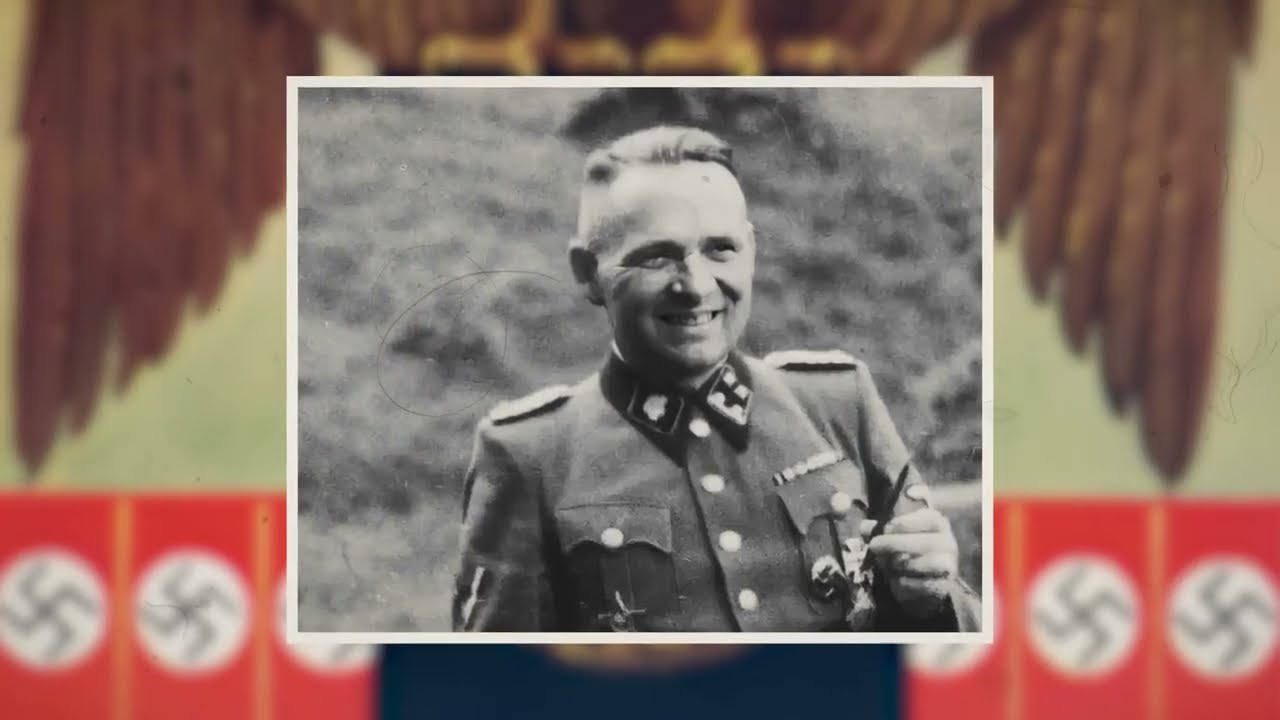
Fortunately there was someone who did not give up easily. This was Simon Wiesenthal, a Holocaust survivor who spent nearly three years imprisoned in Janowska, then in Kraków-Płaszów, and finally survived a death march to Mauthausen. After living through those atrocious experiences he decided to dedicate the rest of his life to tracking down Nazi criminals.
In 1953 a letter revealed to him that Eichmann had been seen in Buenos Aires. The following year he brought that information to the Israeli consulate in Vienna. Then in 1960, after the death of Eichmann's father, he organized for private detectives to photograph relatives of the fugitive. It was known that his brother Otto bore a striking resemblance to him, and there were no recent images of the former SS officer.
On February 18 Wiesenthal handed over those photographs to Mossad agents. Thanks to that material they were able to verify his identity in Argentina. Since Argentina had a history of rejecting extraditions of Nazis, requesting one would have been futile. Israeli Prime Minister David Ben-Gurion therefore ordered his capture and transfer to Israel for trial.
In April 1960 a group of eight agents traveled to Buenos Aires with that mission. On May 11 of that year Eichmann was intercepted near his home on Garibaldi Street in San Fernando. For weeks the agents had observed his movements and discovered that he took the same bus every night. On the designated day, however, he did not appear on the usual transport, almost foiling the plan. Finally he arrived on another bus half an hour later.
Peter Malkin, a Mossad agent, approached him and spoke to him in Spanish, asking if he could ask him a question. Eichmann, surprised, tried to walk away, but two more agents held him. He struggled with them until they subdued him and put him in a car, where they covered him with a blanket.
He was taken to a Mossad safe house where he remained for nine days. There additional verifications were made to confirm his identity. Finally on the night of May 20, Yona Elian, an anesthesiologist who was part of the team, sedated him and disguised him as a flight attendant to take him out of the country on an Israeli plane.
Upon arriving in Israel he was held in a fortified police station in Yagur for nine months. During that time he underwent daily interrogations until his trial began on April 11, 1961. He faced 15 charges, including crimes against humanity, war crimes, genocide, and membership in a criminal organization. Shortly after midnight on June 1, 1962, Eichmann was executed in Ramla prison.
Meanwhile Wiesenthal became recognized as a hero in his country. In the following years he continued his relentless pursuit of Nazi criminals through various methods. He founded the Jewish Historical Documentation Center in Austria, where he gathered information about war crime perpetrators and offered assistance to displaced persons.
He dedicated himself to meticulously recording the horrors of the Holocaust, interviewing witnesses, and using the media to keep interest in the pursuit of Nazis alive. He was convinced that all the guilty, from high-ranking officials to simple collaborators, should face justice.
His tenacity earned him renown, and from the 1960s onward his name became synonymous with Nazi hunting. He was nominated for the Nobel Peace Prize four times and received a knighthood in the United Kingdom, the Presidential Medal of Freedom in the United States, the Légion d'honneur of France, and at least 53 additional recognitions.
For many, Wiesenthal became a kind of secular saint. He is credited with having located 1,100 Nazi criminals, but his legacy is questionable. Throughout his life he fabricated stories and exaggerated his role in numerous captures. From the end of World War II until his death in 2005 he gave inaccurate accounts of his work in the pursuit of Nazis, created false stories about his past during the conflict, and distorted details about his academic background. Despite his ambiguous relationship with the truth, his contribution was key in bringing several war criminals to trial. His figure remains controversial, but his impact on the pursuit of justice is undeniable.
In 1948, just three years after the end of World War II, a notorious war criminal managed to escape from a prison in Linz, Austria. Franz Stangl, who had commanded the extermination camps in Sobibor and Treblinka and was responsible for the death of nearly one million Jews, took an escape route through Graz, Merano, and Florence until he reached Rome.
There Bishop Alois Hudal, also Austrian, took him in and provided him with false documentation that allowed him to travel to Syria, where his family later joined him. In 1951 the Stangls moved to Brazil. Unintentionally, Stangl had opened a new escape route for the Nazis: the Middle East.
Alois Brunner, one of the most ruthless executives of the Holocaust, was still at large at that time. During the conflict Brunner held a high position in the Gestapo, being Adolf Eichmann's main collaborator and leader of the Jewish Affairs Department. His skill in organizing mass deportations and killings in countries like France, Greece, and Slovakia made him a key figure in the genocide. Eichmann considered him his best agent.
After the war he hid in Germany, but in 1954 he felt that the authorities were closing in, especially when a French court sentenced him to death in absentia. With the support of old allies he followed in Stangl's footsteps and escaped to Egypt, then ruled by Gamal Abdel Nasser. Thus began his exile in the Middle East, which lasted until his death several decades later.
Nasser employed various German experts in military technology and missiles, as well as some strategists and security specialists. He had no interest, however, in figures like Brunner, whose only expertise was extermination. With the help of Amin al-Husseini, the former Mufti of Jerusalem and protector of the Nazis in the region, Brunner managed to reach Syria, where he obtained a work visa in 1955.
He integrated into a growing group of arms traffickers in Damascus. In the Syrian capital he joined other fugitive Nazis such as Franz Rademacher, a former official of the Foreign Ministry of the Third Reich, and Wilhelm Beisner, a German spy tasked with eliminating the Jewish population in Palestine if Germany had won.
Together they established the Orient Trading Company, a firm that actually served as a front for a lucrative arms trafficking business. Their network obtained weaponry from the communist bloc and supplied it to the Algerian resistance, the National Liberation Front, in their struggle against French occupation. Brunner amassed a great fortune with this activity.
In 1959 his luck began to fade. Unbeknownst to him, Syrian agents were already tracking his movements and did not look favorably upon his operations. At some point in late 1959 Syrian authorities detained Brunner and transferred him to a secret facility where prisoners of war were interrogated and tortured. Suspecting him of being an undercover agent, they accused him of drug trafficking and ordered that he remain in custody until his situation was clarified.
Facing the threat to his life, Brunner made a final attempt to save himself. He assured the officers that he was being persecuted for his role in the fight against the Jewish people. The reaction of the captain in charge changed immediately. He stood up and offered him a handshake. "Welcome to Syria," he said. "The enemy of my enemies is my ally."
From then on he began collaborating with the Syrian government in various tasks. During the 1980s and 1990s Damascus continued to provide him with refuge, ignoring multiple extradition requests from Austria, West Germany, and the United States. Each official response was the same: that person was not in the country.
Media pressure exerted by Nazi hunters Serge and Beate Klarsfeld made his presence in the capital a problem over time, and his usefulness to the government diminished. During those years Brunner's movements were increasingly restricted, especially after he ignored direct orders from the president to keep a low profile. Despite the warnings he granted interviews to German, Austrian, and international media, causing discomfort in the highest circles of power.
Finally in 1996 the Syrian government decided to get rid of him. They removed him from his residence and locked him in an underground cell in the Muhajirin police station. The door was closed, never to be opened again. Brunner spent the rest of his life in deplorable conditions, surrounded by filth and neglect. He is believed to have died in 2010.
People like Wiesenthal and Bauer never ceased in their mission. For decades they managed to bring thousands of those responsible for the Holocaust and their accomplices to trial. Due to the passage of time, however, capturing war criminals today has become a race against the clock. Even those who were very young during World War II are now over 90 years old.
A clear example is the case of Johann Rehbogen, who in 2018 at the age of 94 was identified as a former guard at the Stutthof concentration camp, where he served between 1942 and 1944. Since he was not yet 21 when the events occurred, he was tried in a juvenile court in Münster. He was charged with the death of more than 100 Polish prisoners and 77 Soviet soldiers using Zyklon B gas.
Another similar case occurred in 2019, when Bruno Dey at the age of 93 received a sentence for his complicity in the murder of more than 5,000 people in an extermination camp between 1944 and 1945.
The tracking and prosecution of these individuals have been possible thanks to a specialized team operating in the German city of Ludwigsburg in the southwest of the country. There the Central Office for the Investigation of National Socialist Crimes has been in operation since 1958. Its task is to locate the last perpetrators of the Holocaust who have not yet faced justice and who can still be tried.
Each year the prosecutors of this institution identify around 30 suspects still alive. Subsequently the cases are transferred to regional prosecutors, who spend approximately a year determining whether the evidence is sufficient to initiate a trial. Since the beginning of the 21st century this meticulous process has resulted in six trials, including the aforementioned cases.
Currently the minimum age of the accused is around 90 years old, and most of them held lower-ranking positions within the Nazi regime: guards, kitchen staff, doctors, and communications operators. The problem lies in the fact that many of those involved die before their trials conclude, reducing the possibility of obtaining convictions.
In 2013, for example, the Central Office compiled a list of 30 individuals who had previously worked at Auschwitz and could be immediately tried. Only five of them faced justice, as the others died before their appearance or were deemed unfit to stand trial.
Despite this, the importance of this institution does not lie in the number of sentences handed down but in the message it conveys: no crime against humanity will be forgotten. Thanks to its work, those who participated in the horrors of Nazism must live knowing that at any moment justice could catch up with them. Its existence keeps the memory of the Holocaust victims alive, reminding the world of the magnitude of the atrocities committed between 1933 and 1945.
The history of these crimes is so chilling that it is imperative not to let it fade into oblivion, no matter how many decades pass. The end of World War II marked the fall of Nazism, but it did not put an end to the pursuit of justice.
For decades the escape networks, the complicity of various institutions, and the efforts of those who pursued war criminals were revealed. Some found refuge in South America, the Middle East, or even Europe, protected by regimes that sheltered them for strategic interests. Others were captured and tried. Many never faced consequences, and with the passage of time the possibility of prosecuting them diminished.
Nevertheless the Central Office for the Investigation of National Socialist Crimes in Germany has continued its work, demonstrating that justice does not expire for crimes against humanity. This account is not just history but a warning about the importance of memory. The atrocities committed by the SS must not be forgotten, and impunity cannot be acceptable. Although the years pass, history continues to remember their names, their deeds, and the consequences of their ideology. Justice, though late, remains necessary to honor the victims and reaffirm humanity's commitment to truth.