Fritz Katzmann rose from a modest apprenticeship in carpentry to become one of the most notorious SS and police leaders of the Holocaust in Eastern Galicia. Born on May 6, 1906, in Bochum, then part of the German Empire, he was the son of a minor official and grew up in a modest family. After primary school he trained as a carpenter and worked in the trade for several years before losing his job.
Seeking a sense of purpose, Katzmann joined the SA in 1927, the Nazi paramilitary force also known as the Storm Troopers or Brownshirts. He joined the Nazi Party in September 1928 and became a member of the SS in 1930. After Adolf Hitler was appointed chancellor on January 30, 1933, Katzmann took part in the Night of the Long Knives in 1934, when the regime assassinated many members of the rival SA, including its leader.
Later in 1934 Katzmann was transferred to Berlin, where he joined the 75th SS unit. Around this time he married, and the marriage produced five children. Despite being arrested for drunken assault, his standing within the SS remained unaffected. He was even appointed a city councillor and became an honorary member of the People's Court.
His commanding officer, one of Hitler's most trusted allies, described him as an ambitious and dedicated SS officer, praising his fanaticism, discipline, and so-called sense of honor. In March 1938 Katzmann and his family were transferred to Breslau, today's Wrocław in Poland.
The Second World War began on September 1, 1939, when Nazi Germany invaded Poland. Following the invasion, Katzmann was put in charge of security for a German army unit. In that role he helped establish ethnic German self-defense units in Kattowitz, today's Katowice in Upper Silesia, which soon engaged in mass executions of civilians.
In November 1939 he became the first SS and police leader of the city of Radom in German-occupied Poland. As of December 1, 1939, Hans Frank, the governor general of occupied Poland, mandated that Jews wear the Star of David. Katzmann enforced the order with brutal efficiency and authorized the execution of any Jew found without identification.
In June 1941 Katzmann was promoted to SS-Brigadeführer, a rank equivalent to brigadier general in the US Army. On June 22, 1941, under the code name Operation Barbarossa, Nazi Germany invaded the Soviet Union, its ally in the war against Poland.
After the German conquest of Western Ukraine, Katzmann was assigned to Lviv in the district of Galicia, a southeastern region of the General Government. From August 1941 he served as SS and police leader of the district, and the following month he was promoted again.
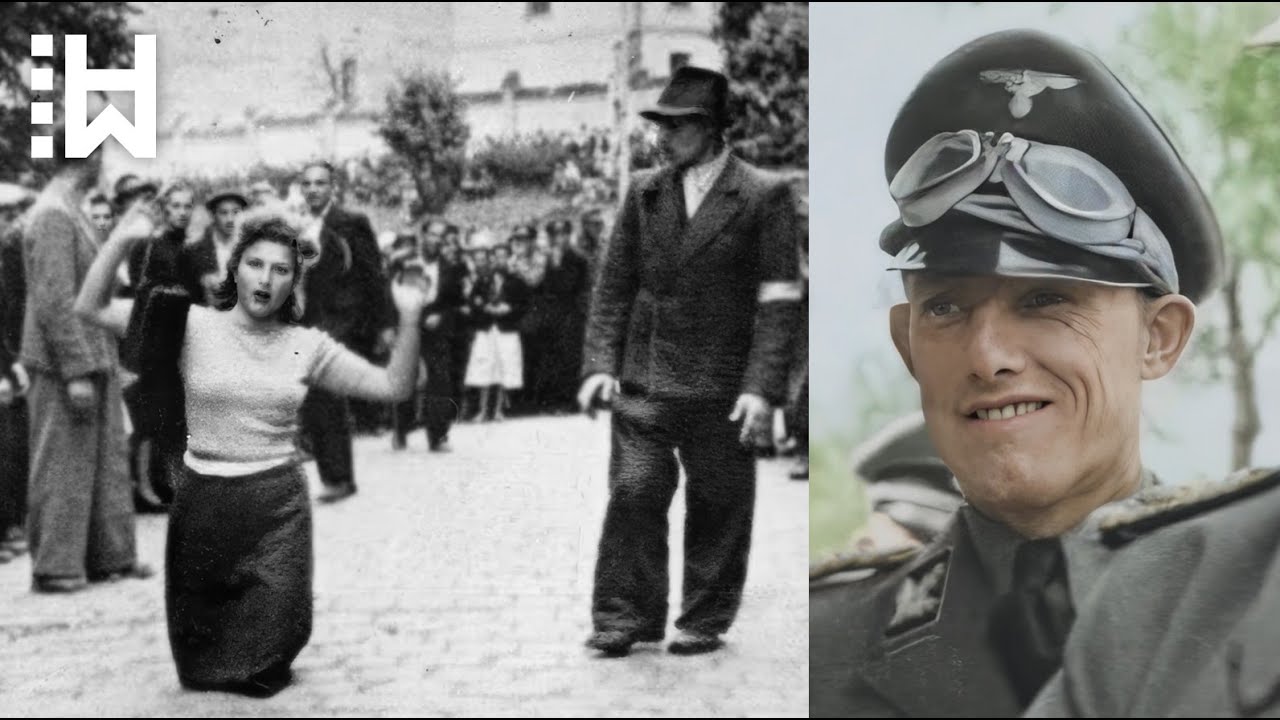
As head of SS forces in Galicia, Katzmann played a central role in the persecution and mass murder of Jews and Poles, two of the groups most targeted by Nazi repression in the occupied territories. With the backing of his subordinates and the security police, he oversaw the extermination of the vast majority of Jews in Galicia.
When Nazi forces occupied Lviv on June 30, 1941, the city's Jewish population exceeded 200,000, half of them refugees from German-occupied Poland. In the weeks that followed, Jews were beaten, tortured, and subjected to mass executions. The massacres were not carried out solely by Germans but also by Ukrainian nationalists and local youth.
According to reports from the Jewish Council, between October and December 1941 the Jewish population in Lviv declined from 119,000 to 106,000. In Eastern Galicia, Katzmann oversaw the murder of an estimated 55,000 to 65,000 Jews between 1941 and 1942. Under his command, approximately 880,000 Jews were deported to the Lviv ghetto in the northern part of the city, where they were forced to endure such brutal conditions along the way that many perished before reaching their destination.
Few Jews from Eastern Galicia lived through the Holocaust, but those who did left behind harrowing testimonies of Katzmann's brutal tactics. Among them were Simon and Sila Wental, who described one of his most deceptive strategies for luring Jews out of hiding. Katzmann established a kindergarten for his children, presenting it as an act of benevolence. Desperate parents, unable to resist the promise of milk and cocoa for their starving children, placed them in the facility. One day three SS officers arrived and led the children away. They were never seen again.
The atrocities committed against children were particularly gruesome. One survivor described how German forces murdered them in unimaginable ways, and some were thrown alive into burning buildings.
Nazi cruelty extended even to music. Jewish prisoners were forced to form an orchestra that played during executions. Among them were internationally renowned Jewish musicians from Lviv, ordered to perform Mozart, Beethoven's Third Symphony, and the Radetzky March. While this was partly an act of sadistic humiliation, it also served to maintain an illusion of order amid mass killing.
One of the most revealing insights into the mindset of SS personnel in occupied Poland comes from the letters of SS officer Felix Landau, who was stationed in Galicia in 1941. His private correspondence provides a chilling glimpse into the mass executions that Katzmann witnessed upon his arrival.
In a letter from early July 1941, written shortly after arriving, Landau wrote to his sweetheart that the first Jews had been shot by his unit. He described 500 Jews standing lined up ready to be shot, and a stench so terrible that one needed a gas mask. Wounded Jews covered in dirt crawled out of mass graves, hundreds lay there with blood streaming down their faces, holes in their heads, broken hands, and eyes hanging out. There were rows of Jews lying one on top of the other like pigs, whimpering horribly. The Jews kept streaming out of the Citadel completely covered in blood. Landau wrote that Jews should not be allowed to run around in this condition and that he would prefer an honorable open battle.

The horrific events described in Landau's letters aligned with reports on the deportations from Lviv to the Bełżec extermination camp, approximately 85 kilometers away. Between September 7 and 10, 1942, trains carrying thousands of Jews broke down, leaving sealed box cars stranded on the tracks for hours, sometimes even days. Some desperate prisoners managed to break free, only to be gunned down by Nazi guards. Meanwhile corpses lay rotting under the sun, further fueling panic among the deportees.
Conditions inside the overcrowded box cars were unbearable. Extreme heat, suffocating confinement, and the overwhelming stench of death made the journey nearly impossible to endure. By the time the trains reached their destination, 2,000 Jews had already perished inside.
A brutal roundup in early September turned the streets of Lviv into a scene of terror. After a member of the Jewish Council refused to carry out Nazi orders, SS forces executed dozens of Jews and stacked their bodies outside the council's headquarters as a chilling display of power and intimidation.
On another occasion, as retaliation for alleged Jewish misconduct, Katzmann's forces publicly hanged 12 Jewish officials and policemen across Lviv. Some ropes and wire snapped, causing the victims to crash onto the pavement, only for German soldiers to drag them back up and repeat the execution. Their bodies were then left hanging in the streets as a gruesome display of Nazi justice.
A survivor later described the horrific scene: the corpses with tongues blackened and stretched out, while German civilians, including women and children, gathered to watch. Some even took photographs, treating the public execution as entertainment.
By late 1942, after a high wooden fence enclosed the ghetto, 70,000 Jews remained trapped inside, enduring extreme overcrowding. The conditions were so dire that hundreds, known as the dead of the desert, were forced to live outdoors.
A press release dated October 16, 1942, contained a statement from an unknown journalist who described the so-called resettlement, a Nazi euphemism for the mass deportation and extermination of Jews, as not worthy of a civilized nation.
By the end of 1942 the Lviv ghetto population had been drastically reduced, dropping from an estimated 120,000 to 40,000 people. Between January 5 and 7, 1943, 15,000 more Jews were murdered, along with members of the Jewish Council.

In January 1943 Fritz Katzmann was promoted to Generalmajor of police and SS-Gruppenführer, a rank equivalent to major general in the US Army. By mid-1943 the death toll in his district had increased by another 143,000 victims.
On June 30, 1943, Katzmann submitted his leather-bound Katzmann Report to SS-Obergruppenführer Friedrich-Wilhelm Krüger, the higher SS and police leader East in the city of Kraków in German-occupied Poland. The report documented the murder of 434,329 Jews through mass executions, deportations to extermination camps, and the liquidation of ghettos across Galicia. It also emphasized the economic advantages of Nazi policies, detailing the confiscation of Jewish property and the use of forced labor to support the German war effort. In its concluding section, Katzmann proclaimed triumphantly that Galicia was free of Jews, framing the genocide as an administrative and logistical success.
Katzmann remained in Lviv until April 1943, when he was transferred to Danzig, today's Gdańsk in Poland, to serve as the higher SS and police leader for Danzig-West Prussia, a position he held until the end of the war. While there he oversaw the installation of gas chambers and a crematorium at the Stutthof concentration camp, located about 22 miles east of Danzig. He also brought with him auxiliaries from Central and Eastern Europe, including collaborators who had participated in earlier Nazi operations.
Three months after Katzmann's departure, the final remnants of the Lviv ghetto were liquidated. By the end of 1943, nearly all of the 620,000 Jews who had lived in Galicia before the German invasion had been murdered.
The ruins of the Lviv ghetto became the site of one final Nazi operation. As the Red Army advanced into Ukraine in autumn 1943, Heinrich Himmler, head of the SS, ordered that all traces of Nazi atrocities be erased. Special SS unit 105, known as the Death Brigade, forced the few remaining Jewish prisoners in Lviv to exhume and burn thousands of corpses from mass graves. On November 20, 1943, in a final act of defiance, desperate prisoners attacked their SS captors and several of them managed to escape.
On July 1, 1944, Katzmann was promoted to Generalleutnant of the Waffen-SS, the military branch of the SS, holding a rank equivalent to major general. He was assigned to oversee the liquidation of the Stutthof concentration camp and its subcamps ahead of the Red Army's advance. By then, mass executions using Zyklon B gas had already begun in June. Until that point Stutthof prisoners had been considered essential for German armament production, but now they were marked for extermination.
It has been estimated that over 25,000 prisoners died during the evacuation from Stutthof and its subcamps. When Soviet forces liberated Stutthof on May 9, 1945, they found only about 100 prisoners who had managed to hide during the final evacuation of the camp.
After Germany's surrender on May 8, 1945, Katzmann vanished completely, severing all ties even with his wife and five children. Under the alias Bruno Albrecht, he found work as a traveling salesman and lived quietly in the city of Darmstadt in West Germany.
Katzmann planned to escape to Argentina, but this failed because he became seriously ill. In 1953, thinking he had only days to live, Fritz Katzmann revealed his true identity to a nurse, but she kept this knowledge to herself. In 1955 he worked in sales for a wood processing company in the town of Vöhl, and in March of the following year he moved to the town of Griesheim, where his family was then living.
Fritz Katzmann was 51 years old when he died as a free man on September 19, 1957, in Darmstadt. His identity was only revealed after his death. Even though Katzmann was responsible for the murder of hundreds of thousands of innocent men, women, and children, he never faced justice for his crimes.