A South Korean mother who spent 44 years searching for her missing daughter finally found her through a DNA test—but the child had been adopted and raised in the United States, believing she was an orphan. In May 1975, four-year-old Shin Kim Hwa was playing outside her home in Jicheon, South Korea, with neighborhood children. Her mother, Han Tae Sun, had gone to the market with Kim Hwa’s two younger siblings. Before leaving, she asked her daughter if she wanted to come along.
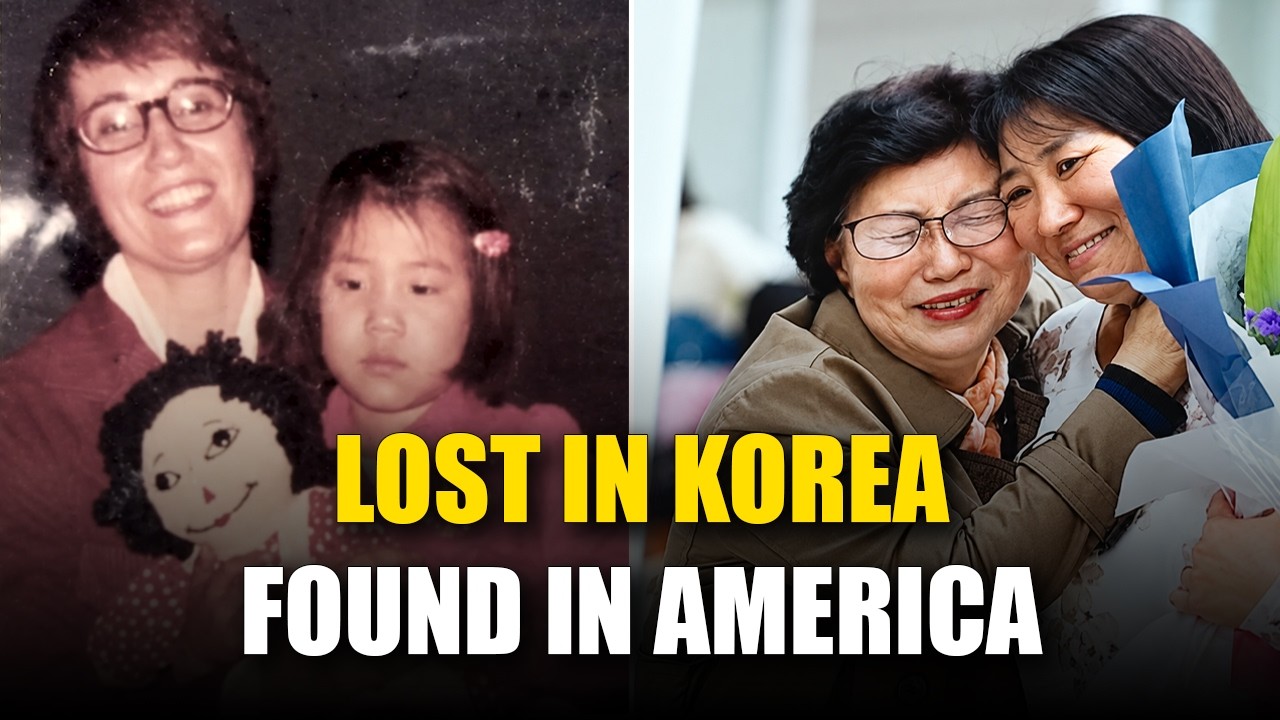
Kim Hwa said no; she wanted to stay and play. When Han returned, her daughter was gone. The family searched the area, assuming the girl had gone to a neighbor’s house. When they couldn’t find her, they reported her missing.
A woman had approached Kim Hwa while she played. She told the child that her parents no longer wanted her because there was a new baby in the family. The girl believed her. The woman took her onto a train, and during the journey, the child fell asleep.
When she woke up, she was alone. She was eventually taken to a police station and then placed in a children’s home in Jicheon. Her parents kept searching. They visited police stations, government offices, and orphanages.
Kim Hwa’s photo was posted at train stations, on streets, and even on snack packages used to publicize missing children. But nine months after her disappearance, Kim Hwa was sent to the United States for adoption. There, she became Lori Bender. Her adoption records described her as an abandoned orphan with no known parents.
That wasn’t true. Her parents were alive, had reported her missing, and had spent years trying to find her. Lori grew up thousands of miles away, unaware that her family in South Korea was still looking for her. Forty-four years passed.
By then, Kim Hwa was an American woman with almost no connection to the childhood she had lost. Her mother, now in her seventies, was still waiting for answers. For most of her life, Lori Bender had no idea that a family in South Korea was still searching for her. She had grown up in America under a different name with little understanding of how she had gotten there.
Decades later, a DNA test finally connected her to relatives in South Korea. The results revealed her lost identity as Shin Kim Hwa. After 44 years, she found her mother. Before meeting in person, Han and Lori spoke via video calls.
Their conversations were difficult because Han spoke Korean while Lori spoke English. But they kept calling, often ending their talks in tears. Han had spent decades wondering what had happened to her daughter. When they finally met in Seoul in 2019, Han embraced Lori and touched her hair, trying to process the reality that the little girl who disappeared in 1975 was standing before her again.
But the reunion also exposed a painful truth about Lori’s adoption. Her records described her as an abandoned orphan with no known parents. Han knew this wasn’t true. She had reported her daughter missing and spent years looking for her.
Han later filed a lawsuit against the South Korean government, the G-Il orphanage, and Holt Children’s Services, the agency involved in the adoption. She wanted recognition of what her family had suffered and answers about how her daughter could have been adopted abroad while her parents were still searching for her. Finding Lori brought new challenges as well. After 44 years apart, the mother and daughter shared almost no memories and could barely communicate without assistance.
The reunion gave Han back her daughter, but it couldn’t restore the years they had lost. Their case was not unique. In 2019, another DNA test connected two Korean adoptees living on opposite sides of the world. Kristine Belyea, adopted by a family in the United States, was searching for her biological mother.
In Belgium, Kim Halon had taken a DNA test for health reasons. Kristine then received an email asking if she was Korean and suggesting they might be related. The results showed they were sisters. Kristine had been found at a train station in Daegu when she was about two years old.
Kim was found at another nearby station as a six-month-old infant. Both were adopted abroad and grew up without knowing the other existed. They finally met in South Korea after 49 years apart. For people like them, DNA was doing what adoption records could not: reconnecting families separated for decades.
But finding a relative was just the beginning. The sisters still had one question unanswered: what happened to their mother? In 2020, Kristine Belyea and Kim Halon returned to South Korea, nearly five decades after they were separated. They traveled to Daegu hoping to find clues about the mother they never knew.
But they found almost nothing to go on—no childhood memories, no family names, no reliable record of what had happened before their adoptions. Kristine refused to stop searching. She left her four children in the United States and moved to Seoul, where she opened a bakery called Sugar Mama. It quickly became a gathering place for Korean adoptees searching for their biological families.
DNA testing kits were available there too. She often returned to Baewol Station in Daegu, where she is believed to have been found alone in 1971. Standing there, Kristine imagined her last moments with her mother. She wondered if they had arrived together, if she had been playing nearby, and what her mother had felt when she disappeared.
“I just want to hug her,” she said. “I just want to make sure she’s okay. ”
Her search also pointed to a much larger story. After the Korean War, poverty and social stigma drove South Korea’s international adoption system.
It initially involved many children born to Korean women and Western soldiers, but later expanded to include poor families, orphanages, and single mothers. South Korea became one of the world’s largest sources of children for overseas adoption. In 1985 alone, nearly 9,000 children were sent abroad. Since the 1950s, about 200,000 Korean children have been adopted overseas.
For some families, adoption was presented as the best way to secure a child’s future. But later investigations raised serious questions about how some children entered the system. There were allegations of falsified records, altered family information, and children registered as orphans even though their parents were alive. Cho Mi Hyo of the Children’s Rights Solidarity organization has helped families investigate such cases.
He also experienced separation in his childhood and watched other children from his orphanage be sent abroad. He believes DNA testing has given adoptees a way to challenge inaccurate records and reconnect with their biological relatives. South Korea has since faced increasing pressure to reform its adoption system and give the government a greater role in protecting children and original families. But reforms cannot restore records already lost.
Han Tae Sun found her daughter after 44 years. Kristine found her sister after nearly 50 years. These stories show that finding family can bring answers, but it cannot erase years of separation.
For adoptees still searching, hope may now lie in something as simple as a DNA match—a small piece of evidence capable of reopening a story once thought lost forever.