On the morning of September 19, 1931, the housekeeper at Adolf Hitler’s Munich apartment noticed that his 23-year-old half-niece, Geli Raubal, had not come down for breakfast. When the door to her room was forced open, she was found face down on the floor, dead from a gunshot wound to the chest. A pistol belonging to Hitler lay beside her. Hitler had left the apartment the previous day for a parliamentary meeting in Hamburg, but not before a violent argument with Geli.
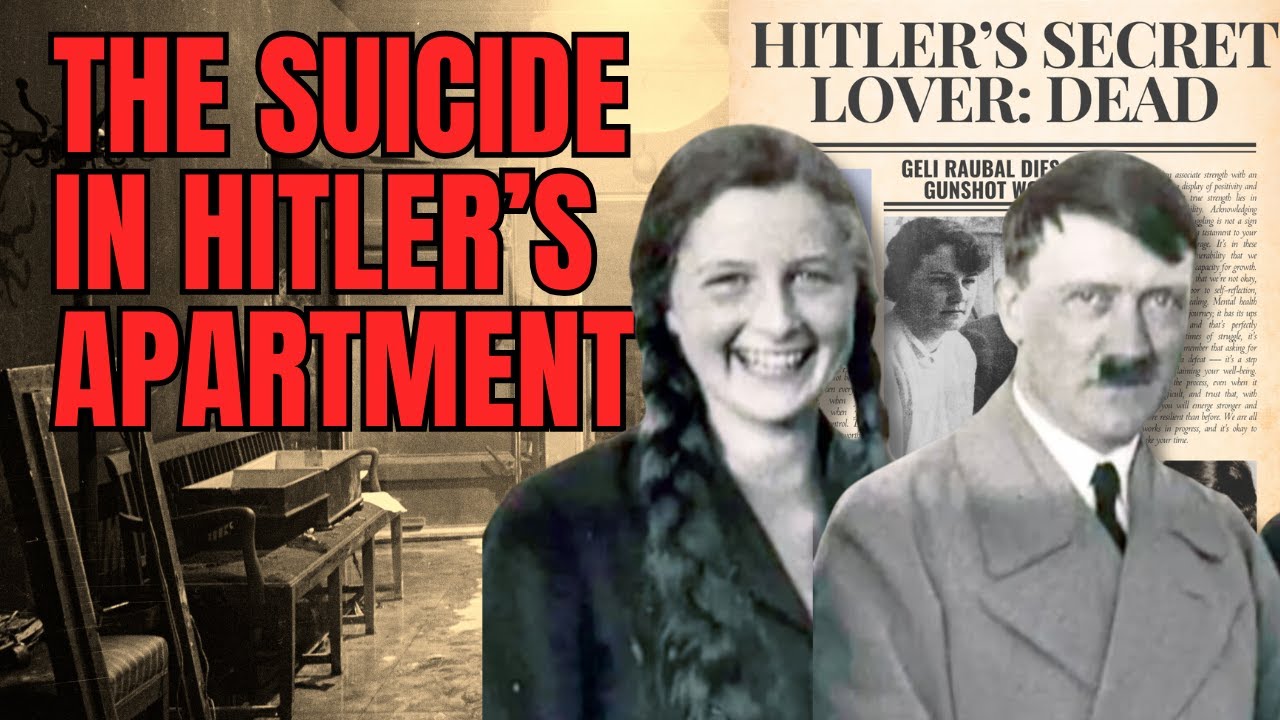
Neighbors heard him scream “no” before slamming the door. When he received word of her death the next morning, he was reportedly inconsolable. Geli Raubal was born Angela Maria Raubal on June 4, 1908, in Linz, Austria-Hungary. She was the daughter of Adolf Hitler’s half-sister Angela and Leo Raubal, a junior tax inspector.
Her father died when she was just two years old. Though her mother lost contact with Hitler for a decade after Geli’s birth, he reconnected with the family in 1919. After his release from Landsberg prison in 1924, following his failed Beer Hall Putsch, Hitler frequently hosted Angela, Geli, and Geli’s younger sister at his mountain retreat in the Bavarian Alps. In 1928, Angela accepted a position as housekeeper at the retreat, and the family moved in.
Geli soon became one of Hitler’s most constant companions, and he appeared devoted to the niece nearly two decades his junior. Baldur von Schirach, later leader of the Hitler Youth, described Geli in his memoirs as a well-developed young woman with dark wavy hair and lively brown eyes. He noted that she was allowed to laugh at “Uncle Alf” and adjust his tie, and that Hitler seemed relaxed and almost playful in her presence. But Hitler’s control over Geli tightened considerably after she began a relationship with his chauffeur, Emil Maurice.
In a December 1928 letter, Geli wrote that she loved Maurice “infinitely much,” but added that “Uncle Adolf insists that I should go on with my studies. ” When Hitler learned of the affair, he dismissed Maurice from his personal service. A year later, Geli moved into Hitler’s Munich apartment after enrolling in medical studies at the nearby university. From then on, she was not allowed to associate freely with friends and was expected to have Hitler or someone he approved of supervising her at all times, including trips to the opera, cinema, and shops.
Rumors of a secret affair between Hitler and Geli began to circulate. One SS officer who guarded the Munich apartment later told an author that Geli admitted Hitler made her do things in private that sickened her, but she feared losing him to another woman if she refused. Geli eventually made plans to escape her uncle’s possessive control by moving to Vienna to take singing lessons. Her mother later told interrogators that Hitler also prohibited Geli from continuing a relationship with a man from Linz whom she hoped to marry.
The argument on September 18, 1931, came after Geli pleaded to be allowed to travel to Vienna. Hitler refused. The next morning, she was dead. The circumstances surrounding her death fueled lasting rumors of murder.
The Munich post reported that her nose had been broken, and an unfinished letter on her desk suggested she had been preparing to leave for Vienna. Hitler’s half-nephew later claimed that Geli had been pregnant, a claim that has never been confirmed. No autopsy and no inquest were conducted. Hitler reportedly became a vegetarian because the sight of meat reminded him of Geli’s bloodied body.
Her room in the Munich apartment was sealed off and never used again. Just sixteen months after Geli Raubal’s death, Hitler became Chancellor of Germany.