Before dawn on December 17, 1944, in the wooded heights east of the twin villages of Krinkelt and Rocherath in the northern Ardennes, the German attack was barely a day old and already behind schedule.
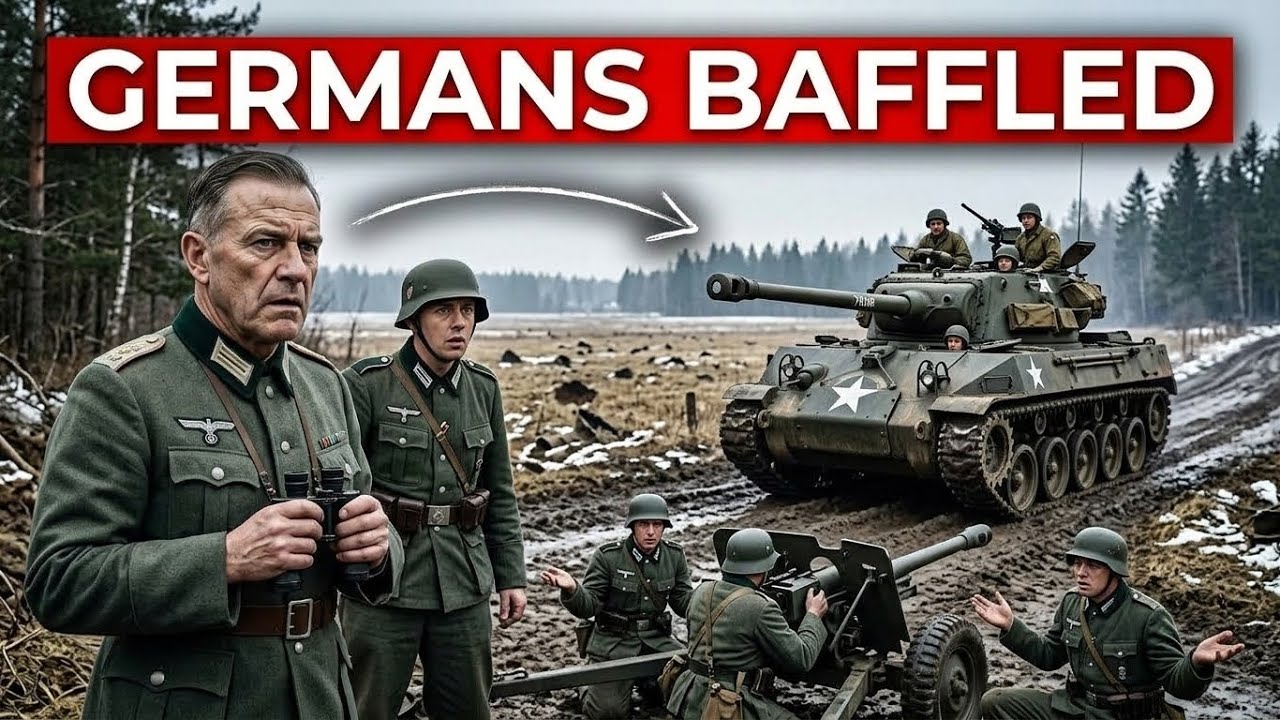
The officer commanding the lead assault guns of an SS panzer regiment had been told what to expect on the hill ahead: a newly arrived American infantry division in its first battle, some artillery, and nothing more. The sector had been chosen precisely because it was weakly defended.
What his gunners found as the light came up through the fir trees was that the American positions in that area were not improvised.
Anti-tank guns had been sited to cover the road exits from the forest. Sited, not merely parked. They were dug in with cleared fields of fire, and the firing lanes had been chosen so that any vehicle emerging from the trees would be hit from the flank at 200 meters rather than met head-on at a thousand.
Self-propelled tank destroyers sat on the reverse slopes, hidden in positions that could only have been picked by someone who had walked the ground with a map and thought carefully about where the German tank would come from.
In the days that followed, as the German offensive shifted from one axis to another looking for a weak point, the same phenomenon repeated itself. The Americans were not reacting to the attack. They were waiting where the attack would arrive.
German gunners attributed it to bad luck, then to good American reconnaissance, then, as it kept happening at Elsenborn in December, at Mortain in August, and at Arracourt in September, to something they could not explain at all.
A German battalion commander would take a new approach, move at night, achieve surprise, and come out of the woods at dawn to find American anti-tank weapons already pointed down the exact route he had chosen.
The explanation was not luck, not magic, and mostly not codebreaking. It was part of the American unit organization that appears on the equipment table as an afterthought, one the Germans had no exact equivalent for at that level, and one almost nobody has heard of: the reconnaissance company of the tank destroyer battalion.
Start with the doctrine, because it was wrong. The American tank destroyer concept, in its original form, was a mistake. Nearly everyone involved concluded so afterward, and the branch was disbanded after the war.
The idea was born out of the panic of 1940. After watching German armor overrun France, the U.S. Army concluded it needed a specific answer to massed tank breakthroughs, and the answer it chose was not more tanks.
It was a separate arm: battalions of fast, lightly armored, heavily gunned vehicles, kept in reserve, kept concentrated, and thrown as a single mass at the point where enemy armor had broken through.
They built an entire institution around the concept, a tank destroyer center at Camp Hood in Texas, its own training pipeline, its own tactical literature, its own aggressive motto, "Seek, Strike, Destroy," and a shoulder patch showing a panther crushing a tank in its jaws.
Almost every assumption in that doctrine turned out to be wrong. The massed German armored breakthrough it was designed to defeat did not occur in the West after 1940.
The idea of holding tank destroyers concentrated in an army-level reserve collided with the reality that division commanders wanted anti-tank capability under their own hand at all times, and they got it.
The thinly armored, open-topped turret accepted in exchange for speed proved a liability in a war fought mostly among hedgerows, towns, and forests, where the enemy was often infantry armed with handheld anti-tank weapons and mortars.
The towed battalions, units equipped with a 3-inch gun on a carriage instead of a self-propelled mount, were a genuine regression, as the men who fought them at Saint-Barthélemy and in the Ardennes at close range discovered.
So the doctrine was wrong. But what mattered, and what the Germans kept running into, is that the organization built to execute that wrong doctrine turned out to contain something of enormous value, and the U.S. Army was flexible enough to notice.
Every tank destroyer battalion contained, alongside its three gun companies, a reconnaissance company.
Read the purpose of that company as the doctrine originally intended it, and the logic is immediate. If your battalion's job is to race to a breakthrough point and destroy it, the thing that determines your success is not the gun.
It is whether you can move 36 vehicles from where they currently are to a firing position covering the right piece of ground, over unfamiliar roads, at night, in time.
So the battalion was given its own reconnaissance element: jeeps, armored cars, and an engineer platoon with men for mines and demolitions, whose sole job was to move forward, examine the ground, pick positions, identify routes, check bridges and culverts for weight, and guide the guns in when they arrived.
In other words, the U.S. Army had attached to each of these battalions a group of men who specialized in answering one question: where exactly will the tanks come from, and where should we be when they do?
Now watch what that produces when it is used the way units actually used it, not the way the doctrine specified. Tank destroyer battalions were attached to infantry and armored divisions, and mostly stayed attached. Their companies were attached to regiments, their platoons to battalions, and sometimes individual sections to a company defending a village.
This kind of task organization, plugging specialized units into whatever formation needed them down to platoon level, then moving them somewhere else the following week, is the most underrated American military skill of the war.
With that attachment came the reconnaissance company, which worked the sector day after day, continuously. They drove the roads behind the front and recorded which ones could take a heavy vehicle in muddy weather. They walked the reverse slopes and picked fighting positions behind hills before anyone needed them. They recorded every place a tank could go and could not go: a boggy meadow, a sunken road, a bridge with a weight limit, a forest track too narrow for a vehicle to turn around in.
That last category is the real weapon, and it is worth being precise about it, because it is the answer to the German gunner's question.
Tanks cannot go everywhere in the Ardennes in December. In mud and snow, in steep wooded terrain cut by streams, an armored formation is limited to a handful of roads and a handful of places where it can deploy off them.
The same applies in the Norman hedgerows, the wet Lorraine autumn, and the Hürtgen Forest, which means that if you have men who have actually walked the ground and thought about it, the number of places a German attack can come is not infinite.
It might be three places. And if it is three, you do not need to be everywhere. You need anti-tank guns covering three places and the ability to shift between them faster than the enemy can change his mind.

The Americans had exactly that. Reconnaissance to identify the three places, a radio net to learn which one was being used, and vehicles to move the guns sideways at night.
The Germans, coming out of the forest at dawn, experienced the result as though it were prophecy.
What arrived first actually looked like it, because the northern shoulder of the Ardennes offensive is the clearest case. The German plan required a rapid breakthrough in the north to open the roads leading toward the Meuse.
The ground they had to take included the twin villages and the heights behind them, the Elsenborn ridge. What they ran into was an American defense that, in the first two days, did something the German timetable had not accounted for.
Reinforcements arrived faster than the attack could exploit them. The mechanics of it are not glamorous, but they are the whole story.
Artillery battalions moved onto the hills and began firing from them within hours, eventually concentrating the fire of several battalions on specific points. Anti-tank guns and tank destroyers were pushed into the villages and to the forest exits. Engineers blew roads and laid mines at the places reconnaissance men had identified as the only possible armor routes. Infantry battalions under heavy pressure on the first day were pulled back onto prepared ground instead of being left to be destroyed in place.
And so the German columns, channeled by the terrain onto a few roads, arrived one after another into fire that had been prepared in advance.
The German experience of it, as recorded in unit accounts and prisoner interrogations, was of an enemy who seemed to know everything. He attacked down this road. The road is mined and there is a gun covering the gap. He moved to that road. There is a self-propelled gun on the reverse slope behind it, hidden behind the hill, firing into the flank of anything that appears.
There is no mystery in it once you know about the jeep men. One of them drove every one of those roads. One of them made a note about which culvert would collapse under a Panther. One of them stood on that reverse slope with a map and said, put a platoon here and they will have to expose their flanks to us.
This is where the American communications structure comes in, because reconnaissance is worthless if the report does not reach the guns before the situation changes.
The tank destroyer platoon leader was on a radio net. The infantry battalion he supported was on a net. The artillery was on a net, and the artillery is the payoff, because an American forward observer could bring the fire of an entire division, sometimes several divisions, onto a single road junction in minutes.
So the German column that found the road blocked and stopped to deal with it did not merely stop. It stopped in a place that had been registered as a target, and the shells arrived while the officers were still deciding what to do.
The men who did that work, the reconnaissance teams in jeeps that moved up at night into ground no one had cleared to check a bridge and count culverts, do not appear in any of the accounts.
An honest comparison is warranted, because the Germans were no amateurs at reconnaissance. They had pioneered much of its modern practice. Every panzer division had a reconnaissance battalion, and in 1940 and 1941 those units were among the best in the world at exactly this kind of work.
Three things had happened to them by December 1944. The first was the sky. German reconnaissance in 1940 could move freely. Vehicles drove the roads in daylight, observed the ground, and came back. By late 1944 in the West, any vehicle moving in daylight was a target for aircraft, which meant German reconnaissance was mostly at night, on foot or on motorcycles, and limited to what a man could see in the dark at close range.
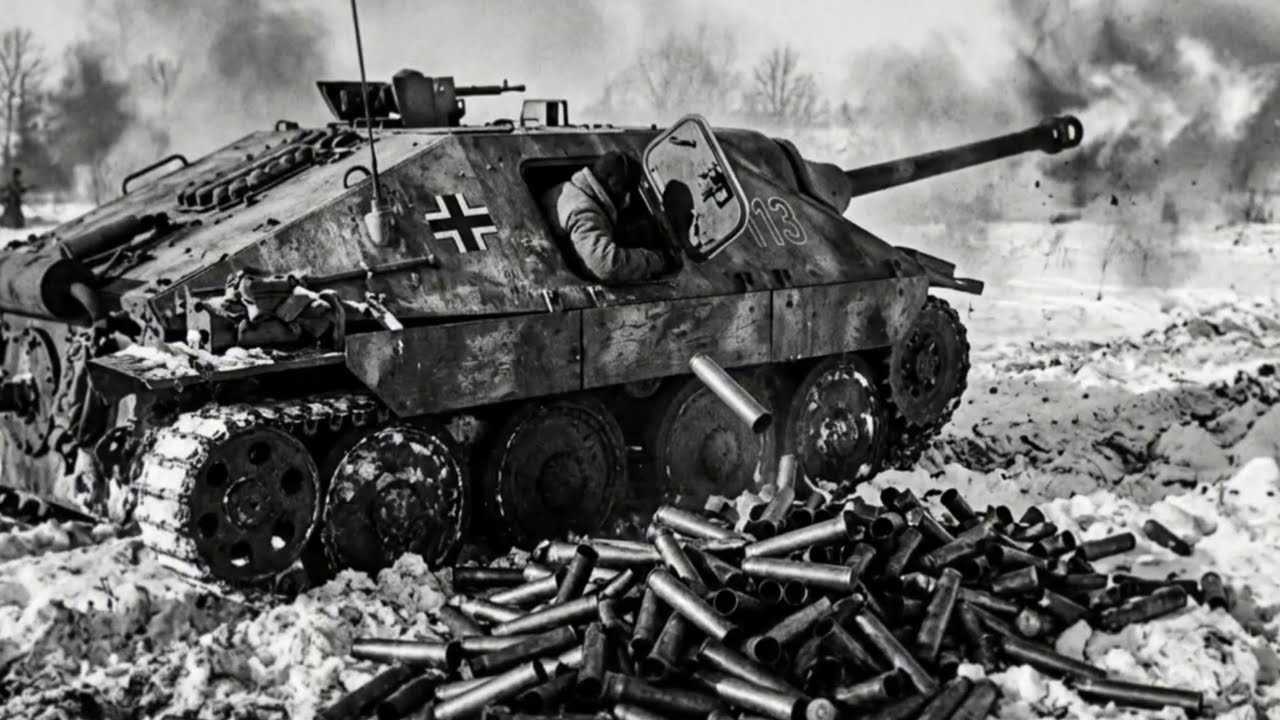
At the same time, the Americans had light aircraft, unarmed observation planes circling over the front all day, doing the opposite job with complete freedom. The German battalion could not watch American positions. The American observer could see everything for as long as he wanted, and talk to the guns while he did it.
The second was fuel. Reconnaissance is the most fuel-hungry activity an army conducts, because it means driving long distances while producing nothing but information. A German commander in December 1944 had to choose between spending his fuel reconnoitering the ground or spending it attacking across it, and there was not enough for both.
The third is deeper, and it concerns the structure of the Ardennes offensive itself. The attack was planned in extreme secrecy from the top, with field commanders informed late and reconnaissance deliberately restricted so as not to alert the Americans. Units moved to their assembly areas at night under radio silence, and many of them attacked across ground their officers had barely seen.
So on the morning of December 16, a German assault gun commander advanced into terrain he had not personally reconnoitered, against positions chosen by an enemy who had been walking that ground for weeks.
There is a fourth reason, and it is the most painful from a professional standpoint. German reconnaissance battalions had largely stopped doing reconnaissance. By late 1944, a division's reconnaissance battalion was one of the few mobile, well-armed, well-led formations the German division still had, and commanders under pressure used it accordingly.
It became a fire brigade, thrown in to plug a gap, to counterattack, or to hold a village until infantry could be scraped together. Units built for reconnaissance were bled out holding positions. It is a rational decision made by men with no reserves left, and it is also the moment an army goes blind. You cannot use your eyes as a fist and expect to keep seeing.
Underneath all of those reasons lies the structural one that runs through this whole campaign. Reconnaissance is worth no more than your ability to act on it. The Germans could sometimes learn where the Americans were. What they could not do, with fuel shortages, air interdiction, and a road net under constant attack, was reposition heavy weapons sideways at short notice based on what they learned.
The Americans could. That is the purpose the whole system was built for.
The verdict is that the American tank destroyer branch got the theory wrong and won anyway, because the organization it built to serve that wrong theory contained the right capabilities.
The doctrine said: keep masses of fast, armed vehicles in reserve to destroy any armored breakthrough. That doctrine failed. The breakthroughs it was designed for mostly did not happen. The vehicles were too lightly armored for the war that was actually fought, and the towed battalions were a genuine error paid for in crews' lives.
But to execute that doctrine, the Army had given each of those battalions its own eyes. A company of men whose full-time job was to know the ground better than the enemy about to attack across it. And when the doctrine failed and the battalions were distributed to divisions instead, the eyes went with them and kept doing what they had trained to do, in one sector, day after day, for months.
Put that on top of the rest of the American system, and the German artilleryman's puzzle dissolves. Men in jeeps who drove every road, a radio net that passed what they found to everyone who needed it in minutes without going through the chain of command, artillery that could be massed on a surveyed point faster than a column could clear a crater, and half-tracks and tractors that could move anti-tank guns sideways in the dark. Engineers who could close a road with mines and ditches at the one place where closing it mattered.
None of that is a weapon in itself. All of it is preparation, and preparation is invisible from the other side of the hill.
What the German officer saw at dawn was a gun that should not have been there. What he was actually looking at was three weeks of someone else's work.
That is the part worth taking away. The Americans did not out-plan the Germans because they were cleverer. They out-planned them because they had the luxury of being able to look. Fuel to spare for driving roads, aircraft that could fly unmolested, radios in enough hands that what one man learned, everyone knew, and enough vehicles to move what the information dictated.
The Germans were the army that taught the world the value of reconnaissance, but they fought a battle in which they could no longer afford to perform it.
The fighting for Krinkelt and Rocherath, the defense of the Elsenborn ridge, the massing of American artillery on the northern flank, and the collapse of the German timetable there are all documented in detail from both sides. The German attack in the north never got the roads it needed.