On the evening of April 23, 1964, in a flat above the Courtauld Institute overlooking Portman Square, a 56-year-old man stood silently at a tall window. His name was Anthony Blunt, a Knight Commander of the Royal Victorian Order and Surveyor of the Queen's Pictures.
Across the room stood Arthur Martin, an officer of MI5, who had arrived armed with testimony from an American naming Blunt as a Soviet recruit from Cambridge. Martin offered immunity from prosecution in exchange for the truth.
Blunt denied it at first. He left the room to pour himself a drink. He returned and stood at the window, his right cheek twitching, evening light falling across a room filled with books and paintings. He let the silence stretch until it became an answer in itself.
Then he confessed. He admitted passing secrets to Moscow during the war from inside MI5 itself.
What happened next should have ended his career, his reputation, and his place in the British establishment. It did none of those things. He was not arrested. He was not removed from his palace post. He was not stripped of his knighthood.
The British state extracted a full confession of treason from a man inside the royal household and deliberately left him in place. This is the story of how that decision lasted fifteen years.
To understand how a confessed Soviet agent remained inside Buckingham Palace, protected and untouched, while the very institutions he betrayed preserved his reputation, you have to go back much further than that night in Portman Square. You have to go back to the world that made Anthony Blunt possible.
This is not ultimately just a spy story. It is a story of a system, a web of secrecy and patronage and social architecture so finely tuned that it could absorb a betrayal of this magnitude and keep functioning as though nothing had happened.
Anthony Frederick Blunt was born on September 26, 1907, in Bournemouth, the youngest of three sons of Arthur Stanley Vaughan Blunt, a vicar in the Church of England. The family was not wealthy, but it was connected, bound into the fabric of the Anglican establishment through ordination, social obligation, and the implicit understanding that a clergyman's son, if properly educated and properly mannered, could find his way into places money alone could not open.
When Anthony was still a boy, his father was appointed chaplain to the British Embassy in Paris, and the family moved across the Channel. It was a formative move of the kind that reshapes a child without anyone noticing at the time. He spent his early years surrounded by the art, architecture, language, and intellectual life of a European capital.
By the time he returned to England for school, something had already taken root in him: an aesthetic sensibility that would define his public career, and a detachment from the prevailing religious traditions of the English establishment that would, over time, define his private life.
He was sent to Marlborough, one of the middling public schools that produced a particular kind of clever, socially aware boy. Blunt was exceptionally intelligent. He was also, by the accounts of contemporaries, so emotionally reserved that even school friends were unsure whether they truly knew him.
He excelled academically. He was drawn to art and languages. He did not excel in the hearty, athletic, social culture that Marlborough, like most public schools of the era, treated as the measure of a boy's character.
He was the type of student who watched, who sat slightly apart from the collective enthusiasms and tribal loyalties of school life, observing the mechanics of belonging without fully surrendering to them. It was a habit that would serve him in ways no one at Marlborough could have predicted.
He won a scholarship to Trinity College, Cambridge, arriving in 1926 to find himself in an environment as intellectually glittering as it was politically charged. Cambridge in those years was a factory of conviction.
The First World War had shattered the old certainties. The Depression was gnawing at the industrial regions. To many young men gathered in those wood-panelled rooms and cold lecture halls, the political establishment seemed not merely inadequate but morally bankrupt.
In this atmosphere of anger, brilliance, and ideological hunger, a generation came to believe with a fervour difficult to summon from this distance that the existing order had failed, and that the future belonged to the left or beyond it.
Cambridge in the 1930s was not merely a university. It was an enclosed world of tutorials, dining halls, late-night conversation, debating societies, and entrenched loyalties. The friendships formed inside it carried a weight that lasted for decades.
Homosexuality was widespread among the Cambridge elite of that generation and tolerated within the university walls in a way it was not anywhere else in British public life. That shared secrecy, the habit of hiding one truth inside the walls and another outside, created a particular intimacy among those who lived it.
Blunt was homosexual. By the early 1930s he was also moving steadily toward Marxism. The two facts were not separate. They placed him outside the official definition of English respectability. They required him to manage a double life, and they drew him toward the small, intense circle of men who would become the Cambridge spy ring.
Here Blunt met Guy Burgess, brilliant, erratic, possessed of overwhelming charisma, a man who talked too much, drank too much, and radiated personality into every room he entered. He met Donald Maclean, sharp, fragile, carrying the psychological pressure that would eventually break him. He met Kim Philby, whose charm was quieter but no less powerful, a man capable of winning your trust simply by appearing trustworthy.
Through this network, in the mid-1930s, Soviet intelligence identified Blunt as a potential recruit. The strategy, as later declassified MI5 history confirmed, was deliberate and patient: recruit the brightest and most ideologically sympathetic students from Britain's elite universities, steer them away from overt political activity, and push them toward positions in the centres of power.
Blunt became one of the most successful products of that strategy, not because he was the most exciting of the recruits, but because he was the least exciting. Burgess was a spectacle. Philby carried an aura of intrigue. Blunt was different. He was disciplined, reserved, intellectually formidable, socially fluent, a man who could enter any room and leave it without anyone remembering exactly what he had said, only that he had seemed measured and wise.
He did not arouse suspicion because he did not attract attention. His reserve was not a mask concealing a more vivid personality. It was the substance of it. In the world he was about to enter, Whitehall and MI5 itself, that quality was not a liability but an asset.
By the late 1930s, Blunt had been recruited by Soviet intelligence and was operating actively as an agent. The precise mechanism of his recruitment remains debated, whether through Burgess, through direct Soviet contact, or through ideological conviction hardened by the Spanish Civil War and the rise of fascism across Europe. The outcome is not in dispute.
When the Second World War broke out, Blunt joined MI5. He did not do so as a plant from outside, but as a man whose qualifications, education, connections, manner, and apparent loyalty made him an ordinary applicant. MI5 recruited him because he looked exactly like the person they were looking for.
Throughout the war, he passed a substantial volume of intelligence to his Soviet handlers from inside the very service responsible for detecting such betrayals. The damage was real, it lasted for years, and it happened within the walls of the institution created specifically to prevent it.
But the war ended, and instead of being destroyed, exposed, arrested, or quietly retired, Anthony Blunt rose. In 1945 he was appointed Surveyor of the Queen's Pictures. The title sounds honorific, and in some respects the work was unpaid, part-time, and without access to classified material.
But the post placed Blunt practically inside the royal court, moving between the private rooms of Buckingham Palace, Windsor Castle, and Hampton Court with the quiet familiarity of a man who belonged in those places. He oversaw the care, cataloguing, and interpretation of one of the greatest art collections in the world.
Two years later, in 1947, he became director of the Courtauld Institute of Art in Portman Square, the most celebrated centre for the study of art history in Britain. He held both positions simultaneously.
He lived above the Courtauld in rooms that became a meeting place for scholars, students, and colleagues who found him brilliant and exacting but not warm. He managed his professional life with extreme precision, and his personal life the same way.
In 1956 he was made a Knight Commander of the Royal Victorian Order, a personal gift of the monarch awarded for services to the Crown. The honour carried particular weight, because the Royal Victorian Order is not granted on the recommendation of a government minister. It is a personal gift of the sovereign.
Sir Anthony Blunt, KCVO, Surveyor of the Queen's Pictures, director of the Courtauld. By every conventional measure, he was an ornament of the British establishment.
This is what makes Blunt's story resistant to simple moral interpretation. His scholarship was genuine. His eye for painting, particularly the work of Nicolas Poussin, was considered exceptional by his peers. He published widely. He lectured with precision. He was not a fraud in every aspect of his life. He was a fraud in the most important one.
The first tremor came in 1951, and it was not the result of Blunt's own carelessness but of Guy Burgess's recklessness. In May of that year, Burgess and Donald Maclean defected to the Soviet Union, vanishing from England and reappearing in Moscow.
The disappearance of two senior Foreign Office officials shocked Whitehall, and Burgess in particular directed suspicion toward Blunt. Burgess had been staying in Blunt's flat before his departure. The two men had been close for decades, not only as fellow recruits but as part of a Cambridge bond that had lasted into middle age.
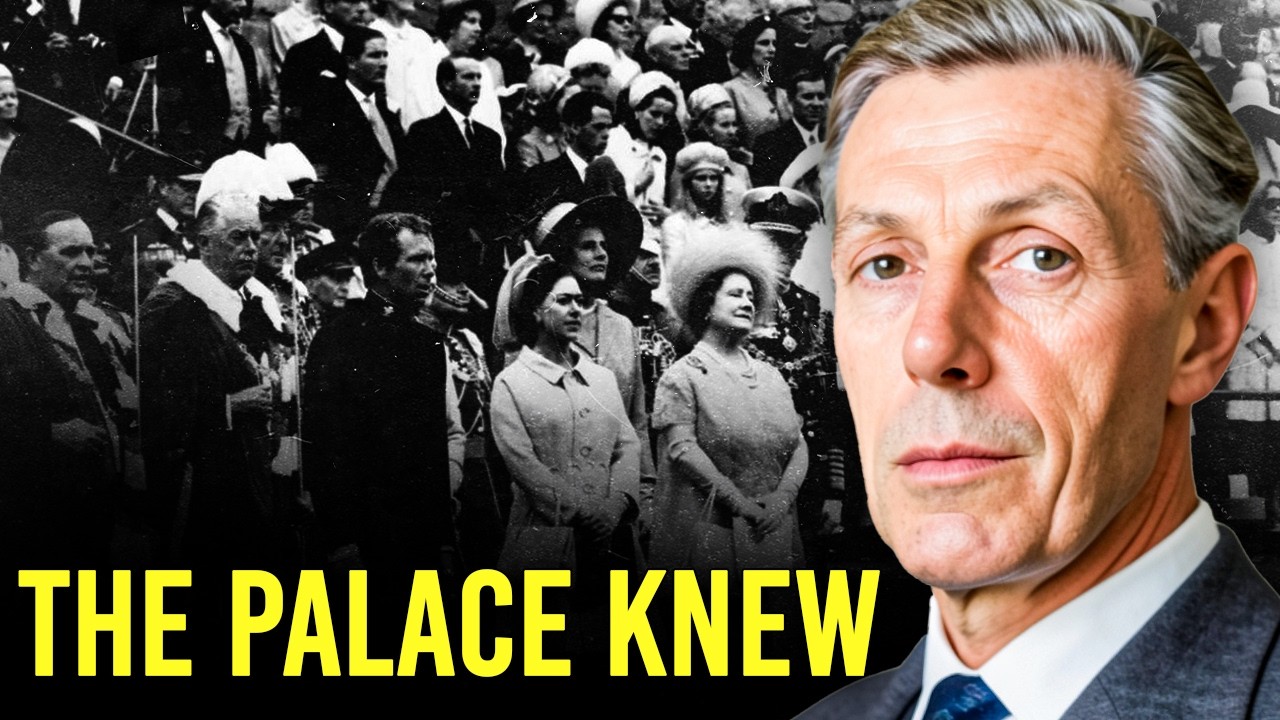
MI5 knew of the relationship. They interrogated Blunt. They watched him. They suspected him with the deep institutional certainty of men who recognised the pattern but could not find the thread that would prove it. But suspicion is not evidence.
He was questioned several times. He denied everything, calmly and fluently, with the steadiness of a man who had spent two decades practising the art of concealment. There was no confession, no defection, no intercepted communication that could settle the case.
MI5 officers were convinced, according to several accounts, that Blunt was an agent. But conviction without evidence in a legal system that requires evidence was not enough to act. And so the investigation stalled, and Blunt carried on.
He continued as Surveyor of the Queen's Pictures, as director of the Courtauld, and as a holder of the Royal Victorian Order. He continued attending official occasions, handling royal paintings, and moving through palace rooms with the quiet of a man who had never hidden anything.
What the public saw through the 1950s and early 1960s was an art historian at the height of his authority. What the intelligence services saw was an unresolved problem, a man they believed to be a traitor but could not touch, embedded in a post of such sensitivity and symbolism that any public move against him would raise questions they were not prepared to answer.
There was a particular kind of paralysis, and it was not merely bureaucratic. It was social. Blunt was one of them. He had gone to the right school, the right college, held the right post. He spoke in the right way. He had the right amount of quiet authority. To accuse him publicly without conclusive proof was not merely an attack on a man but on an entire system.
And the system had a powerful instinct to protect itself, even from facts it suspected to be true. That paralysis might have continued indefinitely. It might have led Blunt to a quiet retirement, a grateful obituary, and a footnote in the history of British art studies.
But in the early 1960s, eight thousand miles from Portman Square, a man named Michael Straight made a decision that brought the whole arrangement down. Straight was a wealthy, well-connected American, a graduate of Trinity College, Cambridge, who had been drawn into the same circle as Blunt and Burgess in the 1930s.
He had been recruited as a Soviet agent while at Trinity and had carried the secret quietly for years, much as his British counterparts had. But by the early 1960s, the ideology that had burned in him at Cambridge had cooled into something like personal shame.
He was living a respectable American life, writing and editing, moving in Democratic establishment circles. Then he was offered a prominent public position in Washington. The chairmanship of a national arts body, and the prospect of an FBI background check, forced him to confront his past.
He went to the FBI. He told them everything, including the identity of the man who had recruited him at Cambridge, Anthony Blunt. The information crossed the Atlantic and reached MI5, and suddenly, after more than a decade of frustrated suspicion, the service had what it had lacked.
It was not circumstantial inference or an accusation of complicity, but a direct, named allegation from a man who had been part of the network. It might not have been enough to prosecute, but it was enough for something MI5 had never been able to do with any real leverage. It was enough for a confrontation.
On April 23, 1964, MI5 officer Arthur Martin arrived at Blunt's flat in Portman Square. He came armed with Straight's testimony. He came with an offer approved at the highest levels: immunity from prosecution, granted by the Attorney General, Sir John Hobson, in exchange for a full confession and continued cooperation with the security services.
And he came with an implicit but firm understanding that what happened in that room would not be made public. Not then, and not ever, if the system could manage it.
What followed was not a dramatic arrest. It was a conversation between two men in an elegant room overlooking Portman Square. Martin presented the evidence. Blunt denied it. Martin pressed. Blunt stalled. His composure broke only in small, involuntary ways. A twitch in his right cheek. A stiffness in his posture. A careful avoidance of eye contact.
He left the room to pour himself a drink. Then he returned. He stood at the tall window overlooking the square and said nothing for what witnesses described as a very long time. Then, quietly, in a tone later described as closer to relief than defeat, he confessed.
He had been a Soviet agent. He had passed intelligence to Moscow during the war. He had been part of the Cambridge network. He confirmed all of it.
Then came the part that would define the next fifteen years. After the confession, after the immunity, after the debriefing process began, nothing much happened. Blunt was not removed from his post. He was not asked to resign. He was not stripped of his knighthood or his royal appointment.
The Queen's private secretary, Sir Michael Adeane, was informed, but exactly what he was told, when, and with what completeness would become one of the most contested details of the entire affair. The official position, stated fifteen years later in Parliament, was that Adeane was told in April 1964 of the confession and the immunity, and that the Queen was advised to take no action because any visible change in Blunt's status might alert Soviet contacts and compromise the ongoing intelligence value of his cooperation.
That was the justification. That was the language, measured, procedural, weighed down with the bureaucratic gravity of a decision taken behind closed doors by men who understood that the priority was not justice but management.
And within that language lay a choice so extraordinary it deserves to be stated as plainly as possible. The British state, having obtained a full confession of Soviet espionage from a man embedded in the royal court, chose to keep him in place entirely, not temporarily, not pending review, but as deliberate and sustained policy.
The logic had a surface. His royal post was unpaid, gave him no access to classified material, and any sudden change in his public status might raise questions in circles where silence was paramount. But the logic also had a deeper logic that no one wrote down in those terms.
Removing Blunt would mean acknowledging what he had done. Acknowledging what Blunt had done would mean explaining how the system had failed. And explaining how the system had failed was something the system was not prepared to do.
The next morning, nothing changed. Sir Anthony Blunt, KCVO, left his flat in Portman Square and resumed his life. He continued his work as Surveyor of the Queen's Pictures and director of the Courtauld. He continued moving through the rooms of Buckingham Palace to inspect the paintings belonging to the Crown.
The confession had happened, the immunity had been granted, and both had been sealed so completely that the British public would not learn a word of either for fifteen years. That silence was not passive. It was policy, maintained with the same institutional discipline that governs everything else the British state wishes to keep from public view.
The first of the mechanisms was the immunity agreement itself. The terms were precise: Blunt would not be prosecuted, and in return he would cooperate fully with MI5, providing names, details, and the operational history of the Cambridge network. The arrangement was authorised by the Attorney General, Sir John Hobson, and rested on a legal argument later defended in Parliament, that the public interest in obtaining intelligence outweighed the public interest in prosecution.
There was a second, unstated logic behind the first. Prosecution would mean a public trial. A public trial would mean headlines. And headlines would mean the British establishment would have to explain how a Soviet agent had been allowed to remain inside the royal court for nearly two decades. The immunity did not merely protect Blunt from prison. It protected the system from scrutiny.
The second mechanism was the palace itself. Sir Michael Adeane, the Queen's private secretary, was informed, as later confirmed in Parliament. But what Adeane was told, and how completely, remains one of the most contested details of the case.
The official account given by Margaret Thatcher in a written answer to the House of Commons in November 1979 stated that Adeane was told in April 1964 of both the confession and the immunity. But files declassified decades later, and reported extensively in January 2025, tell a murkier story.
Those files suggest Adeane may initially have been told only that Blunt was to be interrogated, not that a full confession had been obtained. The distinction matters enormously. If Adeane was told everything in April 1964, the palace made a conscious, informed decision to retain a confessed spy. If he was told only partially, the palace's information was being managed by the intelligence services in a way that kept the royal family away from the truth.
The most significant recent reporting, drawn from declassified MI5 files, indicates that Elizabeth was not fully informed of Blunt's confession until 1973, not 1964, nine years after the fact. For nine years, a confessed Soviet agent held a royal post, moved through the private rooms of the palace, and was addressed as Sir Anthony, while the Queen, in whose name the office was held, was not told the full truth about the man who held it.
There is something in this detail that resists easy interpretation. It would be easy to portray it as a conspiracy, the palace deceiving the intelligence services in a cover-up that extended even to the Queen. But the truth, as the files suggest, was more complicated and in some ways more troubling.
The decision not to inform the Queen was not taken in defiance of her, but, according to internal correspondence that later emerged, out of a kind of institutional protection. Senior officials in both MI5 and the royal household believed the information would only increase the Queen's anxieties and that telling her would serve no practical purpose.
The logic was paternalistic, but it was coherent on its own terms. If the goal was to preserve Blunt's public standing, a phrase that recurs in the declassified files and reveals the priorities of the institution more than any other document, then the fewer people who knew the truth the better. In that calculation, the Queen was simply another person who did not need to know.
The phrase "public standing" deserves scrutiny because it contains the entire philosophy of the cover-up in two words. It does not mean innocence. It does not mean exoneration. It means preserving his respectable appearance as a political instrument.
Blunt's continuation in his public role was not an oversight. It was useful. His presence in the royal court, his knighthood, his palace post, all served as camouflage, not for Blunt himself, but for the decision that had been made about him. As long as nothing changed outwardly, no explanation was required.
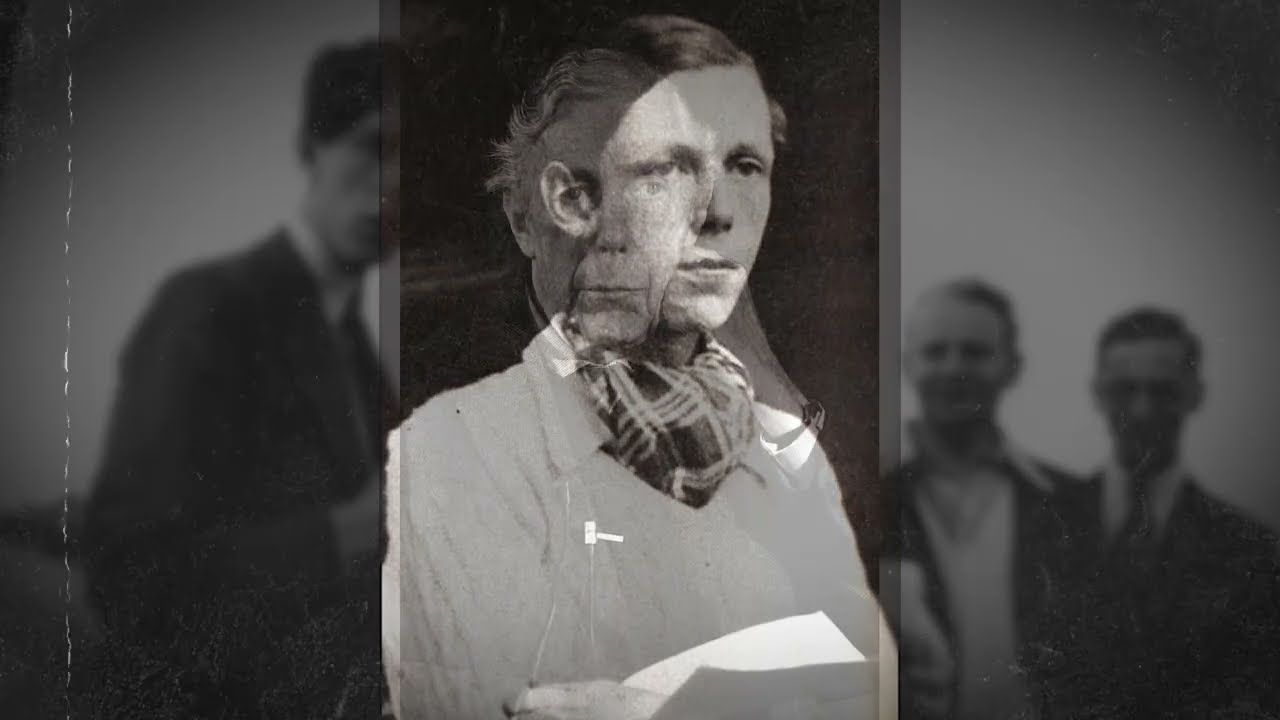
The years passed. Blunt continued his debriefing sessions with MI5, providing information about the Cambridge network and his wartime activities. The sessions were held in secret, in his flat or in locations arranged by the service, and had a strange formality, as though two parties were executing an agreement neither fully trusted.
The intelligence value of those sessions is debated. Some later accounts suggest Blunt was cooperative but selective, disclosing old information while withholding details that might expose active agents or create embarrassments. Others describe him as fully forthcoming once the initial resistance was overcome.
What is not disputed is that the sessions continued for years, and that Blunt's public life remained unchanged throughout. He published, lectured, and supervised doctoral students at the Courtauld with the same precision he had always brought to his work. He attended palace occasions and accepted invitations to scholarly conferences.
Arthur Martin, several senior MI5 officers, officials in the Attorney General's office, and Sir Michael Adeane at the palace all kept their silence with a discipline that, viewed today, is as remarkable as the espionage itself. No one leaked. No one wrote memoirs. No one told a journalist or a colleague in a moment of anger, regret, or drink.
The secret held because those who kept it understood, with the instinct instilled by decades of service inside the British establishment, that some facts are simply not for publication. This understanding was not cynical, or not only cynical. It was structural. It was how the system worked.
But the arrangement had a structural flaw that no amount of institutional discipline could remove. That flaw was time. Time changed the people involved. Time changed the political context. And most dangerously, time changed the risk calculations.
By the early 1970s, the original justification for keeping Blunt in place had largely evaporated. His intelligence debriefing was complete or nearly so. His royal appointment was approaching its natural end, though he would formally retire from the post in 1972 after nearly three decades of service.
The Cold War had entered a different phase, and a new generation of officials, who had not been party to the original decision, began to view the arrangement with fresh and growing discomfort. Michael Hanley, who became director general of MI5 in 1972, was the man who pushed hardest.
Hanley was a different kind of intelligence officer from the men who had struck the original deal with Blunt. He was practical and direct, and he had little patience for the kind of institutional sentimentality that allowed old arrangements to persist long after their usefulness had ended. He inherited the Blunt file and did not like what he found in it.
His internal notes and memoranda, as later reported from declassified records, show a man who believed the relationship with Blunt had outlived any value it once possessed. He wanted to cut ties. He wanted the palace properly informed. He wanted, in the language of intelligence bureaucracy, a clean break.
But a clean break meant telling those who had not been told. And telling those who had not been told meant confronting the question that had been deferred since 1964. What would the Queen say when she learned that a Soviet spy had been kept in her household with the knowledge and consent of her government?
The small circle who kept the secret in the early 1970s was remarkably small. Hanley knew that Martin Charteris, who had succeeded Adeane as the Queen's private secretary, had been briefed. Philip Moore, Charteris's deputy, was part of the circle. These men exchanged quiet, cautious, and deeply anxious correspondence about what to do.
The issue was no longer Blunt himself, who by this stage was largely irrelevant as an intelligence asset and diminishing as a security risk. The problem was the secret itself. The problem was what would happen if the secret emerged.
Hanley's position was clear: the secret should be disclosed to the Queen, the relationship with Blunt formally ended, and the palace should begin preparing for the possibility, however remote, that the story might one day become public. But the palace response, as recorded in the files, was hesitant.
Charteris understood the logic but feared the consequences. There was particular concern, expressed in internal memoranda, that telling the Queen would only increase her anxieties, a phrase that recurs in the correspondence with a hesitation that reveals something about how the men around the Queen understood their role.
They did not see themselves merely as advisers but as protectors, and what they were protecting her from in this case was knowledge that would cause her distress without offering her any remedy. Blunt had confessed. Blunt had been debriefed. Blunt was about to retire from his royal post. What would telling the Queen now achieve, except to burden her with a fact she could do nothing about?
That question, asked sincerely and debated in good faith by men who believed they were acting in the Queen's interest, is the moral crux of this part of the story. Because the answer, of course, is that she would have known the truth. And the men around her, for reasons that blended protection and institutional self-preservation in proportions that are difficult to separate entirely, decided that the truth was not what she needed.
But Hanley persisted. The correspondence continued through 1972 and into 1973, and eventually the palace position shifted. Not because the argument had changed, but because the risk calculations had. Blunt was getting older. His health was uncertain. The fear that began to appear in the files was not exposure during his lifetime but exposure after his death, through memoirs, deathbed confessions, a bold journalist, or the slow seepage of secret documents.
If the Queen learned the truth from a newspaper headline rather than from her private secretary, the damage to the institution would be far greater than any damage the truth itself might cause. And so, in early 1973, the decision was made. Charteris would tell her.
The meeting took place in March 1973. The exact date has not been publicly confirmed, but the circumstances were recorded in the declassified files. Martin Charteris went to the Queen and told her what had happened.
He told her that Anthony Blunt, her former Surveyor of Pictures, had confessed to Soviet espionage in 1964, that he had been granted immunity from prosecution, and that the decision not to inform her had been taken by the intelligence services and palace officials at the time. He told her the secret had been kept for nine years.
The Queen's reaction, as Charteris later described it in a memorandum included in the declassified file, was calm. She was not surprised. She recalled that Blunt had been under suspicion years earlier, suggesting she had been aware, at least in part, of the ambiguity surrounding him, even if she had not been told the truth of it.
She expressed no anger. She did not demand explanations or ask why she had not been told sooner. She absorbed the information with the composure that marked almost every difficult piece of news she received across her reign. It was, by all accounts, a quiet conversation.
In that absence of drama lies the most telling aspect of the scene. The lack of surprise suggests prior knowledge, not of the formal kind, not a briefing with dates and file references, but the instinctive awareness of a woman who had spent her entire adult life inside institutions that concealed things from her even as they claimed to serve her.
She had been Queen for twenty-one years by then. She knew what silence meant. She knew what it meant when the men around her chose their words with unusual care, or avoided a subject, or steered a conversation gently away from a name. The Queen now knew that she knew officially.
After the briefing, nothing changed publicly. Blunt had already retired from the Surveyorship in 1972. He kept his knighthood. He kept his position at the Courtauld, where he continued to work until 1974. He kept his flat in Portman Square.
The Queen had been told. The intelligence services had done their duty, and the secret, now confined to a slightly smaller circle, remained concealed. For six more years, the secret held through the remainder of Edward Heath's government, through Harold Wilson's return to Downing Street, through James Callaghan's government, through changes of MI5 director general and changes of private secretary at the palace.
No minister chose to break the silence. No official saw a reason to. The calculations remained as they had been since 1964. The cost of disclosure was judged greater than the cost of concealment.
But the world outside that circle was not still. In the years after Blunt's retirement from the Courtauld in 1974, the Cambridge spies story attracted renewed interest from journalists, writers, and intelligence historians who sensed that the official account was incomplete.
The question that lingered was whether there had been a fourth man, someone else in the Cambridge network, someone never publicly identified, someone perhaps protected by the very establishment that should have exposed him. That question echoed for years in newspaper columns, intelligence memoirs, and the conversations of Whitehall veterans who knew more than they were prepared to say publicly.
In the late 1970s, a journalist named Andrew Boyle decided to stop avoiding the question and address it directly. Boyle was meticulous and patient, having spent years building relationships with intelligence sources, former officers, retired civil servants, and people connected to the Cambridge network.
By 1978 he had gathered enough material to write a book titled "The Climate of Treason." Although he did not name Blunt explicitly, using the pseudonym Maurice as a precaution born of Britain's strict libel laws, the hints he planted in the text were unmistakable to anyone who knew the world he was describing.
The age, the background, the Cambridge connection, the eminence in the art world, the senior palace post, all pointed in a direction that must have been terrifying to the dwindling circle of men who still held the secret of a single door in Portman Square.
The book was due for publication in November 1979. In the weeks before its release, pre-publication copies circulated among journalists, editors, and members of Parliament. The name Anthony Blunt, which Boyle never printed but which was unmistakable from his text, began to spread through the corridors of Fleet Street and the lobbies of the House of Commons.
The old methods of concealment were no longer sufficient. Too many people knew. Too many journalists were following the same threads. The question was no longer whether the name would emerge, but when and under whose control.
Margaret Thatcher had become prime minister in May of that year. She had been in office six months, decisive, confident, and impatient with the institutional fuzziness that had allowed such a striking arrangement to persist for so long. She was briefed on the file. She understood the legal position, the immunity, the cooperation, and the logic that had sustained the silence through four previous administrations.
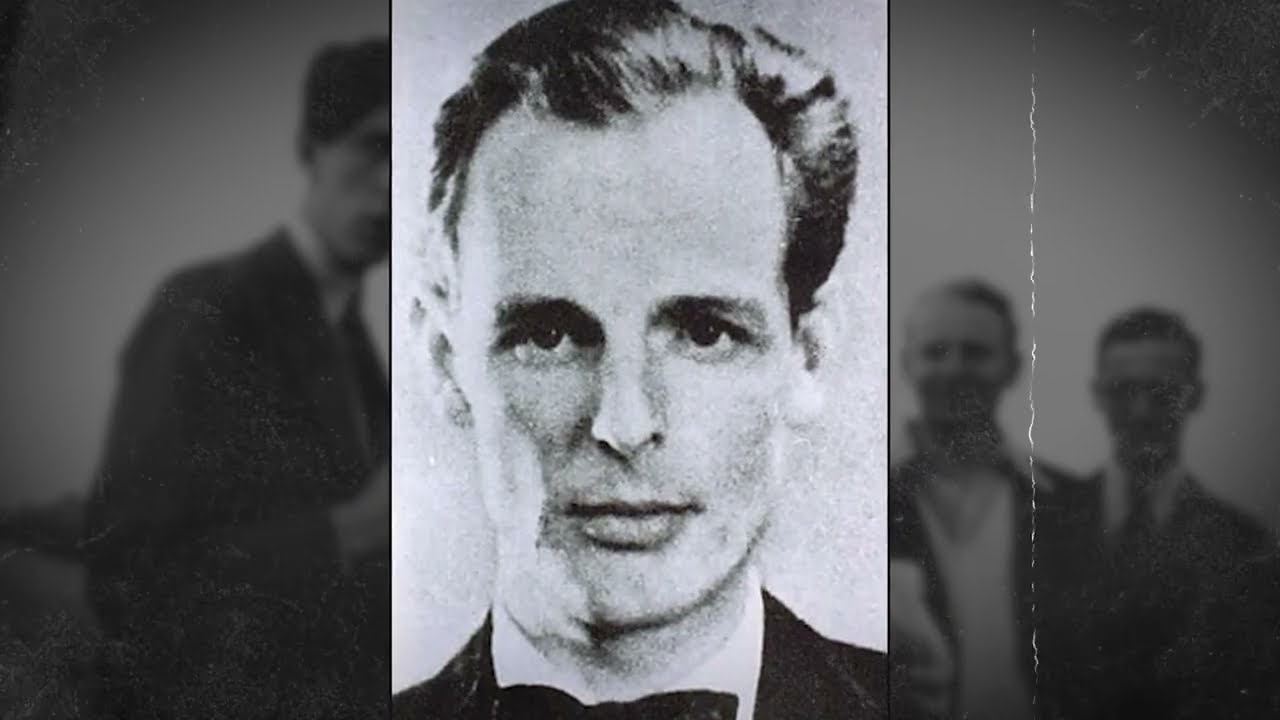
But she also understood something her predecessors had been able to avoid confronting: that the silence was about to end whether the government chose to end it or not. The book was published. The press smelled the story. Parliamentary questions were on the order paper. Even the private investigator had printed the name.
The choice was between controlled disclosure, a government confirmation of what it knew on its own terms and in its own language, and the more chaotic and damaging alternative of revelation by journalists who would frame the story not as an unfortunate intelligence decision but as a fifteen-year cover-up sanctioned at the highest levels of the British state.
Thatcher chose disclosure. She chose the written parliamentary answer, the most controlled and least dramatic instrument available to a prime minister. A statement placed quietly in the Commons library rather than delivered from the dispatch box.
On November 15, 1979, a Thursday, Margaret Thatcher gave a written answer in the House of Commons. It confirmed what Andrew Boyle's book had hinted at and what Fleet Street had been circulating for weeks.
Anthony Blunt, formerly Sir Anthony Blunt, KCVO, had been a Soviet agent. He had confessed in 1964. He had been granted immunity from prosecution in exchange for his cooperation with the security services. The immunity had been authorised by the Attorney General of the time. The Queen's private secretary had been informed. And for fifteen years, the matter had been concealed from the public.
The language was sober and factual. As was customary in written answers, it was devoid of emotion or emphasis or any hint that the information it contained might be extraordinary. It read like a routine memorandum, and its effect, when it reached those who understood its meaning, was like an explosion.
Initial reactions were procedural. Members who had tabled questions were notified that answers had been placed. Journalists monitoring parliamentary business picked up the text. Within hours, the story had broken out of the controlled frame Thatcher had chosen.
Within days, the knighthood was annulled. The Queen acted on the advice of the prime minister, and the cancellation was published in the London Gazette, the same publication that had announced the original award twenty-three years earlier. Sir Anthony Blunt became simply Anthony Blunt.
The removal of a knighthood is a very rare event in British public life and carries a symbolic weight beyond the mere removal of a title. It is an announcement by the Crown, in the most formal terms available, that a bond of trust between monarch and subject has been irreparably severed.
In Blunt's case, the timing of the removal was part of the meaning of the scandal. The knighthood was not withdrawn in 1964 when the confession was made, nor in 1973 when the Queen was fully informed. It was withdrawn only in 1979 when the secret became public.
The honour had been preserved, like other elements of the arrangement, for the sake of appearances. Its removal, like the disclosure itself, confirmed the essence of the scandal: not what Blunt had done, which was terrible enough, but what the system had been prepared to tolerate and conceal as long as it remained hidden.
The days following the parliamentary debate were brutal for Blunt in a way nothing in his carefully managed life had prepared him for. The press descended on Portman Square with the full resources of Fleet Street. Reporters camped outside his flat. Camera crews waited on the pavement from dawn.
He was photographed walking to his car, to a shop, anywhere. A tall, thin, elderly man in a dark coat, seventy-two years old, his face carrying an expression variously described as blank, contemptuous, or exhausted. The man who had spent his life avoiding attention was now the most photographed person in Britain.
He held a press conference, one of the strangest and most jarring scenes of the entire affair. It took place at the offices of The Times in London, and Blunt treated it like an exceptionally difficult academic seminar. He spoke in the same precise, measured manner he had used in his lectures.
He acknowledged his wartime espionage and expressed what he described as regret. He tried to explain the ideological context of the 1930s, the fear of fascism sweeping Europe, the belief among his Cambridge generation that the Soviet Union represented the only serious resistance to it.
In another era, or in a university lecture hall, the argument might have attracted at least some sympathy. But in the autumn of 1979, during the Cold War, weeks before the Soviet invasion of Afghanistan, with the memory of the Berlin Wall still vivid, his words sounded to most listeners like the justifications of a man who had never grasped the human cost of what he had done.
The press conference did not repair his position. It deepened his isolation, a figure from another time speaking a language the country he had betrayed no longer understood and no longer wished to try to understand.
He was asked to resign from the British Academy, and his fellowship was withdrawn, an unprecedented step in the academy's history that provoked sharp internal debate among its members. Some argued that scholarly distinction should be measured by its own standards, not revoked for crimes unrelated to research. That view did not prevail.
Trinity College, Cambridge, where the story had begun more than fifty years earlier, made no public statement, but the fallout spread through its alumni and its reputation. Colleagues who had worked with him for years had to reconcile the man they had known with the man the world had just discovered.
Some defended him privately, arguing that his scholarship was genuine and that his wartime choices, however wrong, belonged to a moral context that could not be judged by the standards of a later age. Most did not. The system that had once protected Blunt with silence now, with the same institutional efficiency, expelled him from its ranks.
He withdrew almost entirely from public life. He and his longtime partner, John Gaskin, retreated into an isolation that was no longer a choice but an imposition. They moved to a flat in a luxury residential block, away from Portman Square, away from the Courtauld, away from the geography that had shaped his public life.
His health declined, and he was diagnosed with a heart condition. The years after his exposure were marked by a secluded quiet different from his customary reserve. He gave occasional interviews to selected journalists and historians, measured, cautious, never apologising in the way the public wanted, never defiant in the way that would have made him easier to dismiss.
He maintained to the end that his motive for espionage during the war had been ideological, not financial, not resentful, not coerced, and that the ideological context of the 1930s, the rise of fascism, the failure of democracies, the Spanish Civil War, made the choice seem not merely justifiable but necessary.
Anthony Blunt died on March 26, 1983, at the age of seventy-five at his home in London of heart failure. The obituaries revisited the espionage, the confession, the immunity, and the disclosure. They noted his contribution to art history. They noted his betrayal.
The wider fallout was less about a single man than about the institutions he had passed through. The exposure of Blunt damaged MI5's reputation at a time when the service was already under pressure for parliamentary scrutiny and growing public suspicion that the intelligence agencies operated beyond effective democratic oversight.
The scandal damaged the royal family severely, not because anyone seriously believed the Queen had been complicit in Blunt's espionage, but because the fifteen years of silence and the nine-year delay before the Queen herself was told raised questions about what the palace knew, when it knew it, and what it was prepared to tolerate to avoid embarrassment.
The credibility of the British establishment itself was damaged more broadly, that interlocking network of schools, universities, clubs, regiments, and institutions that had governed the country for generations. The Cambridge connection to the scandals was not incidental. It was the point.
The cultural afterlife of the scandal proved remarkably durable, a story that refused to stay in the archive. In 2003, BBC 2 broadcast "Cambridge Spies," a four-part drama in which Samuel West portrayed Blunt, capturing something of the controlled manner and the intellectual arrogance beneath it.
In 2019, "The Crown," Netflix's lavish drama about the reign of Elizabeth II, opened its third season with an episode centred on the revelation, placing the scandal inside the internal life of the palace and using it to explore the tension between the Queen's duty to her country and the institutional instinct to protect the monarchy from embarrassment.
But the story did not end with the drama. The declassified files kept coming. In January 2025, the release of a new batch of MI5 records produced fresh reporting that challenged the official timeline Thatcher had set out in her 1979 parliamentary answer.
That reporting indicated that the Queen may not have been told the full details until 1973, and that internal palace correspondence in the early 1970s revealed a decision-making process more anxious, more conflicted, and more morally compromised than the public had been allowed to see.
The archival record continues to shift. It has not settled, and there is no reason to believe it will settle soon, because files that remain classified may yet contain further details that complicate the picture again. In that sense, the story of Anthony Blunt is still being written, not by dramatists or journalists but by the slow, reluctant machinery of official disclosure.
What remains is not an estate or a family seat or a dynasty in the traditional sense. What remains is a vast, fragmented, still incomplete record, scattered between Hansard, the National Archives at Kew, the MI5 files, the Royal Collection, and the institutional memory of the Courtauld Institute.
Art historians still read his publications, and his studies of Poussin are still cited. The Courtauld itself, through changes of leadership and location, continued as one of the world's leading centres for the study of art history, carrying the complications of Blunt's legacy without allowing it to define the institution's identity.
The Royal Collection endures as it always has, vast, magnificent, meticulously cared for, and the role of Surveyor of the Queen's Pictures is now held by people with no connection to the scandal and no reason to think of it in their daily work.
The flat in Portman Square long ago passed out of Blunt's possession, and the royal court itself has moved to new buildings. The physical world he inhabited has been quietly reshaped, as London always reshapes itself, so that the rooms that witnessed the confession and the corridors he once walked carrying the royal paintings he curated have been absorbed into other uses, other lives, other purposes.
And yet the story persists. It is not, in the end, about whether Anthony Blunt was monstrous or brilliant, though he was both in different ways. It is about a particular habit of the British establishment, a preference for discretion over exposure, for appearance over admission, for managed embarrassment over moral clarity.
The Crown did not create his betrayal, but the institutions around it made a choice once they knew what mattered more. And for fifteen years, what mattered more was that nothing should appear to have happened at all.
The image that lingers is not the confession, nor the parliamentary anger, nor the press conference, nor even the removal of the knighthood. It is the image of a confessed Soviet agent walking the galleries of Buckingham Palace the morning after he had admitted everything, because the system had decided that visible continuity was safer than visible truth. That image sums up the entire story, and it remains unsettling to this day.