In 1969, a young American soldier named Jerry White was deployed to Vietnam and stationed near My Tho in the Mekong Delta. He had no idea that the very day his unit arrived in the village of Vinh Kim would change his life forever. Jerry’s Delta Company reached Vinh Kim in May 1969 to replace Bravo Company. On his first patrol, he stepped into the village and saw a slender young woman with dark eyes and black hair standing at the edge of a rice field.
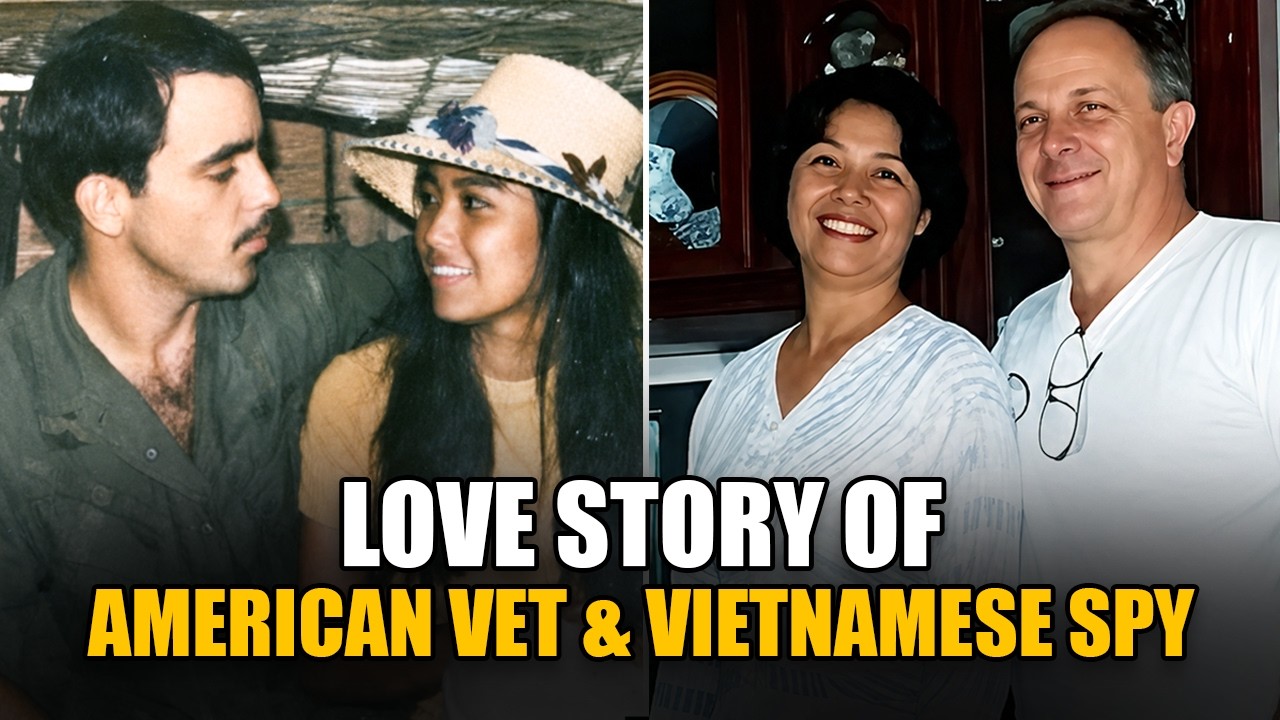
Her nickname was Barbara, though her real name was Tuyet. Jerry later recalled that when she smiled at him, he felt as though his soul had left his body. Under normal circumstances, the two should never have met again. American soldiers usually remained inside heavily guarded bases, and a clear divide separated U.
S. troops from local civilians. But Vietnamese civilians, including women who sold soft drinks to soldiers, were allowed onto the base. That was how Jerry encountered Tuyet a second time.
One day, a superior officer pointed her out and told Jerry that military intelligence suspected she was working for the North Vietnamese. They believed she was gathering information, though they had never been able to prove it. In truth, the suspicions were correct. Tuyet was indeed collecting intelligence and supporting the revolutionary movement.
At first, she and Jerry were simply friends who exchanged greetings. Gradually, short conversations turned into longer ones, and the two grew close. Sometimes Tuyet would quietly suggest that Jerry choose a different patrol route than the one originally planned. Years later, he realized she had been protecting him, steering him away from areas where booby traps had already been placed.
Then tragedy struck. During a military operation, Tuyet was traveling with Jerry’s unit when a landmine exploded. One American soldier was killed instantly, and Tuyet was severely wounded. Jerry rushed to her side and carried her onto a medical evacuation helicopter bound for a local hospital.
Despite her pain, she remained conscious and looked at him with complete trust. When Jerry learned Tuyet would soon be discharged because her family could no longer afford treatment, he paid $40 out of his own pocket so she could stay in the hospital for another month. The explosion nearly took her life, but it also made both of them realize their feelings had deepened beyond friendship. It was love.
Soon afterward, Jerry was transferred to an assignment where he could live in a private apartment. After recovering, Tuyet chose to stay with him. To avoid gossip and suspicion, they told people they were married. They lived together for only three months, but both would later describe that brief period as the happiest time of their lives.
Eventually, reality returned. Jerry would have to leave Vietnam, and Tuyet could not abandon her family. He desperately wanted to bring her to the United States, but she could not leave her responsibilities behind, and obtaining a visa through the military system was impossible. They parted in tears.
After the war ended, Tuyet was pressured by her family into marriage. She eventually became the mother of eight children, and after her husband died of heart disease, she raised them largely on her own. Jerry returned to America, completed graduate school, and built a successful career. His personal life was harder.
He endured two unhappy marriages and fought a custody battle for his children from his first marriage, eventually becoming a single father. Decades passed. Tuyet built a life around raising her family, and Jerry continued with his career. But he never forgot her.
From time to time, he would look through the photographs of her that he had preserved for more than 30 years. In 2001, after more than three decades apart, Jerry made a life-changing decision. He would return to Vietnam and search for the woman he had loved all those years. With the help of a local guide, he traveled back to the area where her family had once lived.
In April 2001, he stood before a simple thatched-roof home and found her. The reunion overwhelmed them both. The love they had shared decades earlier had survived neither war nor time had managed to erase it. Over the next several years, Jerry returned to Vietnam every year to visit Tuyet and support her family.
Then in 2004, they traveled together to the United States, where they were legally married. Jerry’s adult children welcomed Tuyet with warmth. The couple settled in Texas and began the life they had once dreamed about. Every two years, they returned to Vietnam to visit her children, grandchildren, and homeland.
For nearly two decades, they enjoyed the life they had been denied in their youth. Then came 2021. As the COVID-19 pandemic spread, the couple decided to remain in Texas instead of traveling to Vietnam, believing medical care would be safer in America. In late March, Tuyet suddenly began feeling unwell.
Jerry’s son drove her to the hospital, where she tested positive for COVID-19. Her condition rapidly deteriorated, and she was transferred to intensive care. Because of pandemic restrictions, no visitors were allowed. The man who had crossed half the world to find her after 31 years was unable to walk through a hospital door to see his wife one final time.
Jerry later said, “I couldn’t hold her. I couldn’t tell her I loved her. I couldn’t kiss her goodbye. ”
Tuyet passed away on April 1st, 2021.
Even today, Jerry continues to carry the memory of the woman he loved.