For anyone who grew up in Britain between 1950 and 2002, the Queen Mother was a familiar and comforting figure. She was the plump lady in pastel coats and hats, waving a gloved hand from a carriage while holding a gin and Dubonnet in the other. She seemed beloved, unthreatening, and perpetually cheerful, like a porcelain figurine that had come to life at a garden party after a drink or two.
That image was not entirely wrong. Elizabeth Bowes-Lyon, who became Queen Elizabeth and later the Queen Mother, genuinely loved a drink, adored horses, and possessed a warmth that could settle any room. People who met her described the way she fixed her eyes on yours as if no one else existed, giving each person a fleeting sense that they were, for that moment, the only important person on earth. Politicians and palace staff alike adored her. She lived to 101 and died peacefully in her sleep in 2002, mourned by a nation as a beloved aunt they had never really spoken to.
It was a beautiful, highly curated, and entirely incomplete picture. Behind the waving and the pastels and the carefully managed public charm ran something much colder in this woman's veins. It was a grudge she carried for more than six decades, never abandoned, and barely ever spoken aloud. It was aimed at one man, not a foreign enemy or a political rival, but her husband's brother: the former King Edward VIII, the Duke of Windsor, the man who, in her account, destroyed everything.
If all you know of Edward VIII is the romantic image of a king who gave up the throne for love, moved to France, and lived out his days in comfortable exile with the woman he chose over the crown, the Queen Mother's anger may seem disproportionate, a little dramatic, perhaps trivial in that familiar British aristocratic way where real wounds go undiscussed and surface slights become lifelong feuds. But the full picture is stranger and more complicated than either the romantic version or the bitter one suggests.
What the popular narrative usually omits is this: Elizabeth did not merely dislike Edward. She blamed him, with a severity that never softened across 50 years of widowhood, for destroying her husband's health, stealing their private family life, and driving him to an early grave. Not metaphorically. She sincerely believed that Edward's abdication killed her husband. Whether her judgment was correct is a separate question, and one worth reaching. But to understand why she felt this so deeply, and why the anger never faded even after the people she blamed were gone, we have to go back to before the abdication crisis, to a time when Elizabeth Bowes-Lyon and the future Edward VIII were not enemies at all, but, by every account, genuinely fond of each other. That is precisely what makes the whole thing worse.
Rewind to the early 1920s. Elizabeth Bowes-Lyon, daughter of the Earl of Strathmore, married Prince Albert, known as Bertie, the second son of King George V, in 1923 at Westminster Abbey. By all accounts, Bertie was utterly devoted to her, the kind of quiet, intense loyalty that does not always find the right words but shows itself in everything else. Reports suggest Elizabeth turned him down at least once before accepting, not because she did not care for him, but because she dreaded the exposed life of the royal court, the loss of privacy, and the relentless public scrutiny that came with marrying into the House of Windsor. It was a shrewd instinct, as it turned out, and a preview of the kind of life she would spend the next eight decades living.
Bertie's older brother, David, Prince of Wales, heir to the throne and the future Edward VIII, was not yet the cautionary tale he would become. He occupied the role of golden boy of the British Empire: handsome, naturally charming, the sort of person who seemed to fill a room simply by entering it. Letters preserved in the royal archive from that period paint a picture of real warmth between Elizabeth and her brother-in-law, her appreciation of his ease in social situations, and her gratitude for his steady support during the wedding. He treated her kindly, made her comfortable in unfamiliar settings, and proved to be the kind of brother-in-law who makes family gatherings enjoyable rather than a heavy obligation.
To be fair, most people felt that way about David in the 1920s. He was overflowing with charisma. He toured the Empire like a rock star, shook hands with miners and veterans, and the press adored him with an uncritical enthusiasm that has not aged well. If you had told anyone in 1925 that this man would one day abandon his duty for a twice-divorced American woman and spend the rest of his life in a bitter Parisian exile, they would have thought you were writing very bad fiction.
But Elizabeth noticed the cracks forming before anyone else seemed willing to admit them. As the 1920s gave way to the 1930s, David's behavior shifted toward increasing recklessness, a careless disregard for the unwritten rules that held the monarchy together, and a visible boredom with protocol that curdled into open contempt for the institution he was meant to inherit. Historians point to growing unease in Elizabeth, not about David personally, not yet, but about the direction he seemed to be drifting. She valued tradition, order, and the quiet stability of family life. David, increasingly and obviously, valued none of those things.
He chased affairs, dodged obligations, and treated the prospect of becoming king with the enthusiasm of a man waiting for a long-delayed dentist appointment. Elizabeth watched all of this unfold from their home at 145 Piccadilly, the London house she shared with Bertie and their two daughters, the future Queen Elizabeth II and Princess Margaret. Their life there was warm, private, and contented, with Bertie doting on the children while Elizabeth ran the household with a kind of strict grace that could have governed a small country, and often practically did. They did not expect the throne, did not want it, and built their entire lives on the comfortable assumption that David would eventually take it, do an acceptable job, and leave them alone.
That life at 145 Piccadilly became something close to sacred to Elizabeth. It was the one achievement she had built entirely on her own terms, proof that royal life could actually be happy, with Bertie adoring her, the children growing up healthy, and the household running smoothly. Behind its doors, the future king of England quietly continued dismantling every expectation the country had placed on him. Elizabeth did not yet know how catastrophic the consequences would grow.
The abdication crisis of 1936 did not come out of nowhere. It crept in slowly, gave everyone plenty of warning signs they chose to ignore, and then exploded with a force that rearranged the entire British constitutional order within days. By the mid-1930s, David had fallen completely and irrevocably in love with Wallis Simpson, the sharp-tongued, stylishly turned-out American who was still married to her second husband at the time, not her first. The first marriage had already ended in divorce.
In the context of 1930s British society, where the Church of England's position on divorce was not merely conservative but doctrinally absolute, and where the monarch served as the nominal Supreme Governor of that Church, this amounted to far more than a minor social embarrassment. It proved to be extremely dangerous. The British press, under those unwritten conventions that look quaint by modern standards, agreed to keep the relationship out of the newspapers. The American press felt no such obligation, and news of the affair ran on front pages from New York to Chicago for months before the British public became aware of it.
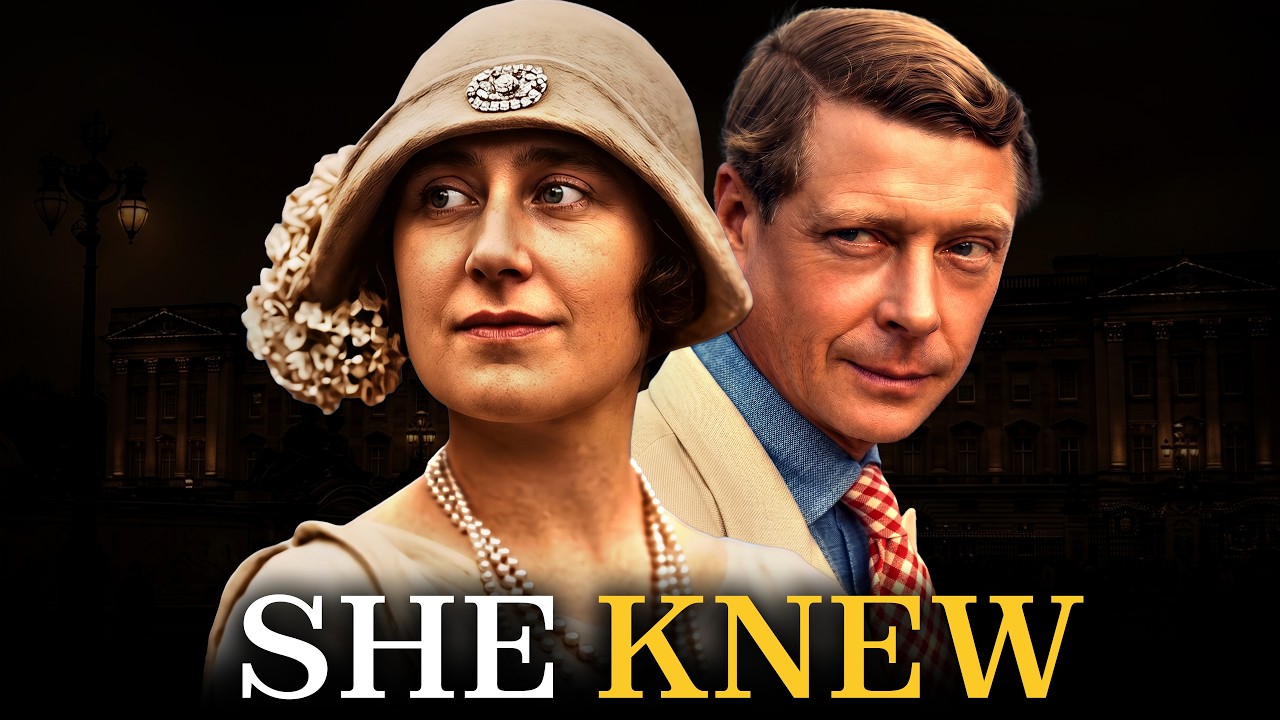
When the dam finally broke in Britain in December 1936, events moved with terrifying speed. Edward, who had ascended the throne earlier that year after the death of George V, announced his determination to marry Wallis regardless of the consequences. Prime Minister Stanley Baldwin, on behalf of the government and the dominion governments, informed him in measured but unmistakable terms that a twice-divorced woman could not be accepted as queen. Edward was offered a compromise, a morganatic marriage in which Wallis would be his legal wife but would not receive the title of queen, and any children they had would not inherit the throne. He rejected it outright.
On December 11, 1936, Edward VIII signed the instrument of abdication and delivered a famous radio address to the nation, telling the public in a voice that sounded calm and slightly wounded that he could not carry the heavy burden of responsibility without the help and support of the woman he loved. The BBC broadcast the speech from Windsor Castle, and millions in Britain and the Empire listened in stunned silence. Many of them were hearing for the first time that their king planned to leave, and realized in the same moment that he had already gone.
A romantic gesture? Perhaps, if you are listening from a comfortable distance with no personal stake in the outcome. Generations would later romanticize the act, a king who gave up everything for love. But imagine, for a moment, listening from 145 Piccadilly. Imagine standing there as Elizabeth Bowes-Lyon, in your living room, absorbing the news that your shy, stammering husband, the man who had never been trained for the monarchy, had never wanted it, had never considered the possibility that it might fall to him, and who suffered from a speech impediment that made public speaking physically painful, now held the title of King George VI, monarch of the United Kingdom, the dominions, and the entire British Empire, with immediate effect.
William Shawcross, in the official biography of the Queen Mother, described the abdication as a horrifying surprise that shattered the family's private world. "Shattered" is not a biographer's exaggeration. If anything, it may be too gentle. The quiet domestic life at 145 Piccadilly, the bedtime stories, the corgis, the garden, the relative privacy of being the Duke and Duchess of York, all of it evaporated in a single evening. Elizabeth, who had feared royal life even as a duchess and had initially refused Bertie's proposal partly because of that fear, now found herself queen consort. Every one of her fears about marrying into the royal family had come true, multiplied a thousand times, and arrived at her doorstep delivered by the one person who should have prevented it.
She did not see Edward's decision as a noble sacrifice for love, not for a single moment. She saw a man who abandoned his post and fled in the most cowardly way available, wrapping his dereliction in the language of romance. Not brave, not understandable, simply selfish. In her view, Edward took one look at the weight of the crown, decided he did not want to carry it, and dropped it directly onto the shoulders of the person least prepared to bear it. What troubled her most, more than the loss of privacy, more than the sudden upheaval of their lives, was the inequality of the choice. Edward could leave. Bertie could not. There was no mechanism for a second abdication. There was no procedure for handing the crown back once it settled on your head, and no one asked Bertie whether he wanted to wear it.
From that December onward, the fondness Elizabeth had felt for David did not merely cool. It hardened into something permanent and structural, a deep hostility that grew colder with each passing decade. The kind that outlives the person you are angry at, and outlives you as well. Lessons were not learned, at least not by Edward. But Elizabeth absorbed the lesson of December 1936 into her bones, and it shaped every decision she made about her brother-in-law for the next 66 years. She believed that duty could not be delegated, that love did not excuse abandonment, and that those left behind always paid the highest price.
So the abdication happened. Bertie became George VI. Elizabeth became queen consort. And Edward, now styled the Duke of Windsor, left for France with Wallis Simpson, naively expecting, with the particular naivety of a man who had never in his life heard the word "no" and meant it, that the family would eventually come around, welcome Wallis, and perhaps invite them home. It did not happen. And the person most responsible for ensuring it never happened, not in 1937, not in 1947, not in 1957, not ever, remained Elizabeth.
In 1937, King George VI issued a new letters patent, on the advice of his cabinet but with Elizabeth's fierce and powerful support behind the scenes. The patent granted Edward the style of Royal Highness, recognizing his former position, but deliberately withheld the same style from Wallis Simpson. Any children they might have were excluded as well. In the language of royal protocol, the document represented a deliberate, calculated, and permanent demotion, and Elizabeth pushed harder than anyone else in the family to see it enforced to the letter.
You might think this was all routine procedure, a technicality, just paperwork. But in the world of British royalty, titles carry a weight outsiders often underestimate. Denying Wallis the style of Her Royal Highness was not a routine administrative matter. It delivered a message in the only language the monarchy truly speaks: you are not one of us, and you never will be. As long as Elizabeth drew breath and held influence, that message never wavered.
The Duke and Duchess of Windsor remained in exile in France, entirely excluded from British royal life. Their life in Paris took on a strange quality, glittering on the surface, with dinner parties and fashionable friends, but essentially hollow, a life of permanent displacement. They occupied a grand house, received visiting Americans who saw the former king as an exotic and romantic figure, and crafted an image of themselves as sophisticated martyrs, yet remained completely isolated from the institution. Edward had no official role, no government duties, no place in the ceremonial life of the family. He remained stuck in the monarchy's harsh accounting as a private citizen with a title and a grudge, reduced to a kind of permanent European holiday funded by a mix of personal wealth and a negotiated annual allowance from the Crown.
He wrote letters to his mother, Queen Mary, and to Bertie, sometimes pleading for reconciliation, sometimes complaining about money, sometimes wallowing in self-pity in the way only a former king can. Wallis, for her part, did not accept the snub graciously. Archival correspondence tells us that Edward and Wallis developed their own private vocabulary of contempt for the family that had cast them out. Elizabeth, with her love of food and her full figure, was nicknamed "Cookie," a sarcastic reference to a stout Scottish cook, the kind of insult whose cruelty comes from its accuracy. Princess Elizabeth, the future queen, was called "Shirley Temple," reducing the heir to the throne to a bratty child actress, an insult that, unlike "Cookie," targeted a child who bore no responsibility for any of it.
The hostility was mutual, and neither side showed the slightest interest in de-escalating. But what stands out is the asymmetry in how each side fought this private cold war. Edward and Wallis traded barbs in private correspondence, lobbing insults from the safety of their Paris salon, while Elizabeth's hostility operated on an entirely different plane. It was not mockery, not cruel nicknames scribbled in letters, not venting to friends. It was something colder. She simply refused to acknowledge that Wallis existed.
According to biographers, Elizabeth adopted a policy of near-total silence regarding the Duchess of Windsor. She avoided saying Wallis's name if she could, did not engage with the subject when others raised it, and treated her brother-in-law's wife as if she had been administratively deleted from the family record. This was perhaps colder than any nickname, because you can recover from being mocked. Being erased entirely is a different matter.
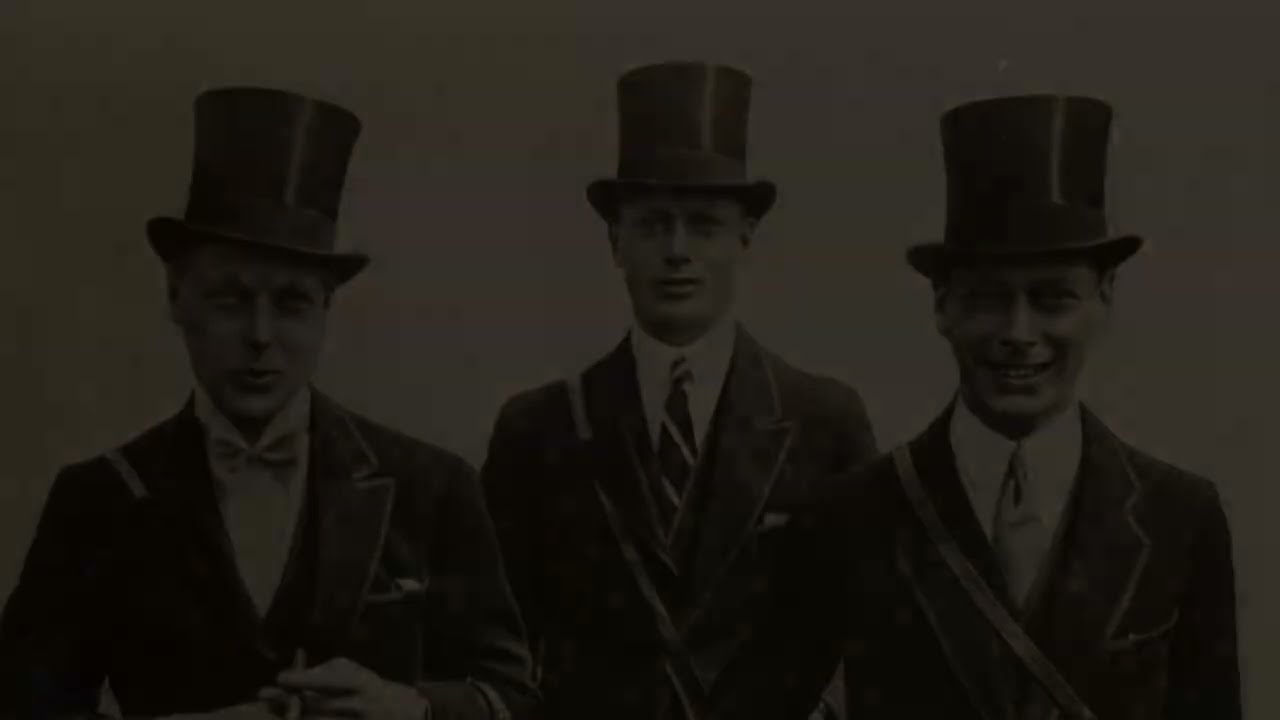
There is a widely circulated quote attributed to Elizabeth, in which she supposedly told intimates that the two people who had caused her the most trouble in her life were Wallis Simpson and Hitler. It is a witty, memorable line, the sort of thing you would expect from a woman of her generation and temperament, and the sort of thing biographers dream of finding in an archive. But serious historians treat it as entirely undocumented, with no archival evidence to support it. The quote also directly contradicts her well-documented refusal to discuss Wallis at all. It appears to be something someone invented to capture the spirit of her feelings, accurate in tone, wrong in fact, rather than something she actually said over afternoon tea.
To be fair, the spirit of the quote may not be far off, and she likely regarded Wallis and Hitler as belonging to roughly the same category of disasters that had befallen her family and country. She simply never said so aloud, because saying so would have meant acknowledging Wallis, and acknowledging Wallis was something Elizabeth Bowes-Lyon absolutely and categorically refused to do for 65 years.
Then Bertie died. On February 6, 1952, King George VI died in his sleep at Sandringham at the age of 56, after a reign that spanned the Second World War, the birth of the welfare state, and the beginning of the end of the British Empire. The official cause of death was a coronary thrombosis aggravated by lung cancer. Surgeons had removed part of one lung the previous year in an operation that slowed the spread but did not stop it. He had been a heavy smoker for most of his adult life, consuming cigarettes at a rate that alarmed his doctors and surprised no one who understood the pressures he worked under, and the medical evidence pointed in one direction. Smoking is what killed him.
Yet none of these medical facts left the slightest mark on Elizabeth's interpretation of events. In her account, and she never retreated from this position, not once, across 50 years of widowhood from 1952 until her death in 2002, the crown killed her husband. Not cigarettes, not cancer, not genetic predisposition, not the pressures of war, not the fact that Bertie's own father had died relatively young. She attributed it to one person: Edward. Edward, who could have done the job himself but chose not to, who left and moved to France and married the woman he wanted, and left Bertie to be slowly and painfully crushed over 16 years under a weight that should have belonged to someone else.
Historians treat this attribution with sympathy, but also with a kind of analytical distance that Elizabeth herself could never achieve on this particular subject. Both William Shawcross and Hugo Vickers suggest that her refusal to confront the smoking, the concrete physical cause of her husband's death, served as a psychological coping mechanism, one she never abandoned because she never needed to. Facing the fact that Bertie's own habits contributed directly to his early death would have meant grappling with the randomness of it, and with his own role in it, an idea intolerable to anyone, let alone a woman who venerated her husband. Blaming Edward gave her grief a target, a narrative, and a villain. It turned a meaningless medical tragedy into a story with a clear moral structure: a duty abandoned, consequences borne, innocence destroyed. The story was coherent in a way cancer never is.
Here lies the uncomfortable middle ground historians occupy. She was not entirely wrong. No one disputes that the cigarettes did the physical damage. But the pressures of the monarchy accumulated over 16 years with a grinding, merciless force. Night after night of bombing during the Blitz, with the royal family staying in London while Buckingham Palace itself took direct hits, constant public appearances and morale-boosting tours of bomb-damaged neighborhoods, and the speeches, the speeches that cost Bertie agonizing, humiliating effort every single time, each one a private battle against his stammer fought on a public stage. All of it piled onto a man who had never trained for the role and carried it not out of desire or ambition but out of sheer, uncomplaining duty.
Sixteen years of continuous service, from the chaos of the abdication, through six years of total war, into the postwar era of rationing, imperial retreat, and national exhaustion, until his body simply stopped at 56. Elizabeth watched that entire trajectory unfold beside him, watched the toll accumulate year after year, and drew her own conclusions about who bore responsibility. Did the crown accelerate the collapse of his health? Probably yes, though we will never know for certain, because the alternate version of Bertie's life, the one in which he remained Duke of York and smoked just as heavily but without the overwhelming daily pressure of running a country through war and reconstruction, exists only as a thought experiment.
But Elizabeth believed it with every fiber of her being, and that belief hardened over the years until, in her mind, it was indistinguishable from established fact. Not a theory, not an interpretation, but the simple, obvious truth of what happened to her husband. After Bertie's death, Elizabeth wore black, withdrew from public life for several months, and quietly considered whether to retire from the world entirely, perhaps to Scotland, to a castle, to live a private life of mourning away from the institution that had swallowed her family whole. But she did not. She eventually returned as the Queen Mother, resuming her public duties with the same measured warmth, carrying her grief and her blame as twin weights she refused to set down.
Edward attended the funeral, awkward and unwelcome, a ghost from a chapter the family wanted closed, and Elizabeth tolerated his presence but offered nothing beyond the bare minimum protocol required. No warmth, no reconciliation, not even the polite fiction of forgiveness. There is another detail worth noting, because it matters for understanding the scale of what we are discussing. Elizabeth was 51 when Bertie died, and she lived another 50 years, half a century of widowhood during which her hatred of Edward, and especially of Wallis, never softened, never eased, never showed the slightest crack of forgiveness.
Edward himself died in Paris in 1972, surrounded in his final weeks by Wallis and a shrinking circle of elderly friends. Wallis survived until 1986, increasingly frail and isolated, still denied the style of Her Royal Highness that had been withheld from her roughly 50 years earlier. Elizabeth outlived them both by decades, and the passage of time changed nothing at all in her feelings. This was not a grudge. It was architecture, something deliberately constructed, carefully maintained, and woven into the structure of the person she became after December 1936.
One frustration of studying the Queen Mother's life is that she controlled her own records with near-obsessive discipline. Unlike Edward, who poured his grievances into letters, memoirs, and radio addresses with reckless abandon, a man simply unable to stop justifying himself, Elizabeth curated what survived with steel precision, knowing that letters outlive their authors and that archives eventually become public, and choosing every phrase with that knowledge in mind. But she was not perfect at it, and the letters that did survive paint a picture her public persona never fully revealed.
In 1940, with the war ongoing and Edward serving as governor of the Bahamas, a posting the family regarded less as a diplomatic appointment and more as a convenient way to keep him away from London, away from the press, and away from any possibility of embarrassing the Crown, Elizabeth expressed her concerns in private correspondence quoted by William Shawcross in the official biography. Discussing Wallis, she noted that the duchess still had a low opinion and could not be relied upon to set a good example for colonial society, warning that a very difficult situation would arise because of his wife. It was a carefully calibrated blend of genuine concern about political fallout and thinly veiled personal contempt.
What strikes me about this letter is not the hostility, which was expected by 1940, but the restraint. Elizabeth did not rage or lose her composure, even in a private letter that almost certainly assumed no one outside the family would ever read it. Even behind closed doors, she framed every objection in the language of duty and propriety, wrapping her personal anger in the cloak of institutional concern. Wallis was not cast as a villain in Elizabeth's precise phrasing, but as a bad example, a poor representative, a potential liability to the Crown's reputation. Every criticism wore constitutional clothing, and every personal wound disguised itself as concern for public policy. It was remarkable craftsmanship. In a way, the letter reads like a legal brief disguised as personal correspondence. Every objection was designed to serve the institution's interests rather than the emotional ones. That is a little terrifying if you consider what it takes to maintain that level of emotional discipline for decades. The sheer willpower required to feel a fire burning inside and express it with such coldness.
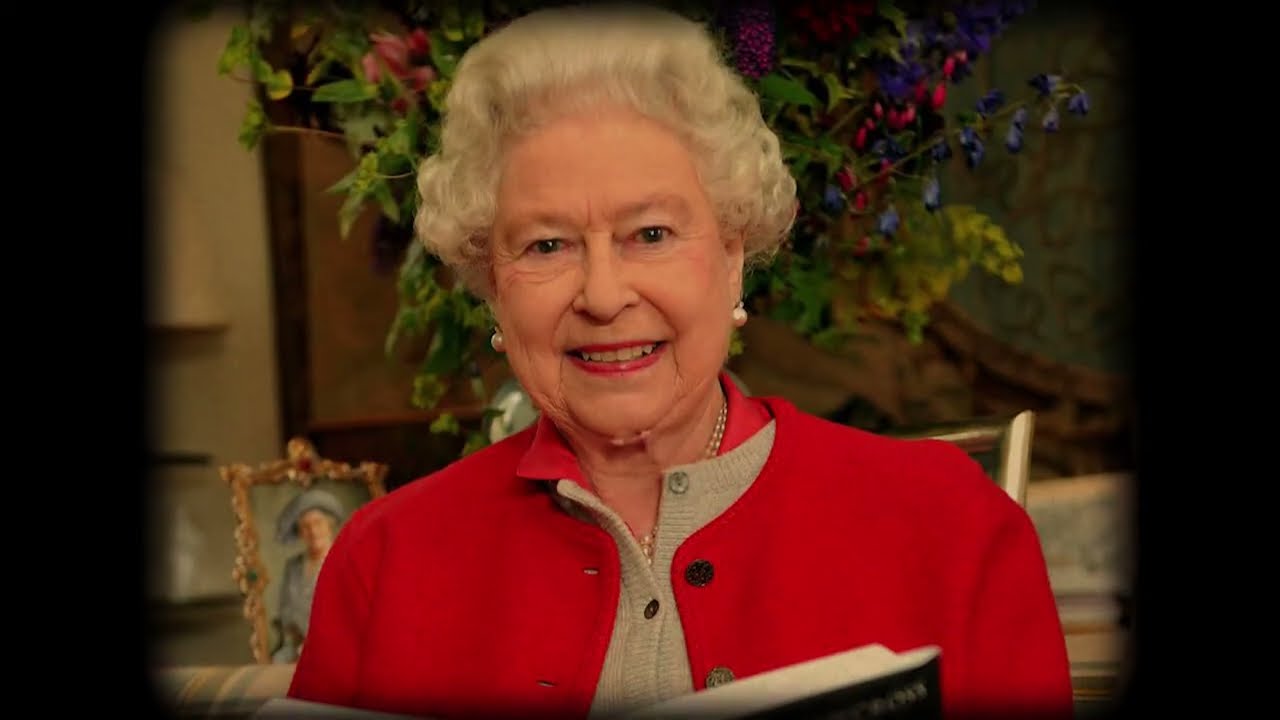
Then there is the letter to Queen Mary, written in the immediate aftermath of George VI's death in 1952. Elizabeth wrote that it was impossible for her to take in what had happened, that he had been an angel to her and the children, and that she could not bear to think about Lilibet, who was too young to bear such a burden. On the surface, it reads as straightforward grief, a widow struggling to absorb an unimaginable loss, and a mother worried about her 25-year-old daughter suddenly elevated to the throne under the weight of an institution that had already consumed a generation of her family. But look at the language, because it echoes that phrase, "too young to bear such a burden."
That word, burden, runs through the entire story as a deep bass note. The burden of the crown that passed from Edward to Bertie when Edward refused to carry it. From Bertie to Lilibet when the crown finished with Bertie. Elizabeth spent 16 years watching her husband stagger under that weight, watching him struggle through speeches, endure the Blitz, run a postwar nation while his health deteriorated in front of them, and now she watched the same weight descend on her daughter. Meanwhile, the man who started the whole chain, who tipped the first domino in December 1936, was still breathing, still living in comfort in Paris, still married to the woman he had given up everything for, and still, in Elizabeth's terms, suffering no consequences at all from the wreckage he left behind.
If you wanted to identify the single emotional thread running through Elizabeth's entire adult life, from the abdication to her death 66 years later, this would be it. The people she loved were left carrying burdens never meant for them, and the person who created those burdens never carried any of them.
There is another quote worth addressing, though it comes with a strong caveat. Royal biographer Michael Thornton claimed that the Queen Mother once justified Edward's permanent exile by telling him directly that a country could not have one king at a time. It is a wonderful line, cold, constitutional, and utterly final, the verbal equivalent of a door closing and locking from the inside. Exactly the sort of thing one wishes Elizabeth had said. But Thornton occupies a contested space in royal biography literature, and we should be honest about that. His 1985 book "Royal Feud" presented itself as a definitive account of the Windsor family's internal wars, but major historians have treated it as a controversial secondary source, a writer prone to dramatic claims and not always accurate about sources or documentation. Compared with the archival letters in Shawcross's official biography, which drew directly from the Royal Archives with the family's cooperation, Thornton's firsthand accounts rest on much shakier ground.
Did Elizabeth say it? Perhaps. The line captures something true about her worldview and temperament, but it probably belongs in the category of things that seem too perfect to verify, a category that tends to be very crowded in royal history.
Now, before concluding, there is one other theory about why Elizabeth despised Edward and Wallis with such sustained intensity that needs addressing, because it still circulates in tabloid columns and Wikipedia rabbit holes and refuses to die, and it deserves proper examination, if only to explain why every credible historian has dismissed it outright. In 2016, Lady Colin Campbell, a socialite, broadcaster, and self-appointed royal commentator whose books tend to generate tabloid headlines rather than academic citations, put forward a claim that Elizabeth Bowes-Lyon's lifelong hostility toward Wallis Simpson actually stemmed from romantic jealousy. According to Campbell, the young Elizabeth harbored feelings for David, the charismatic older brother, and wanted to marry him herself. When David chose women like Wallis instead, this rejection, supposedly, curdled into a hatred she carried through the remaining decades of her life.
It is a tidy theory, I will give it that. It takes a complex, multi-layered resentment built on duty, grief, and institutional loyalty and compresses it into something simple and psychologically familiar: the scorned woman. On the surface, the theory explains the intensity of the grudge, the refusal to forgive, and decades of frozen hostility. It even has a soap-opera elegance, the kind of neat explanation that makes excellent television but tends to collapse under historical scrutiny. And collapse it does, because the theory rests on no evidence whatsoever. No letter, no diary entry, no credible firsthand account, not even a scrap of documentation from the Royal Archives or any other verified source. Lady Colin Campbell offered this claim, as royal biographer Christopher Wilson noted with visible frustration, without a shred of historical evidence to support it.
Historian Andrew Roberts addressed the claim with his characteristic bluntness. No reputable historian believes the Queen Mother was ever in love with the future Edward VIII, let alone tried to marry him. That is as categorical a rejection as you will encounter in academic circles, where the language of hedging and diplomatic qualification tends to be the default mode of disagreement. Wilson went further, pointing to the social mechanics that make the theory implausible even on its own terms. Elizabeth, as the daughter of an earl, belonged to the Scottish nobility, a perfectly respectable tier of aristocracy, but she operated in a different orbit from the Prince of Wales and heir to the British throne. Wilson noted that she and David were never on the same level. Not because Elizabeth was lesser than David in any real sense, but because the upper-class marriage market in 1920s Britain ran along well-understood, well-defined tracks. The daughter of a Scottish peer did not set her sights on the Prince of Wales, any more than a country solicitor aspired to become Lord Chancellor.
Here the theory collapses entirely, even for those who might find it emotionally compelling on first hearing. It does not explain anything better than the evidence already does. We do not need a secret romantic rejection to account for Elizabeth's anger. The documented, devastating, historically proven abdication, established from every possible angle, provides more than sufficient cause. From the destruction of her family's private life, to the burden placed on her husband, to the early death she attributed to that burden, to the exile she enforced with unyielding determination, all of it flows logically and consistently from a woman who believed her brother-in-law had betrayed his duty, destroyed her family, and never paid any price for it. Adding a story of unrequited love does not deepen the story. It cheapens it, converting a real and historically grounded resentment into a tabloid jealousy dressed up as political conviction, with no historical evidence whatsoever, a point I cannot stress enough.
The theory exists and circulates in tabloid columns and certain corners of the internet where speculation and evidence are treated as equally important. But when the documented reasons for Elizabeth's anger run this deep, inventing additional ones is not analysis. It is fan fiction. It is the historical equivalent of adding a basement to a building that already stands perfectly well on its own foundations.
So where does all of this leave us? With a woman who contained, as most people do but few so dramatically, several contradictory selves at once: the smiling grandmother and the implacable enemy, the grieving widow and the shrewd political operator, the woman who charmed everyone she met and the woman who refused to speak another woman's name for six consecutive decades. Elizabeth Bowes-Lyon loved her husband with a devotion that never faded, even across half a century of widowhood. She adored her daughters, held her place as the nation's favorite grandmother, drank her gin, bet on her horses, attended garden parties, opened hospital wings, and lived to 101 with an apparent contentment of someone at peace with the world. But she was never at peace with Edward. Never at peace with Wallis. And she never once, in 66 years, reconsidered the judgment she reached in December 1936: that David had committed the ultimate betrayal, and that Bertie and Lilibet and the family and the country had paid the price for his selfishness.
Was her judgment correct? Partly. And the word "partly" carries a great deal of weight in that sentence. The abdication placed an enormous burden on George VI, and it is very likely that the strain of the monarchy exacerbated his health and shortened his life, even if the cigarettes did the bulk of the physical damage. Edward's decision was selfish in the specific, defensible sense that he chose his personal desires over his family's welfare, and Elizabeth was entitled to her resentment. But she also refused to see the full picture. She refused to acknowledge Bertie's smoking. She refused to consider that Edward might genuinely have been incapable of performing his role without causing greater harm. She refused even to grant the bare possibility that stepping away from a job you know you will fail at might, in some narrow circumstances, be the least destructive option.
Her anger was real and earned, but it was also convenient. "Convenient" is a difficult word to use about someone who suffered genuinely, but I will use it anyway. The anger gave her grief shape and direction, turning a chaotic, painful loss into a clear moral story with a villain and a victim. The alternative, accepting that her husband's death resulted partly from his own habits, partly from random biology, and partly from the accumulated weight of choices no one could have foreseen, offered no such consolation.
Edward died in Paris in 1972, surrounded in his final days by Wallis and a dwindling circle of elderly friends and hangers-on, and Elizabeth did not visit him. Wallis died in 1986, frail and largely forgotten, still denied the style of Her Royal Highness that had been withheld from her years earlier under letters patent Elizabeth had fought fiercely to enforce. Elizabeth made no comment. She never commented, because commenting would have meant breaking a silence she maintained with the discipline of a woman who understood that some grudges are not character flaws but load-bearing pillars.
When Elizabeth herself died in 2002 at the age of 100, the nation mourned the woman with the wave and the pastel colors and the smile that could warm a room: wartime icon, grandmother, last great lady of a vanished age. Almost no one mentioned the grudge in the obituaries or the newspaper columns. Almost no one spoke of the cold anger she had maintained so carefully since that evening in December 1936, when her brother-in-law chose a woman over the crown and left her husband in the wreckage. But it lived there, beneath the hats and the waves and the glass of gin, present in the way she stiffened when Edward's name came up in conversation, in the way she maintained Wallis's exile with bureaucratic precision long after anyone else in the family might have let it lapse, and in the letters she wrote and, perhaps more tellingly, the letters she did not.
She loved fiercely, grieved forever, and blamed without mercy, a woman who smiled for the cameras and carried ice behind her eyes, full of contradictions that never canceled each other out but coexisted uneasily for 101 years without ever reaching resolution. Calm, unyielding, and all the way to the end, across six decades of widowhood, across two more reigns, across a century that reshaped every institution except her anger, which remained entirely unresolved.