On November 22, 1963, at 12:38 p.m., the presidential limousine arrived at Parkland Hospital in Dallas. The car was a 1961 Lincoln Continental, code name SS 100X.
Inside sat President John F. Kennedy, mortally wounded. Governor John Connally had also been shot. Jackie Kennedy was still cradling her husband's shattered head.
The backseat was covered in blood, brain matter, and bone fragments. This was not just a car. It was the most important crime scene in American history.
Standard procedure would have been to secure it, photograph it, and document every blood stain, bullet fragment, and piece of evidence. Forensic experts would have analyzed blood spatter patterns to determine bullet trajectories. The vehicle should have been preserved exactly as it was.
That is not what happened. Within minutes, while doctors fought to save Kennedy's life inside the hospital, Secret Service agents outside grabbed buckets, sponges, and water hoses. They washed the car.
Blood evidence went down the drain. Bone fragments were swept away. Ballistic patterns were destroyed. The single most crucial piece of physical evidence in the assassination was deliberately cleaned before any proper forensic examination.
The presidential limousine was a rolling crime scene, and what it contained could have helped solve the assassination. Blood spatter patterns on the seats, dashboard, and trunk would have revealed the angle and direction of gunfire.
High-velocity blood spray indicates entry wounds. Low velocity indicates exit wounds. The distribution pattern would have shown whether shots came from behind, from the Texas School Book Depository, or from the front, from the grassy knoll.
Bone and brain fragments scattered across the vehicle would have provided tissue for forensic analysis. Bullet fragments embedded in upholstery or metal could have been matched to weapons. Fingerprints on the chrome, steering wheel, or door handles might have identified who touched the car besides the occupants and driver.
Even the windshield was critical evidence. It had been struck either by a bullet or a fragment. The damage pattern would have indicated the direction of impact, from inside or outside, from above or below.
All of this evidence existed for approximately 30 minutes. Then Secret Service agents destroyed it.
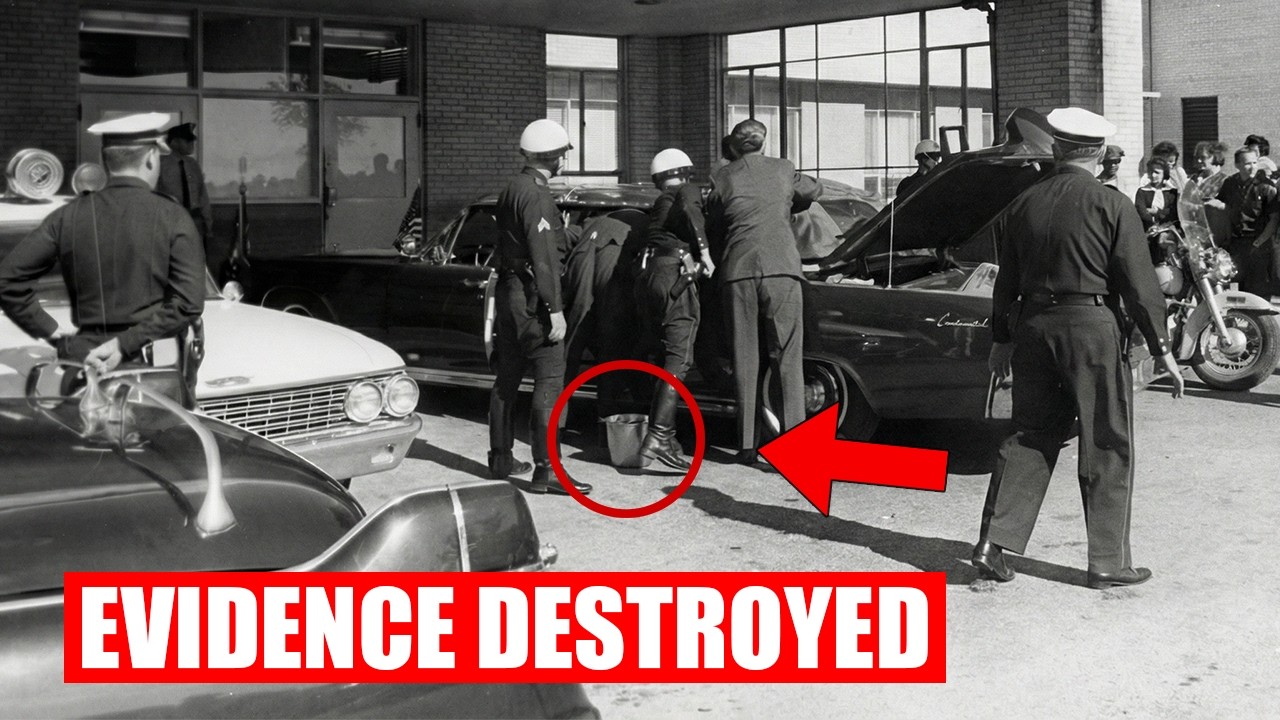
According to multiple witnesses, including Dallas police officers and hospital staff, Secret Service agents began washing the limousine while Kennedy was still alive. Photographer Wilma Tice was at Parkland Hospital. She photographed agents installing the hard-shell bubble top onto the convertible, the protective covering normally stored in the trunk. Then she saw them cleaning.
Some agents used buckets and sponges to clean the interior of the car, according to official records at the Sixth Floor Museum. Agent Sam Kinney later claimed he cleaned the blood-soaked rear seats. His explanation was that he thought it would upset Mrs. Kennedy to see it.
That became the official story. A grieving agent, overcome with emotion, decided to spare Jackie Kennedy further trauma by washing away her husband's blood and brain matter.
From an evidentiary standpoint, the explanation made little sense. This was not Kinney's personal vehicle. It was evidence in a presidential assassination. Even a rookie cop knows not to touch a crime scene.
But the agents did not just wipe down surfaces. According to reports, they used water hoses, buckets, and sponges. They scrubbed the leather seats, rinsed blood down storm drains, and removed tissue samples that forensic pathologists desperately needed.
By the time Kennedy was pronounced dead at 1:00 p.m., the most critical forensic evidence was already gone.
At approximately 2:00 p.m., the limousine was loaded onto a C-130 military transport and flown to Andrews Air Force Base near Washington, D.C. It did not go to an FBI laboratory or to independent forensic experts. It went to the Secret Service garage.
There, under the supervision of Secret Service Director James Rowley, the vehicle sat for a month. Investigators examined it, but the damage was done. The cleaning at Parkland had eliminated the most valuable forensic data.
Some evidence remained. The windshield, struck by a bullet or fragment, was removed and became Warren Commission Exhibit CE 350. Bullet fragments were recovered from the floorboards and seats. But critical questions remained unanswered.
Where exactly did the shots originate? How many shooters were there? What was the sequence of impacts? The blood spatter analysis that could have answered these questions was washing through Dallas sewers.
On December 20, 1963, less than a month after the assassination, the limousine was driven to Hess and Eisenhardt in Cincinnati, Ohio. It was the same company that had originally customized it for presidential use. The order was to rebuild it, make it bulletproof, and return it to service.

What followed was the most extensive vehicle modification in Secret Service history, code name Quick Fix. The entire interior was gutted. Seats were removed, carpets torn out, and metal panels stripped. The car was reduced to its frame, then rebuilt from scratch.
Workers added 1,600 pounds of titanium armor plating to the body. A permanent bulletproof hard shell roof was installed. All glass was replaced with bullet-resistant material capable of stopping .30 caliber rifle rounds. The engine was replaced with a high compression unit providing 17 percent more power. Run-flat tires were installed. The midnight blue paint was changed to somber black.
The cost exceeded $500,000 in 1964 dollars, approximately $5 million today.
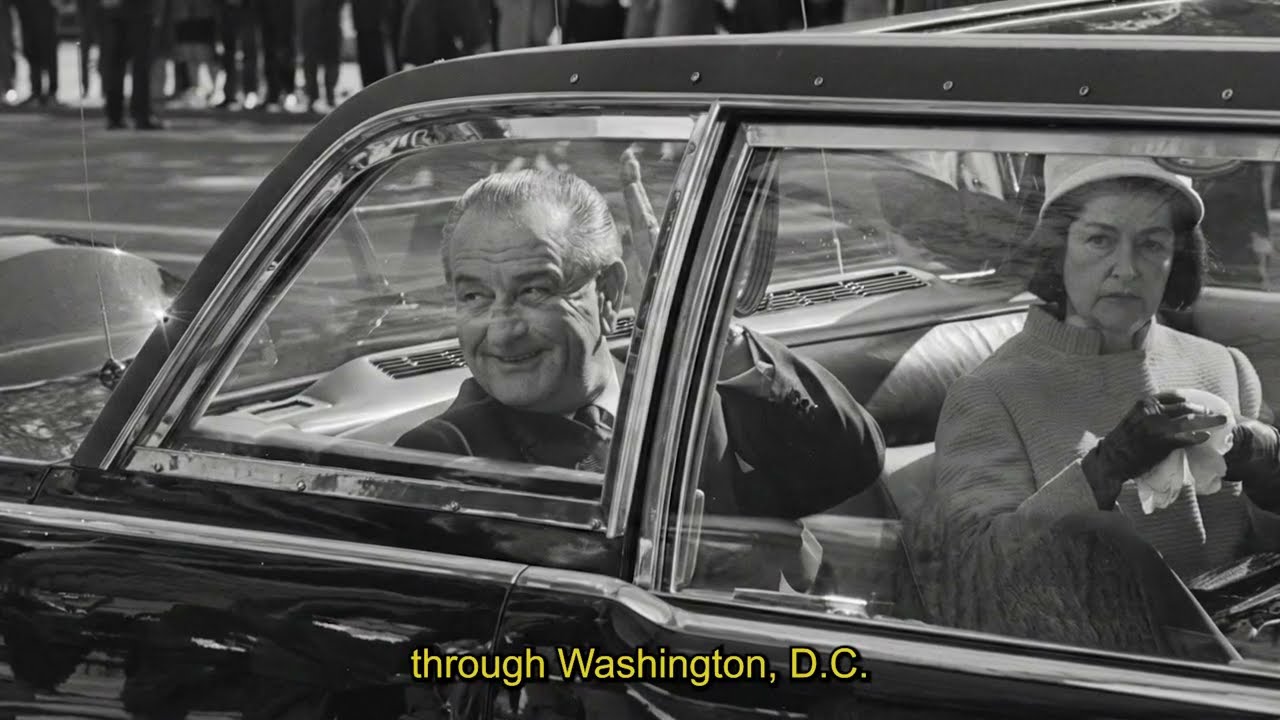
By May 1, 1964, just over five months after the assassination, the rebuilt limousine was ready. After final testing in Dearborn, Michigan, it was delivered to the White House. On October 5, 1964, President Lyndon Johnson used it in a parade through Washington, D.C.
The same vehicle in which Kennedy had been murdered was now rebuilt, repainted, and returned to service.
The official explanation for rebuilding rather than preserving the limousine was economics and logistics. Building a new custom presidential limousine would take years and cost millions. It was faster and cheaper to rebuild the existing one.
But that explanation does not hold up. If the car was going to be rebuilt anyway, stripped to the frame and with most of the vehicle replaced, it was essentially a new car. The cost difference would have been negligible.
Consider what the limousine could have proven. Multiple witnesses, including police officers and Parkland hospital staff, reported seeing a bullet hole in the windshield from the front, an entry hole, not an exit. That would be impossible if all shots came from behind the Texas School Book Depository. But it would be consistent with a shooter on the grassy knoll.
The windshield was removed and cataloged as evidence, but the hole was never definitively explained. Some claimed it was a fragment exiting from inside. Others insisted it was a bullet entering from outside. The answer was never established, because the windshield, along with the rest of the vehicle, was destroyed in the rebuild.
The blood spatter could have shown the direction and angle of bullet impacts. Forensic analysis could have determined whether shots came from one direction or multiple directions. That analysis never happened, because the blood was washed away at Parkland Hospital.
Some bullet fragments were recovered, but how many were lost in the cleaning? How many went down the drain with the blood and tissue? Bullet holes in seats and carpets would have shown trajectories, but the entire interior was gutted and replaced.
Every piece of critical evidence was systematically destroyed.
Not everyone stayed silent about the destruction. Dallas County Medical Examiner Dr. Earl Rose tried to stop the Secret Service from removing Kennedy's body from Dallas. Texas law required an autopsy be performed locally in any homicide. Rose demanded they follow the law.
Secret Service Agent Roy Kellerman drew his weapon. The agents removed the body by force, in violation of Texas law. The same agents who illegally seized Kennedy's body also destroyed evidence in the limousine. It was the same pattern, the same disregard for proper procedure, and the same determination to control the investigation.
Dallas Police Chief Jesse Curry later expressed frustration about Secret Service interference. In his memoir, Curry wrote that Dallas police were prevented from conducting a proper investigation. The federal government, specifically the Secret Service and FBI, took over immediately, and evidence began disappearing.
Today, the Kennedy limousine sits in the Henry Ford Museum in Dearborn, Michigan. It was donated by Ford Motor Company in 1977 after the car was finally retired from service. Visitors can see it, photograph it, and walk around it.
But what they are seeing is not the car from November 22, 1963. It is a heavily modified reconstruction. The original seats are gone. The original carpets are gone. The original paint is gone. The blood evidence was washed away more than 60 years ago.
The museum describes it as President John F. Kennedy's assassination car. That is technically true, but misleading. It is the car associated with the assassination, not the car as it was during the assassination. That car, the actual crime scene, was systematically destroyed within weeks of Kennedy's death.
Why wash the limousine before proper forensic examination? Why rebuild it instead of preserving it as evidence? Why rush it back into service while the investigation was ongoing?
The official answers do not make sense. But the pattern does. Control the evidence, control the investigation, control the narrative.
The limousine could have shown whether shots came from multiple directions, whether there were multiple shooters, and whether the grassy knoll witnesses were telling the truth. Instead, it was washed, gutted, rebuilt, and returned to service.
The Warren Commission concluded that Lee Harvey Oswald acted alone, that there were three shots from behind, and that there was no conspiracy. But the evidence that could have challenged that conclusion was gone, deliberately destroyed.
On November 22, 1963, the most important evidence in American history washed down a Dallas storm drain.