On August 5, 1962, at 4:25 a.m., the Los Angeles Police Department received a phone call. Marilyn Monroe was dead.
The caller was Dr. Ralph Greenson, her psychiatrist. He said she had been found in her bedroom at her Brentwood home, with empty pill bottles on the nightstand.
The coroner would rule it a probable suicide. The world mourned the most famous actress in history, dead at 36. Depression, pills, a tragic ending to a troubled life. Case closed.
Except for one problem. Marilyn Monroe's bedroom was bugged. Her phone lines were tapped. Hidden microphones recorded everything that happened in her house.
The FBI was listening. The mafia was listening. Private investigators were listening. And according to multiple witnesses, those recordings captured something that night that wasn't suicide.
They captured voices, arguments, a struggle, and evidence that Marilyn Monroe didn't kill herself. She was murdered.
Within hours of her death, those recordings disappeared, seized by federal agents, confiscated by law enforcement, erased from existence. For 60 years, the question has haunted investigators. What was on those tapes? And why did the Kennedy administration work so hard to make sure no one would ever hear them?
Marilyn Monroe wasn't just an actress. By 1962, she had become a national security problem. Not because of anything she had done intentionally, but because of who she was sleeping with: President John F. Kennedy, Attorney General Robert F. Kennedy, possibly other powerful men in Washington, and organized crime.
The affair between Marilyn and JFK had begun in 1961. They had been introduced by Peter Lawford, JFK's brother-in-law and a member of Frank Sinatra's Rat Pack.
The affair was sporadic. Kennedy would visit Los Angeles. Marilyn would visit Washington. They would meet at Lawford's beach house or discreet hotel rooms.
By all accounts, Kennedy treated it as a casual fling. Marilyn treated it as something more serious. But the affair created a vulnerability, and America's enemies knew about it.
J. Edgar Hoover, director of the FBI, had been collecting information on Kennedy's extramarital affairs for years. Hoover saw such information as power, leverage he could use to influence or control the president. When Hoover learned about Marilyn and Kennedy, he ordered surveillance.
The mafia also took interest, specifically Jimmy Hoffa, the corrupt Teamsters union boss who was being prosecuted by Attorney General Robert Kennedy. Hoffa wanted dirt on the Kennedys to blackmail them into dropping the investigations.
Hoffa hired private investigator Fred Otash to bug Marilyn's house and tap her phones. By mid-1962, Marilyn Monroe's Brentwood home was one of the most surveilled residences in America. Listening devices were placed in the living room, bedroom, and phone lines. Multiple parties were recording her conversations.
And what those recordings captured was worse than just evidence of an affair. They captured Marilyn discussing government secrets.
Marilyn Monroe was lonely. She suffered from depression, anxiety, and insomnia. She craved connection and intimacy. And when she was with powerful men like JFK and RFK, she wanted to feel like she mattered to them, not just as a sexual conquest, but as someone they trusted and confided in.
So she asked questions. And the Kennedy brothers, in moments of vulnerability, answered.
According to multiple sources, including people who claimed to have heard the surveillance recordings, Marilyn's conversations with JFK and RFK included discussions of plans to assassinate Fidel Castro, CIA operations involving the mafia, nuclear test schedules, details about the Cuban Missile Crisis, Vietnam policy discussions, and information about organized crime investigations.
Some of this might have been exaggeration. Kennedy might have been showing off, trying to impress her. But even if only a fraction was accurate, it was catastrophically dangerous for the president of the United States to be sharing classified information with an actress whose house was bugged by both the FBI and organized crime.
Marilyn, for her part, didn't fully understand the sensitivity of what she was hearing. She would repeat things to friends. She would mention details at dinner parties. She kept notes.
The famous red diary. Multiple witnesses reported that Marilyn kept a diary, a small red notebook in which she wrote down things the Kennedy brothers told her: names, dates, details about CIA operations, information about Castro assassination plots.
If that diary fell into the wrong hands, it could destroy the Kennedy presidency. It could trigger a constitutional crisis. It could even start a war if foreign adversaries obtained the information.
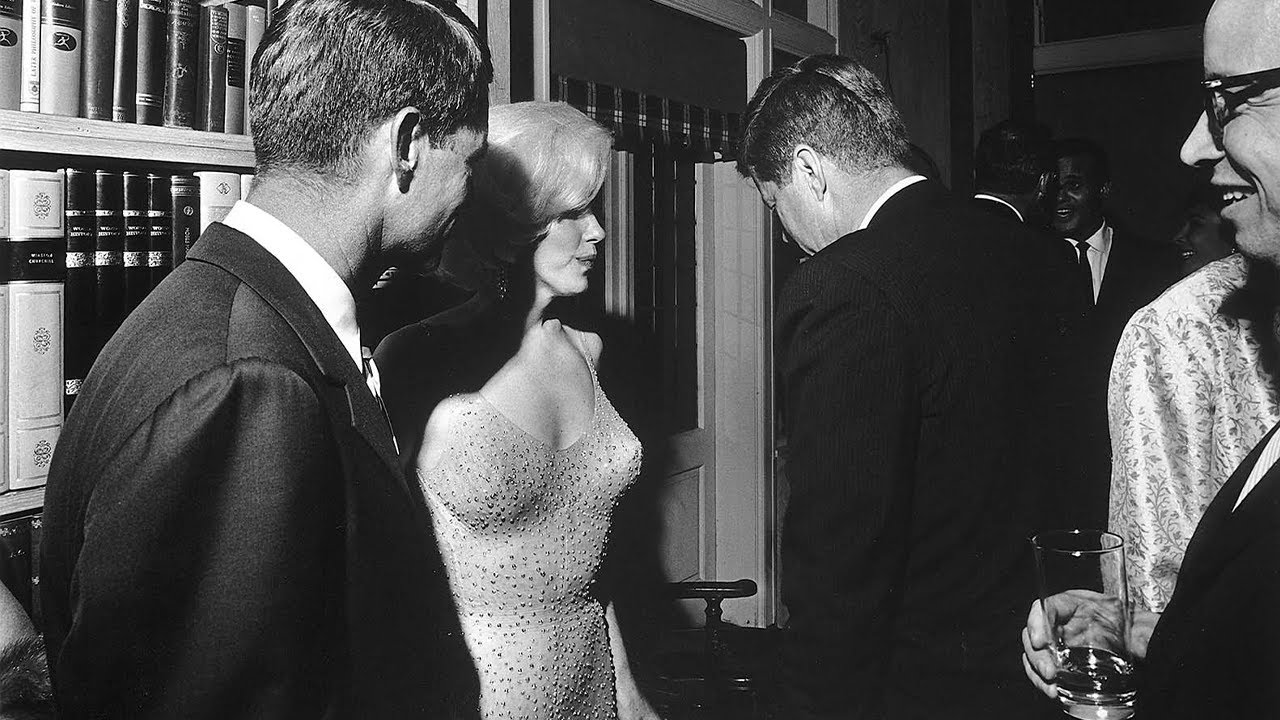
By mid-1962, the Kennedy administration had a Marilyn Monroe problem, and that problem was getting worse.
In early 1962, Marilyn's relationship with the Kennedy brothers began to deteriorate. JFK had grown tired of the affair. Marilyn was becoming too attached, too emotional, too demanding. She would call the White House repeatedly. She would show up places Kennedy was visiting. She was becoming a liability.
On May 19, 1962, Marilyn sang Happy Birthday to President Kennedy at Madison Square Garden. It was a sultry, intimate performance in front of 15,000 people. She wore a skintight, shimmering dress. The sexual tension was obvious.
The performance made Jacqueline Kennedy furious. It made Kennedy's advisers nervous. The affair was becoming too public, too obvious.
Shortly after the birthday performance, Kennedy ended the relationship. He stopped taking Marilyn's calls. He stopped visiting Los Angeles. He had Peter Lawford deliver the message. It was over.
Marilyn was devastated. She felt used. She felt betrayed. She had believed Kennedy loved her, perhaps even that he might leave Jackie and marry her. Now she realized she had been nothing more than a convenient distraction.
When JFK cut her off, Marilyn turned to his brother, Robert Kennedy. RFK had also been involved with Marilyn. Accounts differ on whether it was a full affair or just an intense emotional connection. Some biographers claim RFK genuinely cared for Marilyn and tried to help her through her depression.
But by summer 1962, RFK also began distancing himself. The attorney general couldn't afford to be associated with Marilyn either. The political risks were too great.
Marilyn felt abandoned by both Kennedy brothers. And when Marilyn was hurt, she became unpredictable.
In late July and early August 1962, Marilyn's behavior became increasingly erratic. She was drinking heavily. She was mixing alcohol with prescription drugs, barbiturates, sedatives, sleeping pills. Her psychiatrist, Dr. Ralph Greenson, was deeply concerned. So was her housekeeper, Eunice Murray.
But more disturbing to the Kennedy administration, Marilyn was talking. She was calling friends and reporters. She was saying things she shouldn't say.
According to multiple witnesses, Marilyn threatened to hold a press conference. She said she would reveal her relationships with JFK and RFK. She said she would expose what they had told her about government operations.
Whether she would have actually done it is unclear. Marilyn craved attention and sometimes made dramatic threats she didn't follow through on. But given her emotional state, given her feelings of betrayal, given her desperation for the Kennedys to acknowledge her, the threat had to be taken seriously.
Robert Slatzer, a writer who claimed to have been briefly married to Marilyn years earlier, later testified that Marilyn called him on August 3, 1962, the day before she died. According to Slatzer, Marilyn told him she was done being treated like a piece of meat by the Kennedys. She said she had information that could destroy them and she was going to use it.
Jean Carmen, a friend and fellow actress, claimed Marilyn told her, "I'm going to blow the lid off this whole damn thing."
Whether these accounts are accurate or exaggerated by people seeking attention after Marilyn's death, we don't know. But we know this: in the final weeks of her life, Marilyn Monroe had become a threat to the Kennedy administration. And threats to powerful people have a way of being neutralized.
Saturday, August 4, 1962, was Marilyn's last day alive.
According to police reports, Marilyn spent the day at her Brentwood home. Her housekeeper, Eunice Murray, was with her. Marilyn made phone calls to friends. She seemed depressed, but not suicidal.
Around 7:30 p.m., Marilyn's psychiatrist, Dr. Greenson, arrived and stayed for several hours. Around 10 p.m., Greenson left, believing Marilyn was calm.
Sometime after midnight, Murray noticed Marilyn's bedroom light was still on and the door was locked. Murray called Dr. Greenson, who arrived around 3:30 a.m. and broke a window to enter the bedroom.
Marilyn was found dead, naked, lying face down on her bed, phone in hand. Dr. Greenson called the police at 4:25 a.m.
That's the official story. But multiple witnesses contradict nearly every detail. What really happened on August 4 is dramatically different, if you believe the witnesses who later came forward.

Peter Lawford, JFK's brother-in-law, later told friends that Marilyn called him that afternoon. She sounded heavily drugged, slurring her words. She said, "Say goodbye to the president. Say goodbye to yourself because you're a nice guy." Then the line went dead.
Lawford panicked and called Marilyn's lawyer, Mickey Rudin. Lawford wanted to go check on Marilyn, but Rudin told him to stay away. His presence at Marilyn's house would create a scandal if anything was wrong.
But here's where it gets disturbing. Multiple witnesses, including neighbors, delivery drivers, and police sources, reported seeing Robert Kennedy in Los Angeles that day.
The official position has always been that RFK was at a ranch in Northern California with his family. But several witnesses claimed they saw RFK at Peter Lawford's beach house. Some claimed they saw him arriving at Marilyn's house.
And according to the most explosive claims from private investigators who had bugged Marilyn's house, the surveillance tapes recorded Robert Kennedy at Marilyn's home on August 4.
Fred Otash was a private investigator hired by Jimmy Hoffa to bug Marilyn Monroe's house. Otash worked with Bernard Spindel, a wiretapping expert who installed listening devices throughout Marilyn's home.
Years later, before his death, Otash gave interviews claiming his surveillance equipment captured audio of the night Marilyn died. According to Otash, the tapes recorded Robert Kennedy arriving at Marilyn's house in the late afternoon. A loud argument between RFK and Marilyn. RFK demanding to know where Marilyn kept her diary and any recordings. Marilyn becoming hysterical. The sounds of a physical struggle. Marilyn's voice muffled, saying, "No, no, no." Then silence.
Otash claimed the tapes were seized by federal agents within hours of Marilyn's death. He said he was visited by men identifying themselves as Justice Department officials who confiscated all his Marilyn Monroe surveillance material.
Bernard Spindel also claimed to have recordings from that night. In 1966, Spindel's home was raided by law enforcement. According to Spindel's widow, agents seized all his tapes related to Marilyn Monroe. Spindel died in 1971, still claiming the tapes proved Marilyn was murdered.
Do these tapes actually exist? Did they ever exist? Or were Otash and Spindel lying or exaggerating to seem important? We may never know. But multiple people, including investigators, journalists, and law enforcement officials, have claimed over the years that they saw documentation of the tapes, that they knew people who heard them, that the recordings existed and were destroyed.
Setting aside the testimony of witnesses and the claims about surveillance tapes, let's examine the physical evidence from Marilyn's death. Because the official suicide narrative has serious problems.
Problem one: no pills in her stomach. The coroner's report stated Marilyn died from acute barbiturate poisoning. The presumption was she swallowed a massive overdose of Nembutal pentobarbital sleeping pills. But the autopsy found no pill residue in her stomach. None.
If Marilyn had swallowed 40 to 50 pills, the amount necessary for a fatal overdose, there would have been traces in her stomach. There weren't. The coroner noted high levels of barbiturates in her blood and liver, but the absence of pills in her stomach suggested the drugs were administered some other way.
How? The most likely explanation is a barbiturate enema. The drugs were dissolved in liquid and administered rectally, where they would be absorbed rapidly into the bloodstream without passing through the stomach. This is not how people typically commit suicide. This is how someone might murder a person and try to make it look like an overdose.
Problem two: the missing organs. Marilyn's autopsy was incomplete. Certain tissue samples that should have been preserved and analyzed were either not taken or mysteriously disappeared. Specifically, samples from her digestive system that might have shown how the drugs were administered.
This wasn't incompetence. The coroner who performed the autopsy, Dr. Thomas Noguchi, was highly competent. The gaps in the autopsy suggest interference, someone ensuring that certain evidence wouldn't be available for future examination.
Problem three: the locked door and broken window. Marilyn was found in her bedroom with the door locked from the inside. Dr. Greenson had to break a window to get in. This detail is often cited as evidence of suicide. She locked herself in to ensure she wouldn't be disturbed.
But neighbors reported they saw no broken glass on the ground outside the window. The glass appeared to have been broken from the outside but fallen inside the room, consistent with the window being broken before Marilyn died, not as a rescue attempt. This suggests the crime scene was staged.
Problem four: the delay in calling police. Dr. Greenson claimed he discovered Marilyn's body around 3:30 a.m. and called police at 4:25 a.m. But several neighbors reported seeing activity at Marilyn's house much earlier. Cars coming and going, lights on, people entering and leaving as early as 10 p.m.
Why the delay? What happened in those hours? The most likely explanation is a cleanup operation: removal of evidence, disposal of the red diary, confiscation of surveillance tapes, staging the scene to look like suicide.
The most important piece of evidence, Marilyn's diary, disappeared. Multiple friends testified that Marilyn kept a small red notebook in which she wrote down things the Kennedy brothers told her.
Lionel Grandison, a deputy coroner's aide, later claimed that when he arrived at Marilyn's house, he saw the diary on her nightstand. But when he returned later, it was gone.

Robert Slatzer, who visited Marilyn days before her death, said she showed him the diary. It contained notes about CIA operations, details about plans to kill Castro, information about Kennedy administration policies.
If that diary existed, if it contained even a fraction of what witnesses claimed, it was a smoking gun. Proof that Marilyn had access to state secrets. Proof that she could destroy the Kennedy presidency. And it vanished within hours of her death.
The official position has always been that Robert Kennedy was not in Los Angeles on August 4, 1962. According to the Kennedy family and Justice Department records, RFK was at Gilroy Ranch in Northern California with his wife and children.
But multiple witnesses have contradicted this alibi. Peter Lawford's third wife, Deborah Gould, claimed Lawford told her RFK was at Marilyn's house the day she died and that there had been a terrible fight.
Ward Wood, one of Lawford's neighbors, claimed he saw RFK arrive at Lawford's beach house on August 4. Elizabeth Pard, another neighbor, reported seeing a man matching RFK's description near Marilyn's house that evening.
Eunice Murray, Marilyn's housekeeper, gave conflicting accounts over the years. In most interviews, she said RFK wasn't there. But in a 1985 BBC documentary filmed shortly before her death, Murray admitted, "Well, over the years, I have known that he was there. I wasn't in the room, but he was there."
Was Robert Kennedy in Los Angeles on August 4? The evidence is contradictory, but enough witnesses have placed him there that the official denial seems questionable.
If Robert Kennedy was involved in Marilyn's death, if this was a political murder, we need to understand the motive. It wasn't personal hatred. It wasn't jealousy. It was calculation.
By August 1962, Marilyn Monroe had become a threat to the Kennedy presidency. She knew classified information. She was emotionally unstable. She was drinking, taking drugs, talking recklessly. She had threatened to hold a press conference.
If Marilyn went public with what she knew about JFK's affairs, about government secrets, about CIA assassination plots, the scandal would be catastrophic. JFK might be impeached. The Democrats would lose the 1964 election. The Kennedy political dynasty would be destroyed.
And beyond politics, there was the Cold War context. If Marilyn revealed information about CIA operations or nuclear policy, information that could reach Soviet intelligence, she would be compromising national security.
From the perspective of Kennedy's inner circle, Marilyn had to be silenced, not because they were evil, but because they believed protecting the presidency was more important than one woman's life.
Did JFK personally order her death? Almost certainly not. Kennedy was in Washington that weekend. He likely had plausible deniability. He didn't want to know the details.
But his brother, Robert, the attorney general, the family enforcer, the man responsible for protecting JFK's political survival, may have made the decision. Or someone in their inner circle made it without explicit authorization, believing they were serving the Kennedys' interests.
The most likely scenario, if this was murder, is that RFK went to Marilyn's house to retrieve the diary and convince her to stay quiet. The conversation became a confrontation. Marilyn became hysterical. And someone, whether RFK, a Secret Service agent, or a Kennedy operative, made a split-second decision to ensure Marilyn would never talk.
They administered a fatal dose of barbiturates. They made it look like suicide. They called in favors with the LAPD and coroner's office to ensure the death was ruled self-inflicted. They confiscated the surveillance tapes. They cleaned the crime scene. And then they let the world mourn Marilyn Monroe as another tragic Hollywood casualty.
August 5, 1962. Marilyn Monroe is dead. The official cause: suicide. The real cause: unknown.
For 60 years, investigators, journalists, and conspiracy theorists have tried to piece together what really happened. The evidence is fragmentary, contradictory, and frustratingly incomplete.
We know Marilyn had affairs with JFK and RFK. We know she had access to classified information. We know her house was bugged. We know surveillance tapes existed and were confiscated. We know the forensic evidence doesn't support simple suicide. We know witnesses placed Robert Kennedy in Los Angeles that day despite official denials. We know Marilyn's diary disappeared.
What we don't know, what we may never know, is whether Marilyn Monroe was murdered to protect the Kennedy presidency. The people who could answer that question are dead. The tapes that could prove it are gone. The diary that contained the secrets has vanished.
But here's what we can say with certainty. In the summer of 1962, Marilyn Monroe knew things that could have destroyed the most powerful family in America. And within weeks of threatening to reveal those secrets, she was dead.
Maybe that's coincidence. Maybe she really did commit suicide, depressed and alone, and the suspicious circumstances are just the residue of cover-ups for lesser scandals.
Or maybe the most famous actress in the world was murdered because she knew too much, because she was no longer useful, because she had become a problem that powerful people decided to solve.
If those lost tapes ever surface, if Marilyn's diary is ever found, if someone with direct knowledge decides to confess, we might finally know the truth. Until then, we're left with questions and with the haunting possibility that one of the most beloved presidents in American history may have let his brother silence a woman who loved him.