On October 25, 1957, Albert Anastasia, one of the most feared men in American organized crime, was shot dead in a barber’s chair at the Park Sheraton Hotel in Midtown Manhattan. Two masked gunmen walked in, fired, and disappeared. The man who orchestrated the killing was nowhere near the scene. He was never charged and never seriously investigated for it.
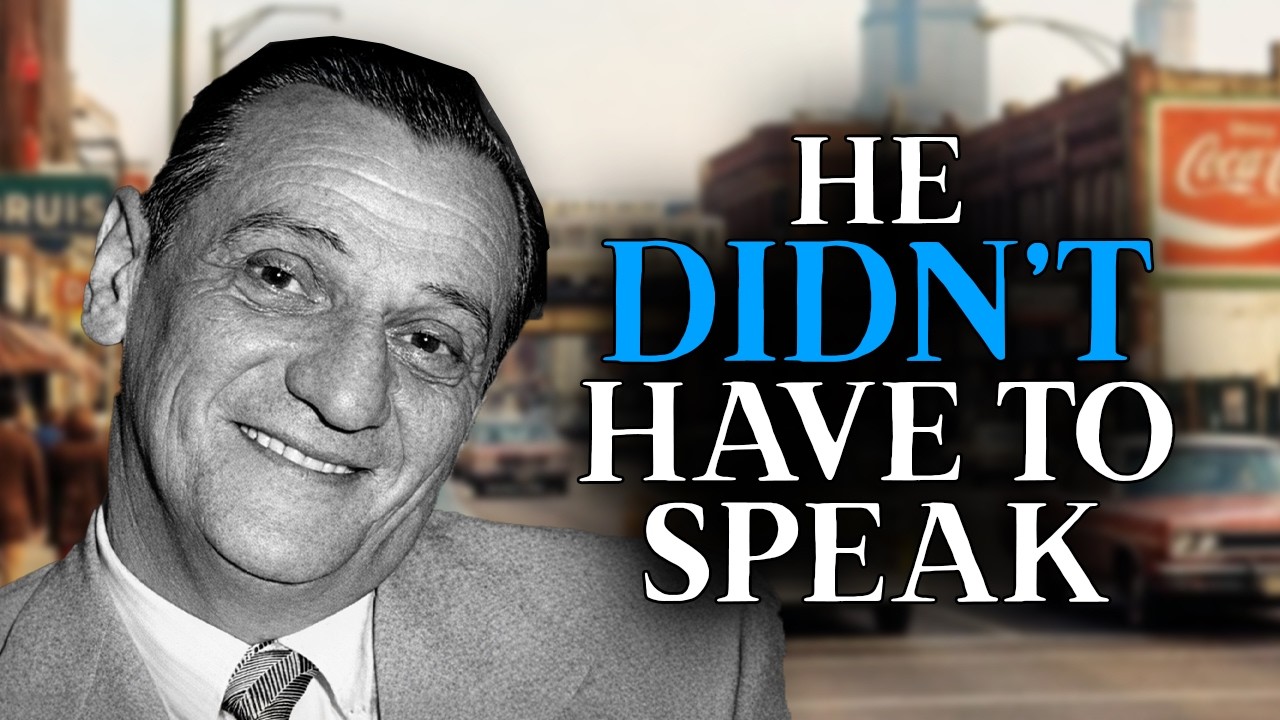
Within weeks, Carlo Gambino took control of the family that would eventually bear his name. Gambino built his empire on a strategy that seemed almost contradictory to the mob lifestyle of his era. He rarely raised his voice, never fired a gun, drove an ordinary car, wore off-the-rack suits, and ate dinner at home with his wife every night. While other crime bosses courted publicity, bought racehorses, and posed for photographers, Gambino sat quietly in the corner and absorbed information.
He treated invisibility as a weapon, and it made him the most powerful criminal in the United States. Born on August 28, 1902, in Palermo, Sicily, Gambino was born into a family with deep ties to the local mafia. It was not something he stumbled into; it was the world he grew up in. As a child, he was small, quiet, and watchful, the kind of boy who sat at the edge of the adult table and listened to everything without appearing to listen at all.
That skill, the ability to gather intelligence while projecting weakness, would define his entire life. At 19, in 1921, Gambino slipped out of Sicily on a merchant ship bound for Norfolk, Virginia. He entered the United States illegally, with no papers and no record. He made his way to Brooklyn, where his cousins, the Castellanos, were already established in the Italian community.
He began running errands for local mafia figures, handling liquor, numbers, and favors. He was not particularly violent, but he was reliable, and in the mob, quiet reliability was rare. When Prohibition turned bootlegging into the most profitable business in the country, most criminals got greedy, loud, and either arrested or killed. Gambino moved liquor like everyone else, but he used the era to build relationships rather than a legend.
Every deal and favor was filed away for future use. He was collecting chips to cash in 10 or 20 years down the road. In the early 1930s, after the Castellammarese War reshaped New York’s underworld, the Five Families structure emerged under Lucky Luciano. Gambino aligned himself with the right people at the right time.
He became a soldier in what would eventually be called the Gambino family, then run by Vincent Mangano. He kept his head down, earned, paid tribute, and watched everyone above him with the patience of a man who understood that the top of the ladder eventually clears itself. The ladder cleared in a brutal way. In 1951, Vincent Mangano disappeared, and Albert Anastasia took over the family.
By 1957, Anastasia had become a problem. He was erratic, expanding recklessly, and selling mob memberships to the highest bidder, which violated every protocol the commission had established. Gambino saw an opportunity and worked quietly with other crime bosses, including Vito Genovese, to engineer consent for Anastasia’s removal. The commission looked the other way, and the men who pulled the trigger had protection from above.
Gambino ran that play throughout his career: find the problem, build consensus, stay out of the room when it happens, and collect the result. One month after the Anastasia murder, in November 1957, the nation’s top mob bosses gathered at a farmhouse in Apalachin, New York, for a national summit. A state trooper named Edgar Croswell noticed the unusual volume of expensive cars arriving at the property and set up a roadblock. Over 60 mobsters were detained or identified after fleeing through the woods.
The Apalachin raid exposed the existence of a national organized crime network that FBI director J. Edgar Hoover had publicly denied for years. Most attending bosses spent years dealing with legal headaches and federal heat. Gambino also attended, but he got away clean, with no arrest and no photograph.
While other bosses were explaining themselves to grand juries, Gambino went home for dinner. Through the 1960s, Gambino consolidated power. He cemented alliances with other family bosses and used his relationship with Genovese, even after Genovese went to prison in 1959, to become the senior statesman of the commission. He was never officially named boss of bosses, but in practice, that is what he became.
When families had disputes, they came to Carlo. When someone needed to be removed, Carlo’s blessing was required. His family was the largest and most profitable in the country, with deep influence in construction, garments, trucking, and the waterfront. The criminal money was so thoroughly tangled with legitimate business that it was nearly impossible to separate.
Gambino reportedly banned his members from dealing narcotics, not for moral reasons but strategic ones. Drug cases brought mandatory sentences, which created informants, which destroyed families. Management set the policy, though many members dealt drugs anyway. The federal government tried for decades to build a serious case against Gambino and got almost nothing.
He did not talk on the phone. He met people in trusted places and spoke in suggestions and implications. A question about how someone’s family was doing carried a meaning that no wiretap or witness could translate into evidence. He communicated in the language of inference, which does not hold up in federal court.
In 1970, the government indicted Gambino on charges related to illegal entry and labor racketeering. Gambino then had a heart attack, a genuine one, and spent years fighting extradition to Italy while his lawyers argued he was too ill to stand trial. He never spent a meaningful day in prison. In 1972, Francis Ford Coppola released The Godfather, and Marlon Brando’s Vito Corleone bore a striking resemblance in style, reputation, and even physical appearance to Gambino.
Reportedly, Gambino hated the movie. He thought it glamorized the mob and brought unwanted attention. Meanwhile, Italian-American kids across the country watched Brando and thought it was the coolest thing they had ever seen. Gambino built a career on being invisible, and Hollywood made him a pop culture icon anyway.
By the mid-1970s, Gambino was old and sick. His wife, Catherine, whom he had married in 1926, died in 1971, and he reportedly never fully recovered. He spent his final years at a modest home in Massapequa, Long Island, where neighbors knew him as a quiet, polite old man who went to mass and kept to himself. On October 15, 1976, he died of a heart attack at home.
He was 74 years old. He died in his own bed, having never served a serious prison sentence or been convicted of a major crime, despite running the most powerful criminal organization in the country for nearly 20 years. It was his heart that got him, not the FBI, not a rival family, not a barber’s chair. Gambino designated his cousin Paul Castellano as his successor.
Castellano was a capable businessman but deeply unpopular with the men beneath him. He ran the family like a CEO issuing corporate memos. Meanwhile, a captain from South Brooklyn named John Gotti watched him the way Gambino once watched Anastasia. On December 16, 1985, Castellano was shot dead outside Sparks Steak House in Midtown Manhattan.
Gotti took over. Gotti dismantled everything Gambino had built. He talked, preened, and became the Dapper Don, a tabloid fixture whose photo was on the front page of the New York Post so often it seemed he had his own column. In 1992, Gotti was convicted on murder and racketeering charges, largely on the testimony of his own underboss, Sammy the Bull Gravano.
Gotti died in prison in 2002. Carlo Gambino built an empire on silence. John Gotti destroyed it with noise. Gambino terrorized industries, corrupted unions, and was responsible, directly or indirectly, for murders that will never be fully accounted for.
The silence was not innocence; it was technique. In an era when every other major mob boss ended up dead, imprisoned, or humiliated, Gambino died at home of natural causes, having outlasted everyone around him without ever appearing to try.