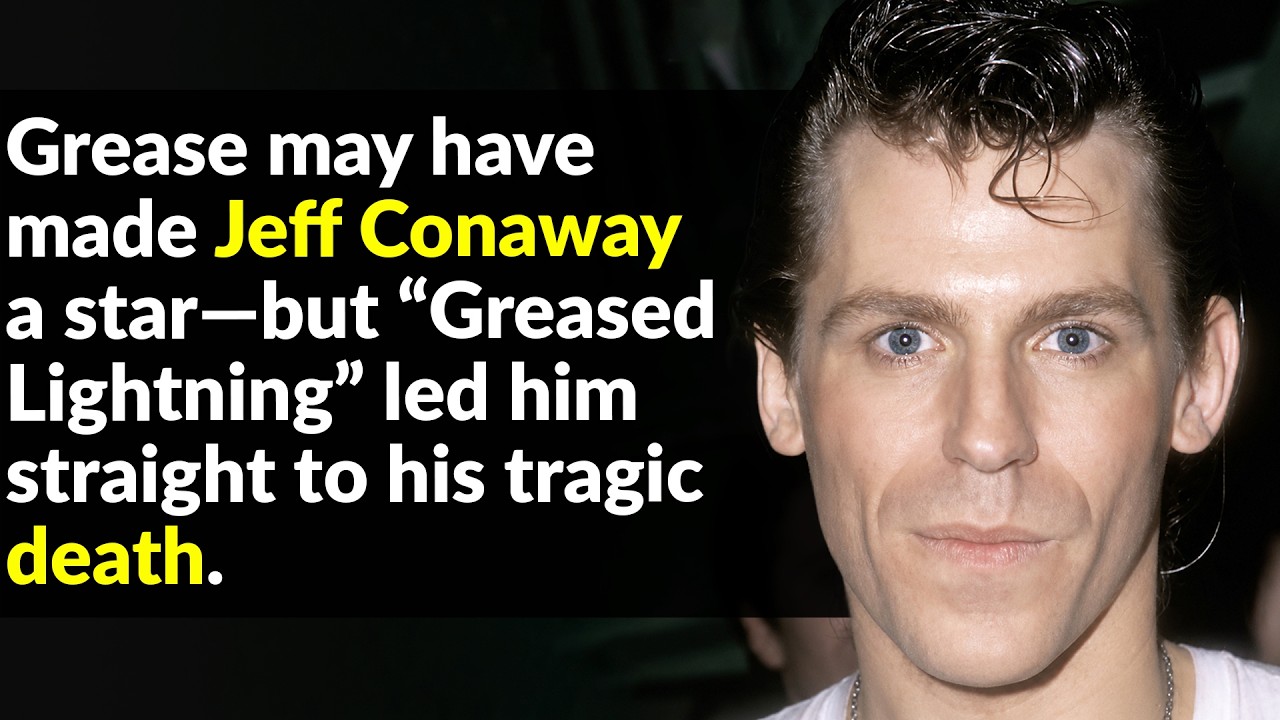
Jeff Conaway’s rise to fame through the hit musical “Grease” was overshadowed by a long and painful battle with addiction that ultimately defined the final years of his life. The actor, best known for playing Kenickie in the film and Bobby Wheeler on the TV series “Taxi,” struggled for decades with substance abuse despite his early success and good looks. Born Jeffrey Charles William Michael Conaway on October 5, 1950, in New York City, he grew up surrounded by the entertainment industry. His parents were both actors who also worked in music, production, and publishing.
However, their marriage did not last, and when Conaway was just three years old, his mother took him and his two sisters to live with their grandparents in South Carolina. Conaway’s first real taste of acting came when he was ten years old. His mother, who was still going to auditions, began bringing him along. He landed a small role in the Broadway production of “All the Way Home,” where his natural Southern accent helped him charm the casting team.
From November 1960 to October 1961, the young actor performed in 333 shows, and he also toured the country with another play, “The Critic’s Choice. ” The exhausting schedule took a toll, and at age 15, he stepped away from acting to try music, becoming a singer and guitarist for a rock band called The Three and a Half, though the group never found major success. At 21, Conaway entered into a brief and largely undocumented marriage with a dancer. The union was annulled shortly after the wedding, and little is known about this early relationship.
In 1972, Conaway’s career took a significant turn when he was cast as Danny Zuko in the Broadway production of “Grease. ” He played the lead role for two years before John Travolta joined the cast in a smaller part, and the two became close friends, sharing the same manager. When the film adaptation of “Grease” was announced, both actors were expected to reprise their roles. However, Conaway received disappointing news: Travolta would play Danny Zuko in the movie, while Conaway would take on the supporting role of Kenickie.
Reports indicate that Conaway was even asked to walk with a slight stoop so that Travolta’s character would appear taller, a request that added insult to injury, though it did not diminish his impact in the film. During the filming of “Grease,” Conaway’s personal life changed for the better when his co-star Olivia Newton-John introduced him to her older sister, Rona. Despite the age difference, the two began dating immediately. It was also on the set of “Grease” that Conaway suffered a back injury while filming the musical sequence “Grease Lightning.
” He took painkillers to manage the pain, but this marked the beginning of a devastating spiral. Over time, his use of prescription medication escalated, eventually mixing with other drugs and illegal substances. Following “Grease,” Conaway appeared on “Happy Days” and then landed a leading role in the new sitcom “Taxi,” playing the charming and naive cab driver Bobby Wheeler. He reportedly faced an initial setback when the casting director told him the producers were considering making the character Black and would be looking for a different actor.
Conaway insisted on another audition and ultimately won the role. In 1980, Conaway married Rona Newton-John, becoming a stepfather to her son, Emerson Newton-John, who later became a professional race car driver. The entire “Grease” family, including Olivia Newton-John, celebrated the union. Despite his professional success on “Taxi,” Conaway grew increasingly unhappy on set, largely due to his clashes with co-star Andy Kaufman.
Conaway described Kaufman as behaving as though he were superior to his castmates, and producers reportedly gave Kaufman special treatment while ignoring the other actors’ complaints. During a team-building event, a drunken Conaway confronted Kaufman, shouting, “Do you think you’re better than all of us, Kaufman? ” When Kaufman did not respond, Conaway punched him, knocking him over a table. The incident did not sit well with the production team.
By the end of the third season in 1981, Conaway left “Taxi,” citing disputes over his salary and a lack of respect. He later said, “They disrespected me. They didn’t hold up their deal. ” However, the show’s writer and producer, Sam Simon, offered a different account on the Howard Stern radio show.
Simon claimed that Conaway’s struggles with painkillers were the real reason he was let go, describing an incident in which Conaway was found lying on the floor of his dressing room, too intoxicated to get up. After leaving “Taxi,” Conaway’s career struggled. He took on small roles and guest appearances in shows like “Wizards and Warriors” and “Barnaby Jones,” but steady and meaningful work became harder to find. His marriage also deteriorated, and he and Newton-John divorced in 1985 after five years of marriage, with his addiction believed to be a contributing factor.
Near the end of the 1980s, Conaway sought treatment and gave up his painkillers. During this period, he met a woman named Cary Young, and the couple married in 1990, around the time he appeared in the film “A Sister’s Tale. ” Though the relationship initially seemed like a fresh start, the marriage eventually ended in divorce. In 1993, while watching the sci-fi series “Babylon 5,” Conaway was so drawn to the show that he drove to the production studio on his own.
He was offered a guest role as Zack Allan, a security sergeant, and the part was quickly expanded into a recurring character. He played the role for three seasons, making it one of his most recognized performances. In 1999, Conaway accepted a cameo in the film “Man on the Moon,” which starred Jim Carrey as his former nemesis Andy Kaufman. The biographical film was based on the life and career of the late comedian, and Conaway played himself in a strange and unexpected return to Kaufman’s story.
As Conaway approached his 50s, he experienced another relapse. His struggles became public when he joined the reality show “Celebrity Fit Club” but left almost immediately. It was later reported that he was removed from the show and sent to rehab. In January 2008, Conaway signed on for “Celebrity Rehab with Dr.
Drew,” a reality program centered on addiction recovery. The show exposed the severity of his condition. When the first episode aired, viewers were shocked by his appearance. He was agitated, slurred his words, and repeatedly threatened to leave the facility.
He later admitted that he had arrived at the Pasadena Recovery Center highly intoxicated. The second episode showed Conaway enduring severe withdrawal symptoms. He was in tremendous pain and could not even walk to the bathroom by himself. During a therapy session, he confessed to Dr.
Drew that he had been thinking about harming himself. When asked how he would do it, Conaway stared into a mirror and said, “I see myself breaking that mirror and hurting myself with it. ” He also revealed that he had previously attempted suicide not once or twice, but 21 times, mostly through pills. During his time on the show, Conaway also opened up about traumatic childhood experiences, describing how older boys in his neighborhood would restrain and threaten him.
He spoke of being bullied and said these early traumas contributed to his addictive tendencies. After the program, Conaway became involved with musician Victoria Spinoza, also known as Vicki Lizzi. Their relationship was described in the media as volatile and co-dependent, as she also struggled with addiction. Despite the concerns of those around him, Conaway and Spinoza tried to present a united front.
In 2009, they released a collaborative album titled “Saints and Sinners” under the name Vicki and Kieki, reviving a nickname from Conaway’s past. By June 2009, Conaway appeared to be in good health and staying sober. He returned to acting and even gave an interview with “Entertainment Tonight” after his fifth back surgery, stating that he was no longer using painkillers. In March 2010, Conaway lost his close friend, actor Corey Haim, who died at age 38 from an illness related to addiction.
Conaway told E! News that he had previously warned Haim about the dangers of addiction and prescription drugs, even though he struggled to follow his own advice. Beginning in December 2010, Spinoza reported increasing signs of instability in Conaway’s behavior. She claimed that he threatened her with a hammer and said he would ruin her life.
On February 28, 2011, the Los Angeles Superior Court granted Spinoza a temporary restraining order and an eviction order, preventing Conaway from approaching her or their home. She also accused him of spreading lies and damaging her reputation. Less than a month later, Conaway filed for his own restraining order, accusing Spinoza of stealing his medication and sneaking into their home while he slept. The two traded escalating accusations involving threats, theft, and suspicious activities.
Conaway’s claims became increasingly strange, including an allegation that Spinoza broke into his home shortly after the protective order, injected something into his arm, and planted drugs to frame him. During this turbulent time, John Travolta re-emerged as a supporter, encouraging Conaway to take courses through the Church of Scientology to manage his addiction and depression. Whether or not the approach was helpful remained unclear. On May 11, 2011, authorities found Conaway unconscious at his home in California.
He was rushed to the hospital, where doctors determined he was in critical condition. His sister and Spinoza went to the hospital to receive the grim news. Conaway remained in a coma for over two weeks. From May 11 to May 27, he stayed on life support until his family made the decision to take him off it.
Initial reports from Dr. Drew Pinsky indicated that Conaway was suffering from pneumonia and sepsis. Although his death was not directly attributed to an overdose, doctors noted that his long history of addiction likely impaired his ability to recognize how serious his illness had become. Jeff Conaway died on May 27, 2011.
Though “Grease” made him a star, fame could not protect him from the addiction that haunted him for most of his life. He is remembered not only for his roles as Kenickie and Bobby Wheeler, but as a talented performer whose legacy remains tied to a painful and very public struggle.